5 Best Super Automatic Espresso Machines for Easy Coffee (2026)Skip to the article
The 5 Best Super Automatic Espresso Machines of 2026
A super automatic espresso machine should make coffee easier without turning cleaning into a second job. We compare five bean-to-cup options by drink menu, milk system, saved profiles, daily maintenance, and the compromise each machine asks you to accept.
John CrestaniEspresso Equipment Specialist
Last Updated
The short version
Which super automatic espresso machine should you buy?
For most households in this five-machine comparison, the Philips 5500 Series LatteGo is the best starting point because it combines 20 hot and iced recipes, automatic milk, and four user profiles. Choose the Philips 2300 for a simpler, lower-feature workflow; the De'Longhi Dinamica Plus for more drink customization; the Bosch 800 Series for a premium multi-user interface; or the Gaggia Brera if compact automatic coffee matters more than one-touch milk.
Testing transparency: This is a research-based comparison of current manufacturer specifications and practical design tradeoffs, not a hands-on laboratory test. Recommendations apply only to the five linked models. We do not publish invented scores, durability claims, prices, or customer-rating rankings.
How we evaluated
Convenience is a system, not a button count
We compared the exact product names in the supplied affiliate list against official manufacturer documentation. The ranking emphasizes what changes daily use: drink selection, milk automation, saved preferences, cleaning access, and the amount of manual work left to the owner. For broader category comparisons, see our best-rated super automatic espresso machine guide and best super automatic espresso machines roundup.
Bean-to-cup workflowHow many steps remain after choosing a drink?
Milk systemIs milk automatic, hose-fed, carafe-based, or manually steamed?
PersonalizationCan users save strength, volume, milk, and recipe preferences?
Ownership frictionConsider rinsing, milk cleanup, brew-group care, filters, and counter access.
Super automatic espresso machines compared
Amazon links in this table are paid links. On a phone, swipe sideways to see every column. Prices and availability change frequently, so this table intentionally does not display them.
Five super automatic espresso machines compared by buyer fit, milk workflow, and main tradeoff
Espresso Mastered:The EspressoFinder.com Guide for Enthusiasts and Professionals
Choose smarter. Brew better from day one.
Pressure numbers and long feature lists can make almost every machine look impressive. This practical guide shows you what actually affects taste, workflow, and long-term value—before you spend your money.
Separate useful specifications from marketing noise
Match the grinder, milk system, and learning curve to your routine
Spot hidden accessory, cleaning, and upgrade costs
Use a clear checklist to compare any espresso machine
Free digital guide · Delivered by email · Privacy Policy
Detailed reviews
Our five picks, with the tradeoffs explained
Best overall
1. Philips 5500 Series LatteGo
The strongest all-round fit here for households that want broad drink variety, simple milk cleanup, and saved preferences without learning manual espresso technique.
Buy it ifYou want hot and iced recipes, automatic milk drinks, and separate profiles for several coffee drinkers.
Skip it ifYou mainly drink straight espresso or prefer to texture milk yourself with a steam wand.
Philips positions the 5500 as the broadest one-touch option in this group. Its official EP5544/90 page lists 20 hot and iced recipes, a LatteGo milk system, and four user profiles. That combination reduces repeated setup in a household where one person wants a strong espresso and another wants a mild latte.
The appeal is workflow rather than barista-style control: select a drink, adjust strength, coffee length, and milk volume, then save the result. LatteGo uses two main milk-system parts and no internal milk tube, which should make routine rinsing less fiddly. The compromise is that automatic foam offers less hands-on texture control than a traditional steam wand, and the larger menu may be unnecessary for buyers who make the same black coffee every day.
Recipes20 hot and iced
Profiles4 user profiles
Milk systemAutomatic LatteGo
What we like
Wide drink selection
Four profiles reduce daily reprogramming
Tube-free milk path simplifies cleanup
What to consider
Higher cost than entry-level models
Less manual control over milk texture
Still requires brew-group and descaling care
Specification source reviewed: Philips official EP5544/90 product page. Listed specifications describe manufacturer claims, not independent performance measurements.
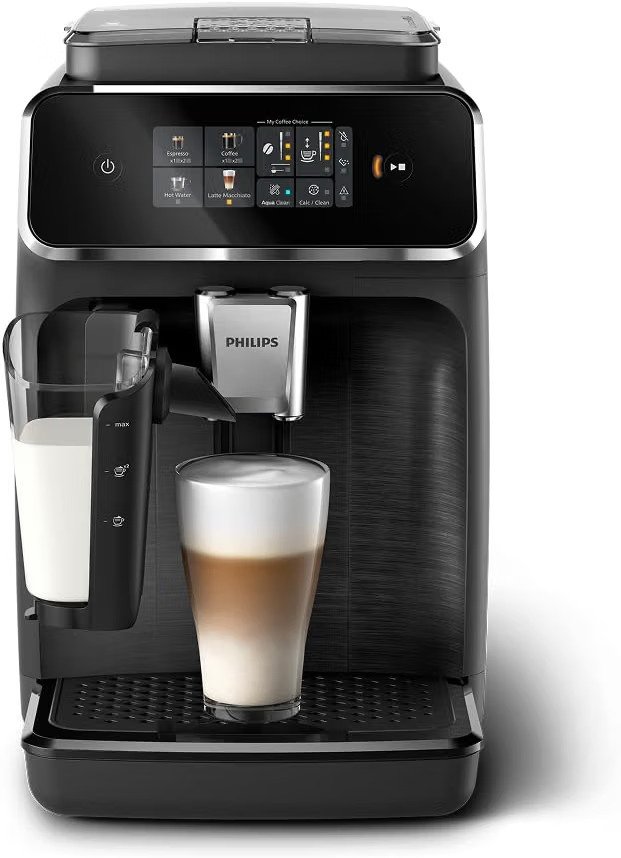
A focused choice for buyers who want the essential bean-to-cup drinks and an easy-clean automatic milk system without paying for a large recipe library.
Buy it ifYour regular order is espresso, coffee, or a simple milk drink and you value fast cleanup.
Skip it ifYou want many specialty recipes, multiple saved profiles, or extensive drink customization.
The Philips 2300 keeps the menu intentionally short. Philips lists four one-touch options, including espresso, coffee, and latte macchiato, plus hot water. It uses the same basic LatteGo idea as pricier Philips machines: a two-part milk system with no tube running through the machine.
That simplicity is the reason to choose it. You are not buying a touchscreen full of recipes you may never use. You are also accepting fewer shortcuts and less personalization than the 5500. If you are still comparing automation levels, our best automatic espresso machine guide explains how one-touch machines differ from assisted semi-automatic models.
Beverages4 one-touch choices
Milk system2-part LatteGo
Best fitSimple daily menu
What we like
Straightforward controls
Automatic milk without internal tubing
Fewer features to learn
What to consider
Limited recipe selection
No multi-user profile advantage
Less room to personalize advanced drinks
Specification source reviewed: Philips official EP2330/10 product page. Listed specifications describe manufacturer claims, not independent performance measurements.
The customization pick for people who want a large one-touch menu, automatic milk, and a color interface that makes drink adjustments easier to understand.
Buy it ifYour household rotates among espresso, coffee, iced drinks, and several milk-based recipes.
Skip it ifYou want the smallest learning curve and would rather have a short menu with fewer settings.
De'Longhi lists 24 one-touch recipes for the current Dinamica Plus ECAM38085SB, controlled through a 3.5-inch full-touch color display. Its LatteCrema Hot system handles milk automatically, while the built-in conical burr grinder doses fresh beans for each drink.
The wide menu is valuable only if you will use it. More recipes mean more settings to explore, a milk carafe to clean, and a larger upfront commitment than a basic bean-to-cup machine. For mixed households, though, the interface can reduce the friction of switching between short espresso, long coffee, and milk drinks. Confirm that the Amazon destination shows the same model number and 24-recipe specification before purchasing.
A premium option for buyers who prioritize a large touchscreen, many saved users, and one of the widest drink menus in this comparison.
Buy it ifYou have several coffee drinkers and want profiles, a broad menu, and app-connected controls.
Skip it ifYou want compact value or prefer a simple machine without connectivity and extensive menus.
Bosch lists 35 beverages, ten user profiles, a five-inch color TFT display, and Home Connect features for the 800 Series TPU60309. Its integrated milk system uses a hose, letting the machine draw milk from a container while automating the drink sequence.
This is the most technology-heavy machine in the group. Profiles can help in a busy home or a small shared workspace, but the size, price, and maintenance needs rise with that convenience. Buyers equipping a workplace may also want to compare our coffee machines for offices guide, because drink volume and cleaning responsibility matter as much as recipe count.
Beverages35 listed
Profiles10 user profiles
Display5-inch color TFT
What we like
Very broad beverage menu
Profiles suit multi-user households
Large display makes navigation clearer
What to consider
Premium footprint and price
Milk hose needs consistent cleaning
Connectivity may be unnecessary for many buyers
Specification source reviewed: Bosch official TPU60309 product page. Listed specifications describe manufacturer claims, not independent performance measurements.
A compact, lower-cost route into automatic bean-to-cup espresso for buyers who are comfortable frothing milk manually.
Buy it ifYou want automated grinding and coffee brewing in a ten-inch-wide body and do not mind using a steam wand.
Skip it ifYou expect cappuccino or latte at one touch with no milk-frothing practice.
The Brera automates grinding, dosing, and coffee brewing but keeps milk manual. Gaggia North America lists two one-touch coffee drinks, five grind settings, three aroma strengths, a 1.2-liter front-loading reservoir, and a Pannarello wand for steaming or hot water.
Its front-access water tank and dreg drawer are helpful under cabinets, and the ten-inch width is modest for a bean-to-cup machine. The important distinction is that “super automatic” does not always mean one-touch milk. The Brera can make cappuccino, but you must steam the milk yourself. That extra step offers some control while making it less convenient than LatteGo or LatteCrema systems.
Width10 inches
Coffee drinks2 one-touch
MilkManual Pannarello wand
What we like
Compact width and front access
Automatic coffee at a lower entry point
Manual wand adds milk-texture control
What to consider
Milk drinks are not one-touch
Only five grinder settings
Smaller 1.2-liter reservoir
Specification source reviewed: Gaggia North America Brera specifications. Listed specifications describe manufacturer claims, not independent performance measurements.
Four choices that define the right bean-to-cup machine
Automatic milk or a steam wand?
LatteGo, LatteCrema, and hose-fed systems make milk drinks with fewer steps. A manual wand adds practice but gives you more control over texture and temperature.
How many recipes will you use?
A large menu helps mixed households. If you only drink espresso and coffee, a focused four-drink machine can be faster to learn and easier to justify.
Do you need user profiles?
Profiles matter when several people change strength, volume, and milk settings. One user with one regular drink may not benefit from the extra interface.
Common questions about super automatic espresso machines
What is a super automatic espresso machine?
It is a bean-to-cup machine that grinds, doses, tamps, brews, and ejects the used coffee puck with minimal input. Milk automation varies: some models make milk drinks at one touch, while others use a manual steam wand.
Is a super automatic machine worth it?
It can be worth it when speed, consistency, and fewer manual steps matter more than detailed control over dose, puck preparation, and milk texture. It is less suitable for someone who enjoys dialing in espresso as a hobby.
Does a super automatic make real espresso?
It brews concentrated coffee using pressure, but the cup may differ from a carefully dialed-in commercial-style portafilter shot. The main advantage is repeatable convenience rather than maximum manual control.
Which milk system is easiest to clean?
A short, removable milk path with few parts is generally easier to rinse than long internal tubing. However, every milk-contact part still needs cleaning after use according to the manufacturer’s instructions.
Can I use oily coffee beans?
Check the machine manual. Very oily or flavored beans can stick in some hoppers and grinder chutes. Medium-roast beans with a relatively dry surface are often the safer starting point for an automatic grinder.
How often should I clean and descale the machine?
Empty and rinse the drip tray, puck bin, and milk parts as directed, then follow the machine’s cleaning alerts. Descaling frequency depends on water hardness, filter use, and drink volume rather than one universal calendar schedule.
Recommended next
Continue your research
Use these published Espresso Finder guides to compare automation, office suitability, maintenance, and everyday use.