Commercial Automatic Espresso Machine Guide: 5 Picks for Offices (2026)Skip to the article
Commercial Automatic Espresso Machine Guide: 5 Picks for Offices (2026)
If “commercial” means a shared office, staff room, studio, salon, or client area, a countertop super-automatic can remove most barista steps. If it means a busy café queue, these consumer machines are the wrong class of equipment. Here is how five options from our product list compare for lighter shared use.
John CrestaniEspresso Equipment Specialist
Last Updated
The short version
Which commercial automatic espresso machine should you buy?
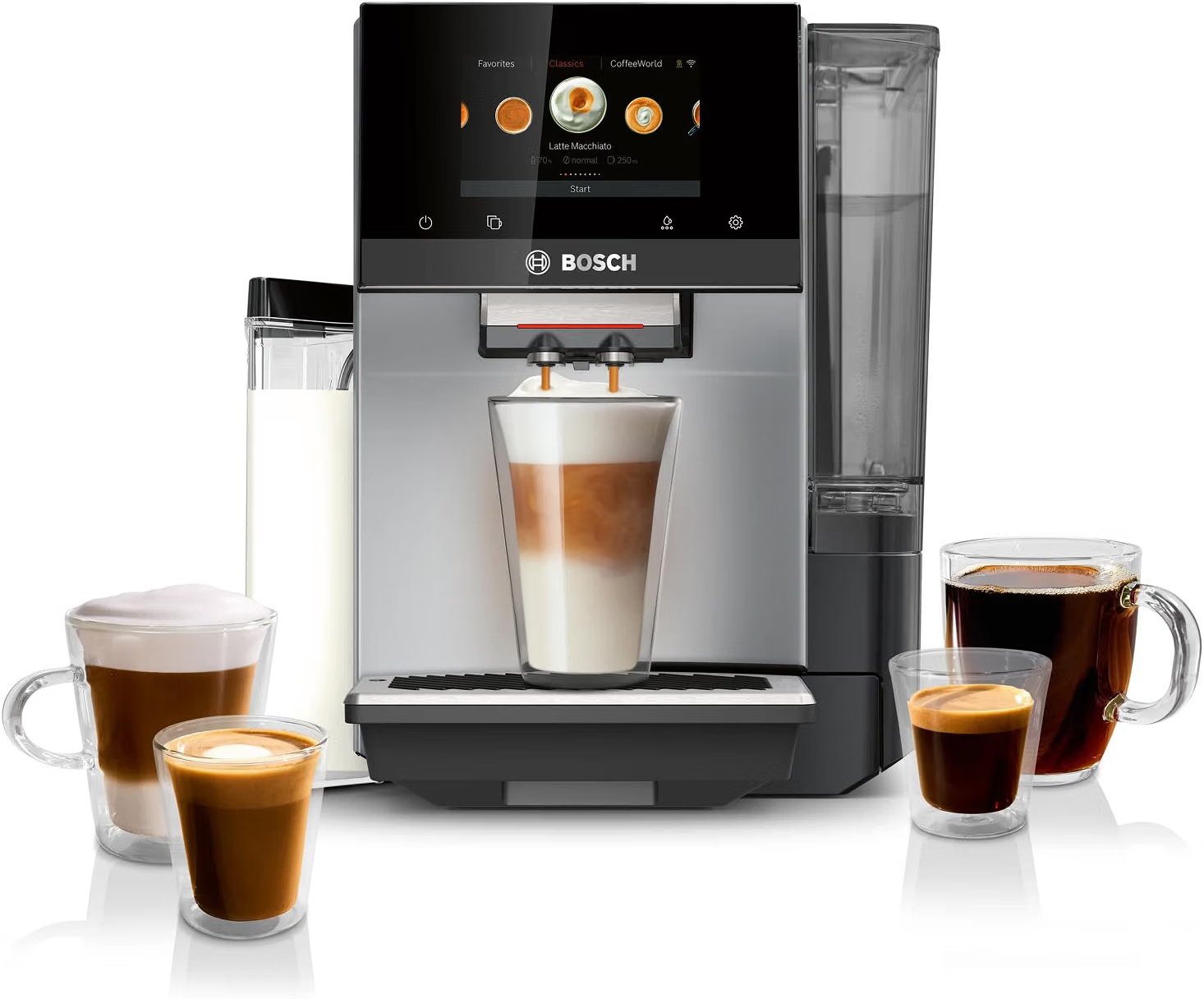
For a shared office or client-facing workplace, the Bosch 800 Series VeroCafe is our research-based starting pick because it combines 36 beverages, up to 30 saved profiles, a large touchscreen, and an integrated milk system. The Ninja AutoBarista Pro is attractive when an 80-ounce reservoir and two swappable bean hoppers matter; De’Longhi Dinamica Plus is stronger for milk-drink variety; Philips 5500 simplifies LatteGo cleanup; Terra Kaffe TK-02 offers the most connected experience.
Commercial-use warning: The five products selected from the supplied affiliate list are countertop consumer automatic machines. We found useful workplace features, but we did not find manufacturer documentation classifying them as high-volume café-duty commercial espresso machines. Before business use, verify the exact model’s warranty, sanitation requirements, electrical requirements, expected daily volume, and local rules. For a coffee shop or restaurant, start with our small-coffee-shop commercial espresso machine guide.
How we evaluated
For a workplace, capacity and maintenance matter more than a long drink menu
This is a research-based comparison of official manufacturer specifications and workplace tradeoffs, not a hands-on laboratory test. We prioritized self-service usability, refill frequency, repeat-user personalization, milk-system cleaning, and ownership friction. We did not convert consumer feature counts into invented “commercial ratings.”
Shared-user workflowCan an employee make a drink without learning grinder, dose, tamp, and steam technique?
CapacityHow quickly are water, beans, milk, drip tray, or grounds likely to need attention?
CleaningDoes the milk and brew workflow encourage daily cleaning rather than make it easy to postpone?
Duty-cycle fitIs this appropriate for light shared use, or should the buyer move to purpose-built commercial equipment?
Commercial automatic espresso machine comparison
Amazon links in this table are paid links. Prices and availability change frequently, so they are intentionally omitted. “Commercial” here means shared workplace/light business use unless a manufacturer explicitly documents otherwise. *Terra Kaffe documents differ on current TK-02 water capacity; confirm the exact revision.
Five automatic espresso machines compared for offices and light shared use
Espresso Mastered:The EspressoFinder.com Guide for Enthusiasts and Professionals
Choose smarter. Brew better from day one.
Pressure numbers and long feature lists can make almost every machine look impressive. This practical guide shows you what actually affects taste, workflow, and long-term value—before you spend your money.
Separate useful specifications from marketing noise
Match the grinder, milk system, and learning curve to your routine
Spot hidden accessory, cleaning, and upgrade costs
Use a clear checklist to compare any espresso machine
Free digital guide · Delivered by email · Privacy Policy
Our five picks, with the workplace tradeoffs explained
There is no universal winner. The useful question is not “Which machine has the most features?” but “Which maintenance and capacity limits can your team realistically live with?” If you are still deciding between office-oriented formats, our coffee office machine guide covers the broader category.
Best for a shared office
1. Bosch 800 Series VeroCafe TQU60307
The most workplace-friendly option here for teams that value many drink choices, saved user profiles, an integrated milk system, and a large touchscreen.
Buy it ifYou want a polished self-serve experience for multiple regular users.
Skip it ifYou need equipment explicitly sold, installed, and warranted for sustained café-volume commercial service.
Bosch gives the 800 Series the clearest shared-user story in this group. The TQU60307 is listed with 36 beverages, an integrated milk container, up to 30 user profiles, and a 5-inch color touchscreen. It can also prepare a coffee-pot serving up to 25.4 ounces, which is useful when several people want regular coffee rather than individual espresso drinks.
For a reception area, executive office, salon, studio, or small workplace, that mix reduces the amount of training needed. The tradeoff is classification: Bosch sells this through its countertop home-appliance range, so a business should verify warranty and usage terms before relying on it as revenue-producing equipment. If your goal is a café queue rather than employee self-service, compare purpose-built options in our commercial espresso machine guide for small coffee shops instead.
Drinks36 listed
ProfilesUp to 30
MilkIntegrated container
What we like
Large drink menu and saved profiles
5-inch touchscreen is easy for shared use
Coffee-pot mode adds flexibility beyond espresso
What to consider
Countertop consumer machine, not documented as heavy café-duty equipment
Higher complexity means more cleaning points
Verify business-use warranty terms before purchase
Specification source reviewed: Bosch’s official TQU60307 product documentation.
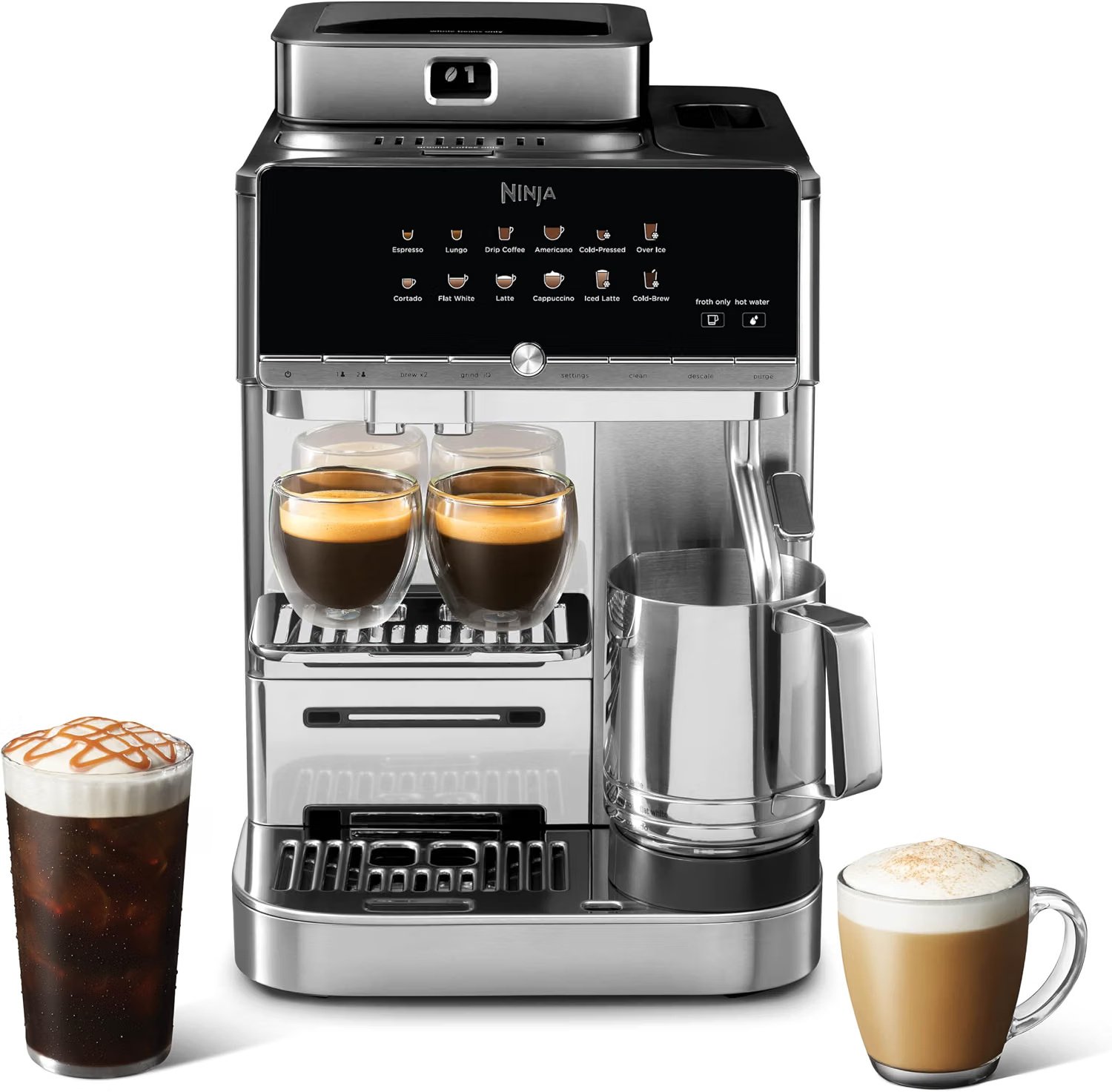
A high-capacity countertop option with an 80-ounce reservoir, 13 one-touch drinks, automatic grinding and tamping, and two swappable bean hoppers.
Buy it ifYour team wants one-touch drinks plus the ability to swap between two beans, such as regular and decaf.
Skip it ifYou need plumbed water, coin/payment integration, or a manufacturer-rated commercial duty cycle.
The AutoBarista Pro is especially interesting for a workplace because Ninja lists an 80-ounce water reservoir, a 340-gram hopper capacity, 13 one-touch drinks, two user profiles, and two swappable bean hoppers. That second hopper can matter more in an office than another specialty-drink button because it makes regular-versus-decaf switching less awkward.
Ninja also lists automatic grind adjustment from 50 settings, weight-based dosing, an automatic tamper, and five froth presets. The machine is marketed for home use, however, so we would treat its large reservoir and automated workflow as convenience features rather than proof of commercial certification. For broader workplace comparisons, see our guide to coffee machines for offices.
Water tank80 oz listed
Drinks13 presets
Beans2 swappable hoppers
What we like
Large reservoir reduces refill frequency
Two hoppers are practical for regular and decaf
Automatic grind, dose, tamp, brew, and froth workflow
What to consider
Only two saved user profiles
Large body needs meaningful counter depth
Not presented by Ninja as high-volume commercial equipment
Specification source reviewed: SharkNinja’s official AE1051 product documentation.
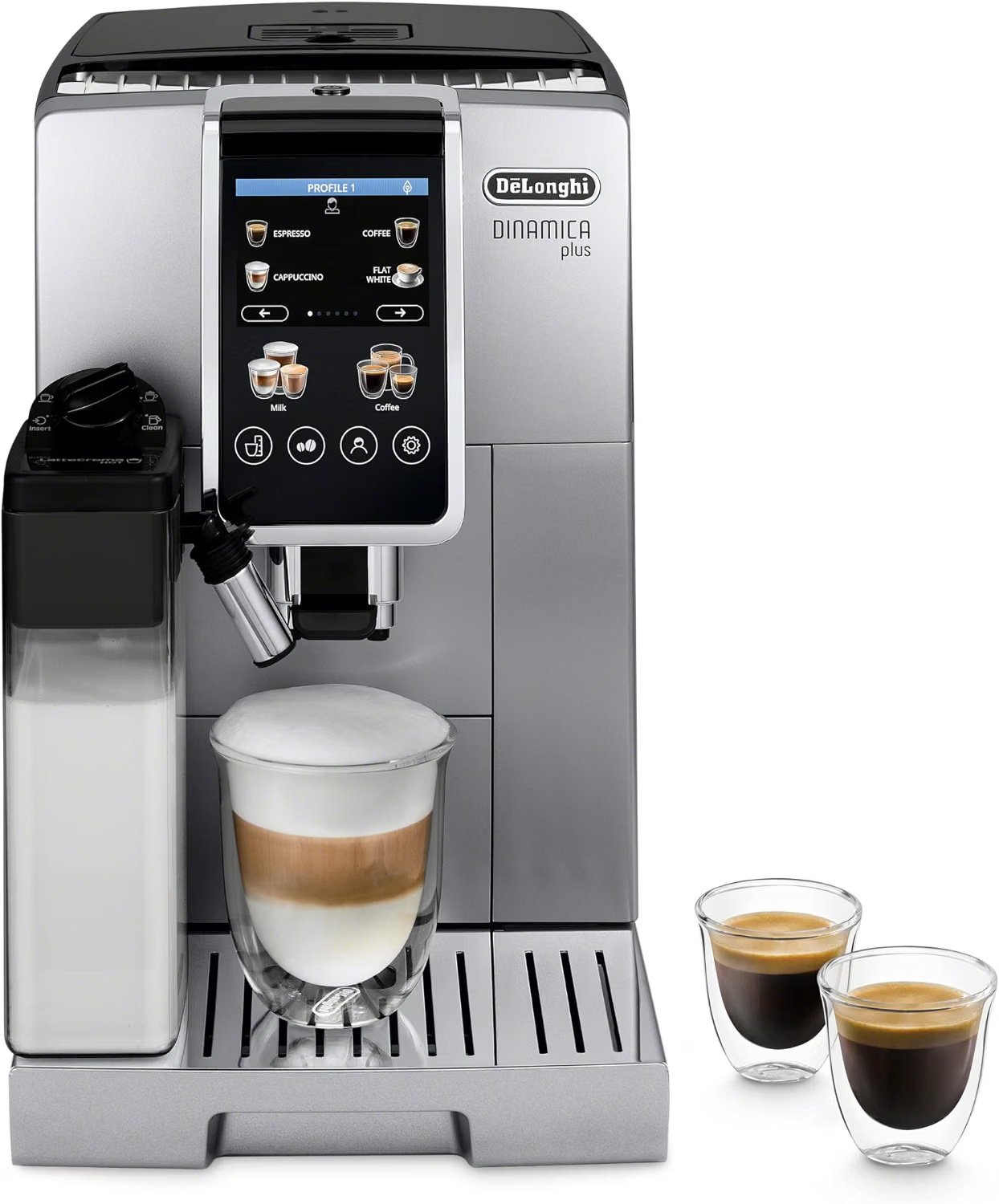
A strong fit for teams that want a broad milk-drink menu, four profiles, and a familiar one-touch bean-to-cup workflow.
Buy it ifYour workplace makes many cappuccinos, lattes, flat whites, and other milk drinks.
Skip it ifYou expect nonstop back-to-back service or need a plumbed-in commercial machine.
De’Longhi lists 24 one-touch recipes, a built-in conical burr grinder with 13 settings, four user profiles, and its automatic LatteCrema milk system with three froth settings. The U.S. ECAM38085SB documentation also lists a roughly 60.9-ounce water reservoir and a grounds container rated for 14 portions.
That combination works well when a small team wants variety without learning barista technique. The limitation is throughput: a removable consumer-size water tank and grounds bin still create refill and emptying chores during a busy morning. If minimizing those interruptions matters more than drink variety, compare the larger-workplace options in our best office coffee machines guide.
Recipes24 one-touch
Profiles4
Grinder13 settings
What we like
Wide one-touch drink selection
Four profiles suit repeat users
Automatic milk system with adjustable froth
What to consider
About 60.9 oz water capacity is smaller than some rivals here
Milk system adds daily cleaning work
Designed as a home automatic machine, not café-duty equipment
Specification source reviewed: De’Longhi’s official U.S. ECAM38085SB product documentation.
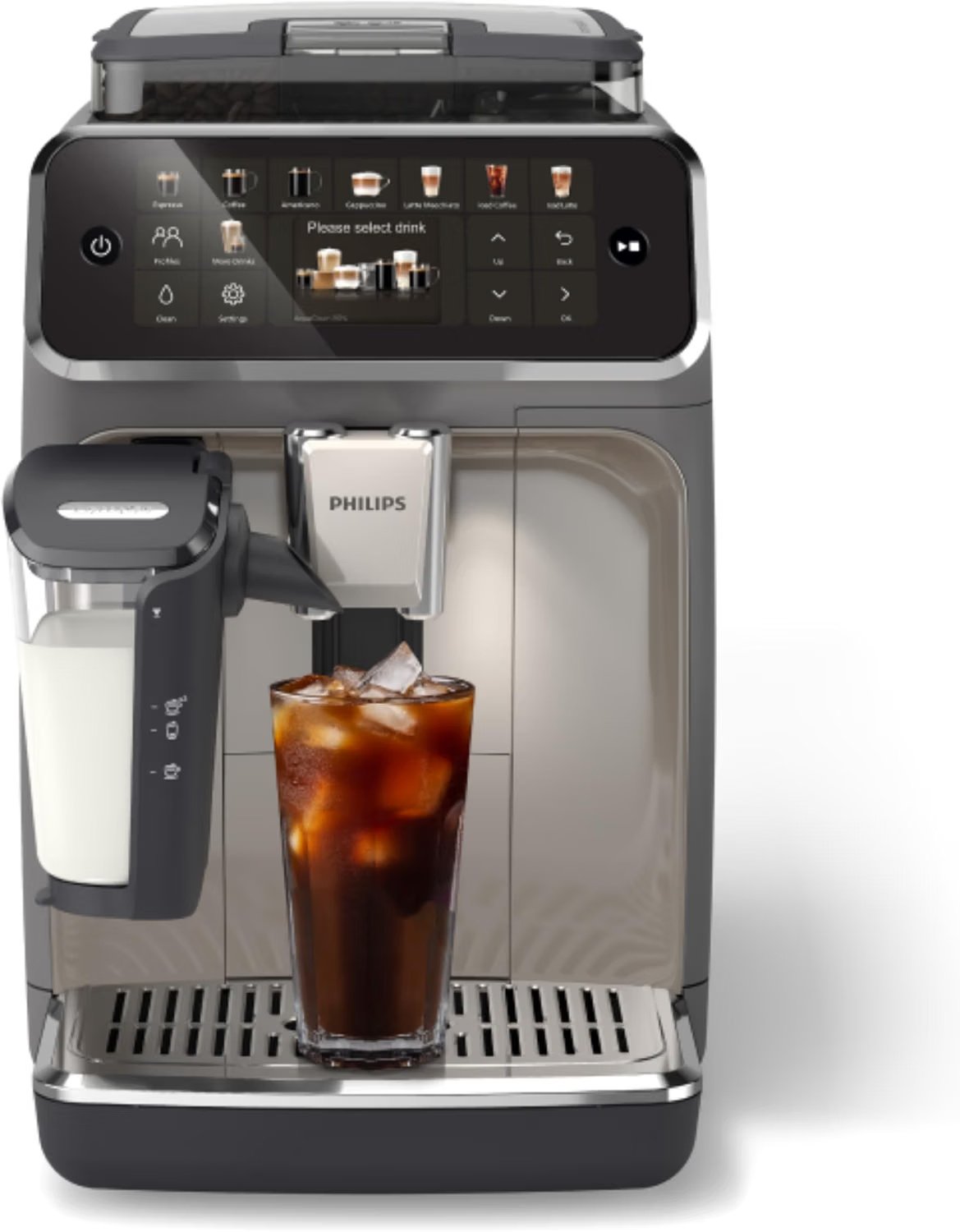
A practical shared-space choice when fast milk-system cleanup matters as much as drink variety.
Buy it ifYou want one-touch milk drinks with a milk system that has very few parts to wash.
Skip it ifYou need a very large reservoir or want a machine designed for continuous commercial production.
Philips lists 20 pre-programmed drinks, 12 grinder settings, a 1.8-liter water tank, a 275-gram bean container, and four profiles plus a guest profile. Its LatteGo milk system uses two main parts and no tubes; Philips says it can be cleaned in under 10 seconds under a tap or in a dishwasher.
That is a meaningful advantage in a shared office because milk residue is often the maintenance problem people ignore. The smaller tank and bean hopper still mean more attention than a plumbed commercial unit, so estimate daily cup volume before buying. Water quality also matters for any shared machine; our water filtration for coffee guide explains why scale control can affect maintenance.
Drinks20 listed
Profiles4 + guest
Water tank1.8 L
What we like
LatteGo is simple to remove and clean
Good drink variety for mixed preferences
Guest profile helps in shared spaces
What to consider
1.8 L tank can empty quickly in busier offices
275 g hopper is modest for heavier use
Still a consumer countertop platform
Specification source reviewed: Philips’ official 5500 Series EP5547/90 documentation.
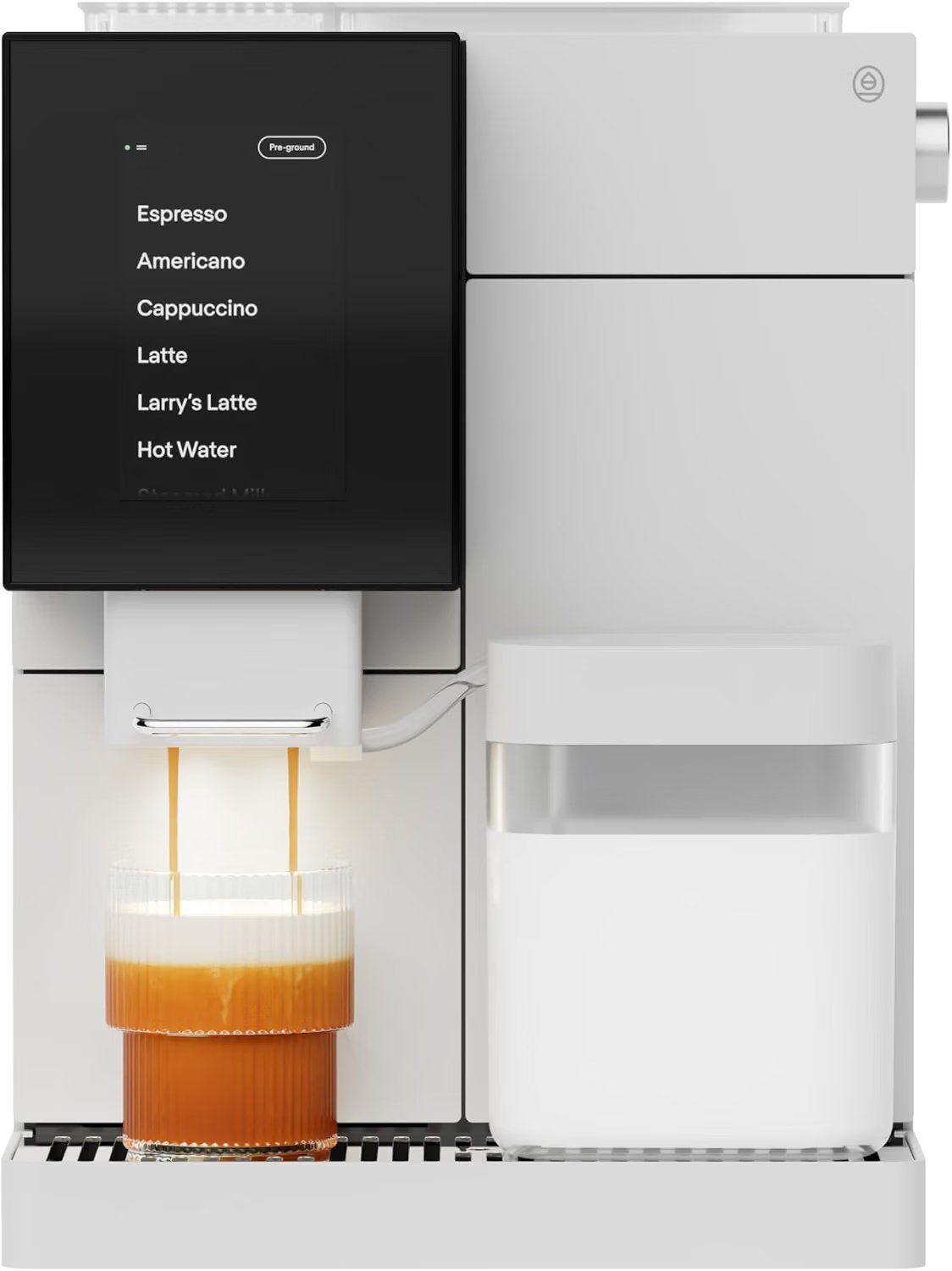
A connected, design-forward option for a smaller team that values app control, customization, and front-access maintenance.
Buy it ifYou want a modern connected machine and are comfortable with a smaller waste-bin capacity.
Skip it ifYour office routinely produces long drink queues or you want the fewest possible emptying cycles.
Terra Kaffe lists a 5-inch capacitive display, connected app features, a 48 mm conical burr grinder, up to a 16-ounce bean hopper, and a front-facing water and waste-bin layout. The current product page lists a 75-ounce water tank and a nine-puck waste bin, so the water capacity is useful but the grounds bin may need frequent attention in a busy office.
There is also a documentation detail worth flagging: Terra Kaffe’s current product page lists 75 ounces for the water tank, while an available user manual lists 68 ounces. That likely reflects revision differences, but confirm the exact current model before publishing or purchasing. The manufacturer’s current page lists a two-year or 5,000-brew limited warranty for new TK-02 units.
Water tank75 oz current page
Bean hopperUp to 16 oz
Waste bin9 pucks
What we like
Large bean capacity for a countertop automatic
Front-access layout helps in tight spaces
Connected controls and customizable drinks
What to consider
Nine-puck waste bin may fill quickly
Official documents differ on listed water capacity
Confirm warranty terms for workplace use
Specification source reviewed: Terra Kaffe’s current TK-02 product page and user documentation; water-capacity figures differ by document.
Five decisions before putting an automatic espresso machine into a business
How many drinks per day?
A machine that feels effortless at 10–20 drinks can become frustrating when 40 people hit it in one hour. Estimate peak demand, not only daily totals.
Who cleans the milk system?
Assign responsibility. Automatic frothing still leaves food-contact parts that require regular cleaning. Simpler systems are easier to maintain consistently.
How often can someone refill it?
Water tank, hopper, drip tray, and puck-bin capacities directly affect workplace interruption. A large drink menu does not compensate for constant refilling.
Do you need true commercial certification?
Restaurants and cafés may need purpose-built equipment, local sanitation compliance, service support, and warranty coverage that consumer countertop machines do not provide.
Regular and decaf beans?
A second hopper or easy bean-change workflow can be more useful in an office than dozens of extra recipes. Otherwise, consider pre-ground decaf compatibility.
Plan for water quality
Hard water can increase scale and maintenance. Before deployment, review filtration, hardness settings, and descaling guidance rather than using one universal schedule.
Common questions about commercial automatic espresso machines
Can I use a home super-automatic espresso machine in an office?
Often, yes for light shared use, but suitability depends on cup volume, cleaning responsibility, electrical setup, warranty terms, and local rules. A shared office and a revenue-producing café are very different workloads.
What makes an automatic espresso machine commercial?
Commercial equipment is typically designed and supported for sustained business use, with serviceability, duty cycle, plumbing or larger-capacity options, and certifications appropriate to its market. A large reservoir or many drink presets alone does not make a machine commercial-grade.
How large should the water tank be for an office?
There is no universal size. Estimate drinks during the busiest period and allow for rinsing cycles. An 80-ounce tank can still require attention if many users make large milk drinks back to back.
Is a fully automatic machine better than a traditional commercial espresso machine?
It is easier for self-service because grinding, dosing, extraction, and often milk frothing are automated. A traditional commercial machine usually offers more barista control and may be better suited to staffed, high-volume service.
Which machine is easiest to maintain?
Among these five, Philips’ two-part LatteGo milk system is especially simple to remove and wash, while every machine still requires routine brew-unit, drip-tray, grounds-bin, and descaling care according to its manual.
Should a small coffee shop buy one of these five?
Not as a default. These are consumer countertop machines selected from the supplied product list and evaluated for lighter shared use. A coffee shop should prioritize equipment explicitly supported for commercial service and its expected peak-hour volume.
Recommended next
Continue your research
Choose the next guide based on whether your priority is office convenience, café-grade equipment, or a broader super-automatic comparison.