Best Dual Boiler Espresso Machine: 2 Picks for 2026
A dual-boiler setup is most useful when you make milk drinks often and do not want to wait between brewing espresso and steaming. We compare two matching machines from our current product catalog by heating design, grinder, portafilter, milk workflow, control, and the tradeoff each one asks you to accept.
John CrestaniEspresso Equipment Specialist
Last Updated
The short version
What is the best dual boiler espresso machine here?
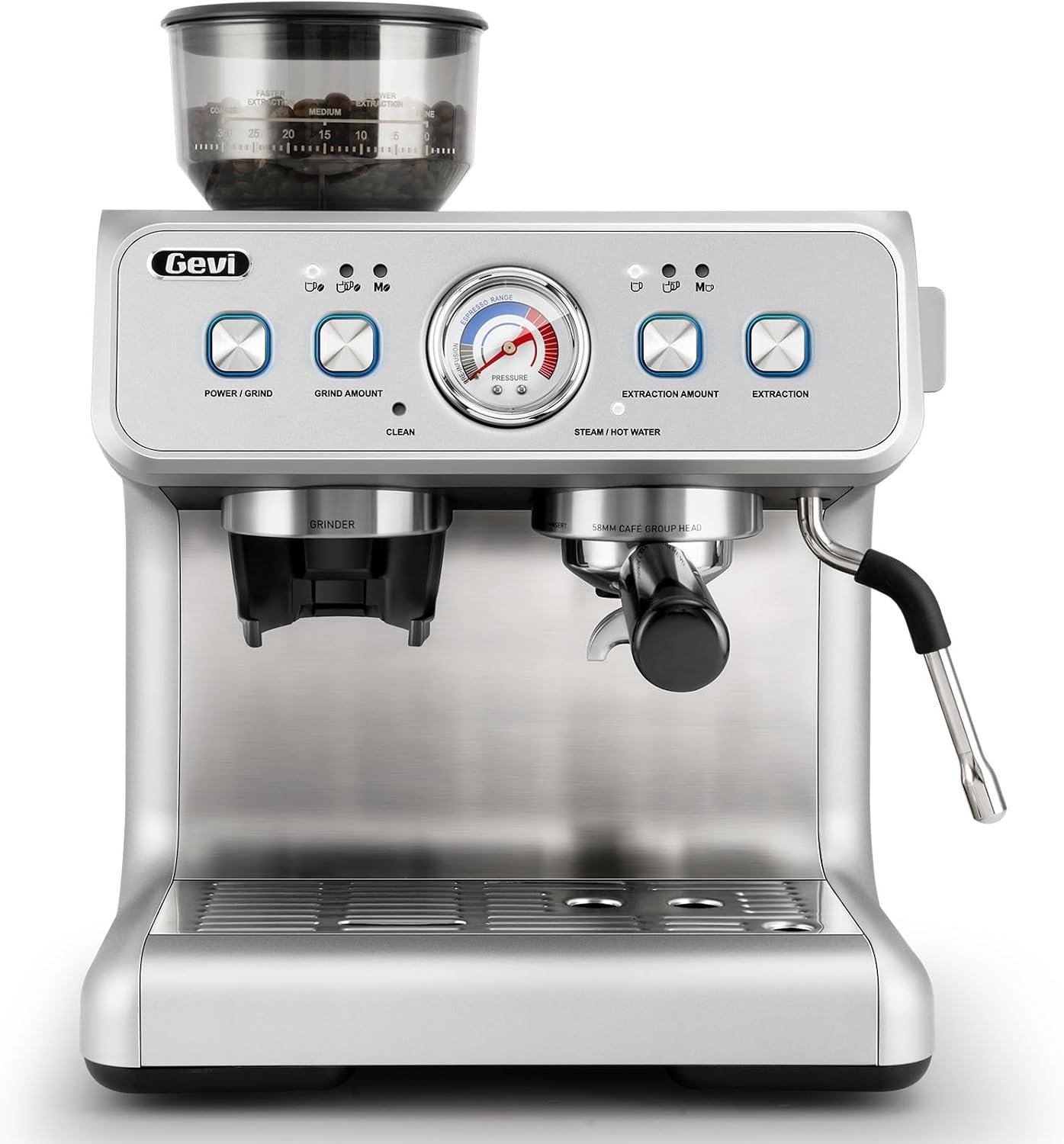
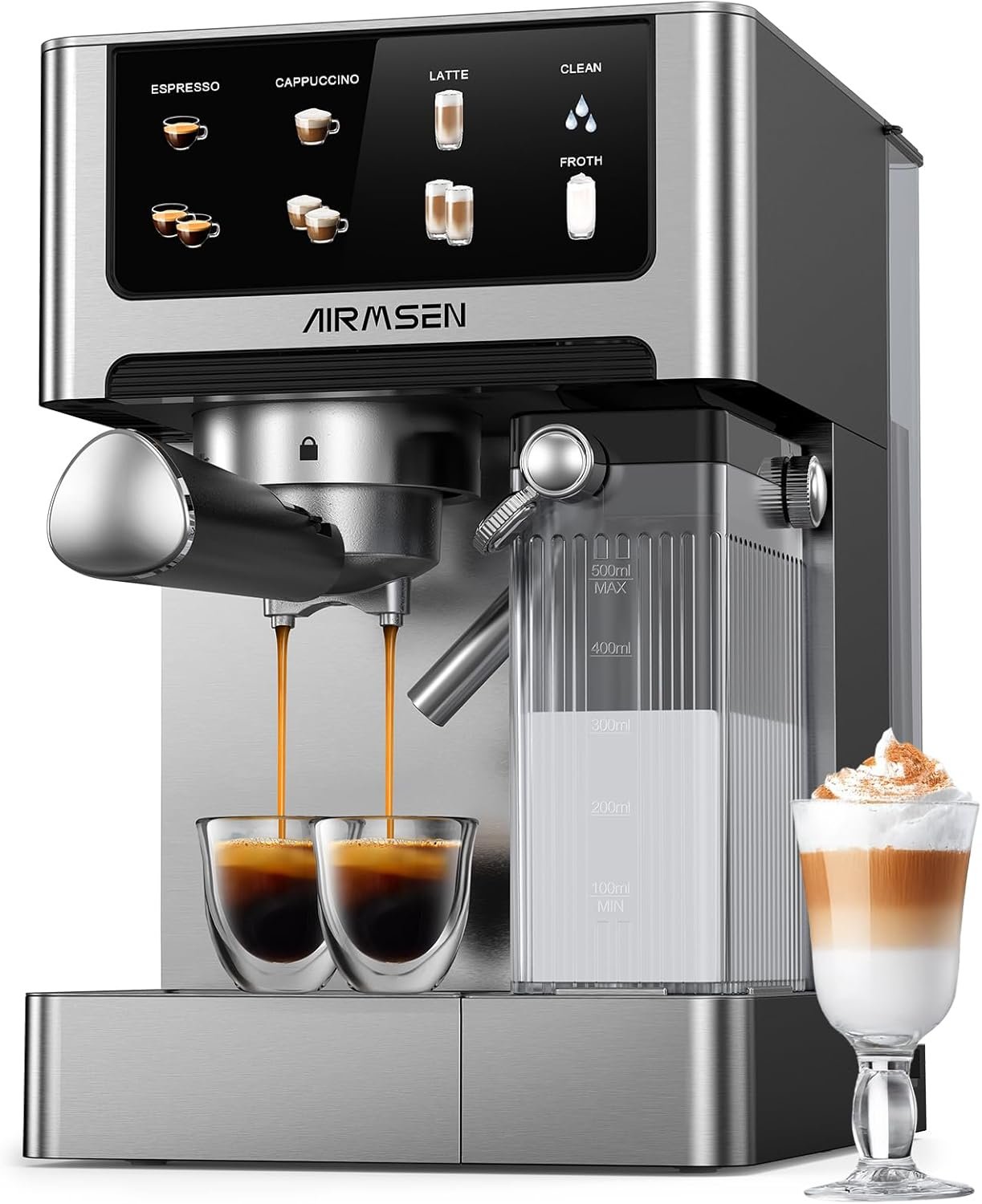
For most home baristas choosing from the dual-boiler models in this product set, the GEVI ECMF0 is the stronger all-in-one starting point. It combines a manufacturer-labeled dual-boiler system with a 30-step built-in grinder, 58 mm group head, pressure gauge, PID + NTC temperature control, and manual steaming. The AIRMSEN BCM2308 is the better convenience-and-budget alternative if you prefer a touchscreen and automatic milk frother, but it uses a smaller 51 mm portafilter and does not include an integrated grinder.
Testing transparency: This is a research-based comparison of current manufacturer specifications and design tradeoffs, not a hands-on laboratory test. It covers the two products in the supplied affiliate catalog that explicitly match the dual-boiler topic. GEVI currently markets the ECMF0 as a dual-boiler machine, while its product copy also references Thermoblock temperature control; that terminology is flagged rather than silently treated as identical engineering.
How we evaluated
A dual-boiler label is only the beginning
We compared the two machines using four practical buying questions: what the manufacturer says about the heating system, how much espresso control you get, how milk drinks fit into the workflow, and what ownership friction remains after the feature list. If you want the technical background first, our guide to how a dual-boiler espresso machine works explains why separate brew and steam heating paths can matter.
Heating architectureDoes the documentation describe independent brew and steam heating, and is the wording internally consistent?
Espresso controlLook at grinder adjustment, portafilter size, temperature control, pressure feedback, and manual input.
Milk workflowCan you brew and steam without a long recovery pause, and is milk handled manually or automatically?
Ownership frictionConsider cleaning, water quality, footprint, accessory compatibility, and the need for a separate grinder.
Dual boiler espresso machines compared
Amazon links in this table are paid links. On a phone, swipe sideways to see every column. Prices and availability change frequently, so this table intentionally does not display them.
Two dual-boiler espresso machines: buyer fit, heating system, grinder, portafilter, and main tradeoff
Machine
Best for
Heating system
Grinder
Portafilter
Main tradeoff
Amazon paid links
GEVI ECMF0
All-in-one home-barista workflow
Manufacturer labels it dual-boiler; PID + NTC
Built in, 30-step
58 mm
Official copy also references Thermoblock control; confirm exact model wording
Espresso Mastered:The EspressoFinder.com Guide for Enthusiasts and Professionals
Choose smarter. Brew better from day one.
Pressure numbers and long feature lists can make almost every machine look impressive. This practical guide shows you what actually affects taste, workflow, and long-term value—before you spend your money.
Separate useful specifications from marketing noise
Match the grinder, milk system, and learning curve to your routine
Spot hidden accessory, cleaning, and upgrade costs
Use a clear checklist to compare any espresso machine
Free digital guide · Delivered by email · Privacy Policy
Our two picks, with the tradeoffs explained
Dual boilers solve one specific frustration well: waiting for one heating path to switch between espresso temperature and steam temperature. They do not automatically solve grind quality, puck preparation, cleaning, or milk technique, so the better machine is still the one whose full workflow fits you.
Best overall workflow
1. GEVI Dual Boiler Espresso Coffee Maker ECMF0
The more complete choice for a home barista who wants grinding, a 58 mm group head, pressure feedback, and manual steaming in one machine.
Buy it ifYou want a more traditional hands-on espresso workflow without buying a separate grinder immediately.
Skip it ifYou want one-touch milk drinks, a very small machine, or documentation with zero ambiguity around the heating terminology.
GEVI positions the ECMF0/BrewCombo as a dual-boiler, all-in-one machine for home baristas. The current specification table lists a 30-step built-in grinder, PID + NTC temperature control, a pressure gauge, manual steam, and a 58 mm group head. That 58 mm format is especially useful if you expect to experiment with baskets, tampers, or other tools; our espresso portafilter guide explains why the size affects accessory compatibility more than it affects espresso quality by itself.
The main reason it ranks first here is workflow completeness. You can grind, dose, tamp, extract, read pressure feedback, and steam manually without adding a separate grinder on day one. That gives you more room to learn than a machine centered around automatic milk. GEVI also lists a footprint of about 12.6 inches deep by 13.8 inches wide by 16.5 inches high, so it is not a compact-apartment pick; measure cabinet clearance before buying.
There is one specification caveat worth keeping visible. GEVI’s current product pages label the ECMF0 as “dual boiler” and describe the ability to extract and heat at the same time, but the same copy also says PID regulates water temperature in a Thermoblock. Those terms can describe different hardware architectures. We therefore treat “dual boiler” as the manufacturer’s current product classification, not as an independently verified teardown result.
SystemDual-boiler 20-bar, manufacturer label
GrinderBuilt in, 30-step
Group head58 mm
What we like
Built-in grinder keeps the setup self-contained
58 mm group head supports a broad accessory ecosystem
Pressure gauge plus PID + NTC gives useful feedback and control
Manual steam workflow leaves room to improve milk technique
What to consider
Manufacturer copy mixes “dual boiler” and “Thermoblock” terminology
Larger footprint than compact single-boiler machines
Manual steaming has a learning curve
An integrated grinder is convenient but less upgradeable than a separate grinder
Specification source reviewed: GEVI’s current ECMF0/BrewCombo product documentation. Editorial conclusions are our own; confirm the exact model and current specifications on the Amazon destination page.
A simpler, lower-friction option for cappuccino and latte drinkers who value automatic milk frothing more than manual barista control.
Buy it ifYou want separate brew and steam heating with touchscreen drink controls and automatic milk frothing.
Skip it ifYou want a 58 mm platform, a built-in grinder, or full manual control over milk texture.
AIRMSEN describes the BCM2308 more explicitly than many budget machines: a 1350W coffee-extraction boiler and a separate 1000W milk-frothing boiler are designed to run in parallel. The manufacturer also lists a 60-ounce removable water tank, touchscreen controls, automatic milk frothing, self-cleaning functions, and a 51 mm portafilter. For a household that mostly wants cappuccinos and lattes quickly, that division of labor is the main appeal.
The tradeoff is that convenience replaces some of the manual learning path. A 51 mm portafilter gives you fewer broadly interchangeable accessories than the GEVI’s 58 mm format, and the machine does not provide an integrated grinder. If you plan to use freshly ground beans, pair it with an espresso-capable grinder; our best budget espresso grinder guide is a useful next comparison.
AIRMSEN lists the machine at about 10.2 inches deep, 7.9 inches wide, and 12 inches high, which is considerably easier to place than many prosumer-style dual-boiler machines. The automatic milk system also removes the need to learn steam-wand positioning. That is a strength for speed and consistency of routine, but a limitation if your goal is to practice manual microfoam and latte-art technique.
Heating1350W brew + 1000W steam boilers
Portafilter51 mm
Water tank60 oz / 1.8 L listed
What we like
Manufacturer describes separate brew and steam boilers
Automatic milk frother reduces the learning curve
Touchscreen controls suit shared households
Narrow 7.9-inch listed width is counter-friendly
What to consider
No integrated grinder in the supplied product listing
51 mm portafilter has a smaller accessory ecosystem
Automatic milk gives you less manual texture control
Budget positioning means the feature list should not be confused with prosumer build quality
Specification source reviewed: AIRMSEN’s current BCM2308 product documentation. Editorial conclusions are our own; confirm the exact model and current specifications on the Amazon destination page.
Four decisions that matter before paying for a dual boiler
True boiler, dual thermoblock, or marketing shorthand?
Read the manufacturer’s heating description, not only the product title. “Dual boiler,” “dual heating,” and “dual thermoblock” can describe different hardware. If simultaneous brewing and steaming is your main goal, confirm that the current model supports both at the same time. For the underlying architecture, see our dual-boiler espresso machine guide.
Manual steam wand or automatic milk?
GEVI gives you the more traditional manual-steam learning path; AIRMSEN automates the milk step. Manual steaming rewards practice and gives more texture control. Automatic milk is easier for households that want repeatable cappuccinos without learning wand angle and aeration.
58 mm or 51 mm—and what about the grinder?
A 58 mm platform usually gives you more third-party basket, tamper, and distribution-tool choices. A smaller portafilter can still make good espresso, but accessories are less universal. Whichever size you choose, grind consistency and repeatable espresso tamping matter more than a large pump-pressure number.
Water quality and maintenance
Two heating circuits do not remove scale risk. Follow the maker’s water and descaling instructions, and consider your local hardness before choosing a filter strategy. Our guide to water filtration for coffee explains the tradeoff between protecting equipment and preserving useful minerals for brewing.
Common questions about dual boiler espresso machines
What is a dual boiler espresso machine?
A dual boiler espresso machine uses separate heating systems for espresso brewing and steam production. The practical benefit is that each function can target its own temperature and, on properly designed machines, brewing and steaming can happen without waiting for one heater to switch modes.
Is a dual boiler better than a single boiler?
It is better for a specific workflow, not automatically for every buyer. If you make several milk drinks, separate brew and steam heating can save time and reduce recovery waits. If you mostly drink straight espresso, a well-controlled single boiler may be simpler and more economical.
Can a dual boiler brew espresso and steam milk at the same time?
That is one of the main reasons to buy one, but verify the exact model. AIRMSEN explicitly describes parallel brew and steam boilers on the BCM2308. GEVI markets the ECMF0 as dual boiler and describes simultaneous extraction and heating, while also using Thermoblock terminology elsewhere in its current product copy.
Is a dual boiler espresso machine worth it for home?
It is most worthwhile when you regularly make cappuccinos, lattes, or several drinks back to back. If your routine is one espresso at a time, the extra heating hardware may add cost, size, and maintenance without improving the part of the workflow you care about most.
Do I still need a good grinder with a dual boiler?
Yes. Boiler architecture cannot compensate for inconsistent grind size. The GEVI ECMF0 includes a 30-step grinder; with the AIRMSEN, plan for a separate espresso-capable grinder if you want to dial in fresh beans.
How should I maintain a dual boiler machine?
Follow the manufacturer’s cleaning and water-quality guidance rather than using one universal descaling schedule. Hard water can create scale in heating circuits, while overly aggressive filtration can also change extraction. Keep the water tank, milk path, drip tray, portafilter, and group area clean on the schedule specified for your machine.
Recommended next
Continue your research
These published guides cover the next decisions most dual-boiler shoppers usually face: whether a single boiler is enough, how to choose a grinder, and how water affects long-term machine care.