The best espresso machine is the one that fits your morning, not the one with the longest feature list. These nine picks compare hands-on, guided, and fully automatic brewing by grinder, milk system, daily upkeep, and the compromise each asks you to accept.
John CrestaniEspresso Equipment Specialist
Last Updated
The Short Version
Which of These 9 Best Espresso Machines Should You Buy?
The Breville Barista Express is our starting pick for learning hands-on espresso, the Ninja Luxe Café Premier suits guided brewing, and the Philips 5500 LatteGo suits automatic milk drinks. Choose the Gaggia Classic Pro E24 if you want a separate grinder, or the La Pavoni Europiccola if manual-lever brewing is the hobby. Dinamica Plus, Philips 2200, Chefman Crema Supreme, and Gaggia Brera serve different priorities in customization, simplicity, tank capacity, and access.
Testing transparency: This is a research-based comparison of manufacturer documentation and design tradeoffs, not a hands-on laboratory test. “Best” labels describe buyer fit among these nine selections, not measured superiority over every machine available. Prices, star ratings, and unverified durability scores are not used.
How We Evaluated
A Useful Shortlist Starts With Your Daily Routine
We selected nine distinct machines from the available product list, then compared the manufacturer documentation linked beneath each review. The evaluation considers workflow, useful brewing control, milk preparation, and everyday upkeep. A manual lever and a fully automatic machine solve different problems; the order below is an editorial reading order rather than a laboratory performance ranking.
Daily WorkflowHow much grinding, puck preparation, milk handling, and cleanup will you do?
Useful ControlCan you adjust the coffee in ways you understand and will actually use?
Milk DrinksDo you want manual steaming, assisted frothing, or an automatic milk recipe?
Ownership FrictionConsider grinder cost, access for refilling, compatible parts, and maintenance.
Source review date: . Listed features are manufacturer specifications, not independent measurements. Where regional versions, product generations, or published specifications differ, the review identifies the uncertainty. Affiliate compensation does not establish a product’s suitability for your kitchen.
9 Best Espresso Machines Compared
Amazon links in this table are paid links. On a phone, swipe sideways to see every column. Compare the workflow first; live prices and availability are shown on Amazon.
Nine home espresso machines compared by buyer fit, grinder, milk system, and main tradeoff
Espresso Mastered:The EspressoFinder.com Guide for Enthusiasts and Professionals
Choose smarter. Brew better from day one.
Pressure numbers and long feature lists can make almost every machine look impressive. This practical guide shows you what actually affects taste, workflow, and long-term value—before you spend your money.
Separate useful specifications from marketing noise
Match the grinder, milk system, and learning curve to your routine
Spot hidden accessory, cleaning, and upgrade costs
Use a clear checklist to compare any espresso machine
Free digital guide · Delivered by email · Privacy Policy
Our Nine Picks, With the Tradeoffs Explained
Start with the kind of morning you want. A machine that rewards careful preparation may be perfect for a weekend enthusiast and frustrating for someone who needs coffee before leaving for work.
Best for Learning Hands-On Espresso
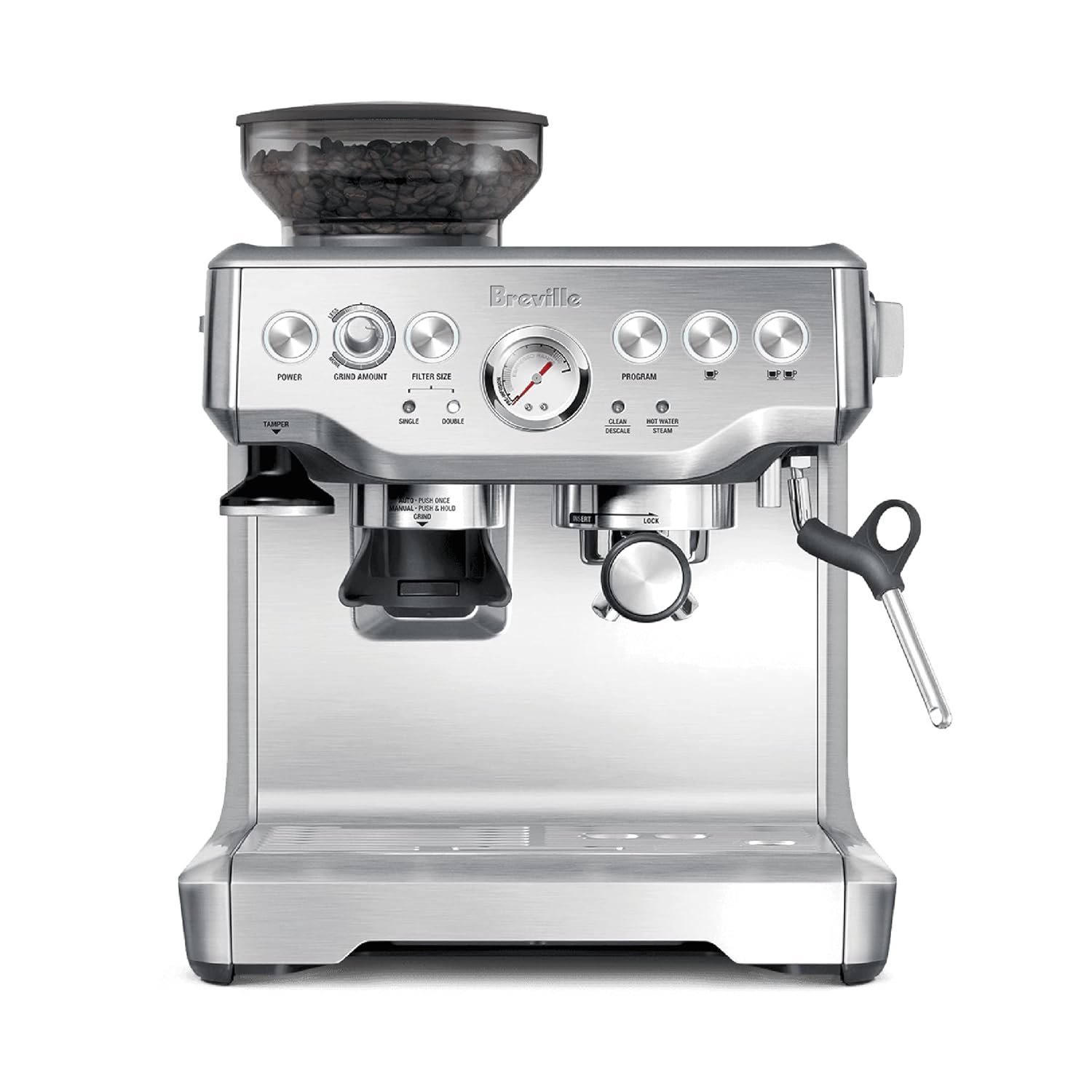
1. Breville Barista Express BES870XL
Our starting pick for someone who wants to learn the espresso routine with a grinder and steam wand in one machine.
Buy It IfYou want control over puck preparation and enjoy improving one shot at a time.
Skip It IfYou want a latte from a single button or already own a grinder you love.
The Barista Express makes the process visible: grind into the portafilter, distribute the coffee, tamp, and start the shot. Breville lists a 54 mm portafilter and Thermocoil heating with PID temperature control. Those features support a traditional home-barista workflow without requiring you to assemble a separate grinder-and-machine combination.
The decision is about involvement. You still prepare the coffee and texture milk yourself, so the result depends on your routine as well as the equipment. Its 16 grinder settings provide fewer numbered steps than some alternatives here, although setting counts alone do not establish grind quality. Start with a consistent dose and change one variable at a time; our guide to using an espresso machine explains the sequence.
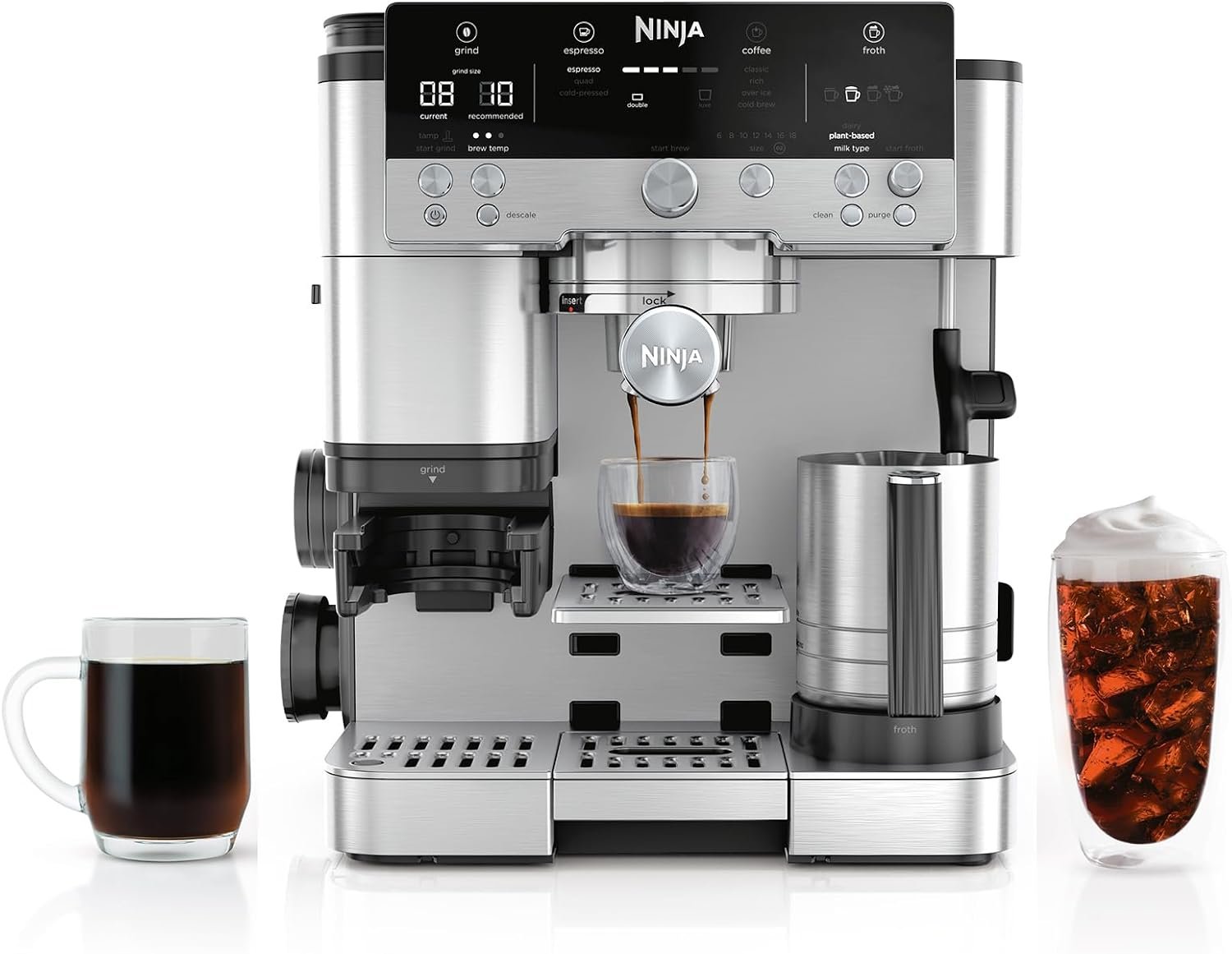
A useful middle ground for a household that wants espresso, regular coffee, and cold-brew options with help along the way.
Buy It IfYou want grind guidance and weight-based dosing while keeping a portafilter routine.
Skip It IfYou want fully automatic bean-to-cup brewing with no puck handling.
Ninja combines three brewing categories in the Premier: espresso, drip-style coffee, and cold brew. Its Barista Assist system provides grind recommendations, while a built-in scale handles weight-based dosing. The 25-setting grinder and hands-free milk programs make this the most appealing guided option in our selection for people who find the first steps of espresso intimidating.
Guidance does not remove every task. You still move the portafilter, prepare the espresso puck, and clean up afterward. That can be a satisfying compromise when one person wants a latte and another wants a larger coffee. Treat its cold-brew program as a machine-specific brewing method; it is not a promise that the result matches an overnight immersion recipe. Compare the actual drinks your household makes before choosing it over a dedicated espresso setup.
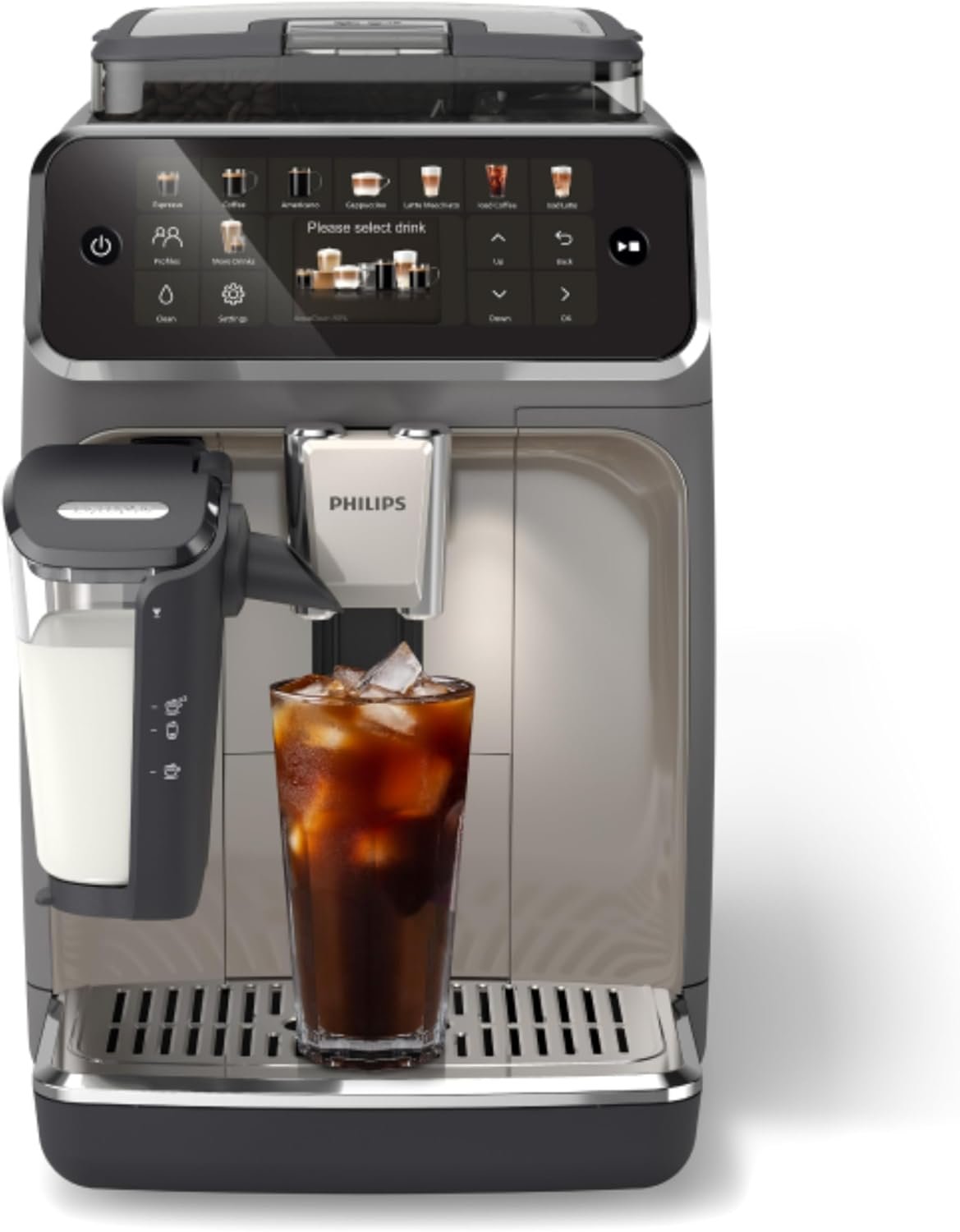
Our automatic-milk shortlist pick for buyers who want a broad drink menu without operating a steam wand.
Buy It IfYou prefer selecting a drink and letting the machine handle grinding, brewing, and milk.
Skip It IfYou want to experiment with baskets, tamping, and manual latte art.
Philips lists 20 hot and iced recipes for the 5500 series, paired with its LatteGo milk system. This is a different proposition from the Breville or Gaggia Classic: the machine performs the brewing steps internally, and milk preparation is part of the selected recipe. That makes it a practical direction when convenience matters more than controlling every stage of extraction.
The convenience comes with a cleaning routine, not an exemption from one. Allow time for the milk components, drip tray, grounds container, and brew group according to the manual. Also check the exact regional model on the linked listing before relying on profile counts or included accessories. For a closer look at this category, read our best super-automatic espresso machines guide.
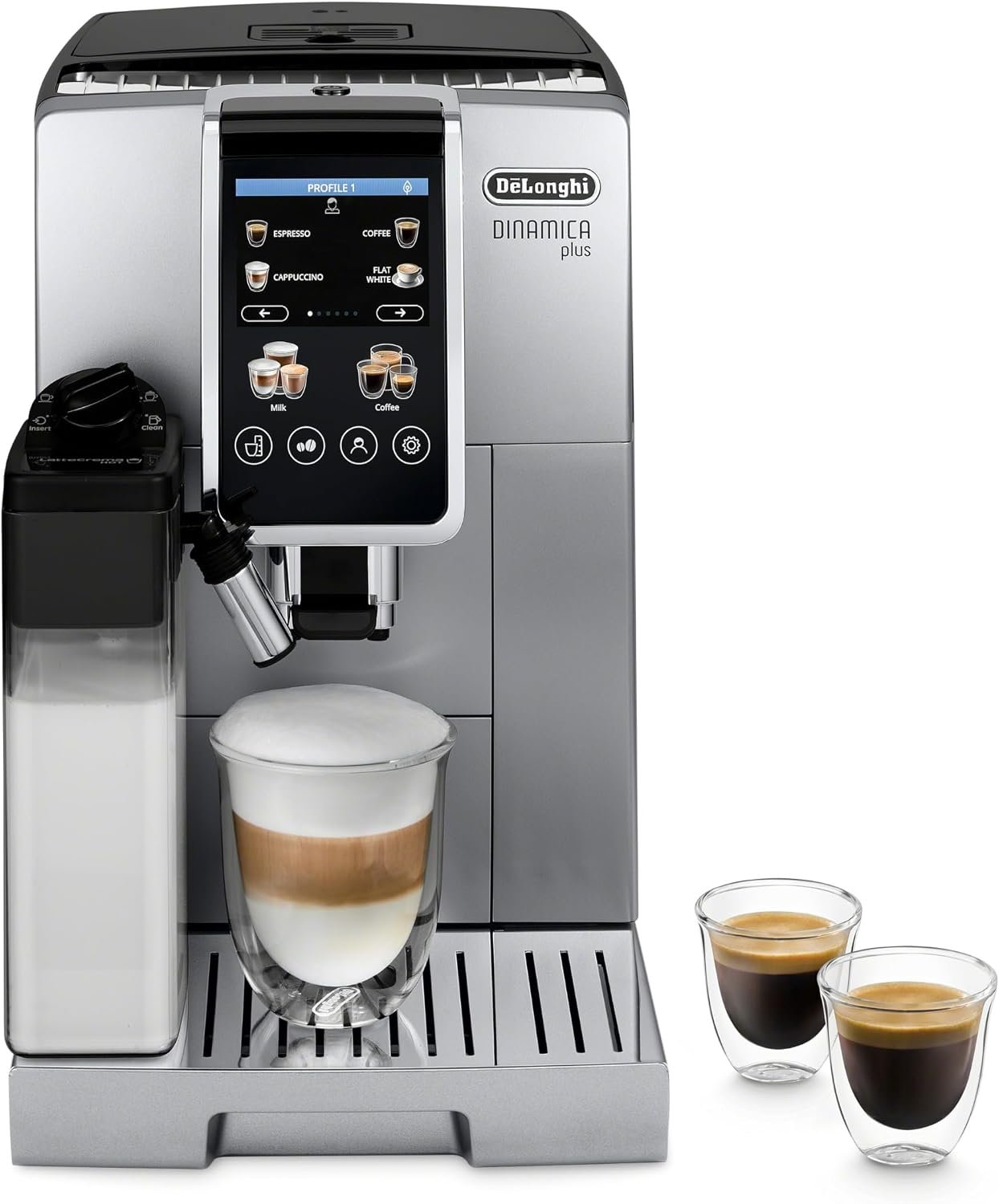
A strong shortlist option when several coffee drinkers want an automatic routine with personalized beverages.
Buy It IfYour household values saved preferences and automatic milk preparation.
Skip It IfYou want a simple manual machine with few menus or electronic settings.
The Dinamica Plus family focuses on automatic coffee preparation and drink personalization. De’Longhi describes adjustments to coffee aroma and quantity, with milk quantity customization on applicable models. In everyday terms, that is useful when one person prefers a shorter, stronger drink and another wants a milkier cup without rebuilding a recipe each morning.
Model identity matters here. The supplied product entry advertises 24-plus recipes and up to four user profiles, but older Dinamica Plus documentation describes different profile counts. This guide does not apply those numbers across the whole family. Check the model code and included milk system on the Amazon destination before buying. A long menu is only valuable if it covers drinks you actually use and you are comfortable maintaining the milk circuit.
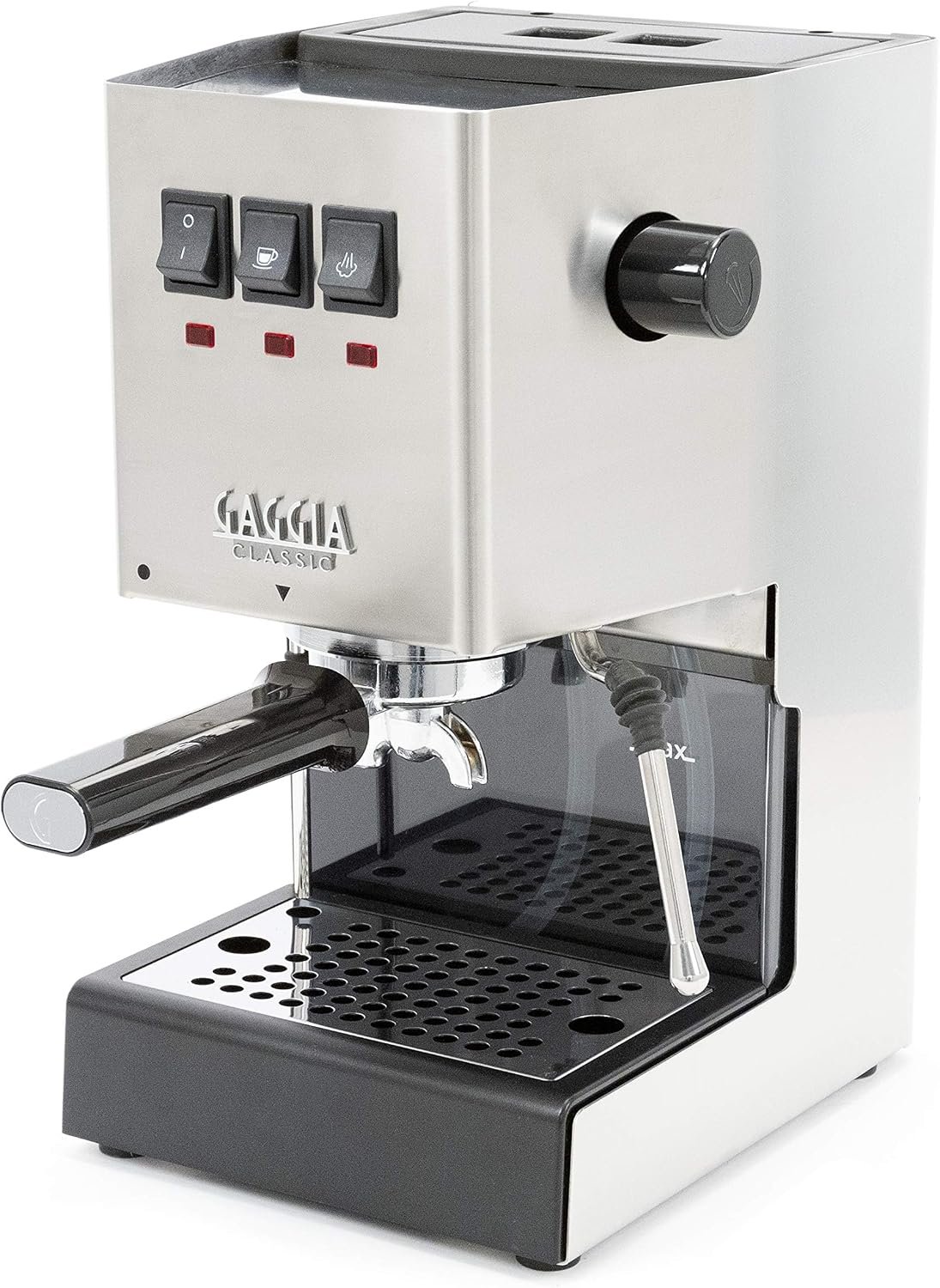
The most natural fit here for someone who wants a traditional machine and the freedom to choose a separate espresso grinder.
Buy It IfYou enjoy dialing in coffee and want a 58 mm portafilter system.
Skip It IfYou need automatic dosing, automatic milk drinks, or simultaneous brewing and steaming.
Gaggia’s E24 specification includes a brass boiler, a 58 mm stainless-steel portafilter, and a manual steam wand with a two-hole tip. Its mechanical controls keep the basic workflow straightforward. The appeal is the separation of responsibilities: choose a grinder for the coffee you drink, then work on dose, distribution, and extraction without depending on an integrated grinder.
The main compromise is its single-boiler design. Brewing and steaming use different operating conditions, so serving several milk drinks involves a sequence rather than parallel work. Budget for an espresso-capable grinder from the beginning; our budget espresso grinder guide is a useful next step. Buy the E24 revision described in the listing, since the Classic name also appears on older machines with different boiler specifications.
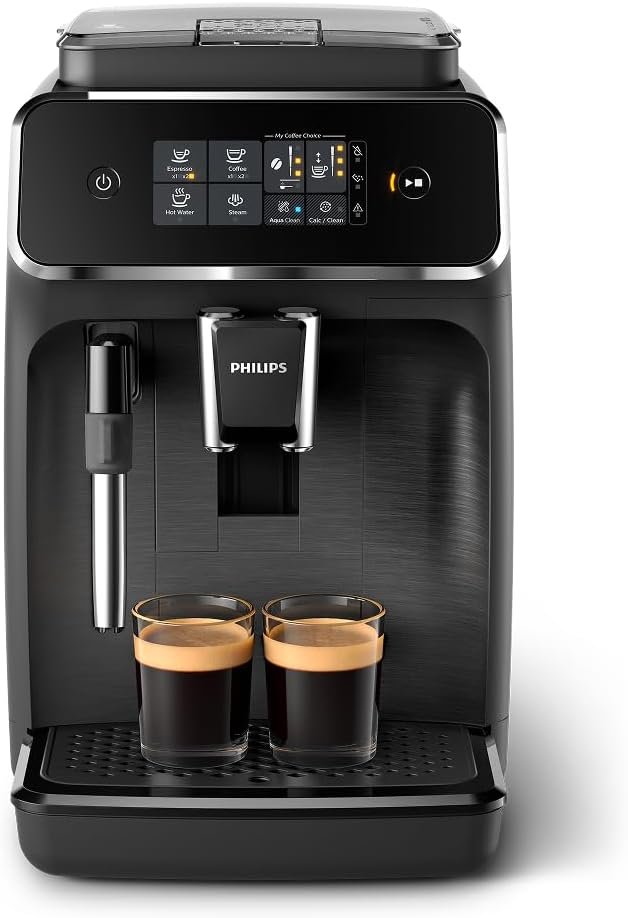
A sensible direction for someone who mostly drinks espresso or coffee and only occasionally wants frothed milk.
Buy It IfYou want automatic coffee preparation with a short, approachable drink menu.
Skip It IfYou expect the machine to prepare a complete latte automatically.
The EP2220/14 offers two coffee choices and a Classic Milk Frother, rather than the LatteGo system used by the 5500 above. Philips lists a ceramic grinder, a touch display, and strength and quantity adjustment through My Coffee Choice. That combination suits buyers who want to simplify the brewing stage without choosing from a large catalogue of drink presets.
The key distinction is milk. The coffee preparation is automatic, but you froth milk separately and assemble the drink yourself. If espresso and ordinary coffee dominate your routine, that may be an acceptable trade. If every order is a latte, compare the total effort with the 5500 before deciding. Match any replacement espresso machine water filter to the exact model rather than assuming filters fit across brands.
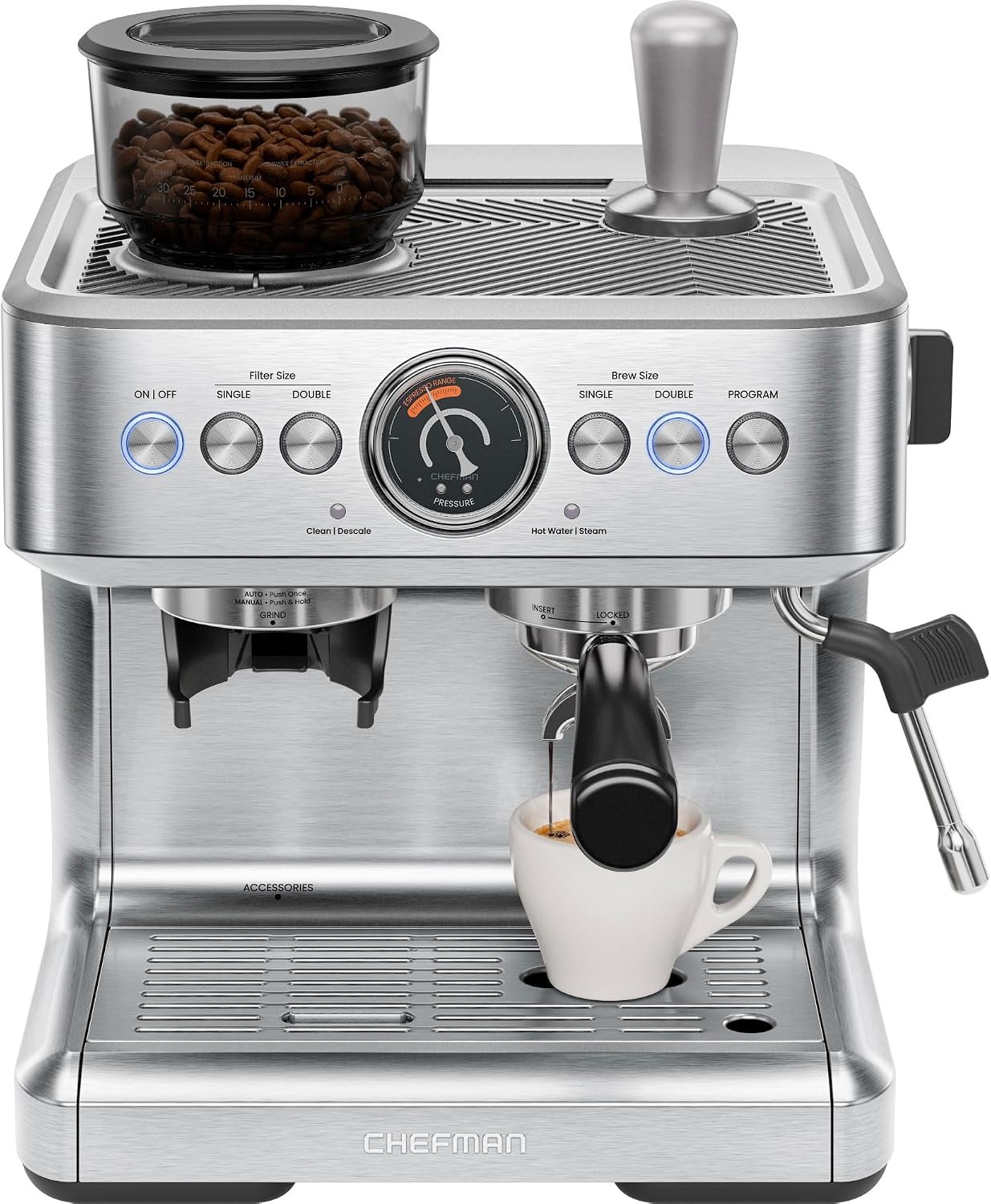
Worth considering when a built-in grinder and fewer water-tank refills matter more than having the smallest machine.
Buy It IfYou want adjustable shot settings and a large reservoir in an integrated setup.
Skip It IfYou need one-touch milk drinks or have tight overhead clearance.
Chefman lists a 30-setting conical burr grinder, adjustable shot temperature and volume, and a removable 3-liter reservoir for the Crema Supreme. These are useful conveniences for a home setup where several drinks are made over the course of the day. The steam wand keeps milk texture under your control, but it also makes practice part of the purchase.
A large tank does not establish café-level output or faster steaming. Treat this as a home machine and measure the space needed for filling, cleaning, and moving the wand. Chefman’s product page contains differing power figures, so this comparison avoids treating either figure as settled. Confirm the exact RJ54-G-SS listing and included accessories. It is also a separate model from the Crema Deluxe; do not assume the Supreme shares that machine’s boiler arrangement.
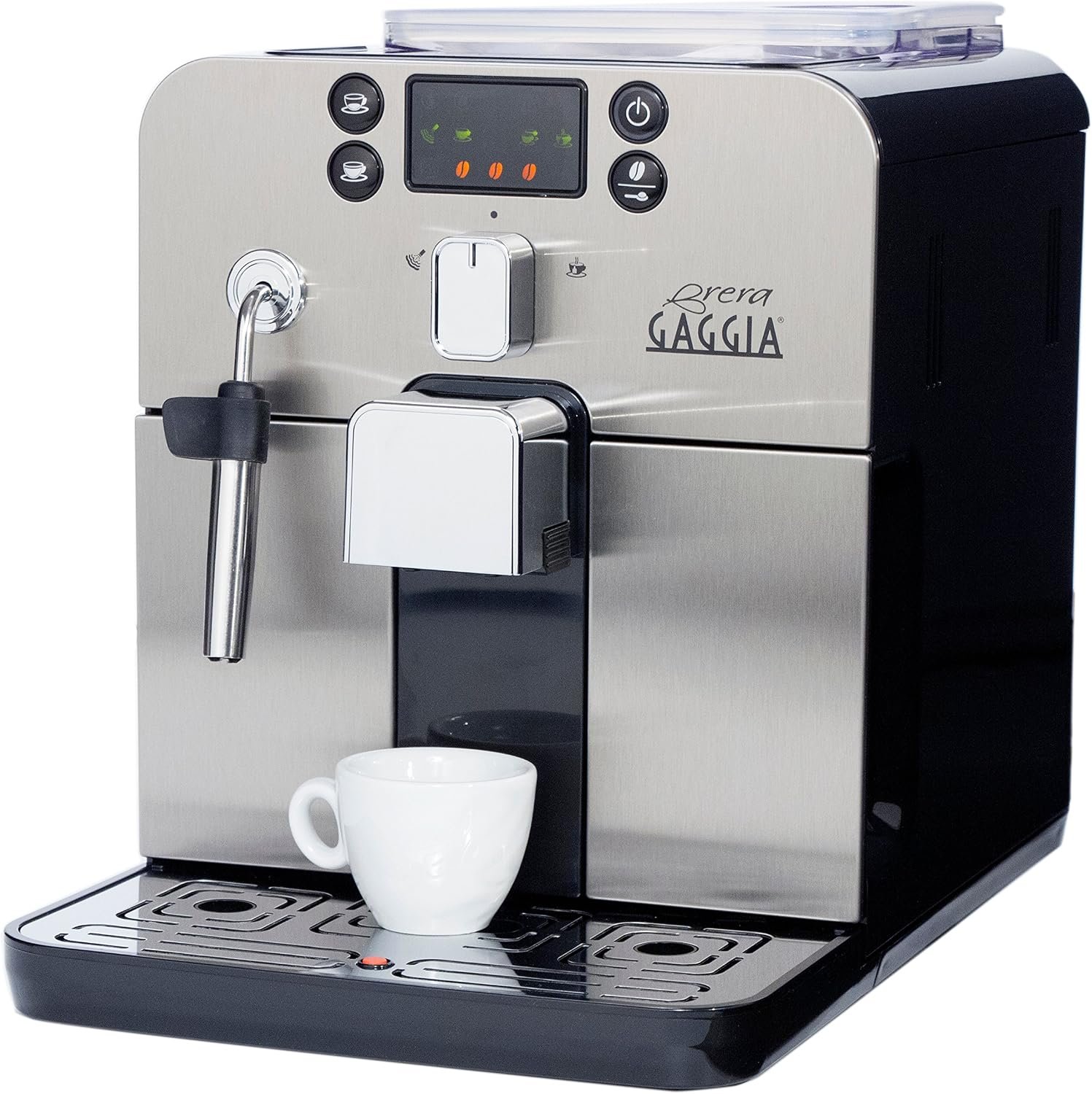
An approachable automatic option for buyers who value front-access drawers and a straightforward coffee routine.
Buy It IfYou want automated coffee brewing and convenient access to the water and grounds drawers.
Skip It IfYou want saved household profiles or one-touch milk recipes.
The Brera combines internal coffee preparation with a Pannarello frothing wand. Gaggia highlights its front-loading water reservoir and used-coffee drawer, which can make routine access less awkward on a kitchen counter. A ceramic grinder handles the beans, while the interface uses buttons and symbols rather than a large recipe touchscreen.
Choose it for that focused routine, not because a smaller-looking machine automatically solves every space problem. Leave room above for beans and around the machine for service access. The wand assists frothing, but you still handle the milk container and combine milk with the coffee. If you enjoy a simple espresso first and an occasional cappuccino later, that balance makes sense. Households wanting fully automatic milk drinks should compare the Philips 5500 and Dinamica Plus instead.
Coffee preparationAutomatic
Milk systemPannarello wand
Daily accessFront-loading drawers
What We Like
Front access to water and grounds
Integrated ceramic grinder
Straightforward coffee-focused controls
What to Consider
Milk drinks are not one-touch
Needs overhead access for beans
Limited recipe convenience versus larger automatics
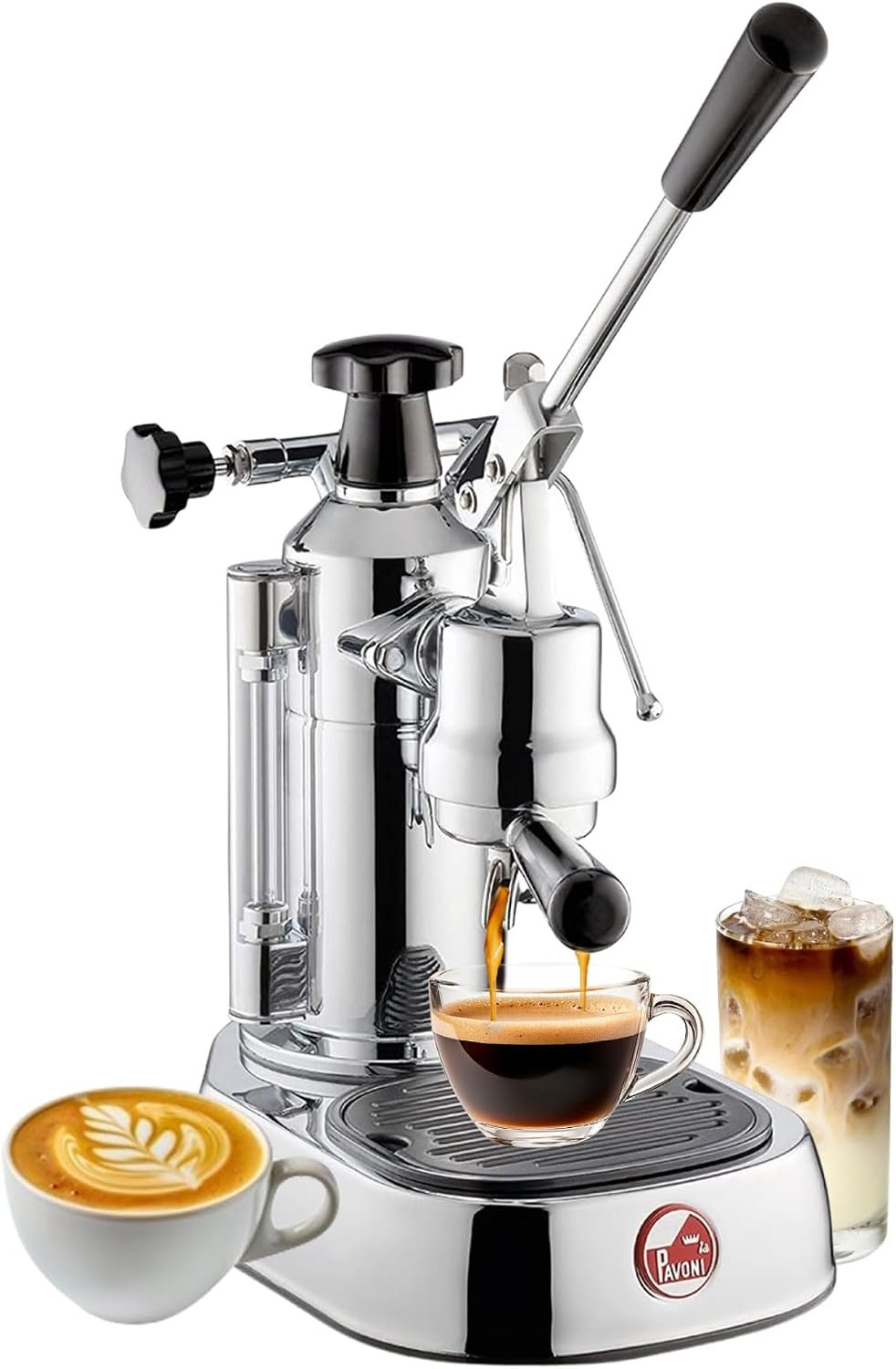
The specialist choice for someone who wants the act of pulling espresso to be part of the attraction.
Buy It IfYou enjoy a deliberate brewing ritual and want to develop manual-lever technique.
Skip It IfYou need a quick, repeatable milk-drink queue with minimal attention.
The Europiccola takes a different route from every push-button brewing system here: the operator applies brewing pressure through a lever. La Pavoni’s current Europiccola documentation describes a boiler-based machine with a steam wand and manual pressure control. The attraction is direct participation in extraction, rather than a screen that chooses the process for you.
That freedom asks for patience. Grind preparation, lever technique, and temperature management become part of your routine, so this is an enthusiast recommendation rather than our default first purchase. The supplied affiliate entry is EPC-8; current manufacturer naming and regional specifications differ, so confirm the US voltage and exact version before ordering. A separate espresso grinder is essential to the intended workflow. Explore our manual lever espresso machine guide before committing to this style.
Four Decisions That Matter More Than a Pressure Number
How Much Brewing Do You Want to Do?
Choose a traditional machine if you enjoy grinding, distributing, and tamping. Choose guided brewing if you want help with dosing and milk. Choose a fully automatic machine when fewer manual steps matter most. Our super-automatic espresso machine overview explains the differences.
Built-In or Separate Grinder?
An integrated grinder keeps the setup together. A separate grinder can be selected and upgraded independently, but it adds cost and counter space. With the Classic E24 or Europiccola, include it in your budget from the start. Consistent espresso tamping technique also matters on portafilter machines.
Mostly Espresso or Mostly Milk Drinks?
For frequent lattes, compare manual, assisted, and automatic milk preparation before looking at preset counts. A single boiler requires brewing and steaming in sequence. If serving several milk drinks quickly is a priority, explore dual-boiler espresso machines as a separate category; a large reservoir alone does not give that capability.
Will the Whole Setup Fit Your Kitchen?
Measure working space, not just the closed machine. Allow access for filling beans, removing water and grounds containers, moving the wand, and opening service doors. Plan for cleaning supplies and model-compatible filters. Our water filtration for coffee guide covers a maintenance decision that is easy to overlook.
Quick Answers
Common Questions Before Buying
What Is the Best Espresso Machine for a Beginner?
Among these nine, choose the Breville Barista Express if you want to learn a traditional grinder-and-portafilter routine. Choose the Ninja Luxe Café Premier if you want brewing guidance, or Philips 5500 LatteGo if automatic milk drinks matter more than hands-on technique. The best beginner choice depends on how much work you want to do.
What Is the Difference Between Semi-Automatic and Super-Automatic?
A semi-automatic espresso machine generally asks you to prepare coffee in a portafilter and manage more of the brewing routine. A super-automatic grinds and brews internally. Milk can still be manual on a super-automatic, as with the Philips 2200 and Gaggia Brera, so check the milk system separately.
Is a 20-Bar Espresso Machine Better Than a 15-Bar Machine?
Not simply because of the number. A pump’s advertised maximum pressure is different from pressure at the coffee during brewing. For example, Breville specifies a 15-bar pump with 9-bar extraction for the Barista Express. Compare brewing control, grinder suitability, and daily workflow instead of ranking machines by the largest pump number.
Do All Nine Espresso Machines Include a Grinder?
No. The Gaggia Classic Pro E24 and La Pavoni Europiccola require a separate grinder for a fresh-bean setup. The other seven selections have integrated grinders. Include the grinder, useful accessories, and cleaning supplies when comparing the total cost of a setup.
Which Machine Is Best for Lattes and Cappuccinos?
For automatic milk preparation, begin with Philips 5500 LatteGo or De’Longhi Dinamica Plus. Ninja Luxe Café Premier offers assisted frothing alongside a portafilter workflow. For learning manual milk texture, compare the Breville Barista Express and Gaggia Classic Pro E24. Milk results also depend on the milk used and the preparation technique.
Can These Home Machines Replace a Commercial Espresso Machine?
Do not assume so. A large tank or a commercial-style portafilter does not establish suitability for continuous café service. For business use, check manufacturer-approved duty, warranty terms, electrical requirements, and service support. Our espresso machines for small coffee shops guide addresses a different buying situation.
How Often Should I Clean and Descale My Espresso Machine?
Follow the instructions for the exact model and your water conditions. Milk components, trays, and used-coffee containers need routine attention; descaling intervals depend on the manufacturer’s guidance, water hardness, and filter use. An automatic rinse does not replace every cleaning task, and filters do not make all maintenance unnecessary.
Does a 58 mm Portafilter Fit Every Espresso Machine?
No. Diameter is only one part of compatibility; the locking ears, basket fit, and group-head design also matter. Gaggia Classic E24 uses a 58 mm format, while the Barista Express uses 54 mm. Check the exact model before ordering a replacement espresso portafilter or tamper.
Recommended next
Continue your research
Compare automatic machines, choose a grinder, or learn the brewing routine with these related guides.