5 Best Office Coffee Machines for Different Workplaces (2026)Skip to the article
The 5 Best Office Coffee Machines of 2026
Office coffee is a workflow problem before it is a feature problem. We compare five machines for small teams, meeting rooms, and busy breakrooms by drink variety, batch capacity, refill burden, cleaning, and the compromise each one asks the workplace to accept.
John CrestaniEspresso Equipment Specialist
Last Updated
The short version
Which office coffee machine should you buy?
For a small office that wants one-touch variety, the Philips 5500 Series LatteGo is our research-based starting pick. Choose the Bosch 800 Series if you want a more premium shared interface and wider drink menu. For mostly black coffee, the SYBO thermal-carafe brewer is better for meetings, the VEVOR 12-cup commercial drip format targets value, and the plumbed BUNN CWTF15-3 makes the most sense when peak-volume brewing matters. If you only want bean-to-cup options, compare our best super-automatic espresso machines.
Testing transparency: This is a research-based comparison of manufacturer specifications and office-use tradeoffs, not a hands-on laboratory test. Recommendations apply to the five models listed here. Office suitability depends on peak demand, access to water, cleaning ownership, and the exact product configuration; model-specific uncertainties are called out in the reviews.
How we evaluated
A good office pick needs more than a long drink menu
This comparison weighs manufacturer specifications against four workplace criteria: peak-time throughput, ease of use, serving format, and ownership friction. A consumer bean-to-cup machine can be excellent for six people and frustrating for sixty; a commercial batch brewer can be efficient for a crowd and excessive for a tiny studio. For more batch-focused options, see our commercial coffee brewer guide. The recommendations are editorial judgments, not Amazon ratings or laboratory scores.
Peak-time throughputHow quickly can the machine serve the 9 a.m. rush or meeting break?
Shared-workflow simplicityCan a new employee make coffee without training or repeated troubleshooting?
Serving formatDo you need individualized drinks, a thermal pot, or several batches held ready?
Ownership frictionConsider refilling, milk cleaning, grounds disposal, water treatment, counter space, and who owns maintenance.
Office coffee machines compared
Amazon links in this table are paid links. On a phone, swipe sideways to see every column. Prices and availability change frequently, so this table intentionally does not display them. Confirm the exact SKU and electrical/water requirements before ordering commercial equipment.
Five office coffee machines: workplace fit, brewing style, capacity, and main tradeoff
Espresso Mastered:The EspressoFinder.com Guide for Enthusiasts and Professionals
Build a better coffee station, not just a more expensive one.
Use the same buying framework to compare grinders, espresso systems, batch brewers, cleaning needs, and long-term ownership costs before you commit.
Separate useful specifications from marketing noise
Match drink workflow and capacity to the people actually using the machine
Spot hidden cleaning, filtration, accessory, and refill costs
Use a repeatable checklist for home or workplace coffee equipment
Free digital guide · Delivered by email · Privacy Policy
Our five office picks, with the tradeoffs explained
There is no universal office winner. A six-person design studio and a 100-person operations floor have different bottlenecks. The best choice is the machine that matches your peak demand and maintenance tolerance—not the one with the longest specification sheet.
Best overall for small offices
1. Philips 5500 Series LatteGo
A low-friction bean-to-cup choice for teams that want espresso, coffee, and milk drinks without assigning someone barista duty.
Buy it ifYou want one-touch drink variety, user profiles, and a milk system that is quick to rinse.
Skip it ifYour office has heavy back-to-back demand that will overwhelm a consumer-size water tank, bean hopper, or waste bin.
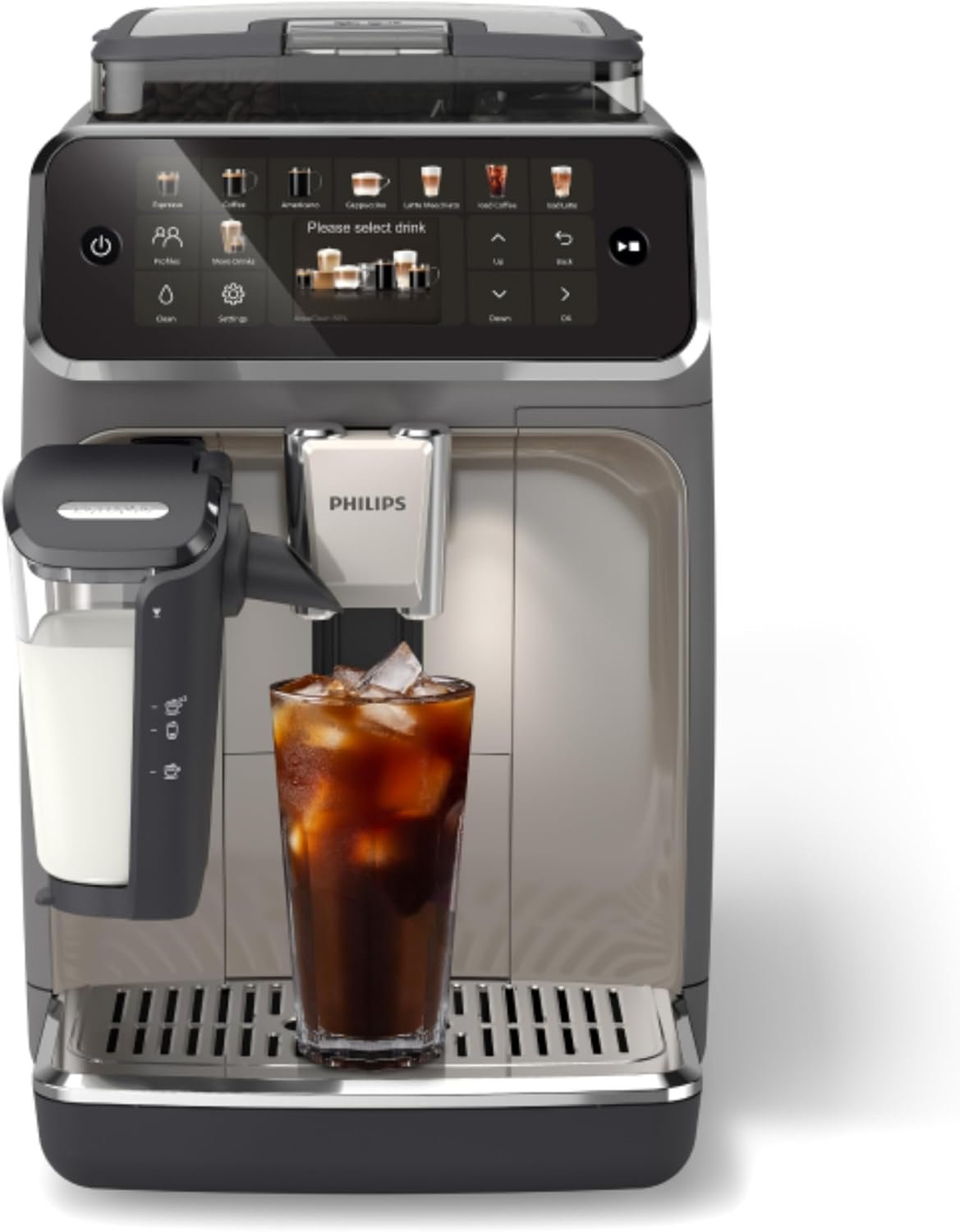
The Philips 5500 makes the strongest case when convenience matters more than café-style manual control. Philips lists 20 hot and iced recipes, a built-in grinder, four user profiles plus guest mode, and the LatteGo milk system. That combination is well suited to a smaller office where different people want different drinks but nobody wants to learn dosing, tamping, or milk-texturing technique.
Its limitation is capacity. Philips lists a 1.8-liter water tank, 275-gram bean container, and a waste container sized for 12 servings. Those numbers are practical for a small team, but a busy floor can turn refilling and emptying into a recurring job. If your main need is dozens of plain coffees around the same break window, a batch brewer below is the better tool.
Drink menu20 pre-programmed recipes
Water tank1.8 L / 60.87 oz listed
Profiles4 + guest
What we like
One-touch coffee and milk drinks
LatteGo has only two milk-system parts
Profiles reduce repeated setup for regular users
What to consider
Consumer-size tank and waste capacity
Milk system still needs routine cleaning
More complex than a simple batch brewer
Specification source reviewed: Philips’ official Series 5500 product documentation. Editorial conclusions are our own.
A premium office-friendly bean-to-cup system with a large drink menu and a touchscreen designed for people who do not want to memorize machine settings.
Buy it ifYou want a polished shared machine with broad drink choice, saved favorites, and a coffee-pot function on supported 800 Series models.
Skip it ifBudget, simple servicing, or high-volume black coffee matters more than a long specialty-drink menu.
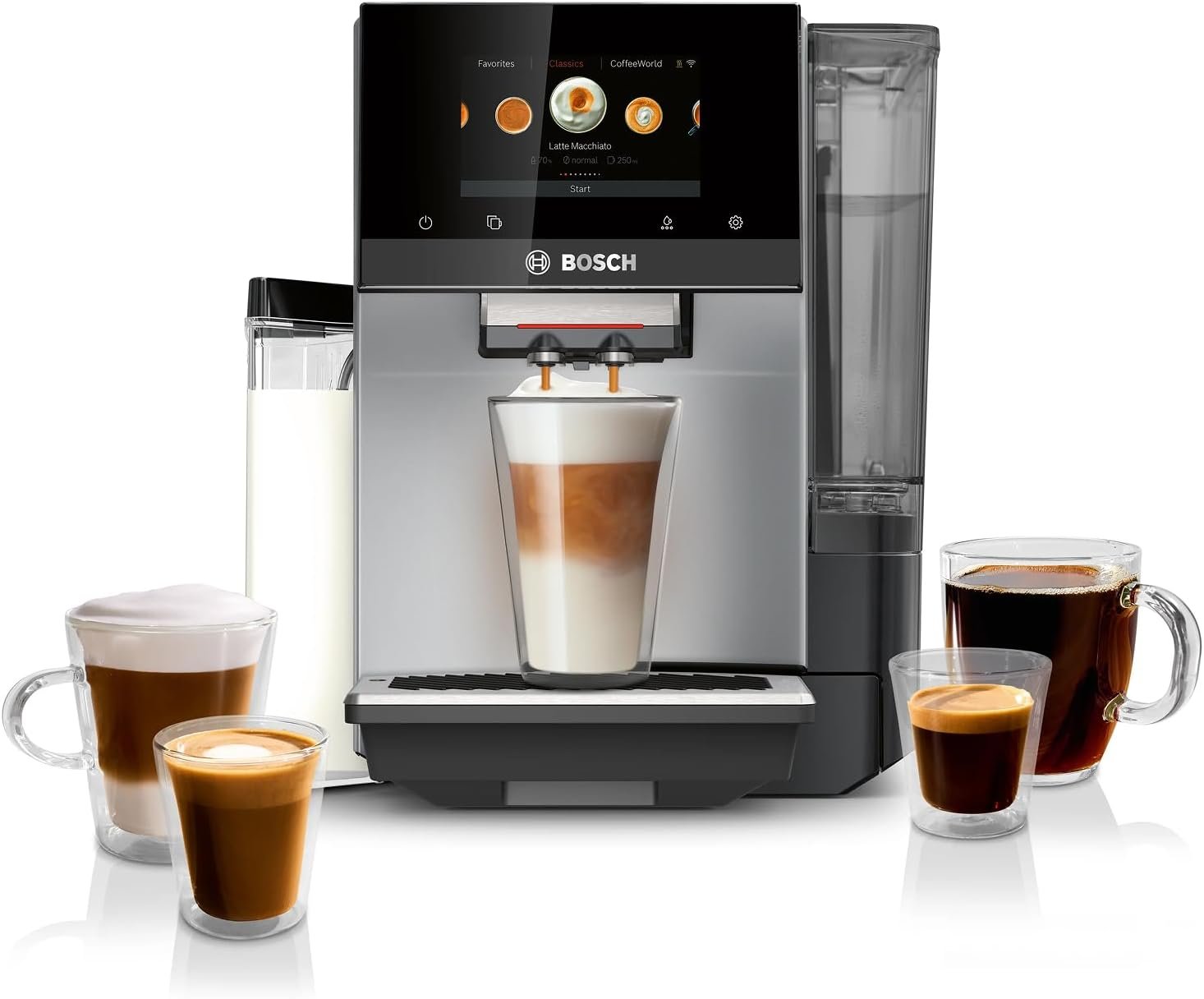
Bosch positions the 800 Series VeroCafe as a fully automatic system rather than a hobbyist espresso machine. Current U.S. 800 Series documentation lists 35-plus drink options, a 5-inch touchscreen, ceramic grinders, and model-dependent milk systems. One metallic-silver 800 Series model also lists up to 20 favorites and a coffee-pot function up to 25.4 ounces, which can be useful when a few coworkers want coffee at the same time.
The catch is model variation. Bosch sells several 800 Series configurations with different milk setups and features, so the exact Amazon destination needs to be checked before purchase. It is also an expensive way to solve a basic “we need a pot of coffee” problem. This pick makes more sense for a smaller professional office that values drink choice and presentation.
A straightforward commercial-style brewer for offices that want a full batch ready to move into a meeting room without keeping it on a hot plate.
Buy it ifYour team mainly drinks regular coffee and you want a thermal carafe that can leave the coffee station after brewing.
Skip it ifCoworkers expect cappuccinos, lattes, or individualized bean-to-cup drinks.
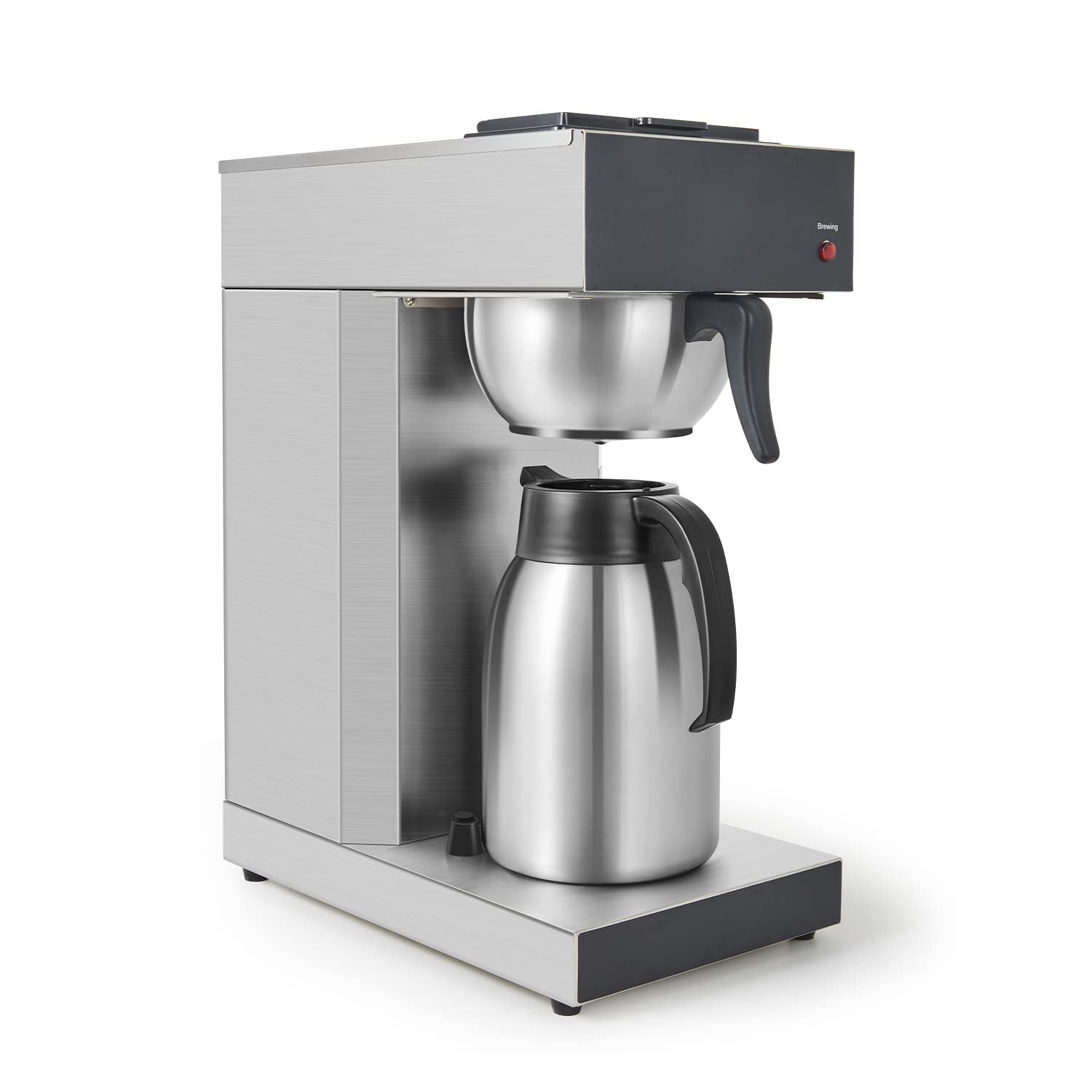
The SYBO thermal-carafe setup solves a common office problem: brewing one shared batch and keeping it useful without leaving glass on a warmer. SYBO lists a 12-cup cycle, roughly 10-minute brew time, stainless-steel construction, and an insulated airpot/thermal carafe. The carafe can be carried to a conference room, reception area, or catered meeting while the brewer stays in the breakroom.
This is intentionally simple. You still need ground coffee, filters, water filling, and someone to start the batch. There are no user profiles or specialty drinks. Its height is also worth measuring before purchase; SYBO lists the AirPot version at about 23 inches high. For teams that mostly want dependable filter coffee, that simplicity can be an advantage rather than a missing feature.
Batch size12 cups listed
Brew timeAbout 10 minutes listed
ServerInsulated thermal AirPot/carafe
What we like
Thermal serving avoids a hot plate at the table
Simple controls for shared use
Commercial-style stainless-steel build
What to consider
No espresso or milk drinks
Manual batch preparation
Tall AirPot configuration needs clearance
Specification source reviewed: SYBO’s official 12-Cup Drip Coffee Maker with AirPot documentation.
A budget-oriented commercial drip format for offices that value fast, familiar batch coffee more than specialty drinks.
Buy it ifYou want a simple 12-cup brewer for repeated pots and are comfortable checking the exact carafe and warmer configuration before ordering.
Skip it ifYou need a plumbed brewer, premium service support, or one-touch espresso and milk drinks.
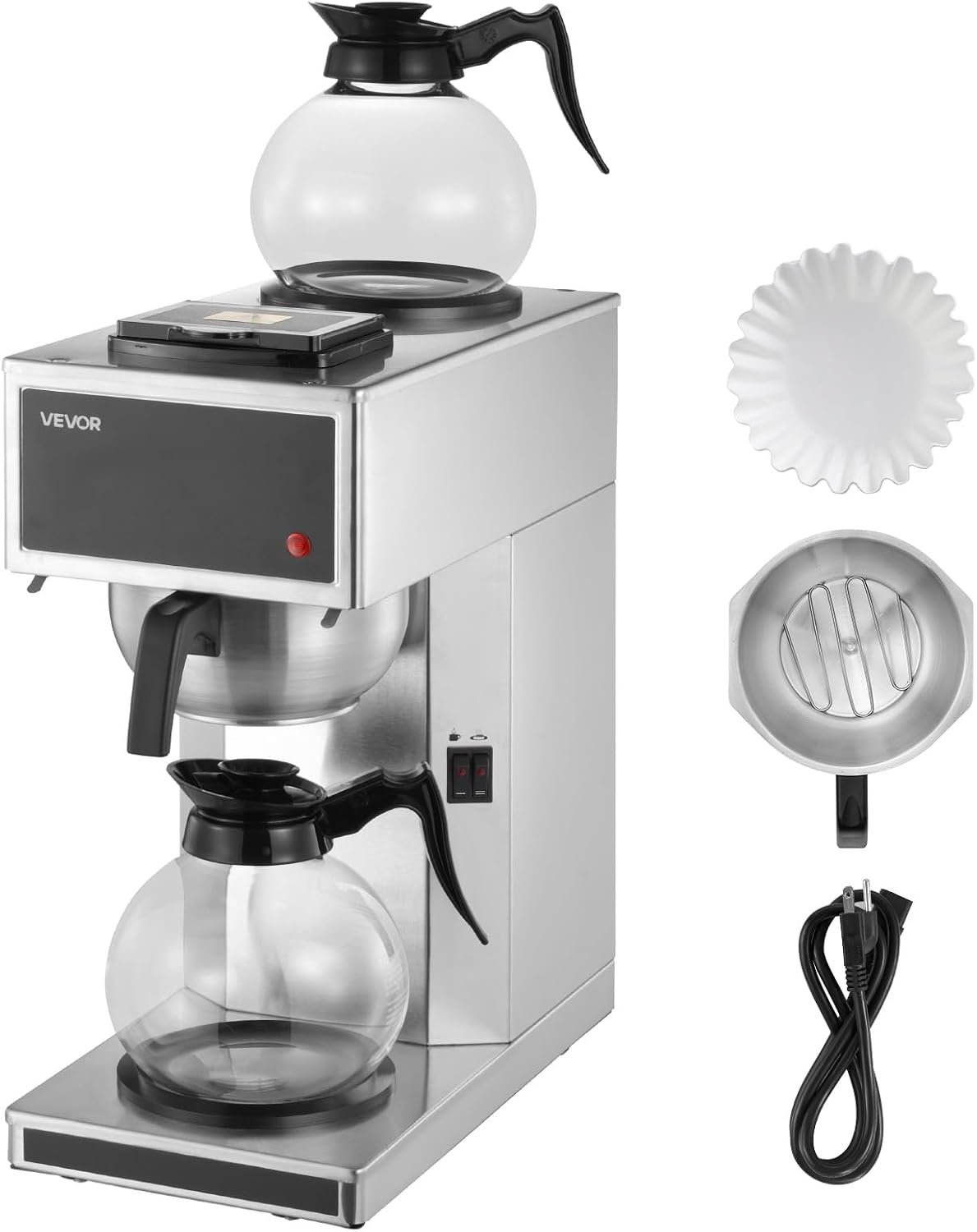
VEVOR’s commercial drip line is built around the familiar office routine: load grounds, add water, brew a pot, and keep another serving position ready. Current 12-cup VEVOR variants use stainless-steel bodies and simple mechanical controls, and several are marketed specifically for offices, restaurants, and coffee shops. That makes this the value-focused pick when the job is batch coffee rather than drink customization.
The important caveat is configuration. VEVOR sells visually similar 12-cup brewers with different numbers of carafes, warmer plates, and thermal-server options. Because the product name in the affiliate sheet is broad, verify the Amazon page against the carafe count, dimensions, and warmer arrangement you need. Do not assume one VEVOR 12-cup specification applies to every variant.
Brewing styleCommercial drip / batch
Nominal batch12 cups
ControlsSimple mechanical switches on current variants
What we like
Straightforward office workflow
Commercial-style stainless body
Lower-complexity alternative to bean-to-cup systems
What to consider
Exact configuration varies by listing
Glass-carafe versions can cook coffee if held too long
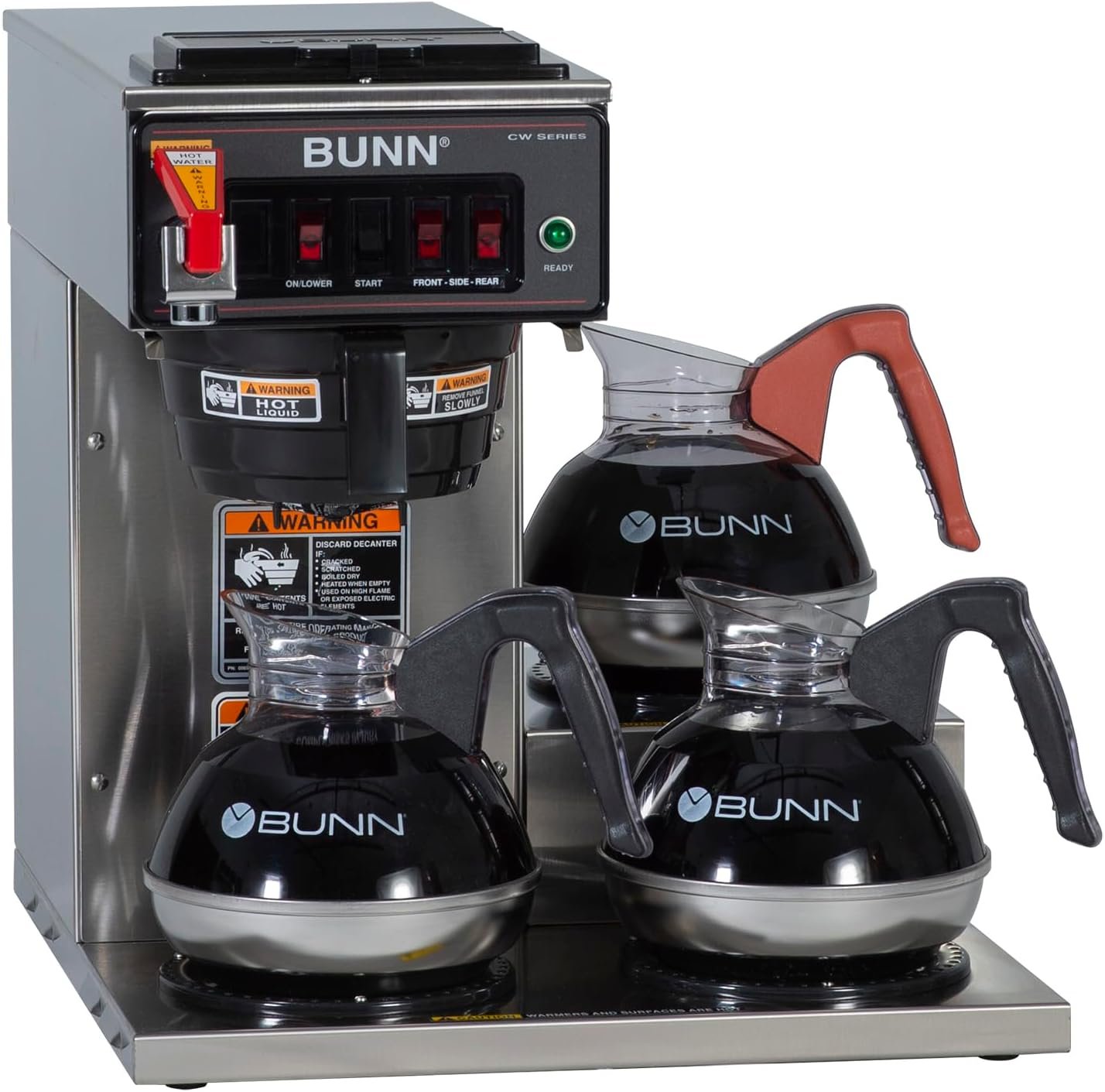
A plumbed commercial brewer for offices where repeated pots and peak-time throughput matter more than countertop simplicity.
Buy it ifYour breakroom can support a water connection and you need an automatic commercial brewer with three lower warmers.
Skip it ifYou rent a small office, cannot add a water line, or want a compact plug-in machine with no installation planning.
The BUNN CWTF15-3 is the most infrastructure-heavy option here, but that is also why it fits busier offices. BUNN lists it as a 12-cup automatic commercial brewer with three lower warmers, a plumbed water connection, and a pourover feature. Once installed, staff do not have to carry measured reservoirs of water to the machine for every batch.
Installation and footprint are the real tradeoffs. BUNN lists the machine at 17.3 inches high, 16.4 inches wide, and 21.4 inches deep, with a 120-volt, 1670-watt electrical configuration and 20–90 PSI water-pressure range. Servers are sold separately on the official product page. This is the pick for an office that can support commercial equipment—not a casual desk-side coffee maker.
Four decisions that matter more than the machine’s feature count
How many people hit the machine at once?
Size for peak demand, not just headcount. A small office can use a one-touch machine comfortably; a larger team may need batch brewing or multiple serving points. Our office coffee maker guide covers additional formats.
Bean-to-cup or batch coffee?
Bean-to-cup gives each person a fresh customized drink but serves people sequentially. Batch brewers trade customization for speed when many coworkers want coffee within the same window.
Refill tank or plumbed water?
Removable tanks simplify installation but create refill chores. Plumbed commercial brewers reduce that work but need suitable water access and installation. If scale is a concern, review our coffee water-filtration guide.
Who cleans the milk and coffee path?
The easiest machine on day one can become the worst office machine if nobody owns cleaning. Assign a simple routine, follow the manufacturer’s schedule, and favor designs whose removable parts match the time your team will actually spend maintaining them.
Quick answers
Common questions before buying for an office
What type of coffee machine is best for an office?
For a smaller team that wants espresso, coffee, and milk drinks, a fully automatic bean-to-cup machine is usually the easiest shared format. For bigger break-time surges or mostly black-coffee drinkers, a commercial batch brewer is often faster and easier to support.
Are super-automatic espresso machines good for offices?
Yes, when demand fits the machine’s tank, hopper, waste bin, and cleaning routine. They remove grinding, dosing, and tamping from the user workflow. For more choices in that category, see our rated super-automatic espresso machine guide.
Is a thermal carafe better than a glass pot on a warmer?
A thermal carafe is useful when coffee needs to move to a meeting room or sit without direct heat. A glass pot on a warmer is easier to see and refill, but long holding times can hurt flavor. Brew quantities that your team will actually finish.
Should an office coffee machine be plumbed into the water line?
Plumbing makes sense when repeated refilling is a real bottleneck and the office can support installation. A refillable machine is simpler for leased spaces or lower-volume teams. Check the brewer’s pressure, fitting, electrical, and filtration requirements before installation.
How often should an office coffee machine be cleaned?
Follow the manufacturer’s cleaning and descaling instructions for the exact model and your water conditions. Milk-contact parts usually need especially prompt cleaning. Assign responsibility instead of relying on an unowned shared-kitchen routine.
Recommended next
Continue your research
Continue with office, commercial-brewing, and water-quality guides that help you size and maintain a workplace coffee station.