5 Best Restaurant Coffee Makers for Service Workflows (2026)Skip to the article
5 Best Restaurant Coffee Makers for Different Service Styles (2026)
A restaurant coffee maker has to match the way your staff actually serves coffee. We compare five commercial options by water connection, batch format, holding method, counter space, and the operational compromise each one brings.
John CrestaniEspresso Equipment Specialist
Last Updated
The short version
Which restaurant coffee maker should you buy?
Among these five options, the BUNN CWTF15-3 is our research-based starting pick for a restaurant with an active water connection and steady decanter service. Choose the SYBO SF-CB-2GA when pour-over flexibility matters, or the SYBO thermal-carafe brewer when coffee may wait away from a warming plate. The VEVOR 12-cup model suits value-focused multi-pot service, while the 100-cup urn fits buffets and catered events better than table-by-table refills.
Testing transparency: This is a research-based comparison of the supplied product listings, manufacturer documentation where available, and restaurant-service tradeoffs. It is not a hands-on laboratory test, a durability study, or an Amazon customer-rating ranking. Confirm the destination listing, electrical requirements, water connection, included servers, warranty, and local sanitation requirements before ordering.
How we evaluated
Restaurant coffee equipment should fit the service plan
We compared the listed configurations against four operating questions: how quickly staff can start the next batch, how coffee is held before service, what utilities the machine needs, and how easy it is to fit into an existing station. For a wider view of batch-brewing formats, see our commercial coffee brewer guide and commercial coffee brewer machine overview.
Service workflowCan staff start a batch quickly during breakfast, lunch, or banquet demand?
Holding methodDoes the brewer use heated glass decanters, an insulated carafe, or a bulk urn?
Utilities and placementDoes the station need plumbing, a dedicated circuit, extra vertical clearance, or several warmer positions?
Ownership frictionConsider cleaning, replacement servers, filters, parts access, and model-specific documentation.
Restaurant coffee makers compared
Amazon links in this table are paid links. On a phone, swipe sideways to see every column. Prices and availability change frequently, so this table intentionally does not display them.
Five restaurant coffee makers: service fit, water feed, serving format, and main tradeoff
Espresso Mastered:The EspressoFinder.com Guide for Enthusiasts and Professionals
Choose smarter. Brew better from day one.
Pressure numbers and long feature lists can make almost every machine look impressive. This practical guide shows you what actually affects taste, workflow, and long-term value—before you spend your money.
Separate useful specifications from marketing noise
Match the grinder, milk system, and learning curve to your routine
Spot hidden accessory, cleaning, and upgrade costs
Use a clear checklist to compare any espresso machine
Free digital guide · Delivered by email · Privacy Policy
Five restaurant coffee makers, with the tradeoffs explained
A dependable choice is not simply the machine with the largest advertised capacity. The right brewer is the one your staff can fill, brew, hold, serve, and clean consistently during real service.
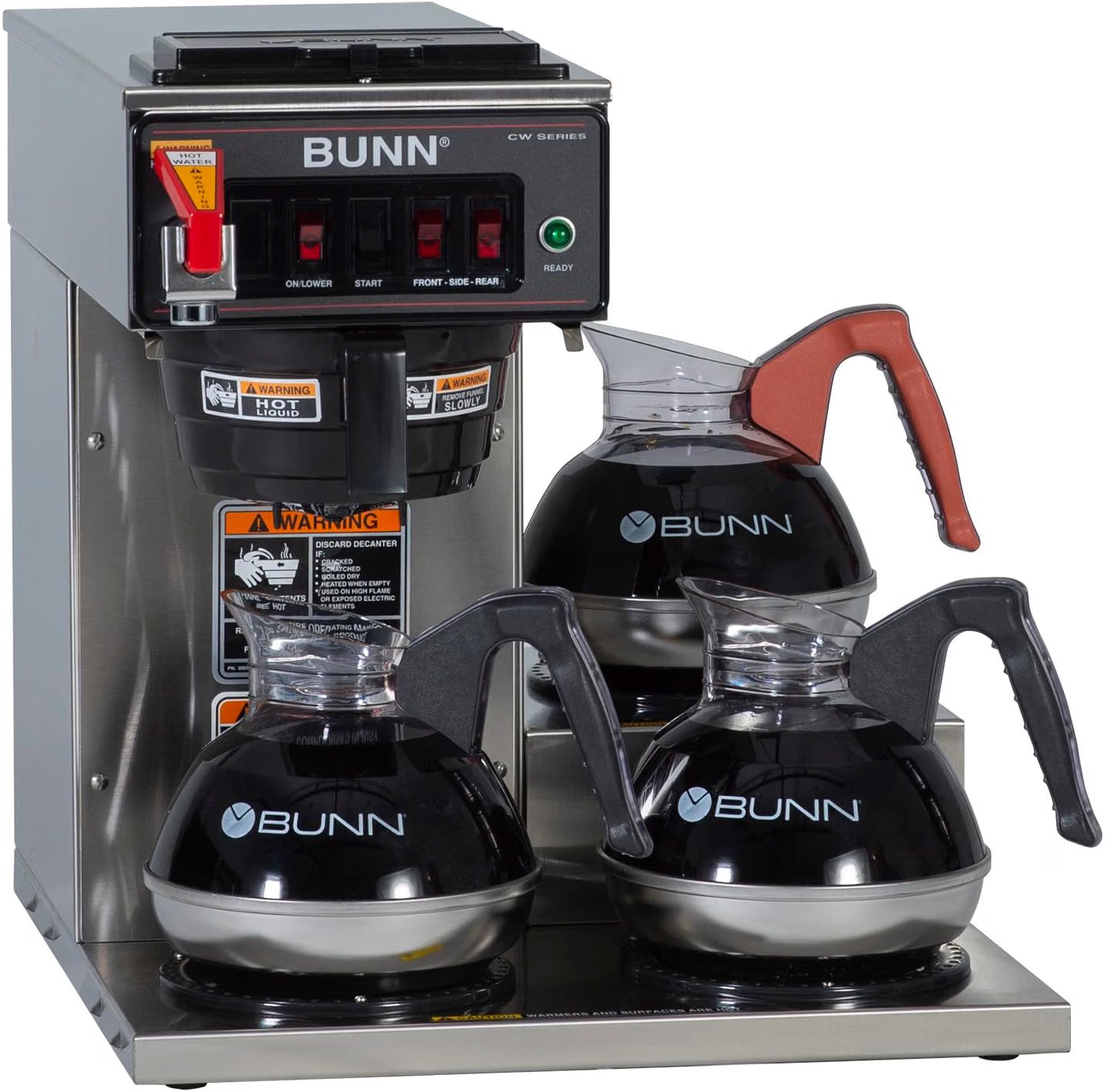
A practical starting point for a restaurant that serves regular and decaf coffee throughout the day and can support a plumbed commercial brewer.
Buy it ifYou need automatic refilling, several warm decanters, and a familiar service workflow.
Skip it ifYou cannot add the required water connection or want coffee held without heated plates.
The CWTF15-3 format is designed for a busy but conventional coffee station: brew one 12-cup batch while the lower warmers keep other decanters ready. BUNN’s current CWTF15-3L documentation lists an automatic brewer with three lower warmers, a pour-over feature, and a hot-water faucet that requires active plumbing. That combination fits diners, breakfast restaurants, and banquet prep areas where refilling a reservoir by hand would interrupt service.
The main caution is configuration. The supplied Amazon product name identifies model 12950.0212, while current BUNN pages may show different suffixes or item numbers for CWTF15 variants. Confirm voltage, plug, water inlet, faucet, warmer layout, and whether decanters are included. If espresso is also central to the menu, compare the drip station with a commercial espresso machine for a small coffee shop rather than expecting one machine to cover both jobs.
Batch format12-cup automatic brewer
HoldingThree lower warmers listed
WaterHot-water faucet needs active plumbing
What we like
Automatic workflow reduces manual refilling
Three warmers support regular and decaf rotation
Established commercial format with documentation
What to consider
Plumbing and electrical requirements need confirmation
Servers may be sold separately
Heated plates can over-hold coffee if staff do not rotate batches
A flexible option for a small restaurant, pop-up, or service counter where plumbing a brewer is difficult or unnecessary.
Buy it ifYou want a commercial-style batch brewer that staff can position near a suitable outlet and fill manually.
Skip it ifYour rush periods make manual water measuring and refilling a recurring bottleneck.
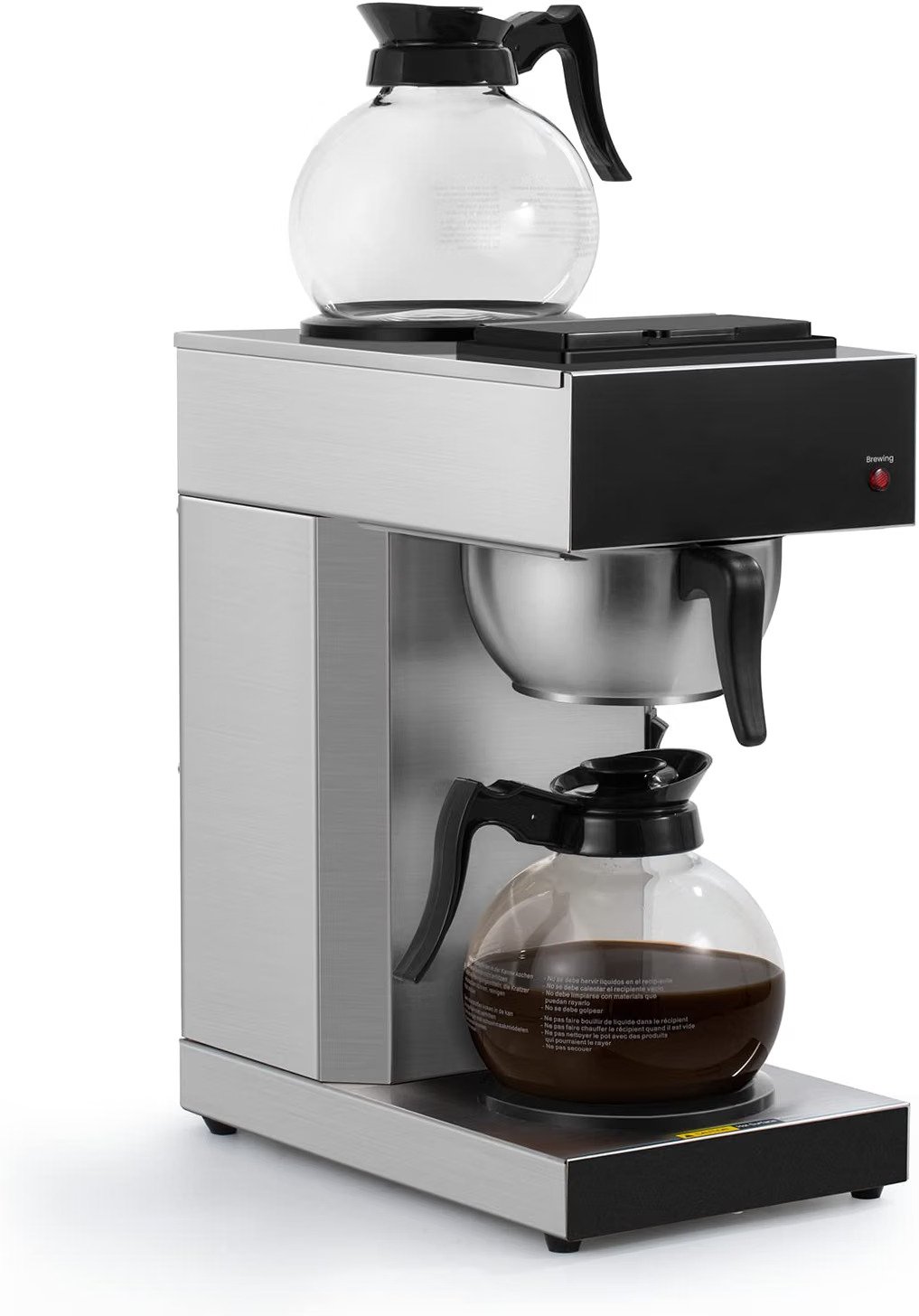
A pour-over commercial brewer trades installation convenience for daily labor. Staff add the batch water manually, which can make the machine easier to place and move than a plumbed unit. That is useful in a seasonal counter, bakery, food truck support kitchen, or lower-volume dining room where coffee orders arrive in waves rather than continuously.
The cost is consistency under pressure. Every batch depends on someone measuring the correct water volume and starting the next brew before the current decanter runs out. Before ordering, check the exact SF-CB-2GA listing for included decanters, warmer layout, filter size, electrical load, and clearance. Restaurants with heavier continuous demand should also compare an industrial coffee maker or plumbed automatic brewer.
ModelSF-CB-2GA
Batch12 cups listed
FeedPour-over workflow
What we like
No permanent water line is implied by the pour-over format
Simple workflow is easy to teach
Useful for low- to moderate-volume stations
What to consider
Manual refilling adds labor to every batch
Included servers and exact warmer layout need checking
Not the best fit for uninterrupted high-volume service
Configuration reviewed: supplied SYBO SF-CB-2GA product listing. Confirm the exact manual, voltage, included servers, filter size, and current warranty on the destination page.
3. SYBO 12-Cup Brewer with 74-Ounce Thermal Carafe
A better match for restaurants that carry coffee to a buffet, meeting room, patio station, or server area away from a hot plate.
Buy it ifYou want an insulated server that can leave the brewer without depending on a warming plate.
Skip it ifYou need several labeled decanters visible at once or bulk capacity for a large banquet.
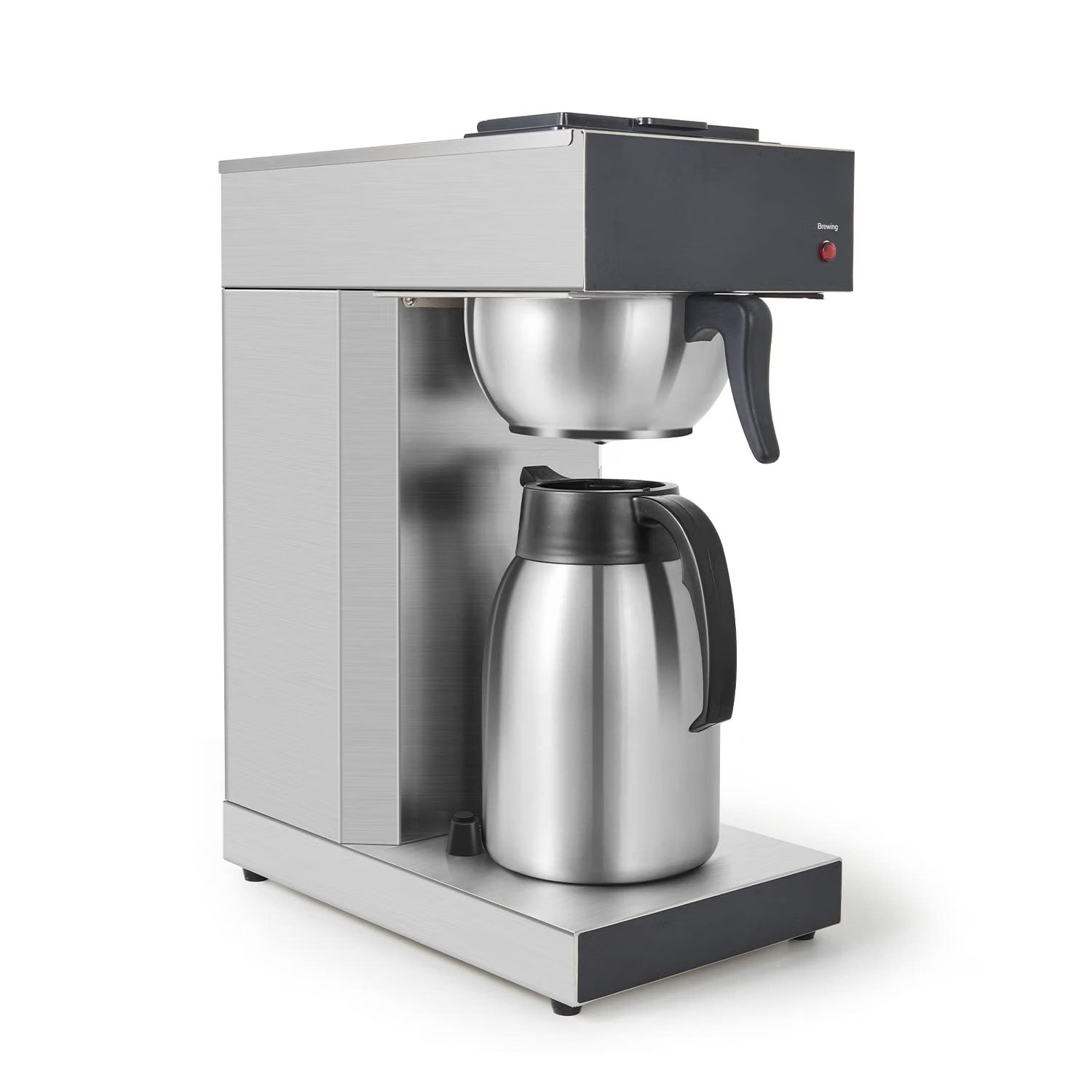
Thermal holding changes the workflow more than the headline cup count suggests. An insulated carafe can move from the brewing station to a buffet or server pickup area without a power cord. It also avoids the direct heat of a glass-decanter warmer. That is useful when coffee needs to travel, but it does not remove the need for timed batch rotation and careful cleaning.
The supplied listing names a 74-ounce thermal carafe, but the model number and water-feed method are not included in the spreadsheet title. Treat those as items to verify rather than assumptions. Check the lid and pump or pour mechanism, replacement-carafe availability, brew-through compatibility, electrical requirements, and how the manufacturer defines its “12-cup” capacity.
Server74 oz thermal carafe listed
Capacity12-cup format listed
HoldingInsulated, no warmer required
What we like
Carafe can move to a remote service point
No heated plate under the finished coffee
Suitable for buffet and meeting-room workflows
What to consider
Exact model and water-feed method need confirmation
Thermal servers require thorough lid cleaning
One 74-ounce carafe may be too small for banquet peaks
Configuration reviewed: supplied SYBO 12-cup, 74-ounce thermal-carafe listing. Confirm the exact model number and replacement-server availability before buying.
A value-focused direction for buyers who want several ready-to-serve decanters and are prepared to verify the exact warmer configuration carefully.
Buy it ifYou need a straightforward commercial drip setup and the linked variant matches your desired number of carafes and warmers.
Skip it ifYou need one unambiguous model number, extensive service documentation, or a plumbed automatic feed.
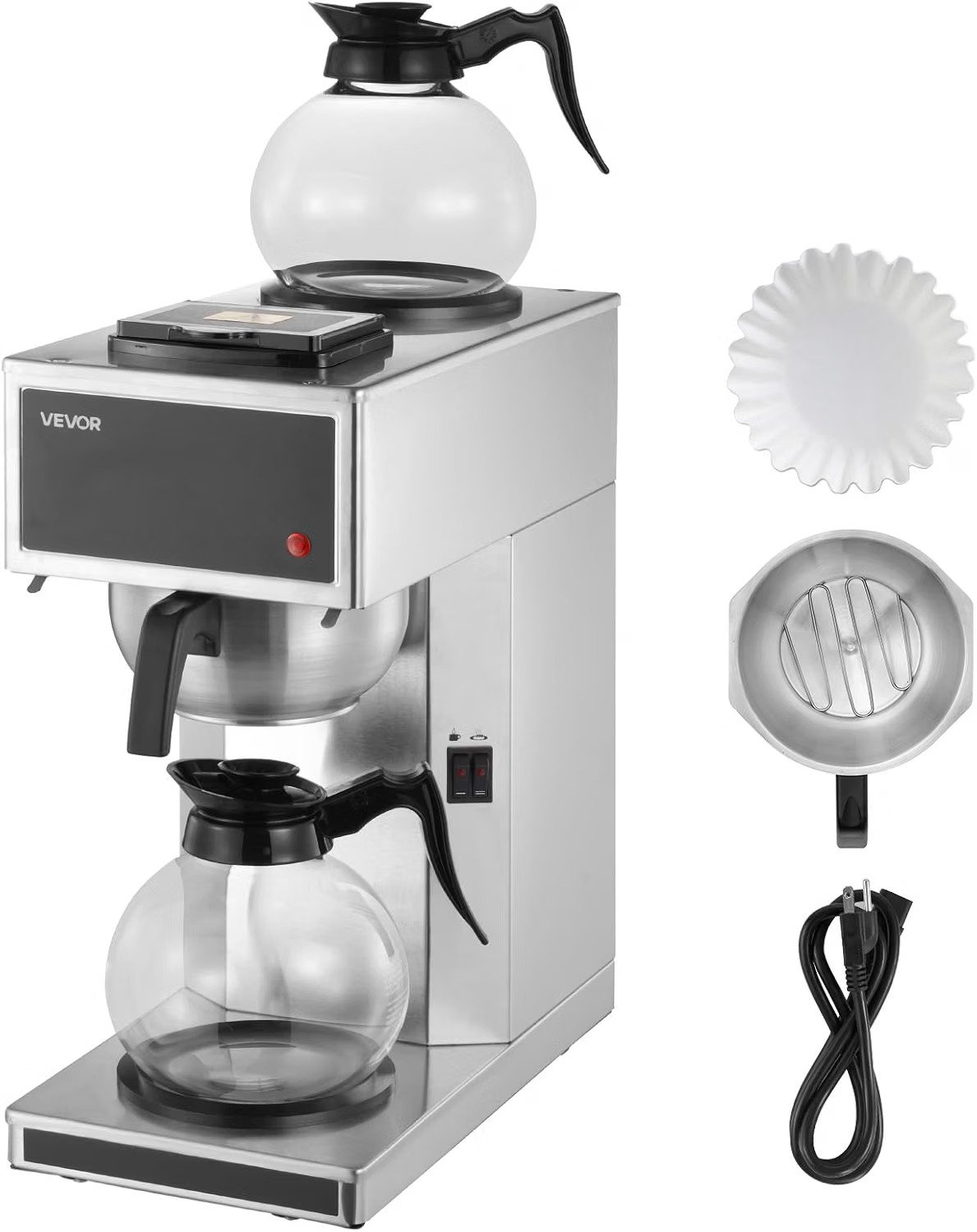
VEVOR sells several visually similar 12-cup commercial drip brewers with different warmer and carafe counts. The manufacturer’s current pages describe pour-over models with two, three, or four warmer positions, depending on the variant. That range can be useful for matching a station to regular, decaf, and backup batches, but it also makes model matching essential.
Do not choose by product photo alone. Match the destination listing to the number of brew heads, warmers, carafes, and switches you expect. Confirm whether the linked product is pour-over or auto-fill, and check its dimensions against the shelf above the station. For a deeper look at continuous commercial formats, see our commercial coffee brewer machine guide.
Batch12 cups listed
FormatCommercial drip
VariantConfirm warmer and carafe count
What we like
Several warmer configurations are available
Mechanical controls suit a simple station
Multiple decanters can support regular and decaf service
What to consider
Similar listings make variant matching difficult
Auto-fill versus pour-over must be confirmed
Parts and service expectations should be checked locally
A bulk-service choice for catered events, church halls, hotel breakfasts, and buffets where self-service capacity matters more than small fresh batches.
Buy it ifYou need one large manual-fill vessel for a predictable group and have space to stage, refill, and clean it safely.
Skip it ifYou serve coffee mainly by the table or need quick regular-versus-decaf batch changes.
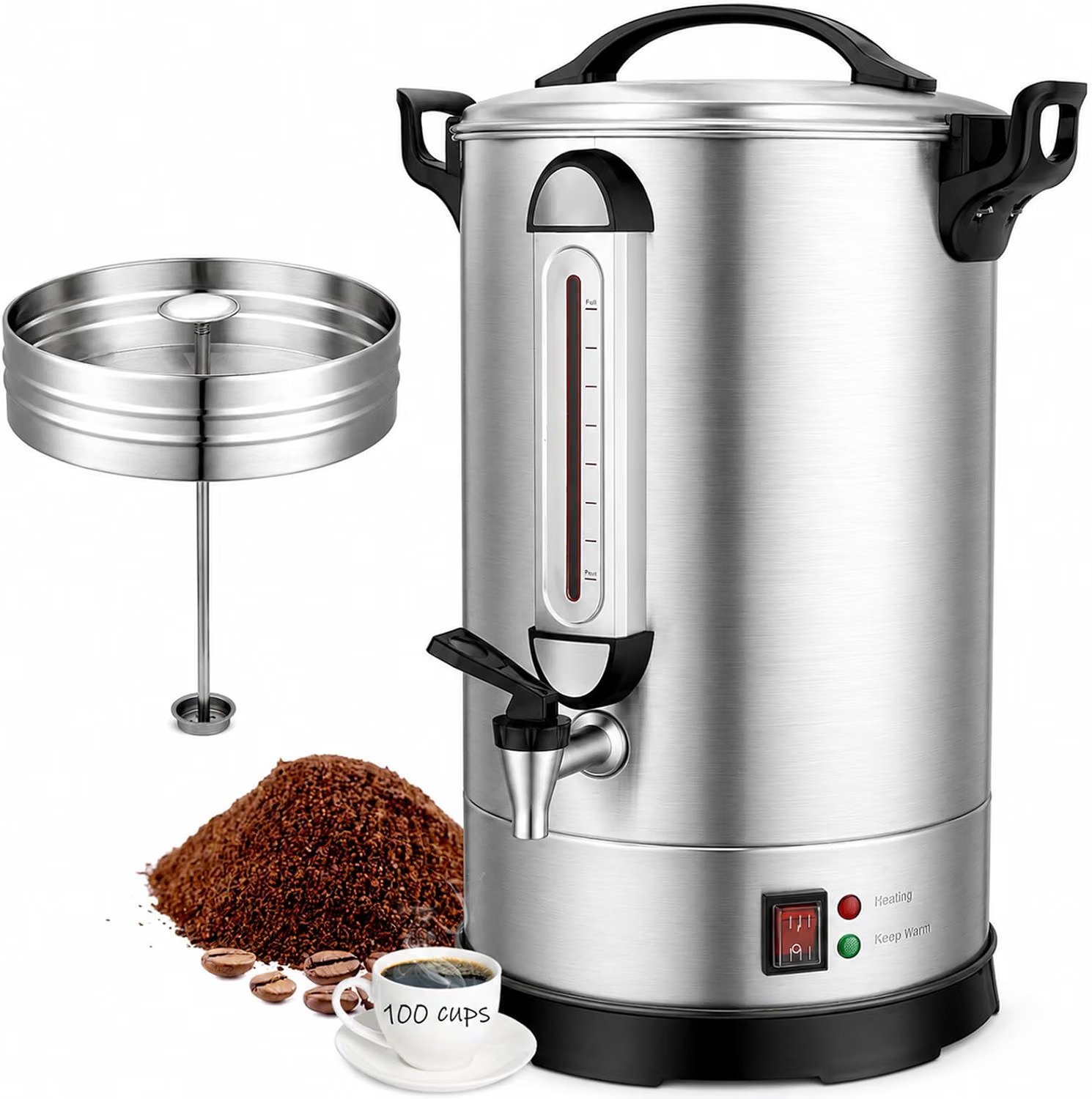
An urn solves a different problem from a 12-cup restaurant brewer. Instead of producing repeated small batches for servers, it prepares and holds a large volume at one self-service point. That can simplify a banquet or breakfast buffet, but it creates a longer preparation cycle and makes batch-size planning more important.
The supplied product title claims a 100-cup capacity, 1300-watt heating, 304 stainless-steel construction, and a double-wall body. Treat those as seller-listed specifications until you verify the current destination page and manual. Also confirm the actual cup definition, minimum batch, dispensing clearance, dry-boil protection, certification marks, electrical circuit, and cleaning access. For still larger continuous-demand planning, compare our industrial coffee maker guide.
Capacity100 cups claimed
Power1300 W claimed
BodyDouble-wall 304 stainless claimed
What we like
Bulk capacity suits planned group service
Dispensing tap supports self-service
One vessel simplifies buffet staging
What to consider
Seller-listed specifications need independent confirmation
Large batches can create waste when attendance is uncertain
Cleaning and safe handling require more space
Configuration reviewed: supplied 100-cup commercial urn listing. Confirm the brand, model, certifications, capacity definition, electrical requirements, and manual before commercial use.
Five decisions to make before buying a restaurant coffee maker
Plumbed or pour-over?
A plumbed brewer removes a repetitive refill step but requires installation and a suitable water supply. A pour-over model is easier to place, yet every batch adds another manual task during service.
Glass decanter or thermal server?
Glass decanters make the fill level easy to see and work with warmer plates. Thermal servers travel better and hold without direct heat, but lids and internal parts need careful cleaning.
How many batches at peak?
Estimate cups needed during the busiest 15 to 30 minutes, not the whole day. Include separate demand for regular and decaf, then plan a rotation that does not leave old coffee on a warmer.
Does your water need treatment?
Scale and flavor problems start with the supply, not the brewer. Review our guide to water filtration for coffee equipment and follow the manufacturer’s water specifications.
Who services the machine?
Before buying, identify local parts and service support. A low purchase price loses its advantage if a failed thermostat, valve, server, or spray head keeps the station offline.
What type of coffee maker is best for a restaurant?
A plumbed automatic decanter brewer is a practical starting point for steady table service. A pour-over brewer fits lower-volume or flexible stations, a thermal brewer fits remote service points, and an urn fits large planned groups.
How many cups should a restaurant coffee maker produce?
Size the station around peak demand and batch rotation, not daily totals. Calculate regular and decaf cups needed during your busiest period, then choose enough brewing and holding capacity to replace batches before they run out or sit too long.
Does a commercial coffee maker need a water line?
Not always. Automatic brewers commonly use a plumbed supply, while pour-over models are filled manually. Check the exact model because similar product families may offer both configurations.
Are thermal carafes better than glass decanters?
They suit different workflows. Thermal carafes can move away from the brewer and hold coffee without a hot plate. Glass decanters show the remaining volume clearly and are quick to swap, but require warmers and disciplined batch timing.
What should I verify before installing a restaurant coffee maker?
Confirm voltage, plug, circuit load, water inlet, drain needs, filter system, counter clearance, ventilation guidance, included servers, certification requirements, and access for cleaning and service.
Recommended next
Continue planning your commercial coffee station
Explore guides to commercial brewers, industrial coffee makers, espresso equipment, and water treatment.