The best espresso machine is the one whose workflow fits your mornings. We compare 10 manual, semi-automatic, hybrid, and fully automatic machines by grinder, milk system, control, learning curve, and the compromise each design asks you to accept.
John CrestaniEspresso Equipment Specialist
Last Updated
The short version
Which espresso machine should you buy?
For buyers who want an integrated grinder, a 58 mm group head, and a more espresso-focused all-in-one workflow, the Gevi Dual Boiler ECMF0 is our research-based starting pick. Choose the Ninja Luxe Café Premier if your household also wants drip coffee and cold brew. For one-touch milk drinks, the Philips 5500 and De'Longhi Dinamica Plus are easier fits; for traditional 58 mm espresso technique with a separate grinder, the Gaggia Classic E24 gives you the most hands-on control.
Testing transparency: This is a research-based comparison of manufacturer documentation, product design, and buyer-use tradeoffs, not a hands-on laboratory test. Rankings apply to these 10 models and the linked versions. Prices and Amazon availability can change, so they are intentionally not displayed. Buyers focused specifically on automation can also compare our best super-automatic espresso machines guide.
How we evaluated
A useful ranking starts with workflow, not pump pressure
We compared manufacturer-documented features against four everyday buying criteria: workflow, control, milk drinks, and ownership friction. Specifications describe listed features, not independently measured performance. The “best for” labels are editorial judgments about buyer fit, not Amazon ratings or laboratory scores.
Daily workflowHow many manual steps stand between beans and a finished drink?
Espresso controlCan you adjust grind, puck preparation, temperature, or recipe settings meaningfully?
Milk drinksIs frothing manual, assisted, or fully automatic—and how much cleanup follows?
Amazon links in this table are paid links. On a phone, swipe sideways to see every column. Prices and availability change frequently, so this table intentionally does not display them.
Ten espresso machines: buyer fit, grinder, milk workflow, and main tradeoff
Machine
Best for
Grinder
Milk system
Main tradeoff
Amazon paid links
Gevi Dual Boiler ECMF0
Home baristas who want grinder + 58 mm workflow
Built in, 30 settings
Manual steam wand
Larger, more hands-on setup than one-touch machines
Espresso Mastered:The EspressoFinder.com Guide for Enthusiasts and Professionals
Choose smarter. Brew better from day one.
Pressure numbers and long feature lists can make almost every machine look impressive. This practical guide shows you what actually affects taste, workflow, and long-term value—before you spend your money.
Separate useful specifications from marketing noise
Match the grinder, milk system, and learning curve to your routine
Spot hidden accessory, cleaning, and upgrade costs
Use a clear checklist to compare any espresso machine
Free digital guide · Delivered by email · Privacy Policy
Our 10 picks, with the tradeoffs explained
There is no universal winner. A manual machine can be “better” for someone who enjoys dialing in espresso, while a fully automatic machine can be better for a household that values repeatable one-touch drinks. The useful question is which compromise fits you.
Best dual-boiler all-in-one
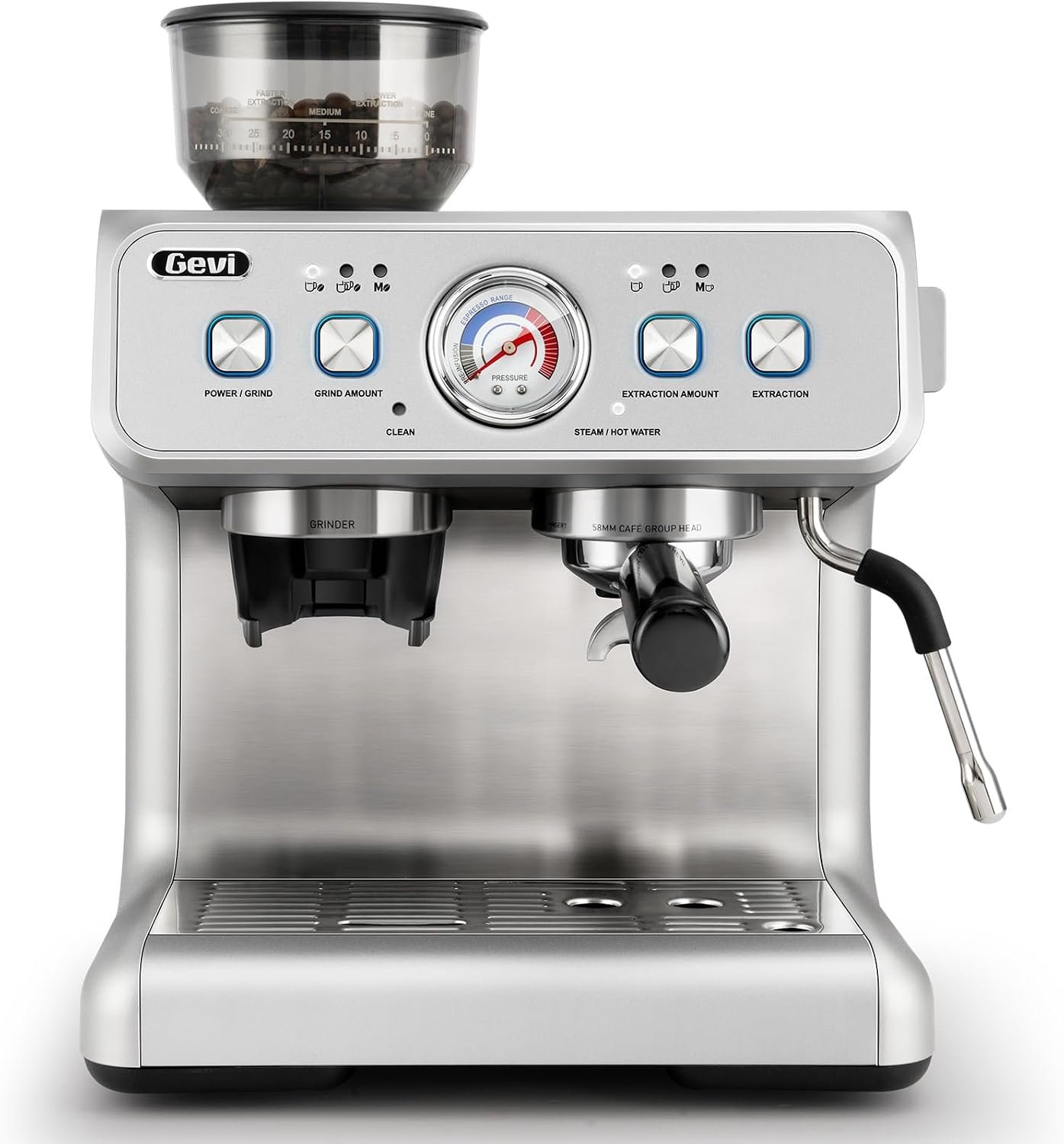
1. Gevi Dual Boiler Espresso Machine ECMF0
Our research-based starting pick for home baristas who want a built-in grinder, 58 mm format, and a dual-boiler workflow without moving to a fully automatic machine.
Buy it ifYou want a 58 mm portafilter, integrated 30-step grinder, pressure gauge, PID temperature control, and manual steam wand in one machine.
Skip it ifYou want one-touch milk drinks, the smallest possible footprint, or the longest track record of independent ownership coverage.
Gevi positions the ECMF0 as an all-in-one home-barista machine that combines a built-in burr grinder, espresso brewer, and manual milk frothing. The manufacturer lists a 30-step grinder, 58 mm group head, pressure gauge, and PID plus NTC temperature control. That combination gives you a more traditional espresso setup than a push-button super-automatic while keeping the grinder inside the same appliance.
The dual-boiler system is the feature that separates it from many entry-level grinder-equipped machines. Gevi says the system is designed to support brewing and heating for steam at the same time, which should reduce waiting during milk-drink preparation. The tradeoff is a larger, more involved machine: you still need to dial in the grinder, distribute and tamp coffee, lock in the portafilter, and texture milk yourself.
Group head58 mm
Grinder30 settings
SystemDual boiler
What we like
58 mm format opens up a broad accessory ecosystem
Built-in 30-step grinder reduces the need for a separate appliance
Dual-boiler design is well suited to espresso plus milk-drink workflows
What to consider
Still requires manual dialing in, tamping, and milk steaming
Larger footprint than compact semi-automatic machines
Independent long-term ownership evidence is less extensive than for older category staples
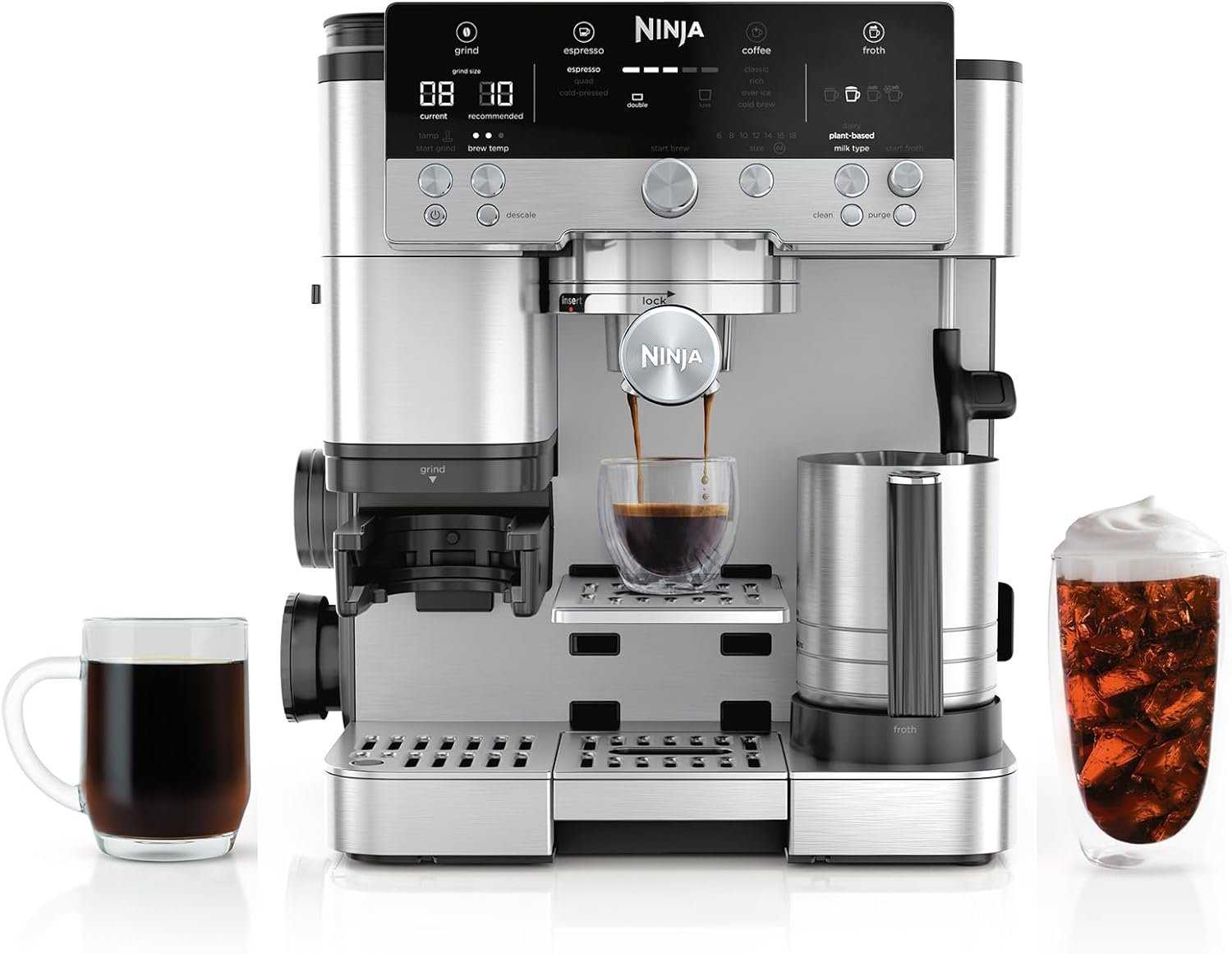
A strong fit for households that want espresso plus drip coffee and cold brew, with guidance that reduces the guesswork.
Buy it ifYou want one machine to cover espresso, regular coffee, cold brew, grinding, dosing, and milk frothing.
Skip it ifYou prefer a traditional espresso machine with direct manual control over every variable.
Ninja positions the Luxe Café Premier as a three-in-one system for espresso, drip coffee, and rapid cold brew. Its Barista Assist system recommends grind size and adjusts brewing, while the built-in scale supports weight-based dosing. The conical burr grinder has 25 settings, giving it a wider operating range than espresso-only integrated grinders.
The other convenience feature is the hands-free Dual Froth System, which combines steaming and whisking to texture milk automatically. That can make the morning routine easier, but it also means the machine is solving several jobs at once. Buyers focused only on traditional espresso may prefer the more espresso-focused workflow of the Gevi ECMF0 or Gaggia.
FunctionsEspresso, drip, cold brew
Grinder25 settings
DosingBuilt-in scale
What we like
Covers three major coffee styles in one machine
Guided grind and brew adjustments reduce setup friction
Hands-free frothing is approachable for milk-drink beginners
What to consider
Large feature set can be unnecessary for espresso-only buyers
More automation means less direct barista-style control
Requires counter space for a multi-function system
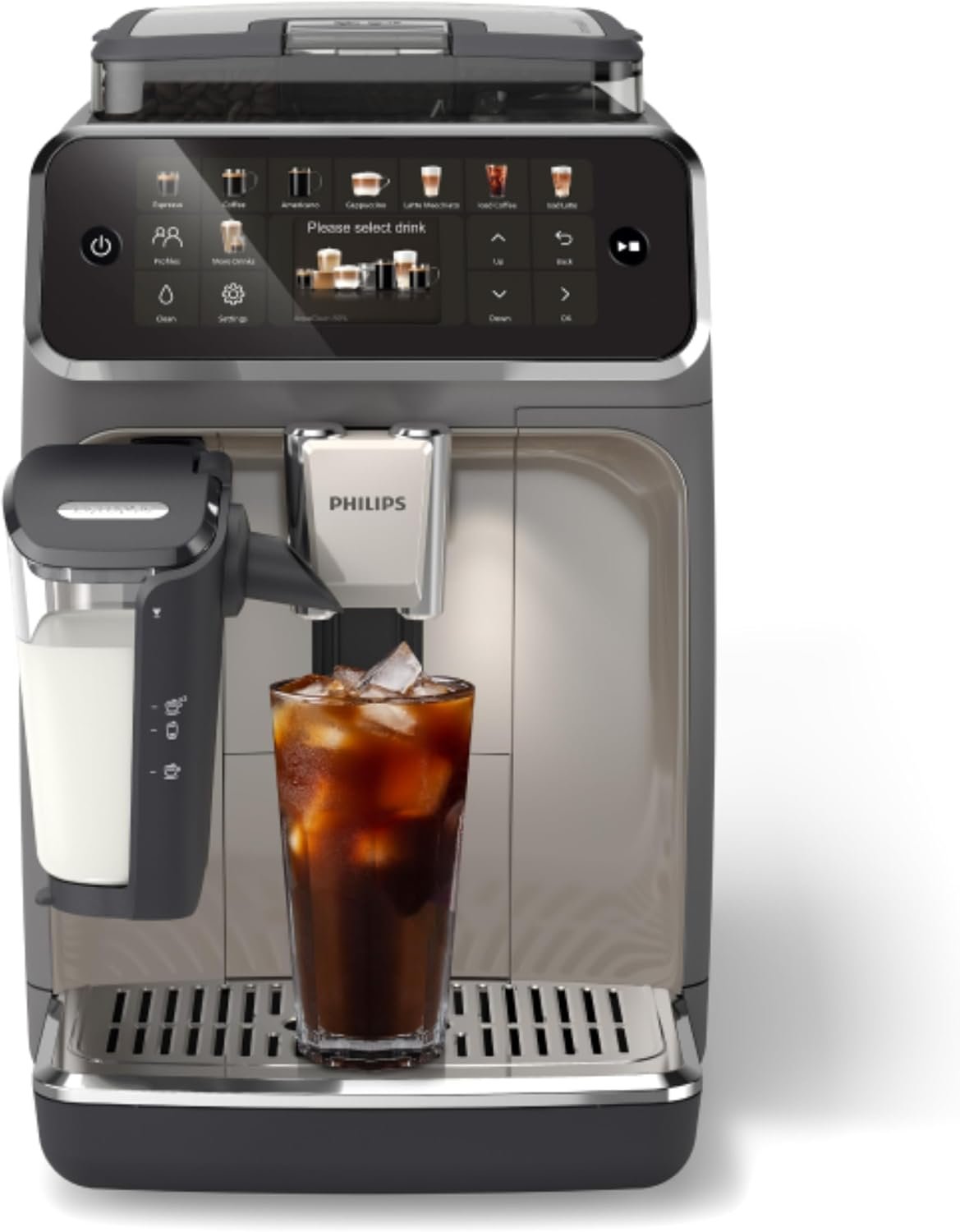
The easiest choice here for people who want a broad menu of hot and iced drinks with an automatic milk system.
Buy it ifYou want one-touch recipes, saved profiles, and a milk system designed for quick cleanup.
Skip it ifYou enjoy changing dose, tamp, and extraction manually from shot to shot.
Philips lists 20 hot and iced recipes on the 5500 Series, including espresso, cappuccino, flat white, iced latte, and iced coffee options. The machine uses the two-part LatteGo milk system, a 12-setting ceramic grinder, QuickStart, and four user profiles plus a guest profile.
That makes the 5500 less about learning espresso technique and more about repeatability across a household. The tradeoff is the usual one with super-automatic machines: the internal brew group and programmed recipes give you less tactile control than a portafilter machine. For convenience-first buyers, that is often the point rather than a weakness.
Drinks20 hot & iced recipes
Grinder12 settings
Profiles4 + guest
What we like
Large recipe library for mixed households
LatteGo has only two milk-contact parts and no tube
Profiles make repeated drinks easier to personalize
What to consider
Limited manual puck-preparation control
More internal parts to clean than a simple semi-auto
Recipe breadth may be excessive for espresso-only drinkers
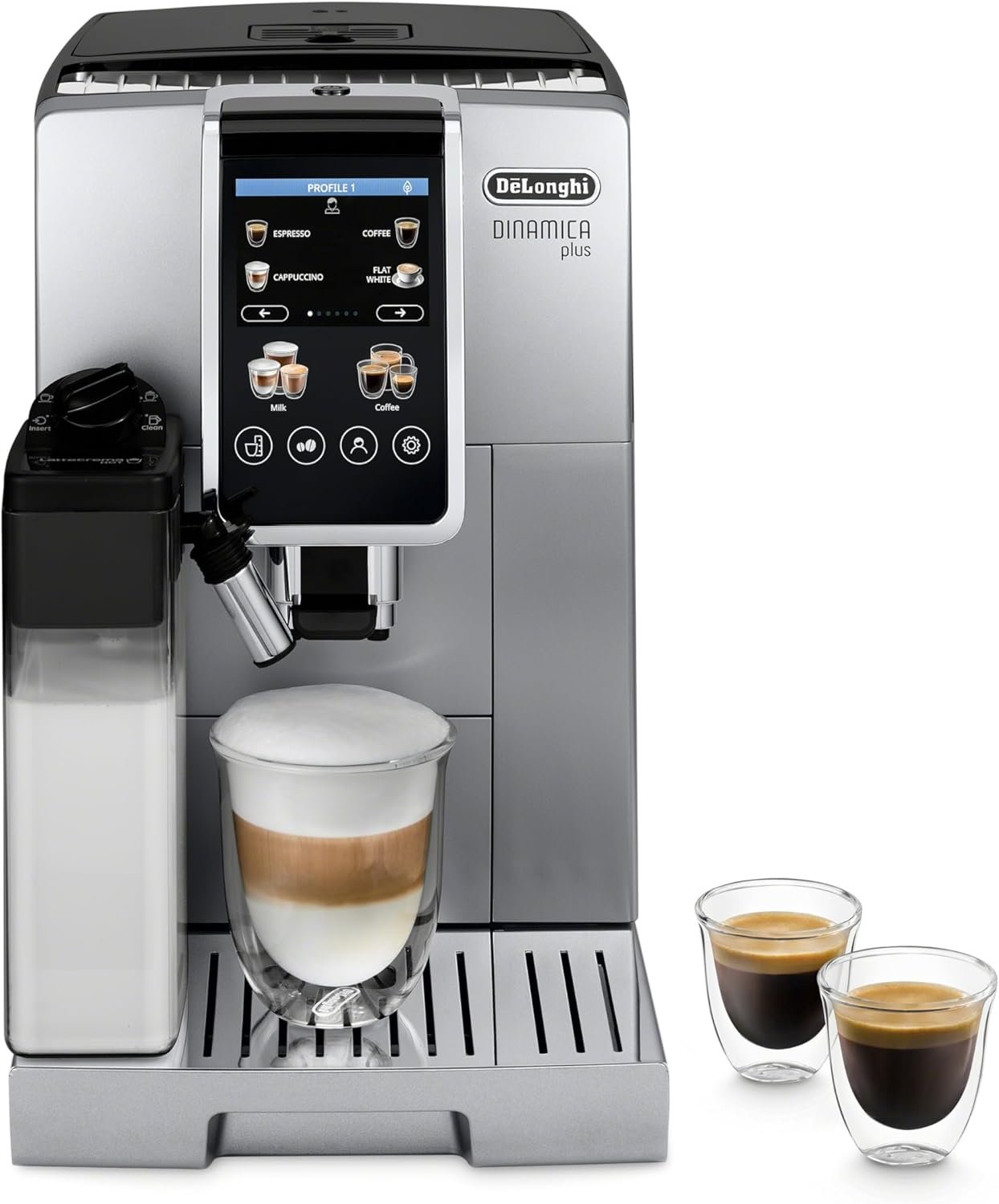
A premium super-automatic for buyers who want a deep recipe menu and customization without handling a portafilter.
Buy it ifYou want an automatic grinder, touchscreen workflow, and a wide range of espresso-based recipes.
Skip it ifYou prefer a simpler machine or want to control puck preparation yourself.
De'Longhi lists 24 espresso-based recipes for the current Dinamica Plus, managed through a 3.5-inch color touch display. Its integrated conical burr grinder has 13 settings, and the one-touch system prioritizes frequently selected drinks so regular recipes are easier to reach.
This is a convenience-led machine, not a substitute for a manual home-barista setup. The value is in repeatable drinks with fewer separate steps. The ownership cost is more routine rinsing and milk-system care, plus a more complex internal brew path than you get with a traditional semi-automatic machine.
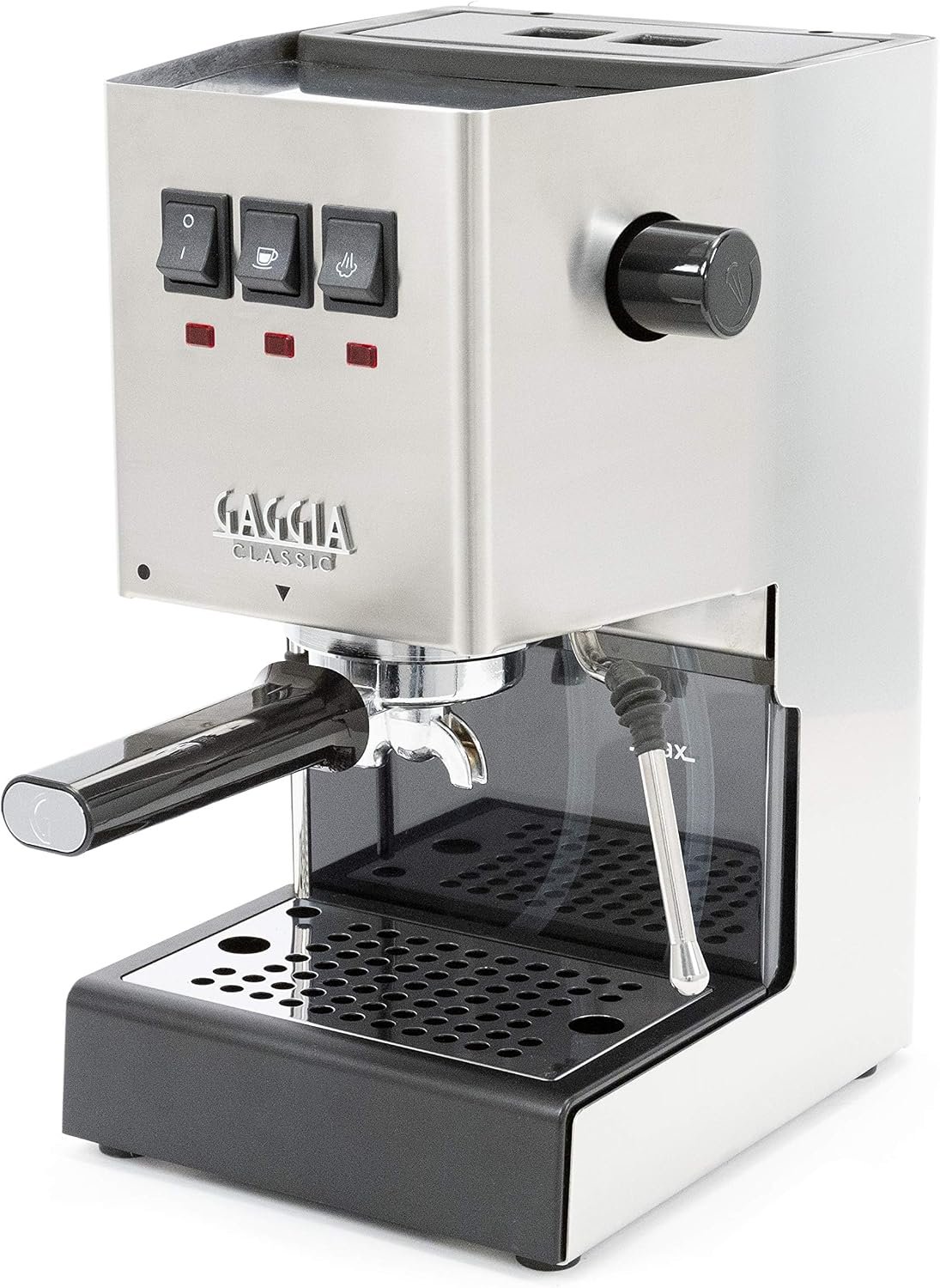
The most traditional choice in this list for buyers who want a 58 mm portafilter, manual steaming, and room to grow their technique.
Buy it ifYou want a classic semi-automatic platform and expect to use a separate espresso grinder.
Skip it ifYou want an integrated grinder, automatic milk, or one-touch drinks.
The Classic E24 is built around a 58 mm stainless-steel filter holder, a lead-free brass group and boiler, a professional steam wand, and a three-way solenoid valve. Gaggia lists a 2.1-liter water tank and a straightforward rocker-switch interface rather than a touchscreen.
That simplicity appeals to people who want to learn espresso rather than automate it. You will still need a capable grinder and consistent puck preparation. If you are new to those steps, our guide to espresso tamping and overview of the espresso portafilter explain two of the most important parts of the workflow.
Portafilter58 mm
BoilerLead-free brass
Water tank2.1 L listed
What we like
58 mm format supports a broad accessory ecosystem
Brass boiler and group are designed for heat retention
Three-way solenoid helps dry the puck after brewing
What to consider
No built-in grinder
Requires more technique than automatic machines
Single-boiler workflow means brewing and steaming are sequential
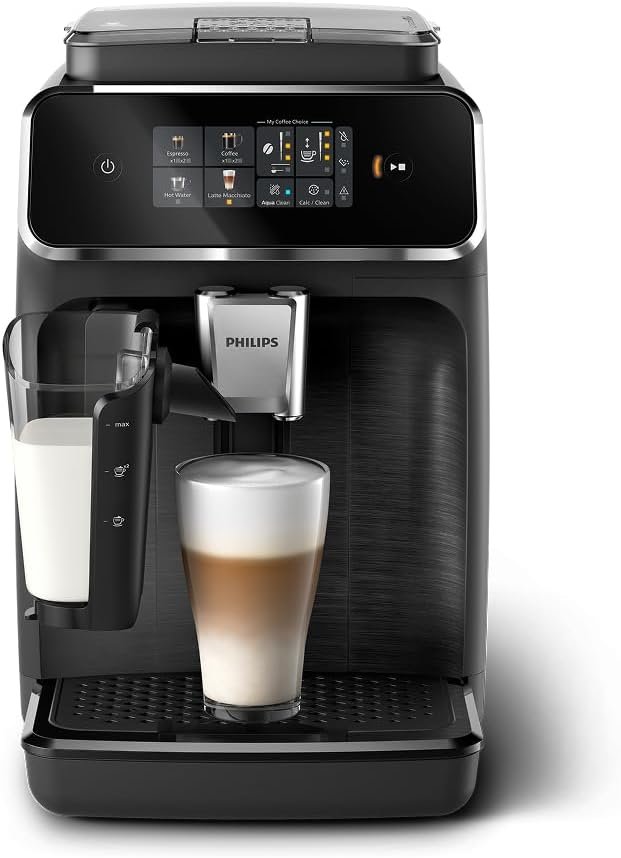
A simpler Philips option for buyers who want automatic espresso and milk drinks without paying for a huge recipe menu.
Buy it ifYou mostly drink espresso, coffee, cappuccino, or hot water and value straightforward cleaning.
Skip it ifYou want a large library of specialty and iced recipes.
The Philips 2300 keeps the super-automatic concept focused. Philips lists four core beverage choices, a 12-step ceramic grinder, LatteGo milk frothing, a colored touch display, AquaClean compatibility, and a removable brew group. The water tank is listed at roughly 61 ounces.
Compared with the 5500, the smaller drink menu is the point: there is less to scroll through and less reason to pay for recipes you may never use. Buyers who want to understand this category more broadly can compare our guide to the best super-automatic espresso machines.
Beverages4 core choices
Grinder12 settings
Water tank61 oz listed
What we like
Focused one-touch interface
LatteGo is simple to disassemble for cleaning
Removable brew group supports routine maintenance
What to consider
Far fewer recipes than Philips 5500
Less manual control than semi-automatic machines
Milk drinks depend on the automatic frothing profile
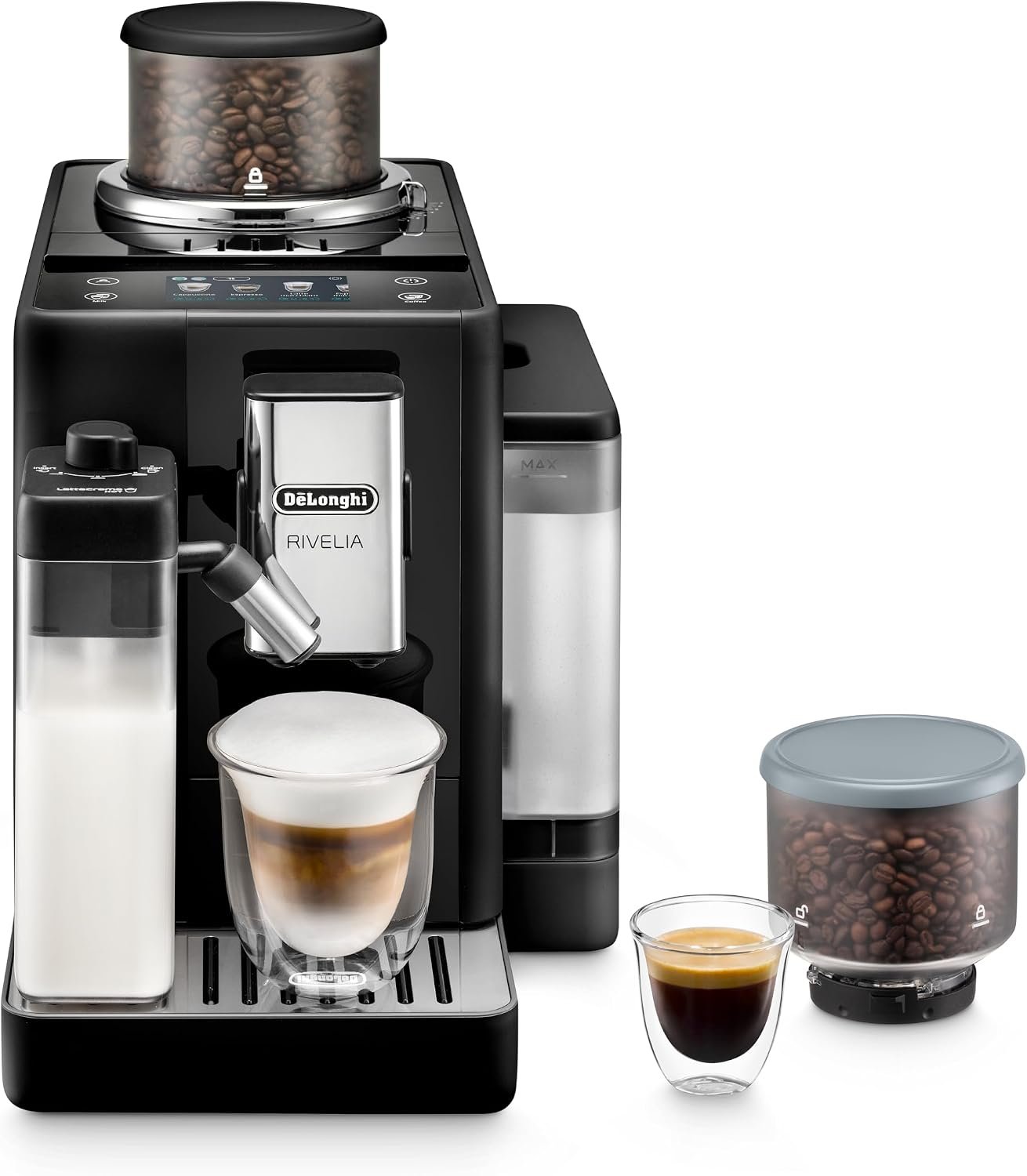
A distinctive fully automatic option for people who regularly alternate between different beans instead of leaving one roast in the hopper.
Buy it ifYou switch between regular and decaf or like rotating roasts without emptying one hopper by hand.
Skip it ifYou use one bean all the time and do not need a specialized switching system.
Rivelia’s unusual feature is its Bean Switch System. De'Longhi supplies two interchangeable 8.8-ounce bean hoppers and pairs them with a 13-setting burr grinder. The US model lists 18+ preset recipes, four user profiles, a 3.5-inch color touch display, and an automatic LatteCrema Hot milk system.
That makes it especially practical in households where one person drinks regular coffee and another drinks decaf. The tradeoff is that the bean-switch concept adds hardware you have to store and keep clean. If you rarely change beans, the simpler hopper arrangement on other super-automatic machines is easier to live with.
Recipes18+ presets
Bean hoppersTwo 8.8 oz
Grinder13 settings
What we like
Interchangeable hoppers make bean changes unusually easy
Automatic milk frothing supports one-touch drinks
Profiles can adapt the machine to multiple users
What to consider
Extra hopper adds another part to store and clean
Less useful if you never switch coffee beans
Automatic workflow offers less manual extraction control
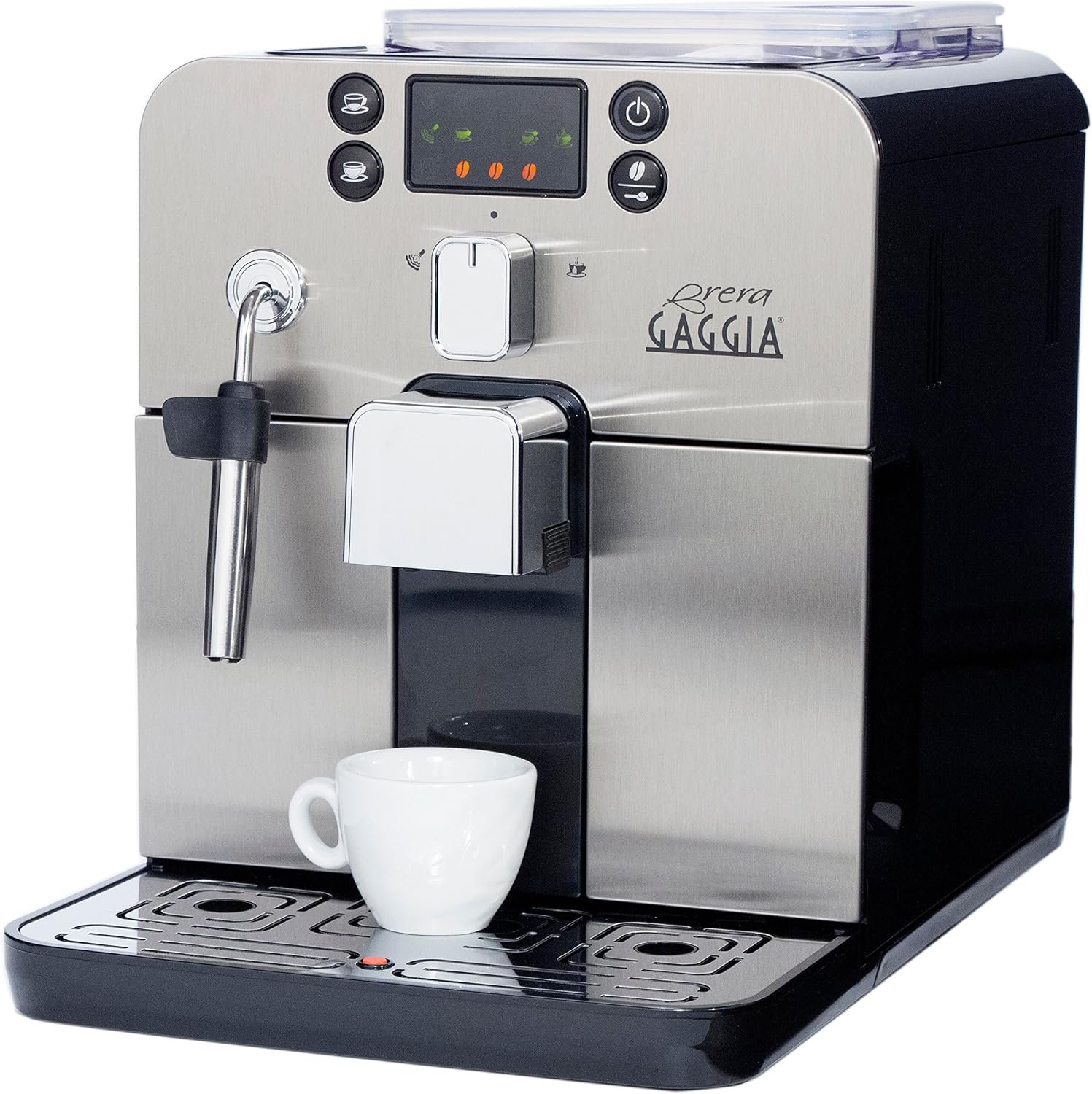
A compact bean-to-cup choice for buyers who want automatic grinding and brewing but are comfortable frothing milk manually.
Buy it ifYou want a smaller super-automatic with a removable brew group and a simple control layout.
Skip it ifYou want automatic milk drinks or a large recipe touchscreen.
Gaggia’s Brera uses a 100% ceramic adjustable grinder with five settings, a front-access 1.2-liter water tank, and a 250-gram bean container. Espresso and lungo are one-touch, while the stainless-steel pannarello handles steam and hot water manually.
That hybrid workflow is useful if you want automated grinding and brewing but do not mind taking over for milk drinks. It is much simpler than a 20-recipe touchscreen machine, but the five grinder steps give you less fine adjustment than newer integrated grinders.
GrinderCeramic, 5 settings
Water tank1.2 L
Bean hopper250 g
What we like
Compact front-access design
Removable brew group supports deeper cleaning
Ceramic grinder is integrated into the machine
What to consider
Only five grinder settings
Milk frothing is manual
Fewer one-touch drink choices than newer super-automatics
A well-equipped semi-automatic option for buyers who want a 58 mm portafilter and built-in grinder without assembling every accessory separately.
Buy it ifYou want barista-style preparation with a built-in grinder, pressure gauge, and a more complete accessory kit.
Skip it ifYou want milk drinks produced automatically from start to finish.
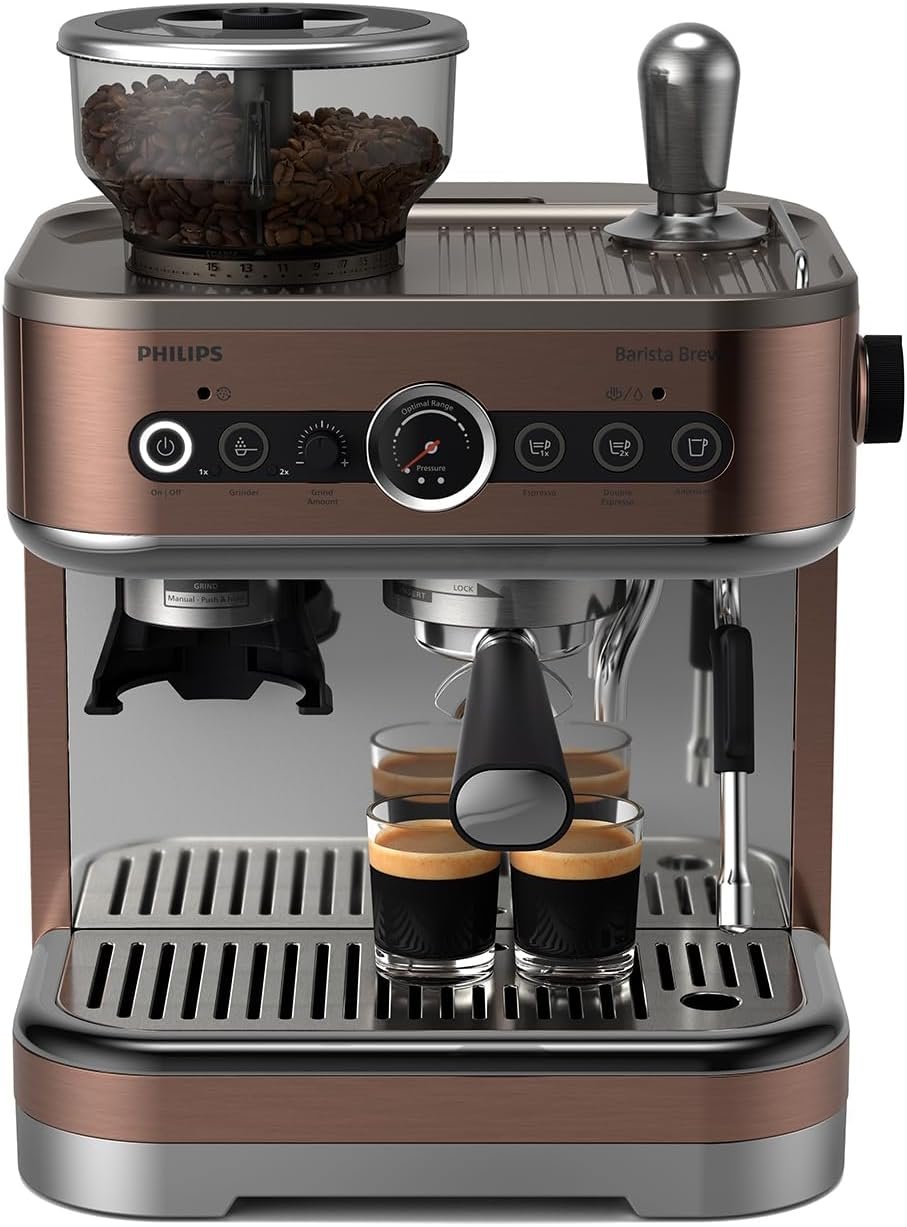
Philips lists a 58 mm stainless-steel portafilter, a metal conical burr grinder with 15 settings, a 280-gram dual bean container, a calibrated tamper, a pressure gauge, and a 450 ml milk jug. The machine also provides single and double espresso, Americano, hot water, and milk-froth functions.
This is still a semi-automatic workflow, so the accessories do not remove the need to learn dose and grind adjustments. The benefit is that more of the setup is bundled together. If you are comparing machines with and without integrated grinders, our best budget espresso grinder guide explains what a separate grinder changes.
Portafilter58 mm
Grinder15 settings
Water tank2.3 L max
What we like
58 mm stainless-steel portafilter
Integrated grinder reduces separate equipment
Includes calibrated tamper and milk jug
What to consider
Requires manual puck preparation
Milk texturing is not fully automatic
Integrated grinder cannot be upgraded independently
The most profile-heavy option here, built for households that want many saved drinks and a large touch interface.
Buy it ifSeveral people will use the machine and you want a wide menu with individualized saved settings.
Skip it ifYou mostly drink one or two simple coffees and prefer a smaller, simpler machine.
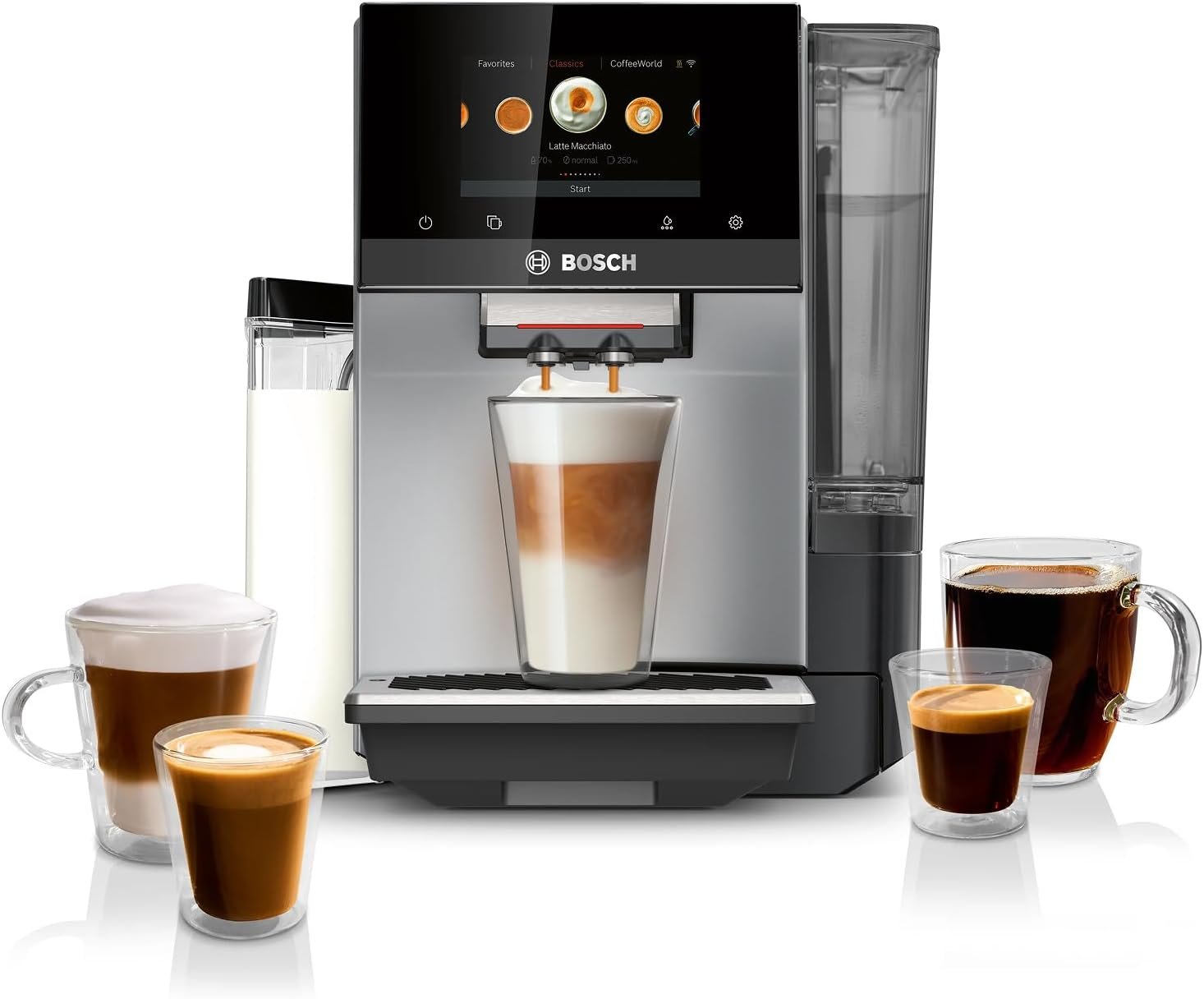
Bosch lists 36 beverages on the 800 Series VeroCafe TQU60307, an integrated milk container, up to 30 user profiles, and a 5-inch full-color TFT touchscreen. It can also brew a coffee pot up to 25.4 ounces, making it unusually flexible for a fully automatic espresso platform.
Those features make sense in a busy household where several people want different recipes. They are harder to justify if one person drinks the same espresso every morning. As with any fully automatic machine, the convenience comes from internalizing the grinding, dosing, brewing, and milk workflow rather than exposing those steps to the user.
Beverages36 listed
ProfilesUp to 30
Display5 in TFT
What we like
Very broad drink selection
Large number of user profiles
Integrated milk system keeps recipes one-touch
What to consider
Feature set is excessive for simple routines
More complex internal system than manual machines
Large touchscreen workflow may not appeal to traditionalists
Semi-automatic machines make you grind, dose, tamp, and steam; super-automatics move most of that inside the machine. If you are new to the process, see how to use an espresso machine before deciding how much involvement you actually want.
Integrated or separate grinder?
An integrated grinder saves counter space and shortens the routine. A separate grinder is easier to upgrade and can offer finer adjustment. Our budget espresso grinder guide is useful if you are considering the Gaggia Classic E24 or another grinder-free machine.
54 mm or 58 mm portafilter?
Both sizes can make good espresso. A 58 mm platform generally opens more third-party basket, tamper, and distribution-tool options. Read our espresso machine portafilter guide if accessory compatibility matters to you.
How important are milk drinks?
Manual steam wands offer control but require technique. Automatic systems such as LatteGo or LatteCrema prioritize repeatability and convenience. Decide whether you want to learn texture control or simply press a drink button.
Single heating system or dual boiler?
If you make several milk drinks back-to-back, faster switching between brewing and steaming can matter more than another preset recipe. Compare the category in our best dual boiler espresso machine guide.
Do not shop by “20 bar” alone
Pump maximums are easy to market but do not tell you whether the machine manages temperature, grind, or puck preparation well. Our 20 bar espresso machine guide explains why the headline pressure number needs context.
Maintenance matters: Water hardness affects scale buildup and taste. Check the manufacturer’s filter and descaling instructions for the exact machine; our espresso machine water filter guide covers the basic decision.
Quick answers
Common questions about the best espresso machines
What is the best espresso machine for most beginners?
Among these 10 models, the Ninja Luxe Café Premier is the most approachable starting point for beginners who want guided help with grinding and dosing while still using a portafilter. If you prefer one-touch drinks with less manual preparation, the Philips 2300 is easier to operate.
What is the best fully automatic espresso machine in this list?
The Philips 5500 is our convenience-first pick for a broad hot-and-iced recipe menu and easy LatteGo cleanup. The De'Longhi Dinamica Plus is a stronger fit if you prefer De'Longhi's one-touch recipe system, while the Bosch 800 stands out for many saved user profiles.
Do I need an espresso machine with a built-in grinder?
No. A built-in grinder reduces clutter and makes the workflow faster. A separate espresso grinder gives you more upgrade flexibility and is required for machines such as the Gaggia Classic E24.
Is a 58 mm portafilter automatically better than 54 mm?
No. A 58 mm portafilter has a broad accessory ecosystem and a commercial-style format, but a well-designed 54 mm machine can still make excellent espresso. Grinder quality, temperature management, dose consistency, and technique matter more than diameter alone.
Are super-automatic espresso machines easier to clean?
They reduce manual preparation but do not eliminate cleaning. You still need to empty drip trays and grounds containers, rinse or clean milk parts, maintain the brew group where applicable, and follow the manufacturer’s descaling instructions.
Is 20 bar better than 15 bar for espresso?
No. Those numbers usually describe the pump’s maximum rating. They do not prove better extraction. Temperature stability, grind consistency, coffee preparation, and the way the machine regulates brewing are more useful buying signals.
Recommended next
Continue your research
These published EspressoFinder guides go deeper on automation, heating systems, and grinders. WordPress can still replace these fallbacks dynamically when a more relevant recent article is available.