Top 10 Espresso Machine Picks for Different Buyers (2026)Skip to the article
Top 10 Espresso Machine Picks for Different Buyers (2026)
The best machine is the one whose workflow fits your mornings. We compare ten options across manual, semi-automatic and fully automatic categories, focusing on grinder setup, milk drinks, control, cleaning and the compromise each machine asks you to accept.
John CrestaniEspresso Equipment Specialist
Last Updated
The short version
Which espresso machine should you buy?
The Breville Barista Express is our research-based starting pick for buyers who want a hands-on espresso routine without purchasing a separate grinder. Choose the Ninja Luxe Café Premier when you want guided espresso plus drip coffee and cold brew. The Philips 5500 makes more sense when one-touch milk drinks and multiple profiles matter more than manual control. Experienced tinkerers should look at the Gaggia Classic Pro E24, while the Flair 49 PRO is the specialist choice for manual pressure control.
No list can name one universal winner. Someone comparing the best super-automatic espresso machines values a different experience from a buyer researching a manual lever espresso machine. The picks below are ranked by usefulness for clearly defined buyers, not by inflated pump-pressure numbers.
Testing transparency: This is a research-based comparison of manufacturer documentation, supported features and design tradeoffs. It is not a hands-on laboratory test, and the order is an editorial buyer-fit ranking rather than an Amazon customer-rating table. Confirm the exact model, voltage, included accessories, warranty and return terms on the destination page before ordering.
How we evaluated
A useful top 10 needs ten clear reasons to buy
We compared the listed models against four daily-use questions. Manufacturer specifications establish what a machine is designed to do; they do not prove cup quality, durability or measured performance. We therefore avoid made-up scores and explain the tradeoff behind every recommendation.
Workflow fitHow much grinding, dosing, tamping, steaming and cleanup does the user want?
Drink rangeDoes the machine focus on espresso, milk drinks, brewed coffee, cold drinks or all of them?
Control and repeatabilityCan users change grind, dose, temperature, milk texture or pressure in a meaningful way?
Amazon links in this table are paid links. On a phone, swipe sideways to see every column. Prices and availability change frequently, so this table intentionally does not display them.
Ten espresso machines compared by buyer fit, machine type, grinder and main tradeoff
Machine
Best for
Type
Grinder
Main tradeoff
Amazon paid link
Breville Barista Express
Learning a hands-on routine
Semi-automatic
Built in
Older grinder design offers less adjustment than newer rivals
Espresso Mastered:The EspressoFinder.com Guide for Enthusiasts and Professionals
Choose smarter. Brew better from day one.
Pressure numbers and long feature lists can make almost every machine look impressive. This practical guide shows you what affects taste, workflow and long-term value before you spend your money.
Separate useful specifications from marketing noise
Match the grinder, milk system and learning curve to your routine
Spot hidden accessory, cleaning and upgrade costs
Use a clear checklist to compare any espresso machine
Our ten picks, with the tradeoffs explained
Best overall starting point
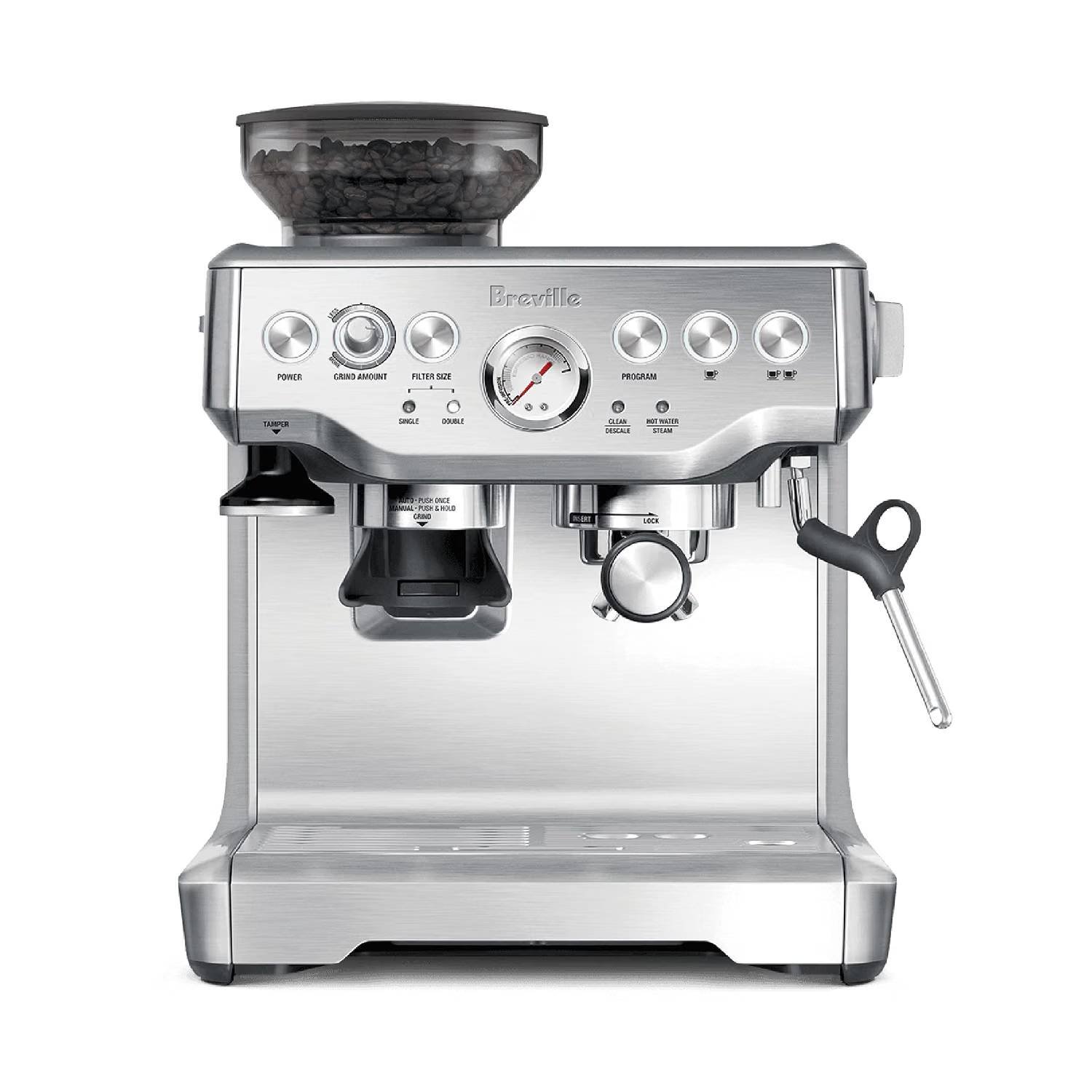
1. Breville Barista Express BES870XL
A strong first machine for buyers who want to grind, dose, tamp, extract and steam milk themselves without assembling a separate grinder-and-machine setup.
Buy it ifYou want to learn espresso technique through a familiar all-in-one workflow.
Skip it ifYou want one-touch drinks or a newer grinder with finer adjustment steps.
Breville’s lasting advantage is coherence. The grinder, dosing cradle, pressure gauge, 54 mm portafilter and manual steam wand form one understandable path from whole beans to a finished drink. It still requires practice, but new users are not left wondering which major component to purchase next.
The design is mature rather than cutting-edge. Buyers who expect to chase light-roast espresso or make many drinks back to back may eventually want a more capable grinder or a dual-boiler espresso machine. For medium roasts and a few daily milk drinks, however, the Barista Express remains an approachable place to develop real technique.
WorkflowGrind, dose, extract and steam
Portafilter54 mm system
MilkManual steam wand
What we like
Complete hands-on starting setup
Manual milk texturing leaves room to improve
Large accessory and learning community
What to consider
Grinder offers less fine adjustment than newer machines
54 mm tools are not interchangeable with 58 mm systems
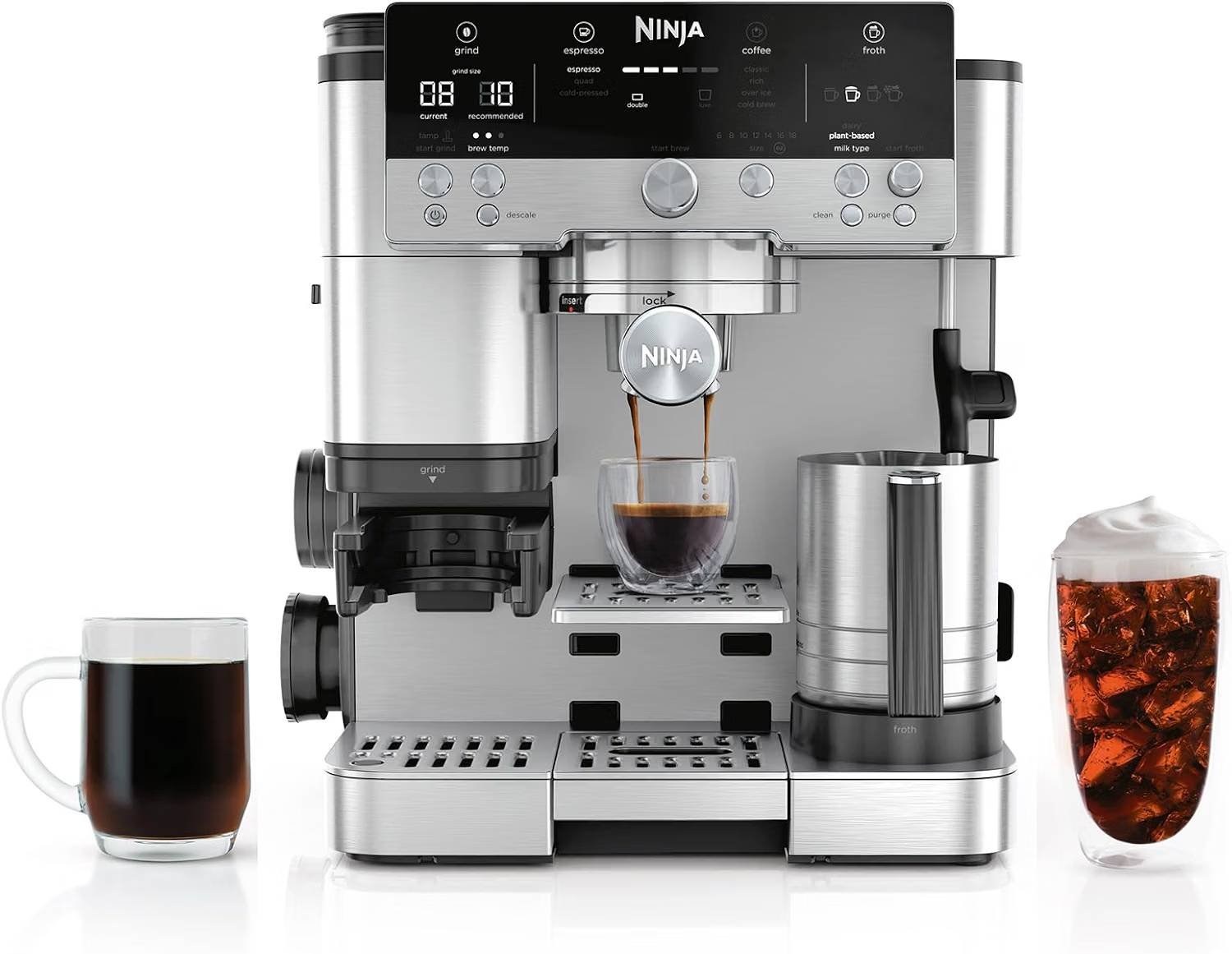
The versatile choice for a household that wants guided espresso, regular drip coffee and cold brew without dedicating the counter to three appliances.
Buy it ifYou want the machine to recommend grind settings and assist with dosing and milk texture.
Skip it ifYou prefer a simple traditional machine with fewer automated decisions.
The Ninja approaches espresso as a guided system. Its official product description emphasizes grind recommendations, weight-based dosing and hands-free microfoam, while the same platform also handles drip coffee and rapid cold brew. That makes it unusually practical in a mixed household where not everyone wants the same drink or the same level of involvement.
Versatility also creates complexity. The machine occupies more conceptual and physical space than a focused espresso maker, and its guidance features decide parts of the process that advanced users may prefer to control directly. Buy it for convenience across drink categories, not because you expect it to behave like a traditional prosumer machine.
A strong fit for households that want many hot and iced recipes, saved preferences and an automatic milk system that avoids tubes.
Buy it ifSeveral people want different drinks without learning manual espresso preparation.
Skip it ifYou want to control distribution, tamping, shot pressure or milk texturing yourself.
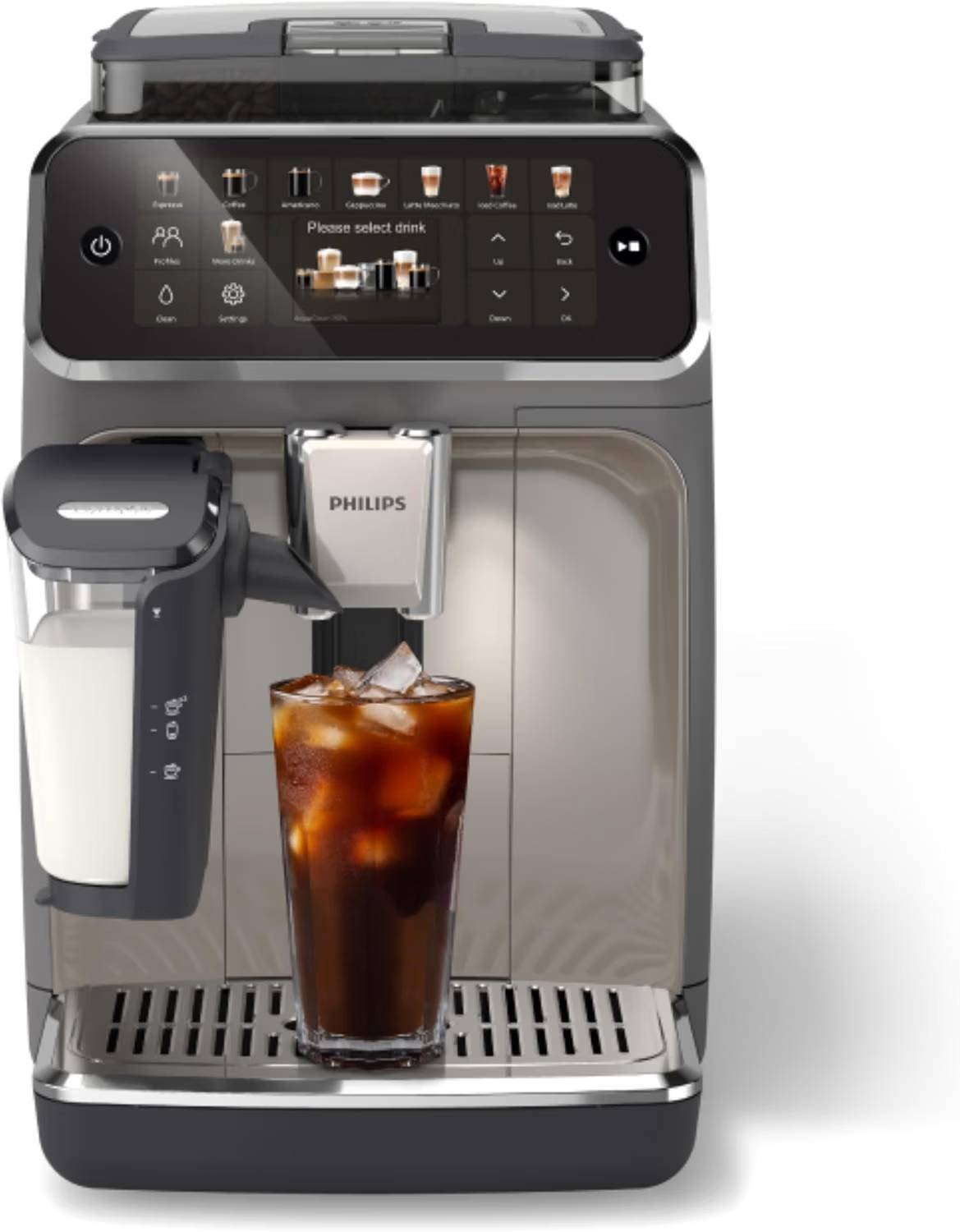
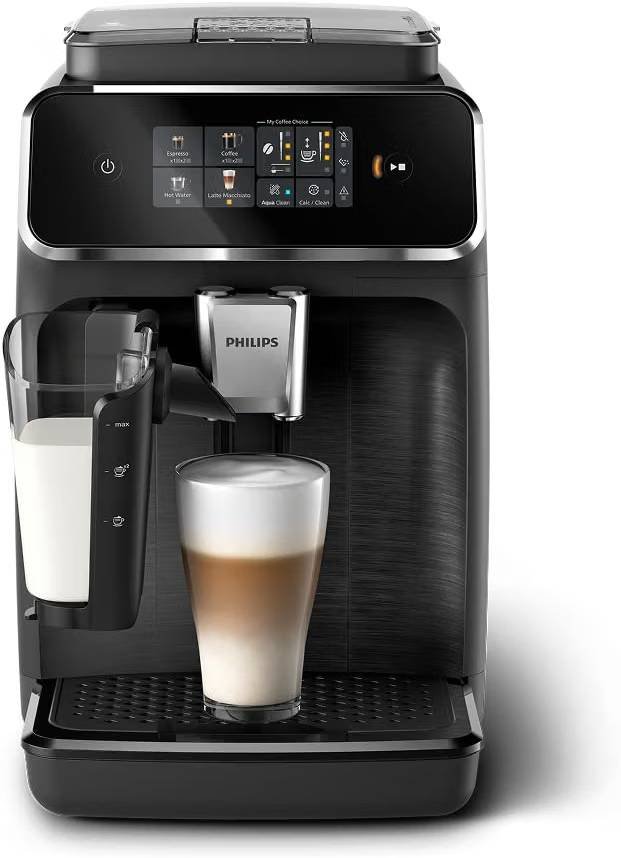
Philips lists 20 hot and iced recipes for the 5500 Series, along with the two-part LatteGo milk system and user profiles. The value is not that every recipe is fundamentally different; it is that family members can reach their preferred strength, volume and milk drink with fewer repeated adjustments.
The tradeoff is the defining compromise of every super-automatic machine: you gain speed and repeatability while giving up direct control over puck preparation. If that exchange sounds right, the 5500 deserves its place near the top. If it does not, compare the semi-automatic picks on this page instead of paying for automation you will resist.
A convenience-first option for buyers who want freshly ground hot and cold coffee drinks with automatic milk rather than a manual steam wand.
Buy it ifYour household regularly alternates between hot milk drinks and cold coffee recipes.
Skip it ifYou want a portafilter, manual steaming and visible control over extraction.
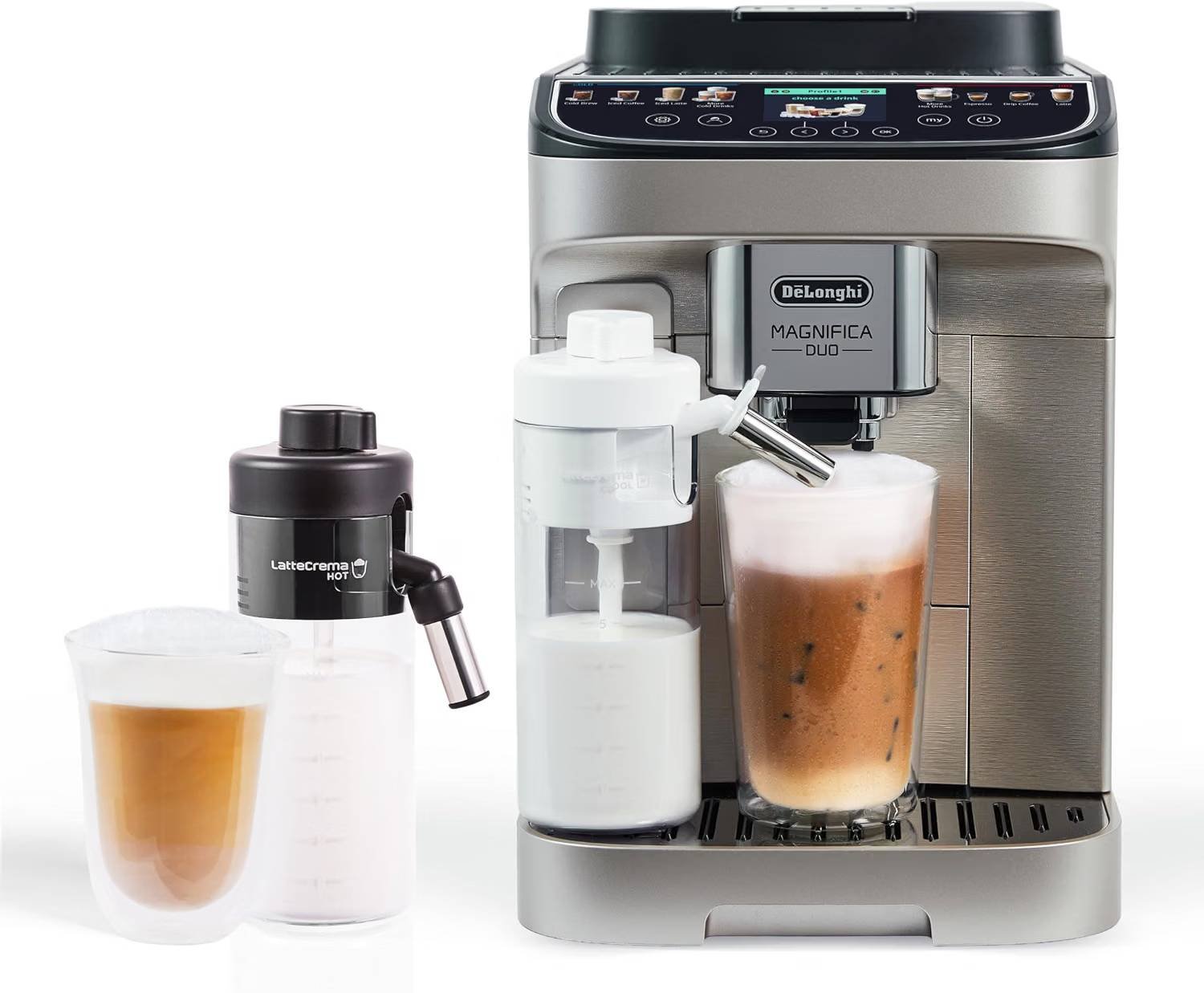
De'Longhi positions the Magnifica Duo around automatic grinding, dosing and extraction, paired with LatteCrema Hot & Cool. Its color interface is meant to remove technique from the morning routine: select a drink, make preference adjustments and let the system coordinate coffee and milk.
That convenience is the reason to buy it and the reason some espresso enthusiasts will not. The machine can reduce daily effort, but it cannot recreate the tactile feedback of dialing in a portafilter. Match the purchase to your behavior: if nobody in the home wants to become the household barista, automation is a feature rather than a compromise.
A simpler route into one-touch coffee and milk drinks for buyers who do not need the 5500 Series' larger recipe library or user profiles.
Buy it ifYou want a short menu and straightforward LatteGo cleanup.
Skip it ifYou want extensive recipes, multiple saved profiles or manual espresso technique.
The 2300 Series deliberately keeps the menu compact. Philips lists four one-touch beverages plus hot water, paired with the same basic two-part, tube-free LatteGo idea that makes the brand attractive to milk-drink buyers who dislike cleaning narrow hoses.
This is a better value than a feature-heavy model when the household repeatedly makes the same few drinks. It becomes restrictive only when users want many recipes or separate saved profiles. Compare the 2300 and 5500 by actual habits, not by assuming the longer specification sheet is automatically better.
A focused semi-automatic machine for buyers who want to develop puck preparation and milk-steaming skills with a separate espresso grinder.
Buy it ifYou enjoy practice, accessories and a traditional machine layout.
Skip it ifYou want fast automatic drinks or simultaneous brewing and steaming.
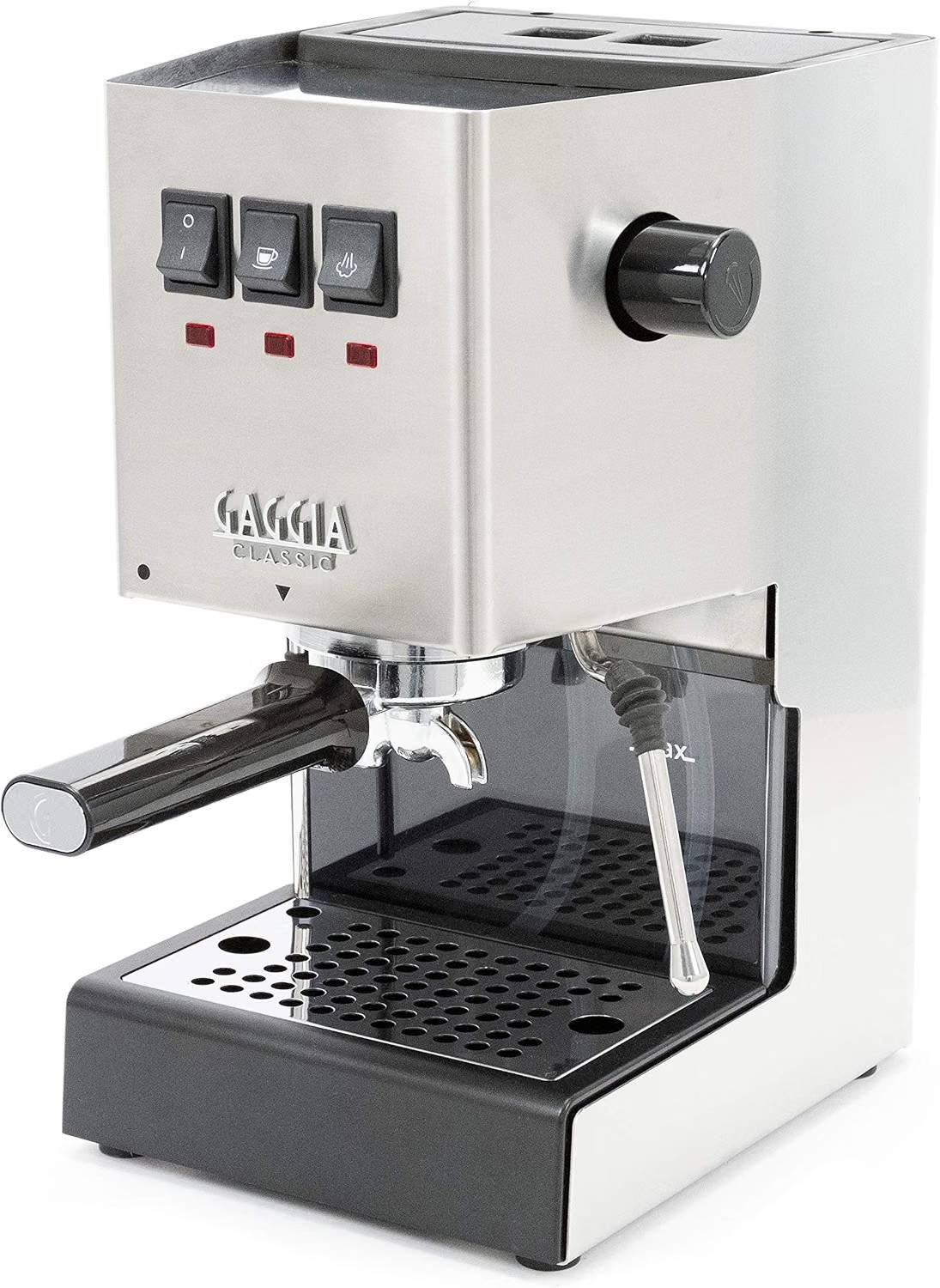
The E24 version of the Gaggia Classic uses a brass boiler and preserves the simple, hands-on character that has made the Classic family a common first serious machine. It does not hide mistakes. Grind quality, dose, distribution and espresso tamping all shape the result.
Its single-boiler design also shapes the pace: brew first, change temperature mode, steam milk, then manage the return to brewing temperature. Read our single-boiler espresso machine guide if that sequence is unfamiliar. It is rewarding for one or two drinks, but slower for a line of lattes.
The specialist pick for buyers who want to control pressure by hand and do not need an integrated boiler, pump or milk-steaming system.
Buy it ifYou enjoy measuring, preheating and physically controlling each extraction.
Skip it ifYou want rapid milk drinks or a push-button morning routine.
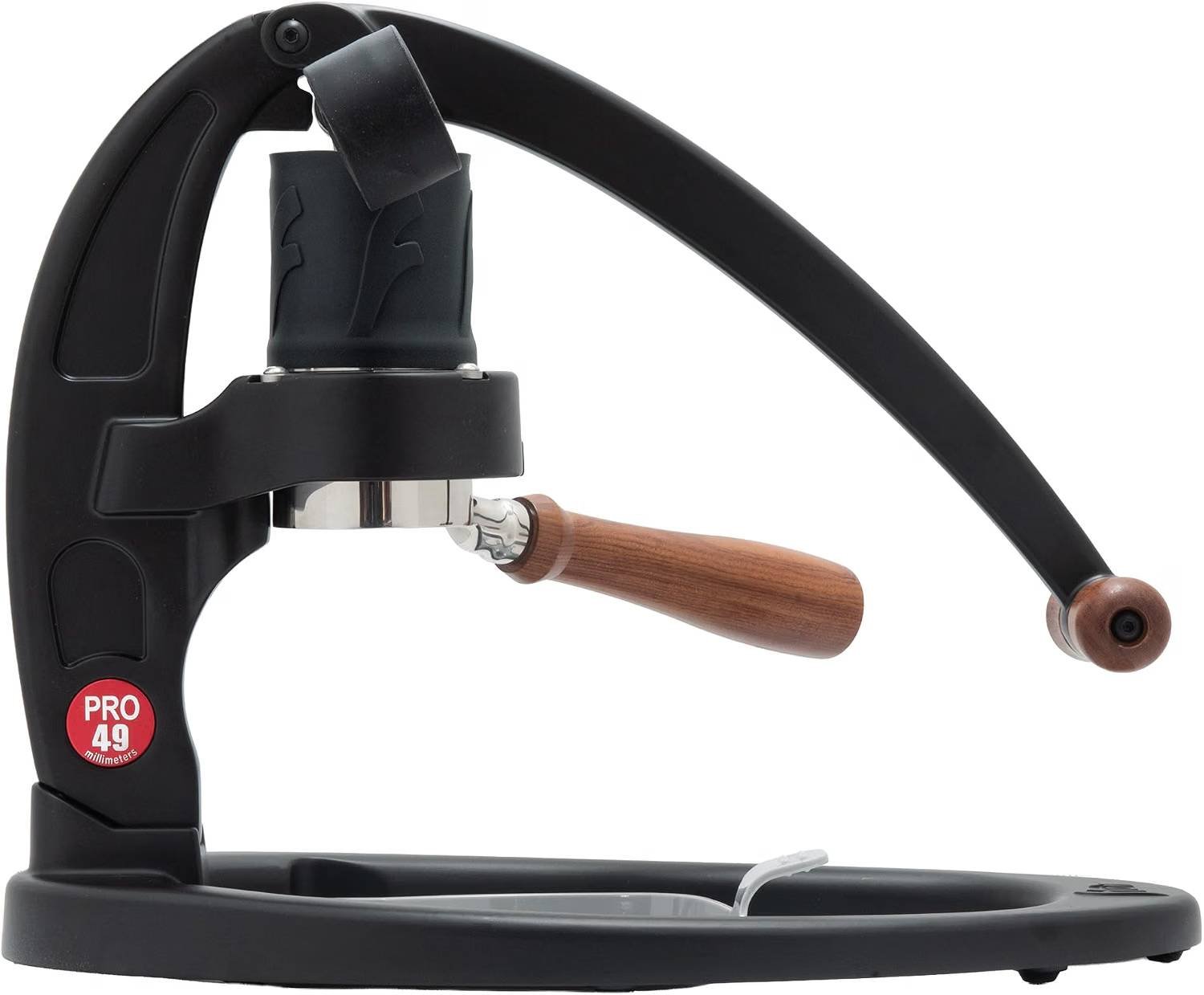
The Flair strips espresso back to heat, grind, dose and lever pressure. The 49 PRO uses a 49 mm basket and a pressure gauge, so users can see and feel the pressure profile rather than relying on a pump. It is a compact way to study extraction, but it moves several responsibilities from the machine to the person.
You need a suitable grinder, a kettle and a consistent preheating routine. Milk drinks also require a separate frother or steamer. That makes the Flair less convenient than every powered machine above, yet more direct for a buyer who considers the process the main attraction.
Basket49 mm format
PressureManual lever with gauge
Heat and milkExternal kettle and milk solution needed
What we like
Direct pressure profiling
No pump or powered boiler
Compact, focused espresso setup
What to consider
Preheating adds steps
Requires a precise grinder and kettle
No built-in milk steaming
Specification sources reviewed: Flair's official 49 PRO documentation and brewing manual. See also our lever espresso machine guide.
A high-end automatic system for households that value a large touchscreen drink menu, saved preferences and connected features.
Buy it ifYou want premium automation and expect several users to save different drinks.
Skip it ifYou want a compact, mechanically simple machine or the strongest value per drink.
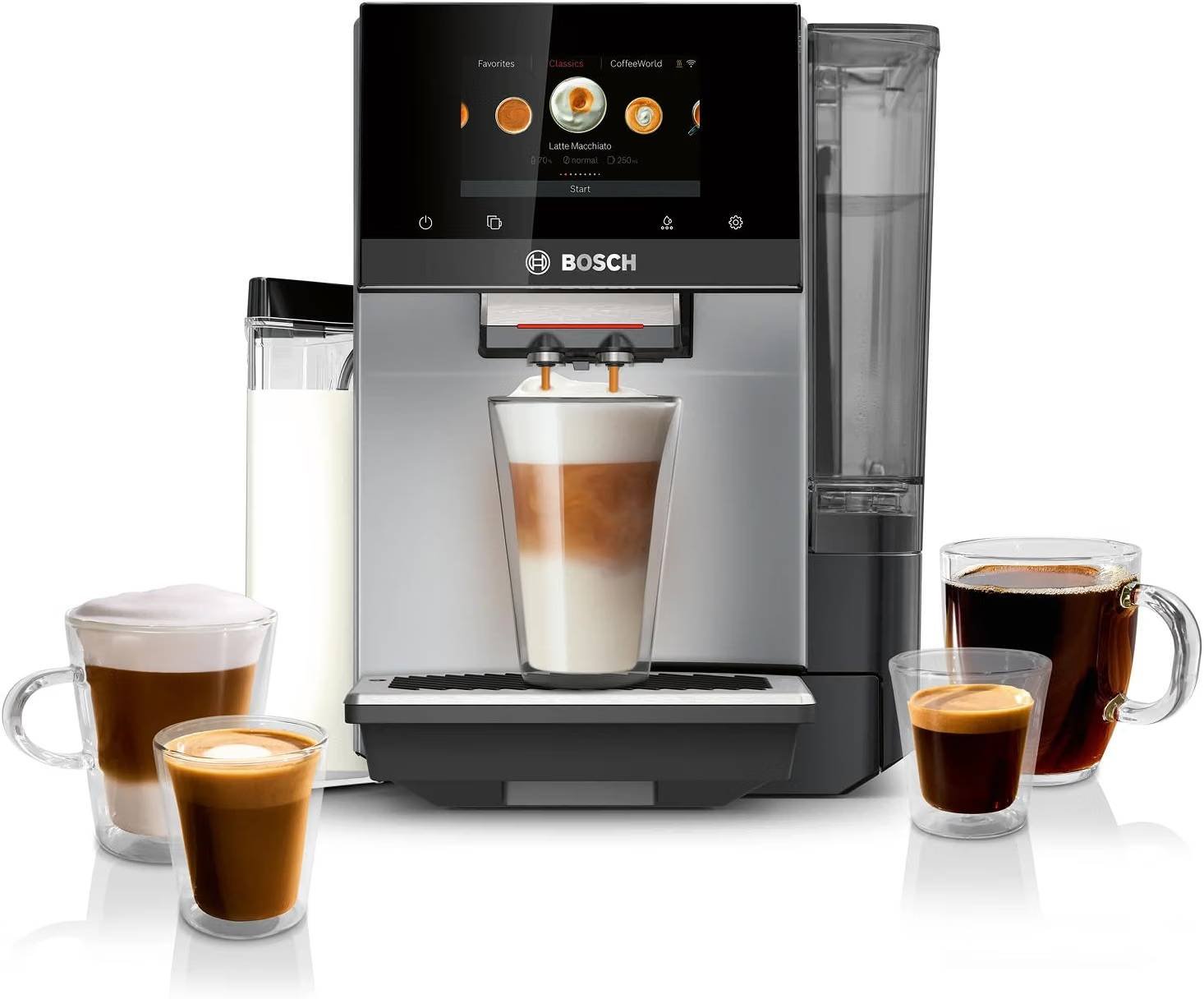
Bosch lists more than 35 drink options on current 800 Series VeroCafe variants, along with a five-inch color touchscreen, a ceramic grinder and Home Connect features. Exact milk hardware and profile counts vary by model, so the model number on Amazon must match the Bosch page you use for comparison.
The VeroCafe makes sense when interface quality and household personalization are purchase priorities. It is harder to justify for someone who orders only espresso and cappuccino. More recipes, profiles and connectivity can improve a shared kitchen, but they also create a higher-cost system with more settings and maintenance routines.
Drink menu35+ options on current 800 Series variants
A compact automatic option for households that want to change between regular, decaf or different roast styles more easily.
Buy it ifBean switching is a real weekly habit rather than a feature you may never use.
Skip it ifYou use one coffee consistently or want manual control over extraction.
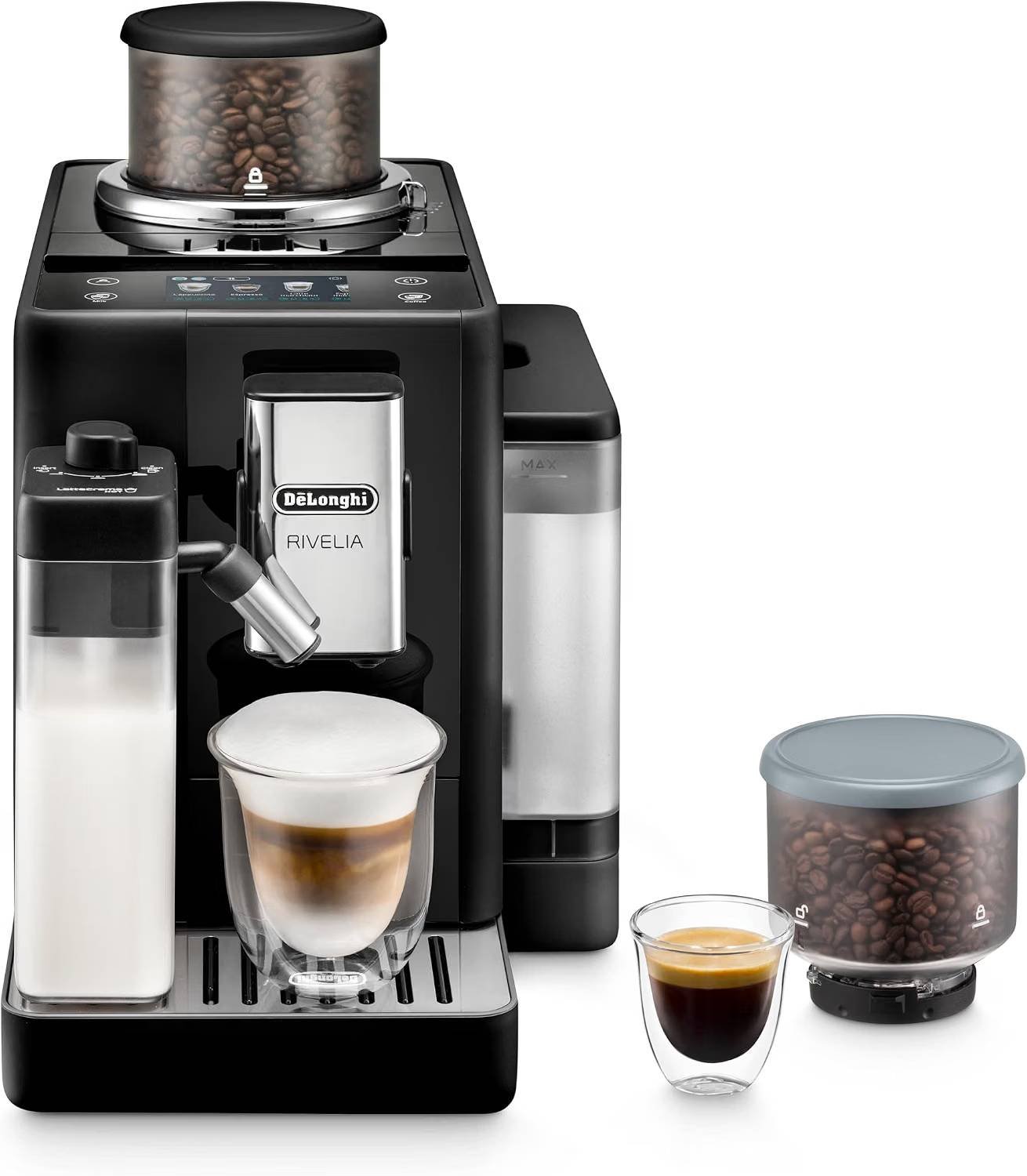
Rivelia's distinctive idea is its removable bean-hopper system, designed to make changing coffee easier than emptying a fixed hopper. That can be genuinely useful in a home that alternates between caffeinated and decaf beans or uses different roasts for different drinks.
The convenience comes inside De'Longhi's automatic ecosystem, so buyers should verify the exact Rivelia revision and milk configuration on Amazon. Do not pay extra for bean switching unless it solves a routine problem; if one bag stays in the hopper until empty, a simpler automatic machine may offer better value.
Key featureRemovable bean-hopper workflow
TypeFully automatic
Buyer fitRegular and decaf switching
What we like
Practical solution for changing beans
Compact automatic concept
Reduces friction for decaf households
What to consider
Extra value depends on using the hopper system
Milk setup varies by exact model
Proprietary components require model-specific care
Specification sources reviewed: De'Longhi Rivelia product and support documentation. Confirm the exact model code and included milk system before purchase.
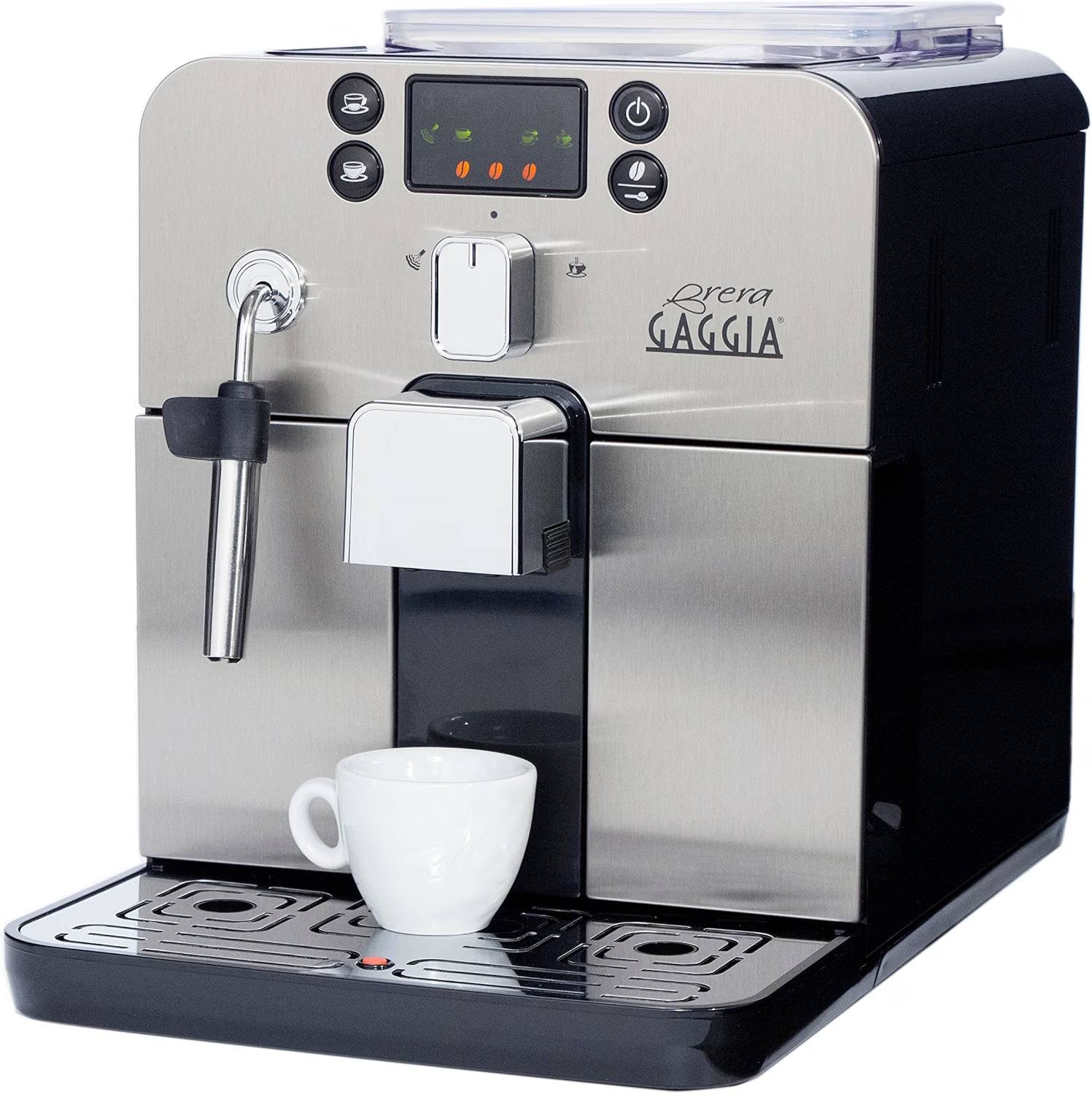
A compact, established super-automatic for buyers who mainly want espresso and coffee at the press of a button and do not mind frothing milk manually.
Buy it ifYou want simple bean-to-cup drinks in a smaller footprint.
Skip it ifYou want a modern color display, automatic milk carafe or large drink library.
The Brera earns its place by staying focused. It grinds and brews automatically, while its steam wand keeps milk preparation separate. This hybrid approach reduces the number of milk tubes and carafe parts but still asks the user to learn basic frothing.
Its interface and drink selection feel modest beside newer premium machines. That can be a strength if you value straightforward operation. It can also be a limitation for a household expecting one-touch lattes. Review the current dimensions, reservoir access and warranty because small kitchens often depend on where doors and tanks move, not only the width printed in a listing.
Manual and semi-automatic machines reward technique. Fully automatic machines trade direct control for repeatability and speed. Decide which routine you want before comparing features.
Built-in or separate grinder?
An integrated grinder saves space. A separate grinder usually gives you a clearer upgrade path. Our budget espresso grinder guide explains what to prioritize.
Espresso or milk drinks?
For lattes and cappuccinos, compare steam recovery, milk automation and cleanup. A machine can pull capable espresso yet feel frustrating when several milk drinks are needed.
One drink or a busy household?
User profiles, large reservoirs and automatic milk systems matter more when several people use the machine. A single enthusiast may prefer simpler hardware and deeper control.
What is the best espresso machine for most beginners?
The Breville Barista Express is our starting recommendation for a beginner who wants a hands-on workflow and built-in grinder. Beginners who prefer one-touch drinks should choose a fully automatic model such as the Philips 2300 or 5500 instead.
Is a 20-bar machine better than a 15-bar machine?
No. The advertised number usually describes maximum pump capacity, not the pressure that should reach the coffee during extraction. Grinder quality, temperature stability, puck preparation and pressure regulation are more useful buying signals.
Do I need a separate espresso grinder?
You need a capable grinder, but it can be built into the machine. A separate grinder offers more upgrade flexibility. Manual machines and the Gaggia Classic Pro E24 on this list require one.
Are super-automatic espresso machines worth it?
They can be worth it when speed, repeatability and low-effort milk drinks matter more than manual control. They are a weaker fit for buyers who want to adjust distribution, tamping, extraction pressure or milk texture directly.
Which machine is best for lattes and cappuccinos?
The Philips 5500 and De'Longhi Magnifica Duo are convenient for automatic milk drinks. The Ninja Luxe Café Premier adds guided, hands-free milk texturing. A buyer who wants to learn manual microfoam should consider the Breville or Gaggia Classic.
Which espresso machine is easiest to clean?
No espresso machine is maintenance-free. The Philips LatteGo carafe uses two parts and no tube, which simplifies milk cleanup. Manual lever machines have fewer powered systems but require hands-on cleaning and a separate milk solution.
How much counter space should I allow?
Measure width, depth and height with the machine in use. Leave space to remove the water tank, fill the hopper, move the steam wand and access the drip tray. Product photos rarely show this working clearance.
How often should I descale an espresso machine?
Follow the manufacturer's water-hardness and filter guidance. A universal calendar schedule may be excessive with soft water and insufficient with hard water. Do not use vinegar unless the machine manufacturer explicitly permits it.
Recommended next
Continue your espresso-machine research
Use these focused guides to narrow the machine type and complete the setup around it.