A 20 bar pump sounds impressive, but the number on the box is only one part of good espresso. We compare five 20 bar machines by pressure control, grinder setup, portafilter size, milk workflow, temperature management, and the tradeoff each one asks you to accept.
John CrestaniEspresso Equipment Specialist
Last Updated
The short version
Is a 20 bar espresso machine actually better?
Not automatically. A 20 bar label usually describes the pump's maximum capability, while espresso itself is commonly brewed around roughly 9 bar. Among these five models, the Gevi ECMI0 is our research-based starting pick for an all-in-one grinder workflow. Choose the AIRMSEN BCM2308 if automatic milk is more important, or the Gevi ECMN0 if you want a separate grinder plus OPV pressure control and 58 mm tools.
Testing transparency: This is a research-based comparison of manufacturer specifications, current product documentation, and espresso-system tradeoffs—not a hands-on laboratory test. Recommendations apply to the five models listed here, not every 20 bar espresso machine on the market.
How we evaluated
We ranked the machine around the pump, not the pump number
Historical SCA espresso definitions and modern professional practice center much closer to 9 bar than 20 bar during extraction. So this comparison treats “20 bar” as a category label, then looks at the hardware and workflow that actually help you control the shot. If you are still comparing the category as a whole, our 9 best espresso machines guide gives you a broader reference point.
Pressure managementDoes the machine regulate or communicate brew pressure, or only advertise pump maximum?
Grind and puck controlIs a capable grinder built in, and what portafilter format does the machine use?
Temperature and milkHow does the machine handle brew temperature and the switch from espresso to steaming?
Ownership frictionConsider cleaning, water capacity, accessory compatibility, counter space, and learning curve.
20 bar espresso machines compared
Amazon links in this table are paid links. On a phone, swipe sideways to see every column. Prices and availability change frequently, so this table intentionally does not display them.
Five 20 bar espresso machines: buyer fit, grinder, portafilter, and main tradeoff
Espresso Mastered:The EspressoFinder.com Guide for Enthusiasts and Professionals
Choose smarter. Brew better from day one.
Pressure numbers and long feature lists can make almost every machine look impressive. This practical guide shows you what actually affects taste, workflow, and long-term value—before you spend your money.
Separate useful specifications from marketing noise
Match the grinder, milk system, and learning curve to your routine
Spot hidden accessory, cleaning, and upgrade costs
Use a clear checklist to compare any espresso machine
Free digital guide · Delivered by email · Privacy Policy
Our five 20 bar picks, with the tradeoffs explained
A 20 bar pump can be part of a capable machine, but it should not be the reason you buy one. The better question is how the machine manages pressure, temperature, grinding, milk, and repeatability around that pump rating.
Best all-round 20 bar setup
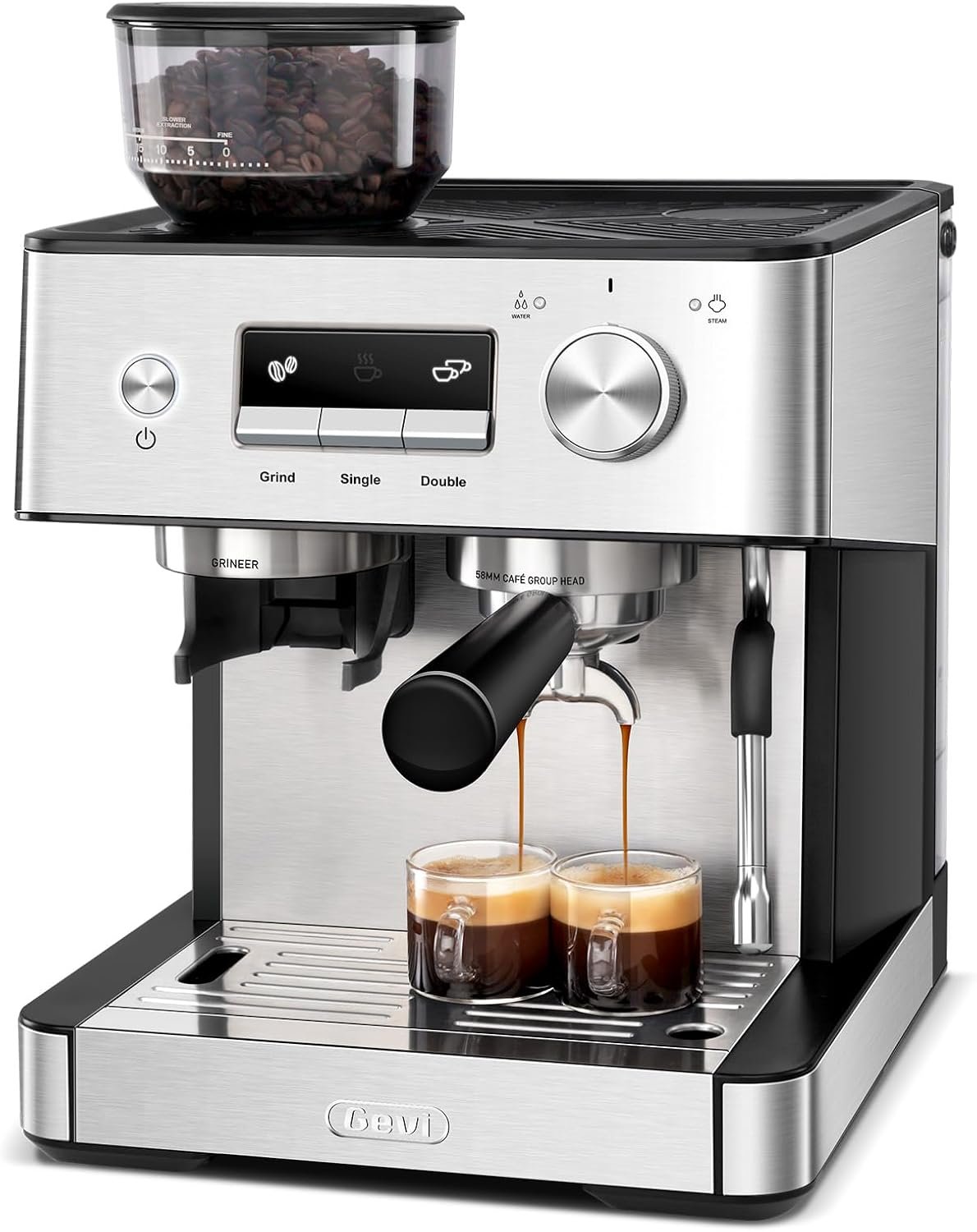
1. Gevi ECMI0 20 Bar Espresso Maker
The strongest starting point here if you want a built-in grinder, a 58 mm format, PID/NTC temperature control, and a manual steam wand in one machine.
Buy it ifYou want to go from whole beans to espresso without buying a separate grinder.
Skip it ifYou want dual-boiler brewing and steaming at the same time.
Gevi lists the ECMI0 as a single-boiler 20-bar system with a 30-step built-in grinder, PID + NTC temperature control, a 58 mm group head, and manual steaming. That combination makes the pressure number less important than the integrated workflow: you can adjust the grind, prep a standard-size basket, and steam milk without assembling several separate appliances.
The main compromise is the single-boiler layout. Espresso-first buyers may not care, but people making several milk drinks back-to-back should expect a more sequential routine than with a dual-heating system. If you want to compare grinder-first setups more broadly, see our guide to budget espresso grinders before deciding whether an integrated grinder is the right long-term choice.
Pressure system20-bar pump listed
Grinder30 settings listed
Portafilter58 mm
What we like
Integrated grinder keeps the station compact
58 mm format opens up accessory choices
PID + NTC temperature control is listed
What to consider
Single-boiler workflow is more sequential
Built-in grinders are less upgradeable
Pressure rating alone does not guarantee better extraction
Specification source reviewed: Gevi's current ECMI0 product page and espresso-machine comparison data.
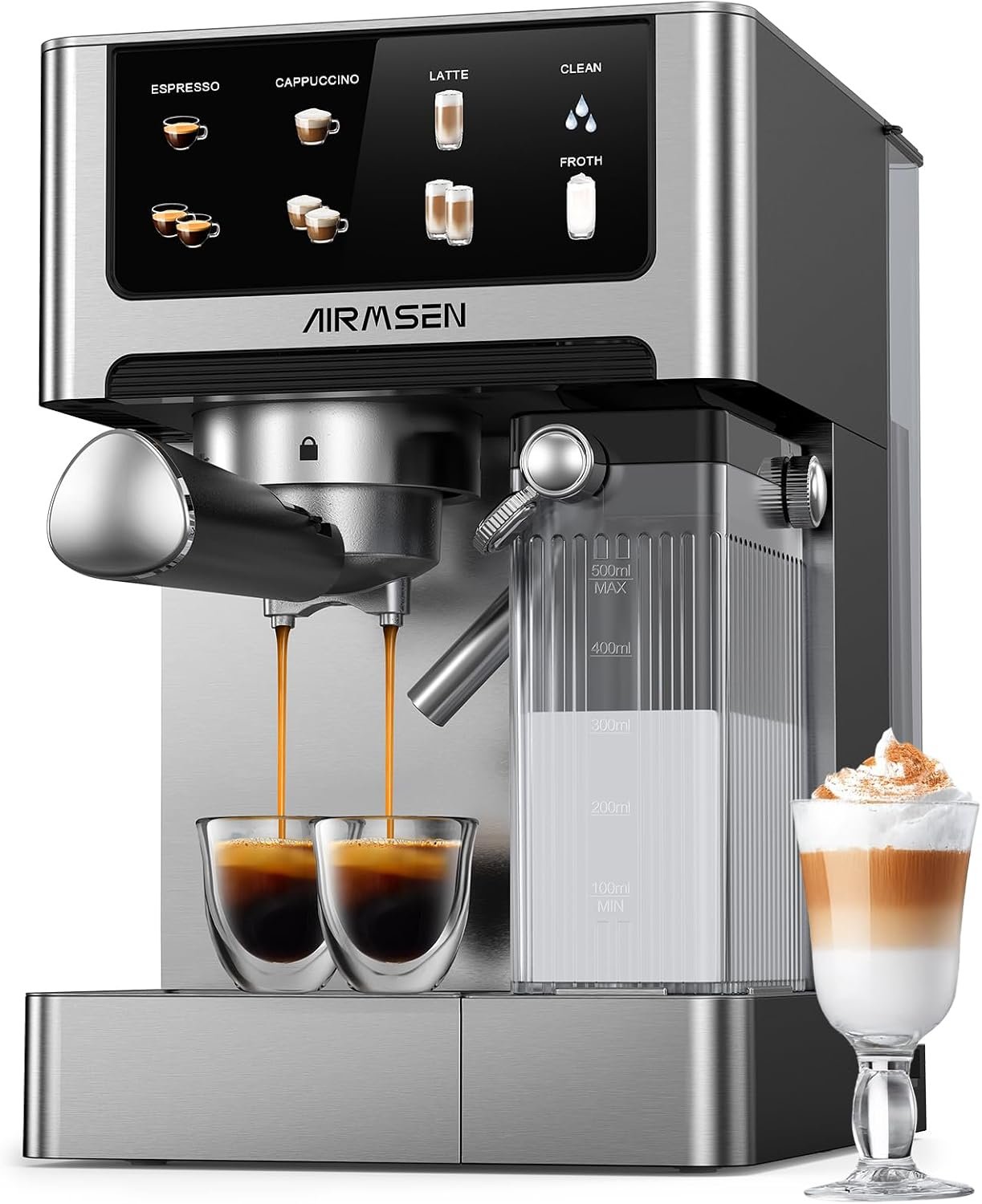
A convenience-first pick for cappuccino and latte drinkers who would rather use an automatic milk carafe than learn manual steam-wand technique immediately.
Buy it ifYou prioritize automatic milk drinks, touchscreen controls, and quick switching between espresso and foam.
Skip it ifYou want the espresso machine itself to grind whole beans.
AIRMSEN lists a 20-bar Italian pump, a touchscreen, an automatic milk system, and separate 1350W brewing and 1000W steam heating systems. The current product specifications also list a 60 oz (1.8 L) removable water tank and a 51 mm portafilter. That makes the BCM2308 notably different from the grinder-equipped machines in this guide: it automates milk rather than grinding.
That tradeoff can make sense for a latte-heavy household. You can pair it with fresh espresso-ground coffee or a separate grinder while reducing the skill needed to texture milk. For shoppers who want even more automation from beans to cup, compare our best automatic espresso machine guide.
Pressure20-bar pump listed
Water tank60 oz / 1.8 L
Portafilter51 mm listed
What we like
Automatic milk system lowers the frothing learning curve
Separate brew and steam heating is useful for milk drinks
Touchscreen and removable parts simplify daily operation
What to consider
No built-in grinder in the supplied listing
Milk system adds more parts to clean
51 mm accessories are less universal than 58 mm
Specification source reviewed: AIRMSEN's current BCM2308 product page.
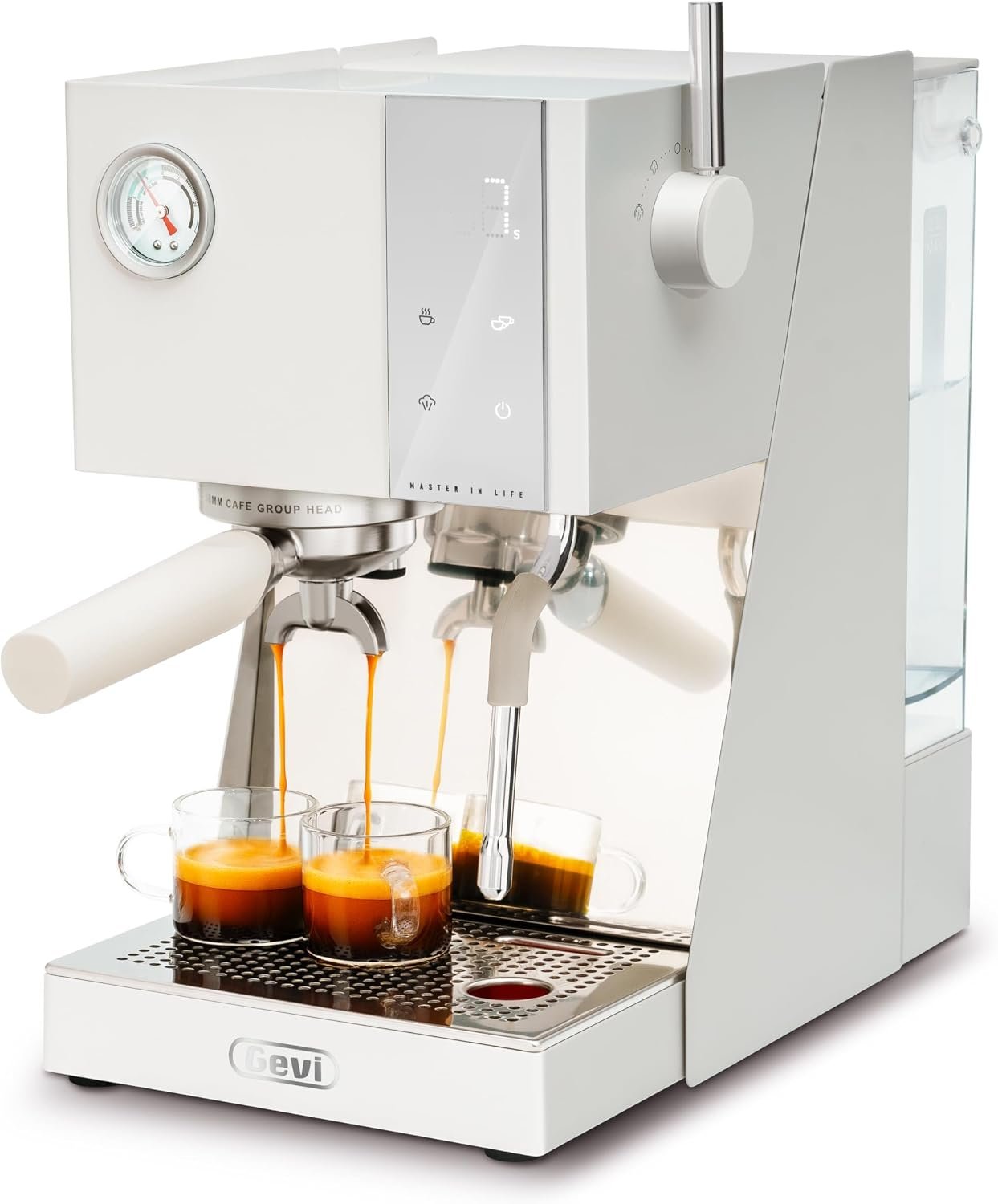
The most pressure-control-focused choice here, pairing a 20-bar pump with an OPV system, a 58 mm portafilter, temperature control, and real-time display feedback.
Buy it ifYou want a 58 mm semi-automatic machine and prefer to choose your grinder separately.
Skip it ifYou want an all-in-one bean hopper and grinder built into the machine.
This model is the clearest example of why “20 bar” and actual brew pressure are not the same thing. Gevi describes the ECMN0 as using a 20-bar Italian ULKA pump while its OPV is designed to keep extraction pressure in a lower range. The machine also lists PID + NTC temperature control, a 58 mm group head, a touchscreen, a pressure gauge, and a 2.3 L tank.
For a buyer who enjoys dialing in espresso, that pressure-management hardware matters more than the pump's maximum rating. The standard 58 mm format also makes it easier to shop for baskets, tampers, and bottomless handles; our espresso machine portafilter guide explains why size and compatibility matter.
Pressure control20-bar pump + OPV
Portafilter58 mm
Water tank2.3 L listed
What we like
OPV makes pressure management a real design feature
58 mm format is accessory-friendly
Display feedback supports a more deliberate dial-in process
What to consider
Requires a separate espresso-capable grinder
More manual technique than automatic machines
Touch controls may not suit buyers who prefer knobs and switches
Specification source reviewed: Gevi's current ECMN0 product page.
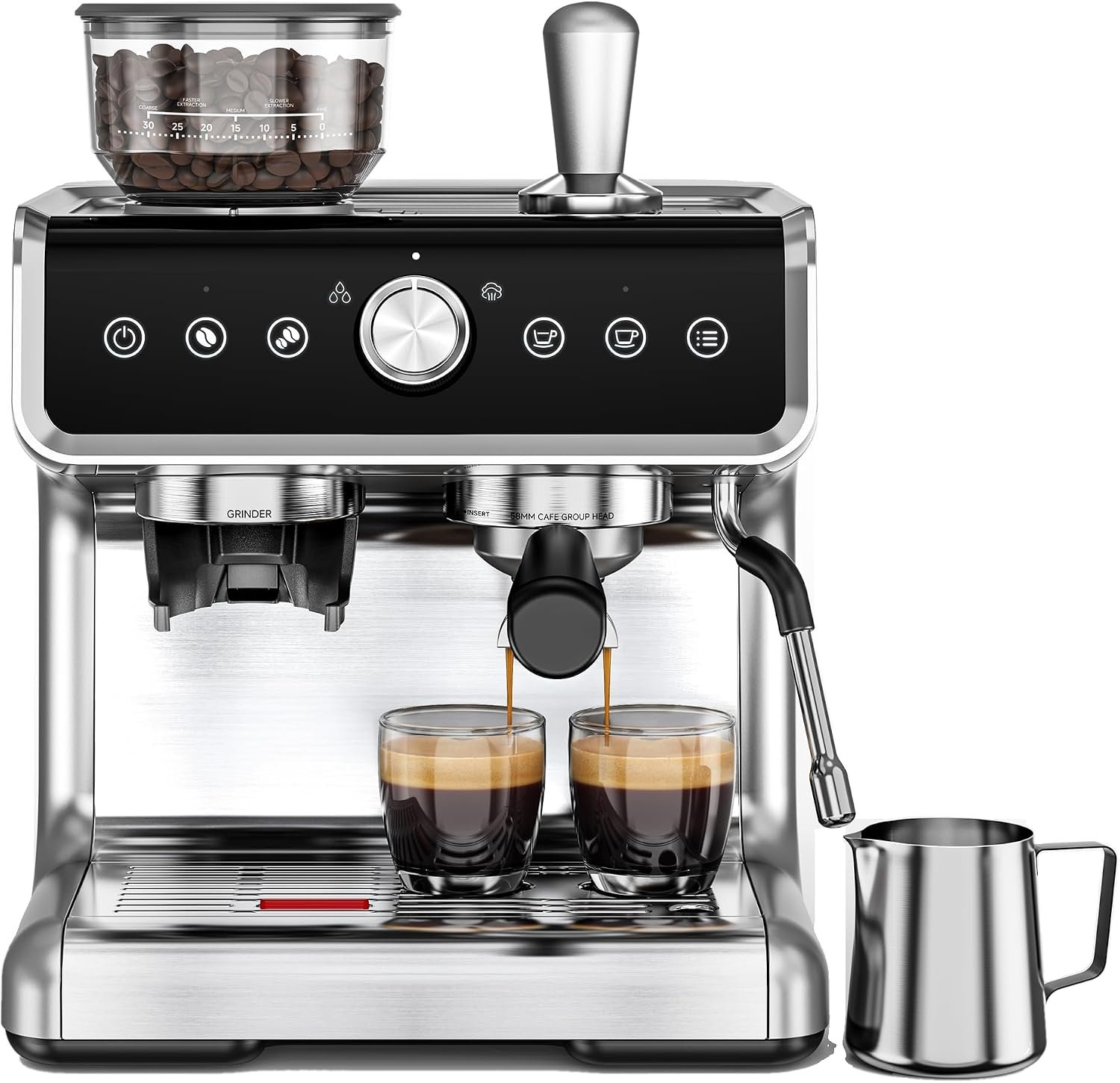
A feature-dense alternative with a built-in grinder, 58 mm portafilter, PID control, and manual steam wand—but with less long-term third-party evidence than established category leaders.
Buy it ifYou want 58 mm tools and a grinder in one countertop footprint.
Skip it ifYou prioritize a long track record of independent ownership reporting.
EUHOMY's current product page lists a commercial-grade 20-bar pump, 30 grinder adjustments, a professional 58 mm portafilter, PID temperature control, and a high-pressure steam wand. On paper, that is a strong feature mix for someone who wants room to experiment with grind and puck preparation without adding a separate grinder.
The caution is evidence quality. Manufacturer specifications can tell us what controls and components are listed, but they do not establish long-term durability, noise, or thermal consistency in real kitchens. Treat the specification sheet as a starting point, not a laboratory score.
Grinder30 settings listed
Portafilter58 mm listed
TemperaturePID listed
What we like
58 mm format plus built-in grinder
PID temperature control is listed
Manual steam wand leaves milk texture in your hands
What to consider
Limited independent long-term evidence
Manufacturer performance claims still need outside verification
Integrated grinder cannot be upgraded independently
Specification source reviewed: EUHOMY's current 20-bar espresso machine product page.
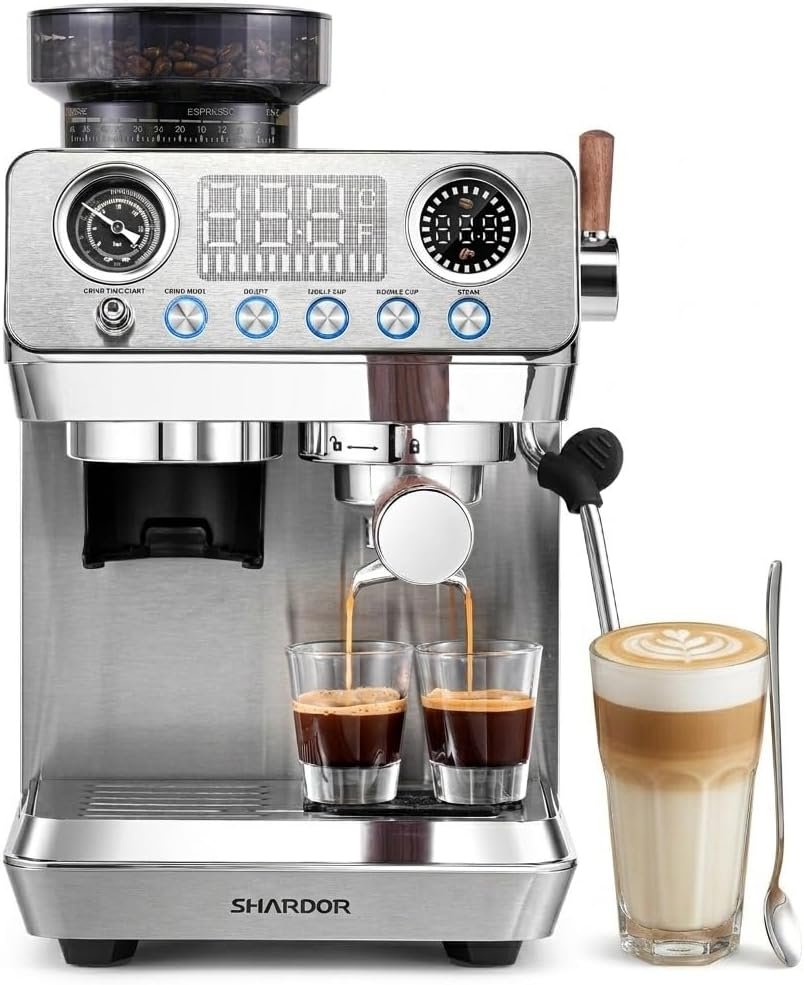
5. SHARDOR 20 Bar Espresso Machine with Built-In Grinder
Worth considering when grinder adjustability is high on your list: SHARDOR lists 45 grind settings, a 52 mm group, a manual steam wand, and a large removable tank.
Buy it ifYou want more grinder steps than the other integrated-grinder models in this comparison.
Skip it ifYou specifically want the wider 58 mm accessory ecosystem.
SHARDOR lists a 20-bar pump, a built-in grinder with 45 settings, a 52 mm stainless-steel portafilter, a manual steam wand, and a removable 60.9 oz tank. The broader grind range is the headline feature because espresso is sensitive to small grind changes as beans age and environmental conditions change.
The 52 mm group is less universal than 58 mm, so check accessory compatibility before buying extra tampers or baskets. Whichever machine you choose, consistent preparation matters; our espresso tamping guide covers the puck-prep basics that pressure marketing cannot replace.
Grinder45 settings listed
Portafilter52 mm listed
Water tank60.9 oz listed
What we like
45 grind settings give useful adjustment range
Integrated grinder reduces separate equipment
Removable tank and drip tray simplify routine cleaning
What to consider
52 mm accessory choices are narrower than 58 mm
Manual milk steaming requires practice
Built-in grinder ties two major components together
Specification source reviewed: SHARDOR's current built-in-grinder 20-bar product page.
Four things that matter more than the “20 bar” badge
Look for brew-pressure control
A high-rated pump creates headroom. What matters for espresso is how the machine manages pressure at the coffee. An OPV or pressure gauge can be more informative than the maximum pump number.
Choose the grinder strategy first
A built-in grinder reduces clutter; a separate grinder is easier to upgrade. If you use pre-ground coffee, you give up one of the most useful variables for dialing in espresso.
Check portafilter size and baskets
58 mm gives you a broad third-party accessory ecosystem. Smaller sizes can work well, but confirm basket, tamper, and bottomless-portafilter compatibility before ordering extras.
Plan for water and cleaning
Scale can affect flow and temperature over time. Follow the machine's maintenance guidance and consider your water quality; our espresso machine water-filter guide covers the next step.
Quick answers
Common questions about 20 bar espresso machines
Is 20 bar too much pressure for espresso?
The pump may be capable of 20 bar, but that does not mean the coffee should be extracted at 20 bar. Traditional espresso standards and many professional machines operate around 9 bar at the brew group. Pressure regulation, grind, dose, and flow matter more than the maximum pump rating.
Is a 20 bar espresso machine better than a 15 bar machine?
Not by the pressure number alone. A well-designed 15 bar machine with stable temperature and good pressure regulation can outperform a poorly controlled 20 bar machine. Compare the complete system rather than treating pump rating as a score.
Do I need a grinder for a 20 bar espresso machine?
Yes, unless the machine has a suitable built-in grinder or you use pre-ground coffee. Fresh grind adjustment is one of the main ways to control shot time and flow. Beginners can also review our how to use an espresso machine guide before dialing in their first shots.
What is the best portafilter size?
There is no single best size, but 58 mm is popular because compatible baskets, tampers, and accessories are widely available. A smaller portafilter can still make good espresso if the machine and basket are well designed.
Should I buy automatic milk or a steam wand?
Choose automatic milk if convenience and repeatability matter most. Choose a manual steam wand if you want to control milk texture yourself and are willing to practice.
Recommended next
Continue your research
Compare broader espresso-machine categories, automation levels, and portafilter choices before you buy.