Best Auto Espresso Machine: 5 Fully Automatic Picks (2026)Skip to the article
The 5 Best Auto Espresso Machines of 2026
The best automatic espresso machine should make your routine easier without hiding the tradeoffs. We compare five bean-to-cup options by one-touch workflow, grinder, milk system, drink variety, cleaning, and personalization.
John CrestaniEspresso Equipment Specialist
Last Updated
The short version
What is the best auto espresso machine?
Among these five models, the Philips 5500 Series LatteGo is our research-based starting pick for the best auto espresso machine overall. It combines 20 hot and iced recipes, automatic LatteGo milk frothing, a 12-step ceramic grinder, four user profiles plus guest, and a removable brew group. Choose the De'Longhi Dinamica Plus if saved profiles and recipe depth matter most, the Ninja AutoBarista Pro if you want the machine to automate grind dialing and tamping, the Magnifica Duo for hot-and-cold variety, or the Philips 2300 for a simpler one-touch routine.
Testing transparency: This is a research-based comparison of current manufacturer specifications and design tradeoffs, not a hands-on laboratory test. Recommendations apply to the five models listed here. Prices are intentionally omitted because they change frequently. If you want a broader category comparison, see our best super-automatic espresso machines guide.
How we evaluated
The best automatic machine should remove work, not just add presets
We compared the manufacturer specifications for these five machines against four everyday buying criteria: how much of the bean-to-cup process is automated, how flexible the built-in grinder is, how the milk system fits real drink habits, and how much cleaning or setup remains after the button press. These are editorial judgments based on documented features, not laboratory scores or Amazon customer ratings.
One-touch workflowDoes the machine grind, dose, brew, and handle milk without extra steps?
Grinder & personalizationCan grind, strength, size, and saved profiles adapt to different users?
Milk & drink varietyDoes the machine cover the hot or cold drinks you actually make?
Ownership frictionHow much cleaning, refilling, counter space, and routine maintenance should you expect?
Best auto espresso machines compared
Amazon links in this table are paid links. On a phone, swipe sideways to see every column. Prices and availability change frequently, so this table intentionally does not display them.
Five automatic espresso machines: buyer fit, grinder, milk system, and main tradeoff
Espresso Mastered:The EspressoFinder.com Guide for Enthusiasts and Professionals
Choose smarter. Brew better from day one.
Pressure numbers and long feature lists can make almost every machine look impressive. This practical guide shows you what actually affects taste, workflow, and long-term value—before you spend your money.
Separate useful specifications from marketing noise
Match the grinder, milk system, and learning curve to your routine
Spot hidden accessory, cleaning, and upgrade costs
Use a clear checklist to compare any espresso machine
Free digital guide · Delivered by email · Privacy Policy
Our five automatic picks, with the tradeoffs explained
There is no universal winner. The best automatic espresso machine is the one that automates the parts of the routine you dislike while still giving you enough control over the drinks you make most often.
Best overall auto espresso machine
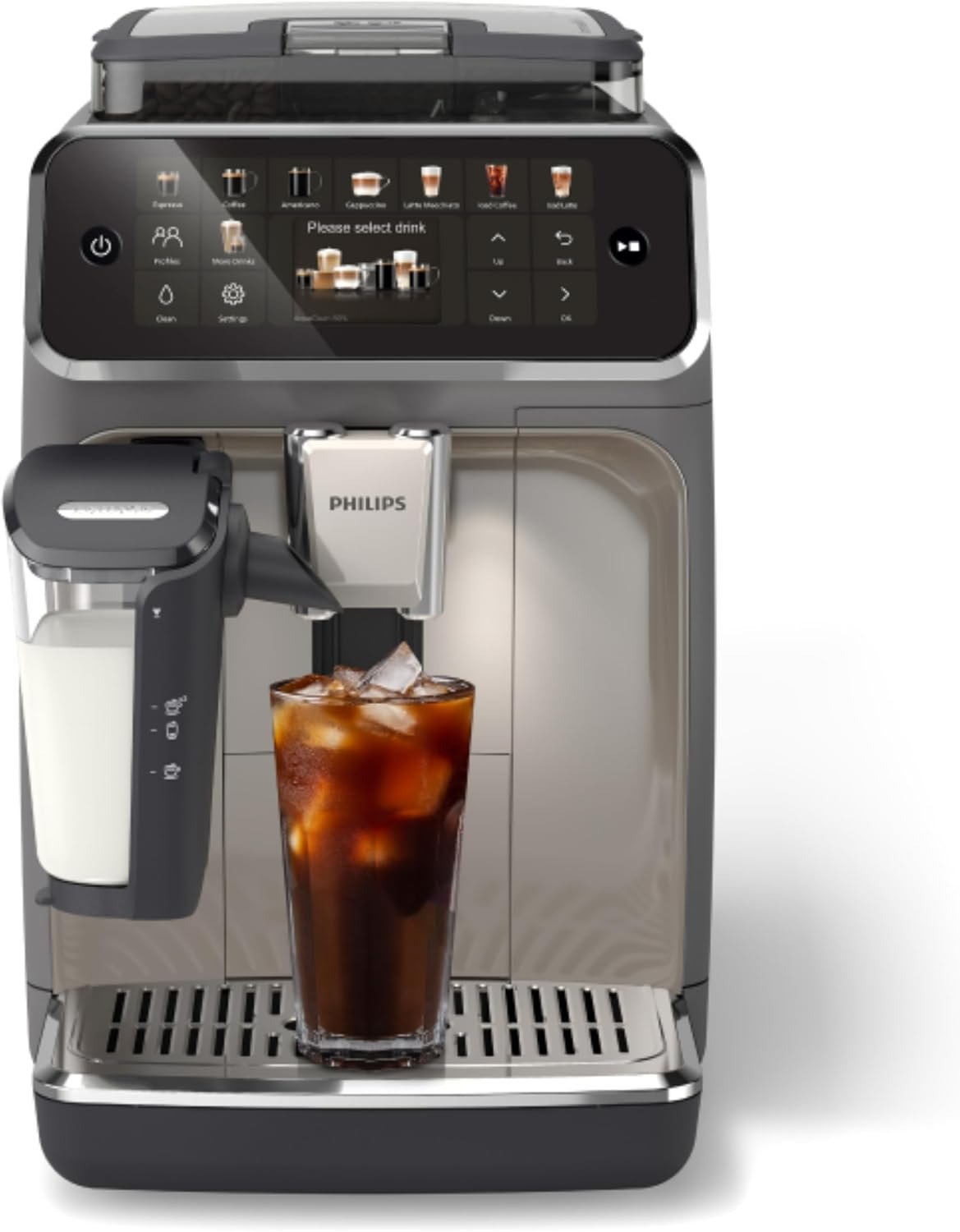
1. Philips 5500 Series LatteGo
The strongest all-round starting point here for buyers who want a broad hot-and-iced drink menu, automatic milk, profiles, and a relatively simple daily cleanup routine.
Buy it ifYou want one-touch milk drinks, iced coffee choices, four user profiles, and a removable brew group.
Skip it ifYou only drink straight espresso and would rather pay for a simpler machine with fewer presets.
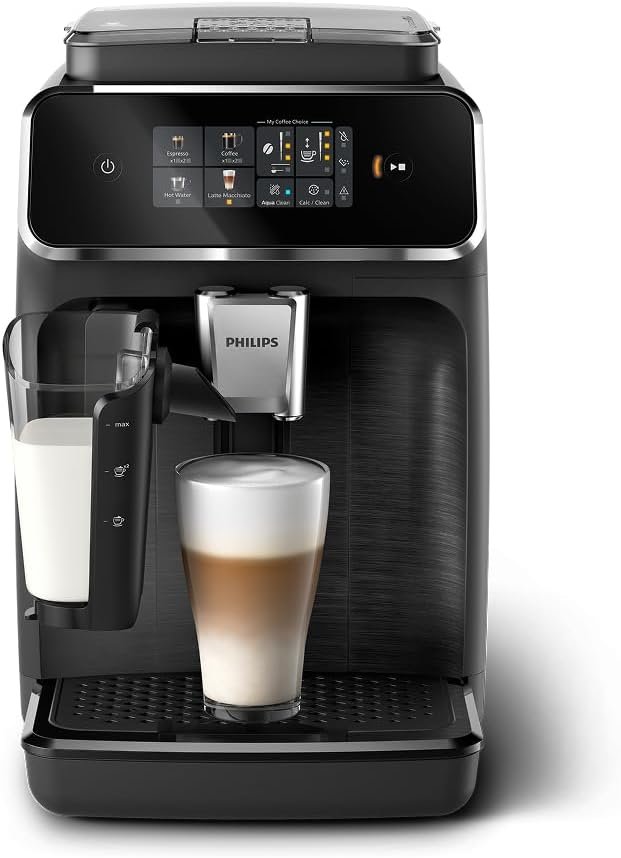
The Philips 5500 is built around convenience without stripping away all customization. Philips lists 20 hot and iced recipes, a LatteGo automatic milk system, a ceramic grinder with 12 settings, and four user profiles plus a guest profile. That combination makes it easy for a household to save different preferences without manually rebuilding the same drink every morning.
Its main advantage is balance rather than one standout specification. You get enough recipe variety to cover espresso, cappuccino, latte-style drinks, Americanos, and iced options, while the removable brew group and dishwasher-safe LatteGo parts reduce maintenance friction. The tradeoff is that experienced users who want deep manual control over dose, flow, or puck preparation may find a fully automatic platform less engaging than a semi-automatic setup.
Drinks20 hot & iced recipes
GrinderCeramic, 12 settings
Profiles4 + guest
What we like
Wide one-touch drink selection
LatteGo is designed for quick milk-system cleanup
Removable brew group and AquaClean compatibility
What to consider
Less manual control than a semi-automatic machine
Milk container is compact for large groups
Twelve grind steps may feel limiting to advanced tinkerers
Specification source reviewed: Philips Series 5500 EP5544/90 official product documentation.
A strong fit for households that want a deeper recipe library and saved profiles while keeping the process almost entirely one-touch.
Buy it ifYou want many one-touch recipes, multiple user profiles, and automatic milk texture settings.
Skip it ifYou prefer a very simple interface with only a handful of core drinks and fewer menus to navigate.
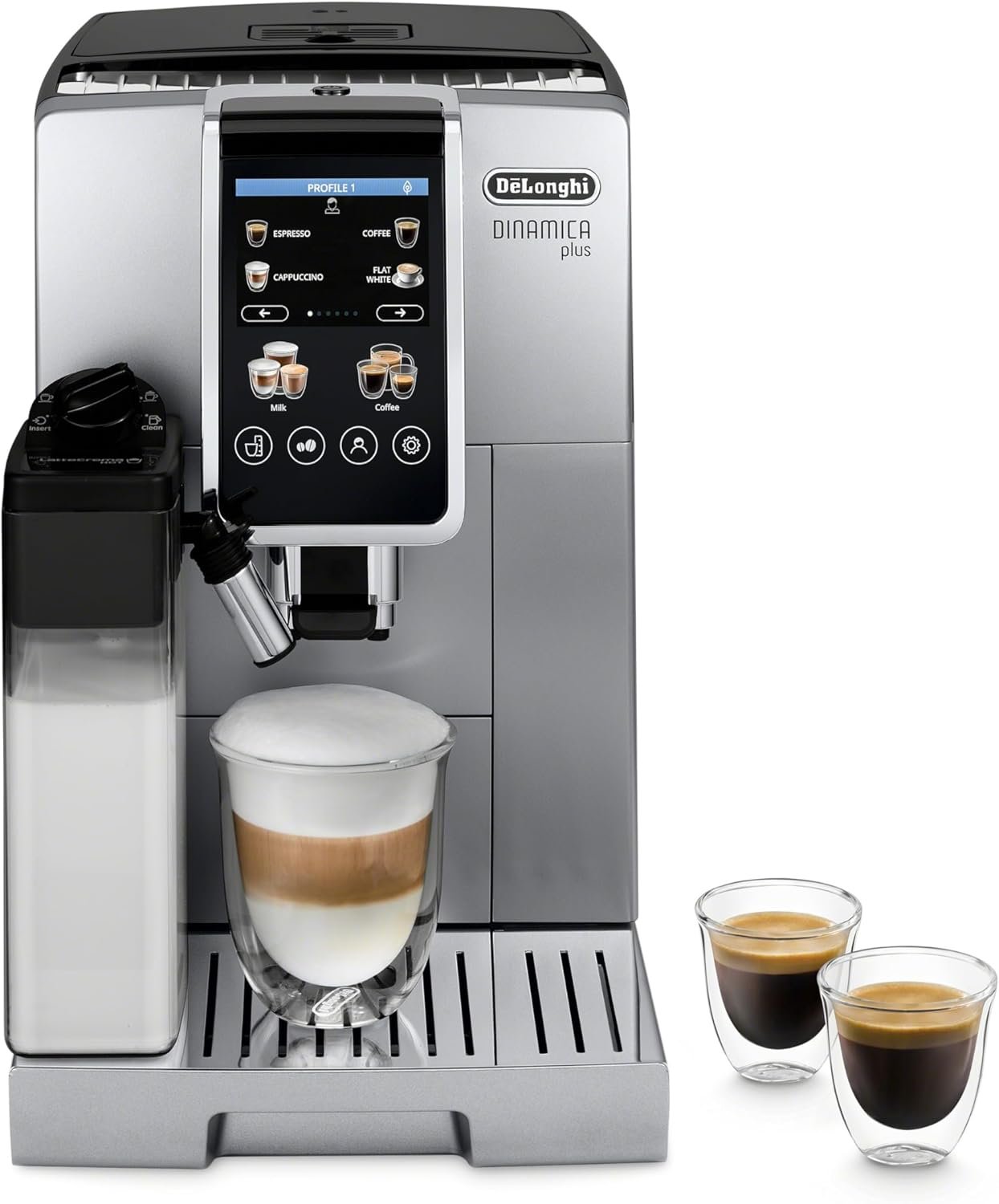
De'Longhi positions the Dinamica Plus as a high-customization bean-to-cup machine. The current U.S. model lists 24 one-touch recipes, a built-in conical burr grinder with 13 settings, a 3.5-inch color touch display, and four user profiles. The LatteCrema system also offers three froth settings, which is useful when different people prefer different milk textures.
The tradeoff is complexity. A large recipe library and profile system are helpful only if you actually use them; buyers who mostly make espresso and one milk drink may not need that much interface depth. For a family or shared kitchen, though, the ability to save preferences can reduce the repeated tweaking that makes some automatic machines feel less automatic in practice.
One-touch recipes24 listed
GrinderConical burr, 13 settings
Profiles4 user profiles
What we like
Large one-touch recipe library
Three automatic milk froth settings
Saved profiles for different users
What to consider
More menu depth than basic machines
Larger feature set can be unnecessary for simple routines
Automatic workflow offers less hands-on espresso control
Specification source reviewed: De'Longhi Dinamica Plus ECAM38085SB official product documentation.
The most automation-heavy option in this group, with automatic grind calibration, weight-based dosing, integrated tamping, and hands-free milk frothing.
Buy it ifYou want the machine to handle grind selection, dosing, tamping, brewing, and frothing with minimal intervention.
Skip it ifYou need a lighter, smaller countertop machine or prefer a simpler bean-to-cup system with fewer moving parts.
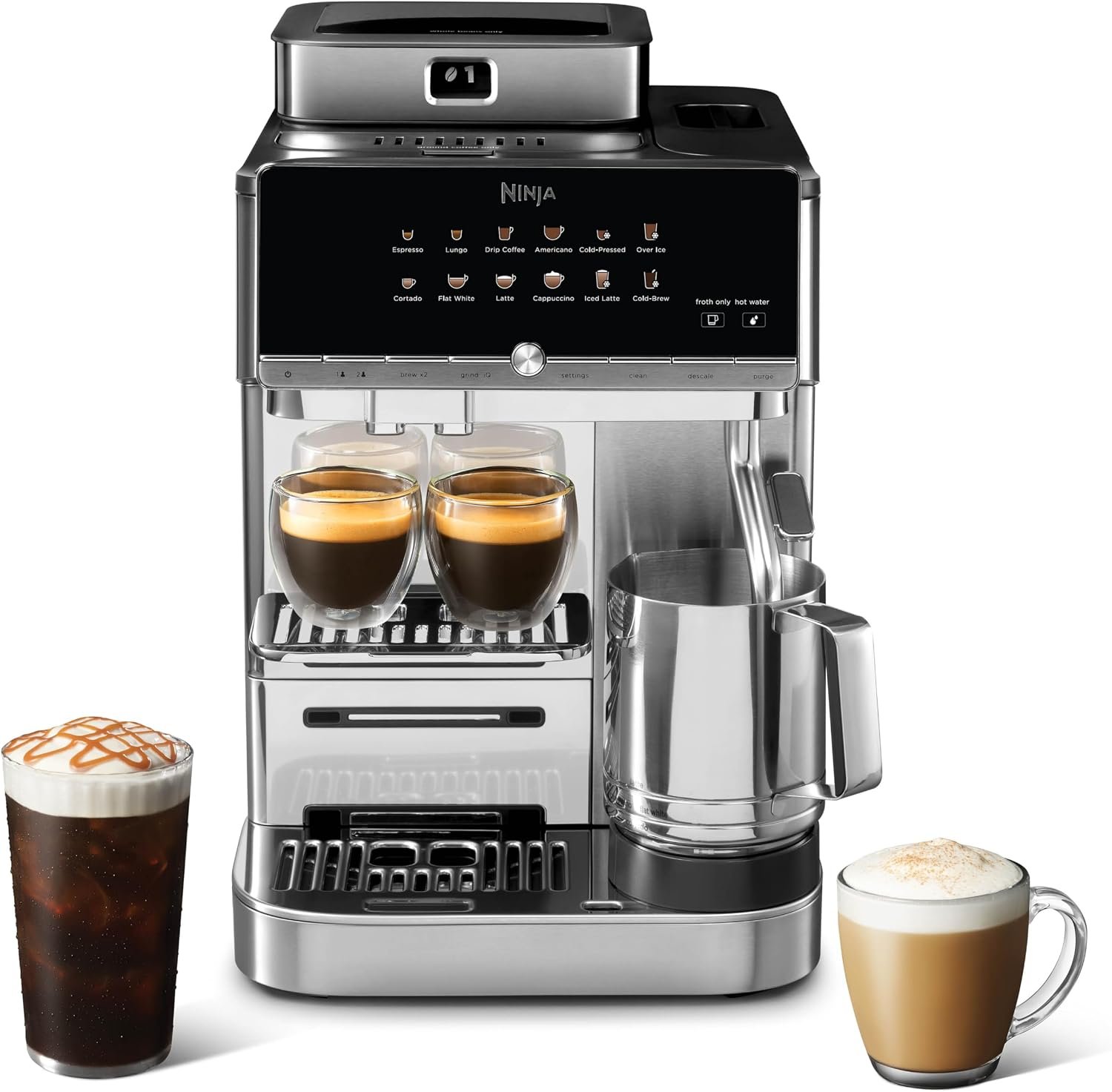
The Ninja AutoBarista Pro is designed for buyers who want automation to go beyond simply pressing a drink icon. SharkNinja lists Grind iQ with 50 grind settings, weight-based dosing, an integrated tamper, 13 one-touch drink presets, and five hands-free froth presets. It also covers drip coffee and cold brew alongside espresso-based drinks, which gives it a broader beverage role than many traditional super-automatic machines.
That extra hardware comes with a physical cost. SharkNinja lists the machine at about 39.4 pounds, with an 80-ounce water reservoir and a 340-gram hopper. It is therefore better suited to a permanent counter position than a kitchen where the machine is moved in and out of storage. The appeal is clear: fewer manual decisions between whole beans and a finished drink.
Drink presets13 one-touch
Grinder50 settings with Grind iQ
Water tank80 oz listed
What we like
Automatic grind calibration and weight-based dosing
Integrated tamping reduces manual steps
Hot, cold, espresso, and drip-style drink versatility
What to consider
Heavy and relatively deep countertop footprint
More complex mechanism than simpler automatics
Feature breadth may be excessive for espresso-only users
Specification source reviewed: SharkNinja AutoBarista Pro AE1051 official product documentation.
A good match for buyers who genuinely use both hot and cold coffee recipes and want the milk system to switch between those styles automatically.
Buy it ifYou regularly make hot lattes, iced milk drinks, and cold coffee and want one machine to cover all three.
Skip it ifYou only drink hot espresso or cappuccino and do not need the cold-focused features.
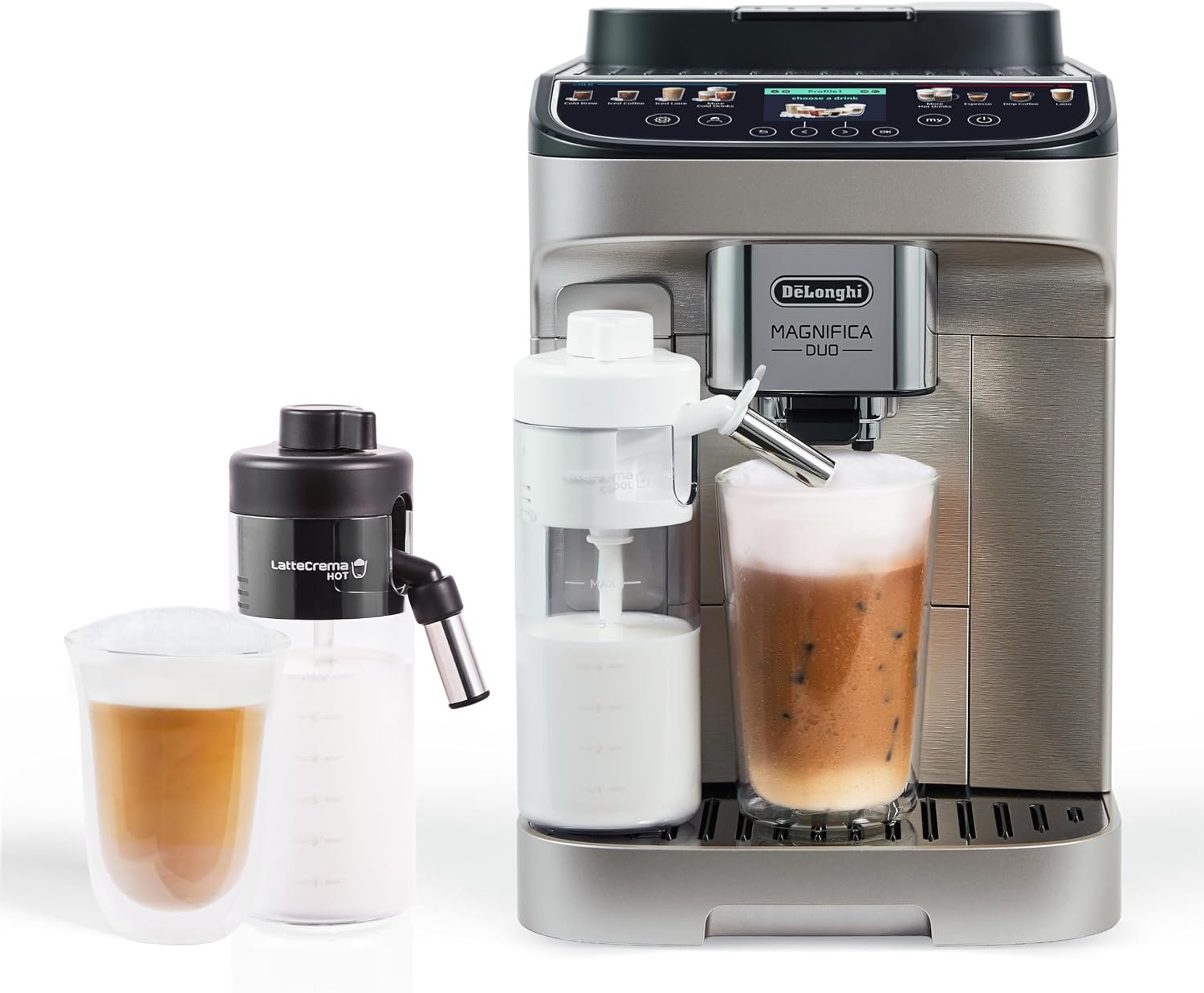
The Magnifica Duo stands out because its automatic workflow is not limited to hot drinks. De'Longhi lists LatteCrema Hot & Cool, cold coffee and cold milk recipes, and its Cold Extraction Technology for cold brew. It also includes a built-in conical burr grinder with 13 settings and three user profiles for saved drink customization.
The buying question is whether you will use those cold features often enough to justify the added system complexity. If you switch between cappuccino in the morning and iced drinks later in the day, the flexibility is meaningful. If your routine is almost always hot espresso, a simpler automatic machine can deliver the core bean-to-cup convenience with fewer features to manage.
GrinderConical burr, 13 settings
Profiles3 user profiles
Water tank60.87 oz listed
What we like
Automatic hot and cold milk system
Cold coffee and cold brew options
Personalization with saved profiles
What to consider
Cold features add little value for hot-only drinkers
More parts to clean than espresso-only automatics
Feature-rich interface is more than some users need
Specification source reviewed: De'Longhi Magnifica Duo ECAM33080SXB official product documentation.
A simpler choice for buyers who want automatic espresso and milk drinks without paying attention to a long menu of specialty presets.
Buy it ifYou want a straightforward one-touch machine with automatic milk frothing and easy access for routine cleaning.
Skip it ifYou want many saved profiles, a large specialty-drink library, or extensive hot-and-cold recipe choices.
The Philips 2300 keeps the automatic experience focused. Philips lists four beverage choices, LatteGo automatic milk frothing, a ceramic grinder with 12 settings, a colored touch display, a 61-ounce water tank, and AquaClean compatibility. The two-part LatteGo system has no milk tube, which reduces the number of small pieces involved in daily cleanup.
Its limitation is also its strength: there are far fewer recipes and personalization tools than on the Philips 5500 or Dinamica Plus. For someone who mainly wants espresso, coffee, cappuccino, and hot water, that can make the machine easier to live with. Buyers who expect the machine to act like a café menu will likely outgrow the simpler selection.
Beverages4 listed
GrinderCeramic, 12 settings
Water tank61 oz listed
What we like
Simple one-touch drink selection
LatteGo has only two main milk-system parts
Removable brew group and AquaClean compatibility
What to consider
Much smaller recipe library than premium models
No multi-user profile system listed
Less customization for households with varied preferences
Specification source reviewed: Philips Series 2300 EP2330/10 official product documentation.
Four decisions that matter before you buy an automatic espresso machine
How automatic do you want it?
A true bean-to-cup machine should grind, dose, brew, and eject the puck automatically. Some go further with grind calibration, tamping, and saved profiles. For category basics, see our super-automatic espresso machine guide.
How important are milk drinks?
If lattes and cappuccinos dominate your routine, prioritize an automatic milk system that is easy to remove and rinse. If you mainly drink espresso or an Americano from an espresso machine, a simpler milk setup may be enough.
Will several people use it?
Saved profiles matter more in a shared kitchen. They reduce repeated changes to strength, volume, temperature, and milk settings every time a different person makes a drink.
What will maintenance look like?
Removable brew groups, automatic rinse cycles, dishwasher-safe milk parts, and accessible water tanks matter after the honeymoon period. Water quality also affects scale buildup, so read our espresso machine water filter guide before choosing a maintenance routine.
Quick answers
Common questions about automatic espresso machines
What is an automatic espresso machine?
An automatic espresso machine handles more of the brewing process than a traditional semi-automatic machine. In the fully automatic or super-automatic category, the machine typically grinds whole beans, doses the coffee, brews the drink, and deposits the used puck internally. Many models also automate milk frothing.
Is a fully automatic espresso machine the same as a super-automatic machine?
In consumer shopping language, the terms are often used for the same bean-to-cup category. Manufacturers may label similar machines “fully automatic,” “automatic,” or “super-automatic,” so compare the actual workflow rather than relying only on the label.
Which automatic espresso machine is easiest to clean?
Look for removable milk components, automatic rinse programs, a removable brew group where available, and front-access water and waste containers. Philips LatteGo systems use a two-part milk container with no tube, while other brands use automatic milk carafes with their own rinse routines.
Do automatic espresso machines still let you customize coffee?
Yes, but the amount varies. Common controls include strength, drink volume, temperature, grind setting, and milk volume. Higher-end models may add saved user profiles and larger recipe menus.
Should I choose more drink presets or more grinder settings?
Choose based on your routine. Drink presets matter if you switch between many milk, iced, and black-coffee recipes. Grinder adjustment matters more if you regularly change beans and want more control over extraction. A machine with both can be useful, but only if you will actually use the extra options.
Recommended next
Continue your research
Compare nearby categories and maintenance topics before choosing your machine.