The 5 Best Super Automatic Espresso Machines of 2026
The best super automatic espresso machine is the one that removes the steps you dislike without adding a cleaning routine you will ignore. We compare five bean-to-cup machines by one-touch drinks, milk system, grinder adjustment, saved profiles, counter space, and the compromise each model asks you to accept.
John CrestaniEspresso Equipment Specialist
Last Updated
The short version
Which super automatic espresso machine should you buy?
Among these five models, the Philips 5500 Series is our research-based starting pick for most homes because it combines 20 hot-and-iced drinks, automatic LatteGo milk frothing, 12 grinder settings, and four saved profiles plus guest mode. Choose the De'Longhi Dinamica Plus if customization matters more, the Rivelia if you switch between regular and decaf beans, the Bosch 800 Series if you want the broadest connected drink menu, or the Gaggia Brera if you prefer a simpler espresso-first machine with manual milk frothing.
If you are still deciding what “bean-to-cup” automation actually changes, our super automatic espresso machine guide explains the category before you compare individual models.
Testing transparency: This is a research-based comparison of current manufacturer specifications and design tradeoffs, not a hands-on laboratory test. Recommendations apply to the five models listed here, not every super automatic machine on the market. Amazon model names, availability, and regional specifications can change, so verify the exact destination listing before ordering.
How we evaluated
A super automatic is only convenient if the whole workflow stays easy
This comparison weighs the manufacturer specifications for each machine against four everyday criteria: drink workflow, milk-system friction, personalization, and ownership maintenance. We do not convert Amazon star ratings into editorial scores and we do not treat pump-pressure marketing as a proxy for cup quality. For a broader cross-category shortlist, see our 9 best espresso machines guide.
One-touch workflowHow much can the machine do from whole beans to the finished drink without manual intervention?
Milk systemIs milk automatic, easy to rinse, and realistic for the drinks you make most?
PersonalizationCan households save profiles, adjust strength, change beans, or tune grinder settings?
Ownership frictionConsider tank size, removable parts, milk cleaning, counter space, and filter/descaling needs.
Super automatic espresso machines compared
Amazon links in this table are paid links. On a phone, swipe sideways to see every column. Prices and availability change frequently, so this table intentionally does not display them.
Five super automatic espresso machines: buyer fit, milk system, drink menu, and main tradeoff
Espresso Mastered:The EspressoFinder.com Guide for Enthusiasts and Professionals
Choose smarter. Brew better from day one.
Drink counts and “one-touch” labels can make every super automatic look equally convenient. This guide helps you compare the grinder, milk system, cleaning routine, water setup, and long-term ownership details that actually shape daily use.
Separate useful specifications from marketing noise
Match the milk system and drink menu to your routine
Spot filter, cleaning, and maintenance costs before buying
Use a clear checklist to compare any espresso machine
Free digital guide · Delivered by email · Privacy Policy
Our five picks, with the tradeoffs explained
There is no universal winner. A super automatic earns its place by making your preferred drinks easier, not by having the longest menu. If you want another angle on the category, compare this shortlist with our best-rated super automatic espresso machine guide.
Best overall for most homes
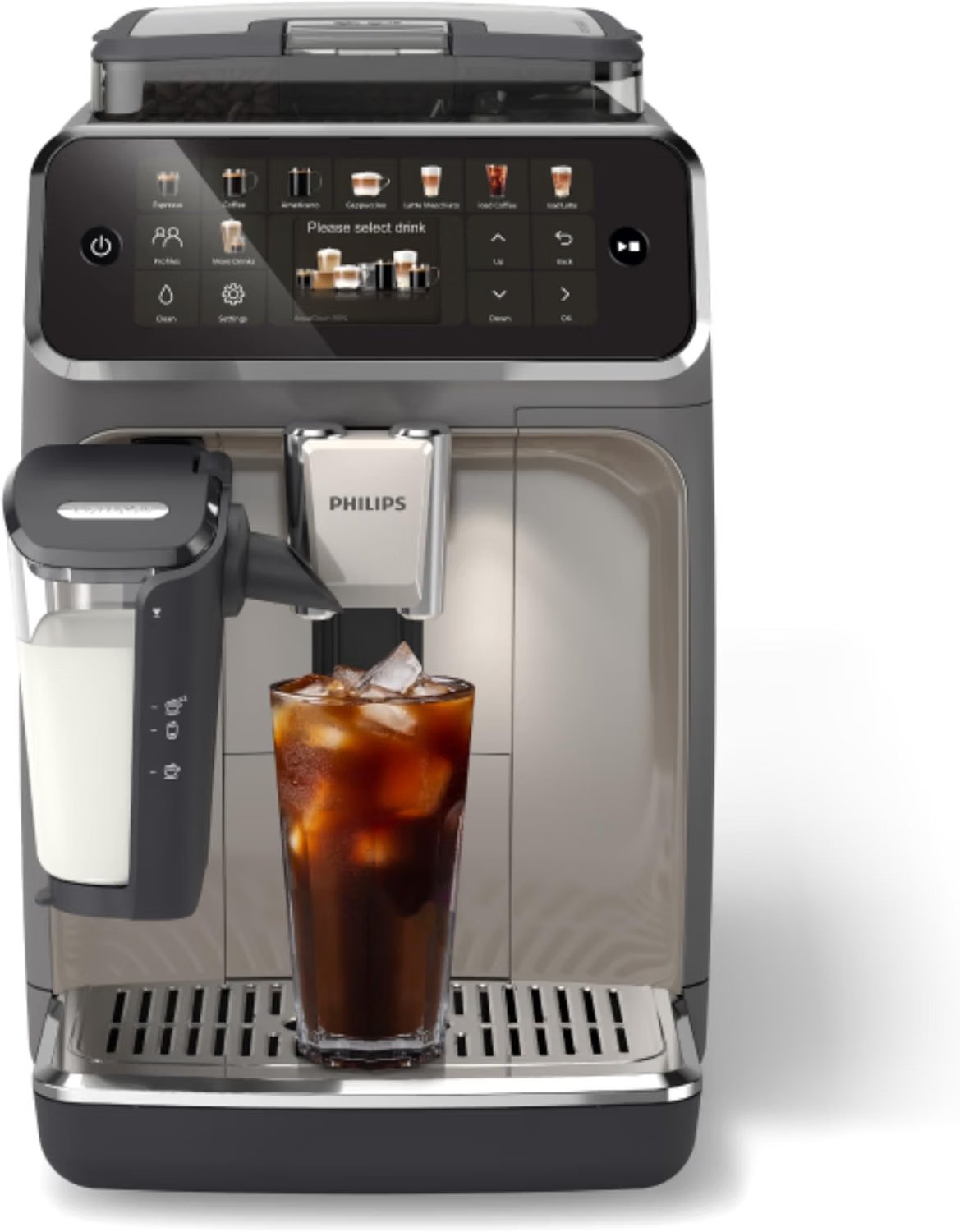
1. Philips 5500 Series Fully Automatic Espresso Machine
The strongest all-round starting point here if you want one-touch milk drinks, a broad hot-and-iced menu, and a milk system designed to be quick to rinse.
Buy it ifYou want a wide one-touch drink menu with straightforward milk-system cleanup and saved profiles.
Skip it ifYou want app connectivity or a machine built around swapping between multiple bean hoppers.
Philips builds the 5500 around convenience rather than barista-style intervention. The machine grinds, doses, brews, and handles milk automatically, while the LatteGo system uses a simple two-part milk container instead of a tube-heavy carafe. For a household moving between espresso, cappuccino, latte macchiato, and iced drinks, that reduction in daily friction matters more than another pressure number on a product listing.
The 5500 also gives you useful room to personalize without turning every cup into a project: Philips lists 20 pre-programmed drinks, 12 grinder settings, adjustable strength and volume, and four user profiles plus a guest profile. The compromise is that this is still a convenience-first bean-to-cup system; buyers who want manual puck preparation or deeper control over extraction will be happier with a semi-automatic setup.
Drink menu20 pre-programmed
GrinderCeramic, 12 settings
Profiles4 + guest
What we like
Large hot-and-iced drink menu
LatteGo has only two milk-system parts
Four saved user profiles plus guest
What to consider
No app connectivity listed
Less hands-on control than a semi-automatic machine
Milk double-cup brewing is not listed
Specification source reviewed: Philips official Series 5500 documentation. Editorial conclusions are our own.
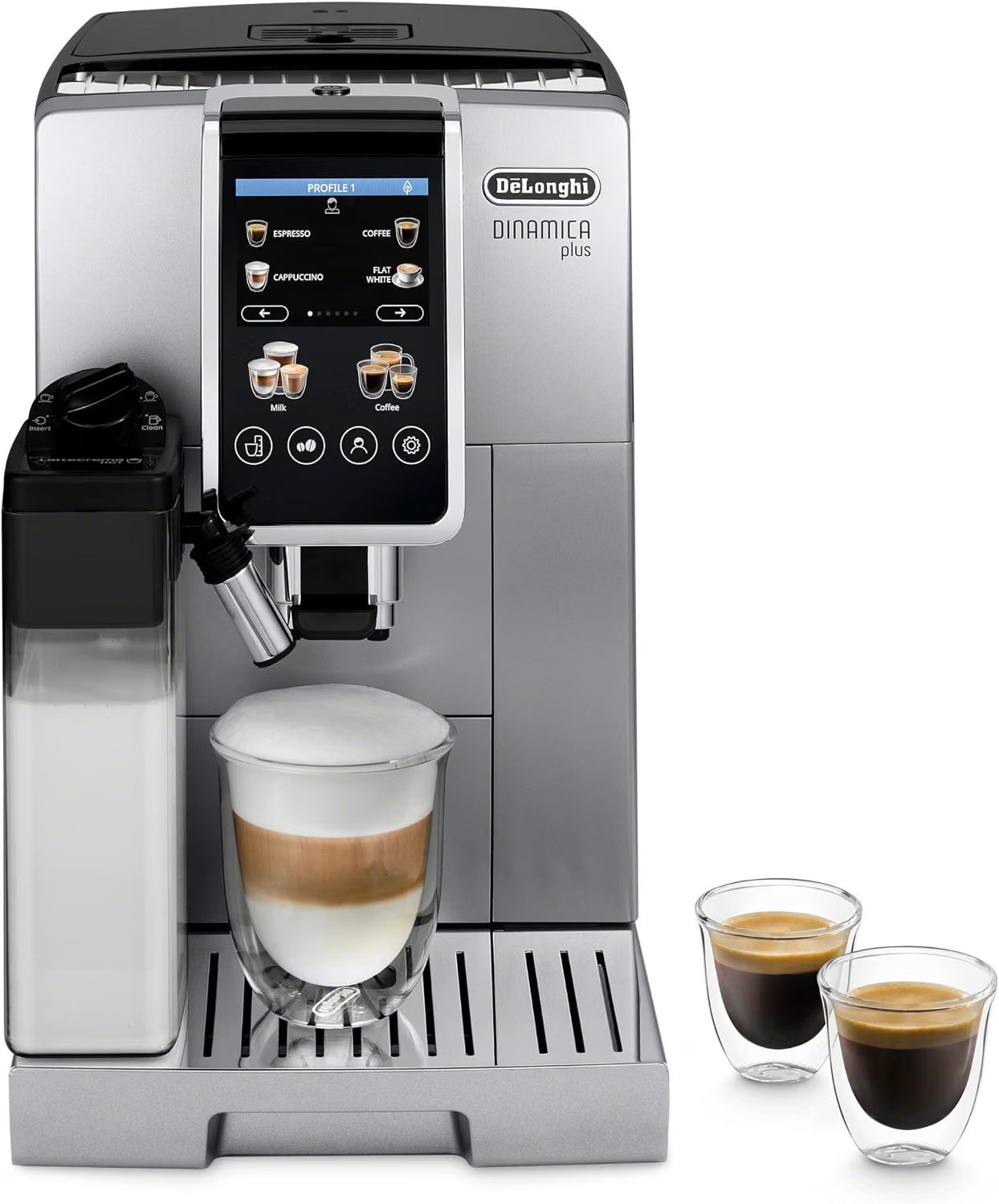
2. De'Longhi Dinamica Plus Fully Automatic Espresso Machine
A better fit for a multi-user household that wants a larger recipe library, automatic milk texturing, and more saved personalization than a basic bean-to-cup machine.
Buy it ifSeveral people will use the machine and you want profiles, adjustable milk texture, and a deep one-touch menu.
Skip it ifYou prefer the fewest possible menus and settings, or you mostly drink straight espresso with no need for automatic milk.
The Dinamica Plus is built around personalization. De'Longhi lists 24 one-touch recipes, four user profiles, a 3.5-inch color touch display, and its LatteCrema Hot system with three froth settings. That combination makes sense in a household where one person wants a flat white, another wants a cappuccino, and someone else wants a stronger straight coffee without rebuilding the recipe each morning.
Its built-in conical burr grinder has 13 settings, which is enough to make meaningful adjustments as beans and roast levels change. The tradeoff is complexity: a machine with more recipes, profiles, and milk controls gives you more to learn and more removable parts to keep clean. If your goal is simply “press espresso,” a simpler super-automatic can be easier to live with.
Drink menu24 one-touch recipes
GrinderConical burr, 13 settings
Profiles4 user profiles
What we like
Very broad one-touch recipe list
Three automatic milk-froth settings
Profiles suit shared households
What to consider
More menus than simplicity-first buyers need
Milk carafe adds a cleaning step
Premium feature set can be unnecessary for espresso-only users
Specification source reviewed: De'Longhi official Dinamica Plus documentation. Editorial conclusions are our own.
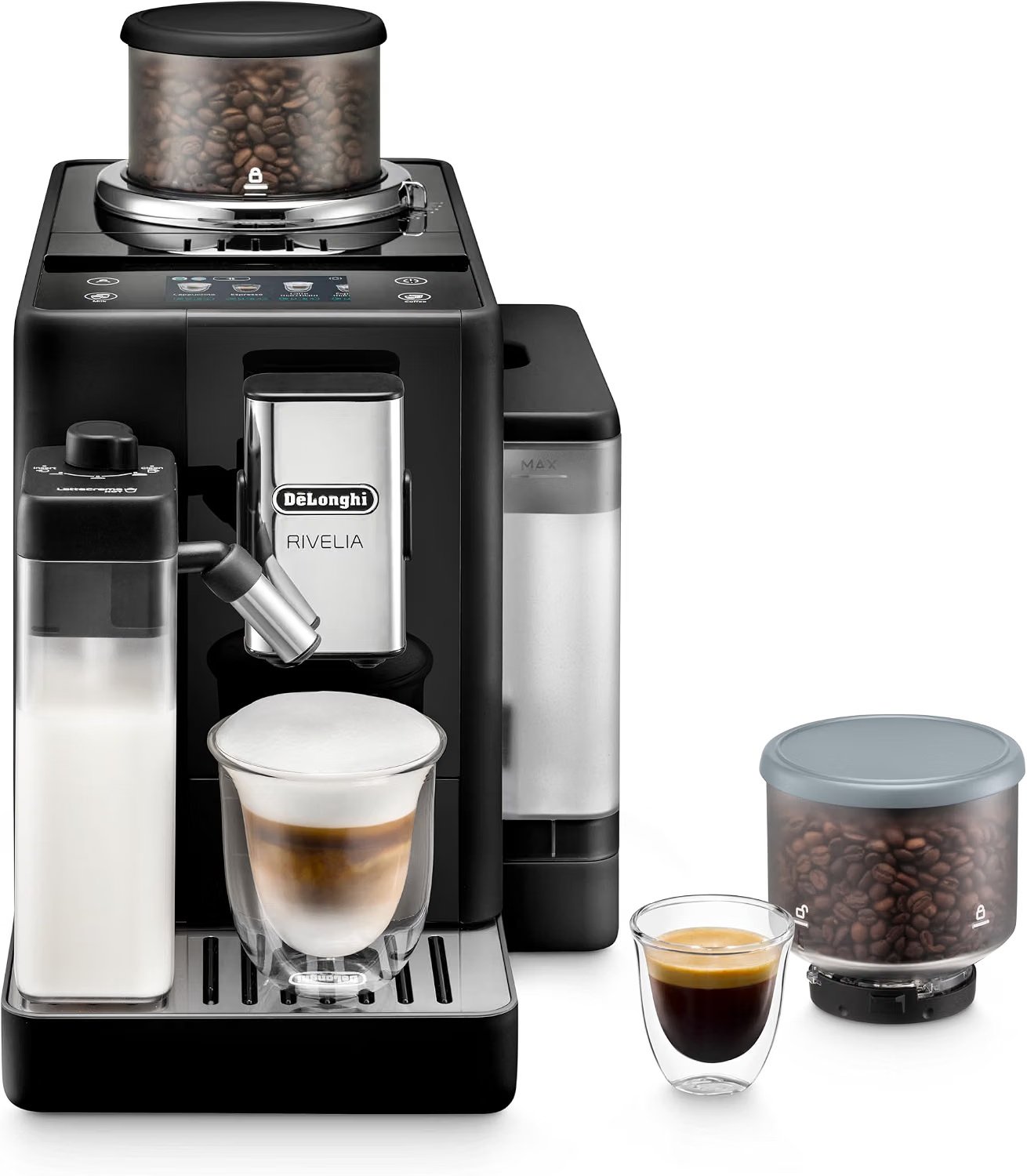
A particularly smart premium choice if your home regularly switches between regular, decaf, light, or dark beans instead of leaving one hopper loaded for weeks.
Buy it ifYou actively rotate bean types and want automatic milk drinks without emptying the hopper by hand.
Skip it ifYou rarely change beans or want the largest possible water tank and drink menu for the money.
Rivelia solves a problem most super-automatics barely address: changing beans. De'Longhi supplies two interchangeable 8.8-ounce hoppers and a Bean Switch workflow, so you can move from a morning regular coffee to decaf later without scooping beans out of a fixed hopper. The machine also uses a 13-setting burr grinder and saves preferences across four user profiles.
For milk drinks, the included LatteCrema Hot system automatically froths milk or plant-based alternatives, and the current U.S. model lists 18+ preset recipes. Rivelia is compact for the feature set, but the smaller 47.34-ounce water tank is part of that footprint. Busy households making many large drinks may refill it more often than a physically larger machine.
Bean systemTwo removable hoppers
GrinderIntegrated, 13 settings
Drink menu18+ presets
What we like
Easy switching between bean types
Four intelligent user profiles
Compact footprint for a premium super-automatic
What to consider
Smaller water tank than some larger rivals
Premium features are wasted if you never switch beans
Cold milk drinks require the separate Cool accessory
Specification source reviewed: De'Longhi official Rivelia documentation. Editorial conclusions are our own.
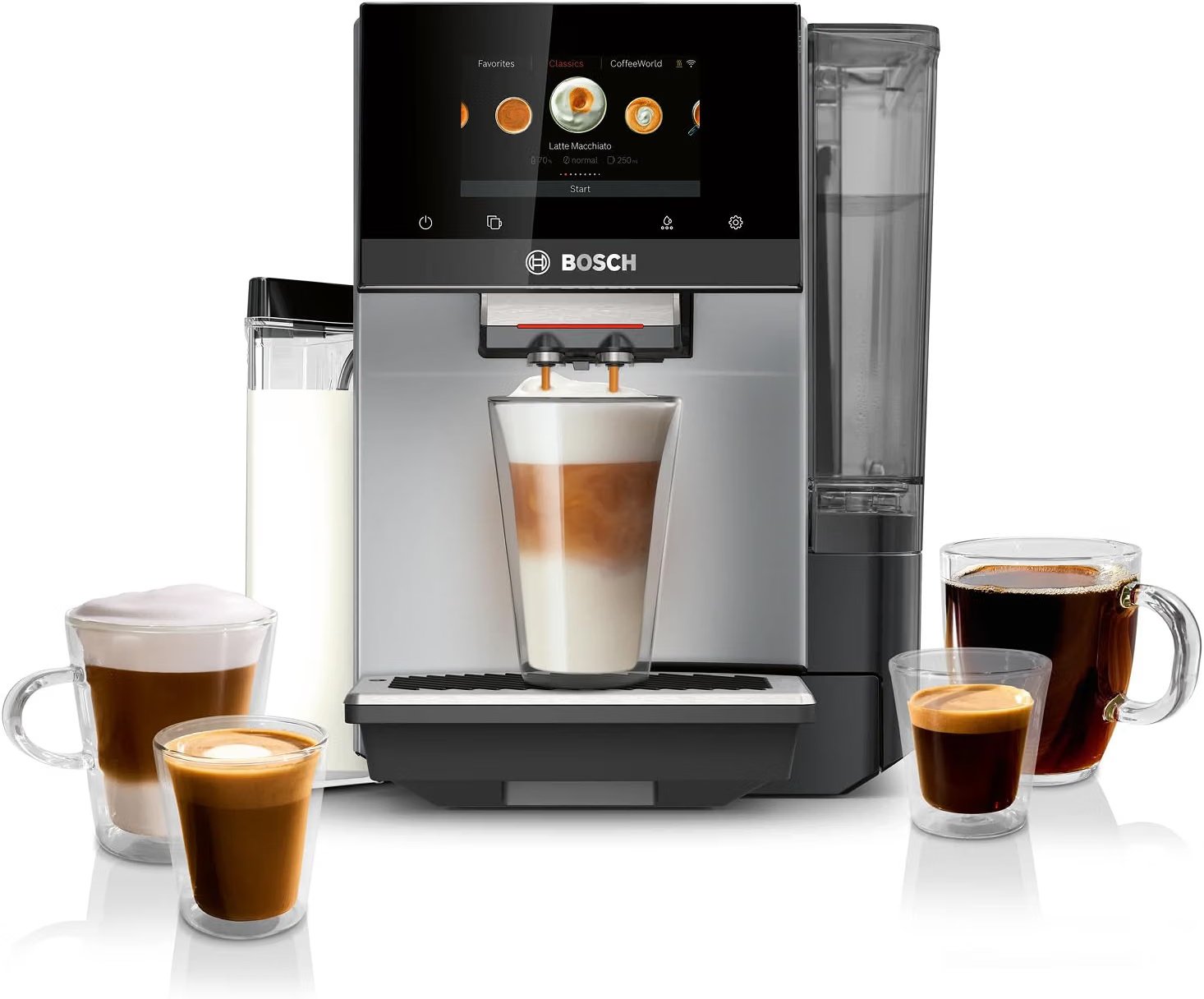
4. Bosch 800 Series VeroCafe Fully Automatic Espresso Machine
The pick for someone who wants a very broad beverage menu, a large color display, and connected controls more than minimalist operation.
Buy it ifYou value a big recipe library, a 5-inch touchscreen, and Home Connect features.
Skip it ifYou want a stripped-down machine with the fewest screens, app features, and milk-system pieces.
Bosch takes the “coffee appliance” approach further than most machines here. The 800 Series VeroCafe lists 36 beverages, a 5-inch full-color TFT touchscreen, an integrated milk hose, and Home Connect for smartphone control. That makes it appealing if different people in the home want very different drinks and prefer guided on-screen selection over learning espresso variables.
The ceramic grinder and automatic milk system keep the workflow firmly in super-automatic territory. The tradeoff is philosophical as much as practical: this is a feature-rich connected appliance. If you do not care about a long recipe list, remote features, or a large display, you may be paying for complexity you will rarely use.
Drink menu36 beverages listed
Display5-inch color TFT
ConnectivityHome Connect
What we like
One of the broadest drink menus in this shortlist
Large touchscreen is easy to navigate
Home Connect adds remote convenience
What to consider
More interface complexity than basic machines
Integrated milk hose needs regular care
Connected features may be unnecessary for some buyers
Specification source reviewed: Bosch official 800 Series VeroCafe documentation. Editorial conclusions are our own.
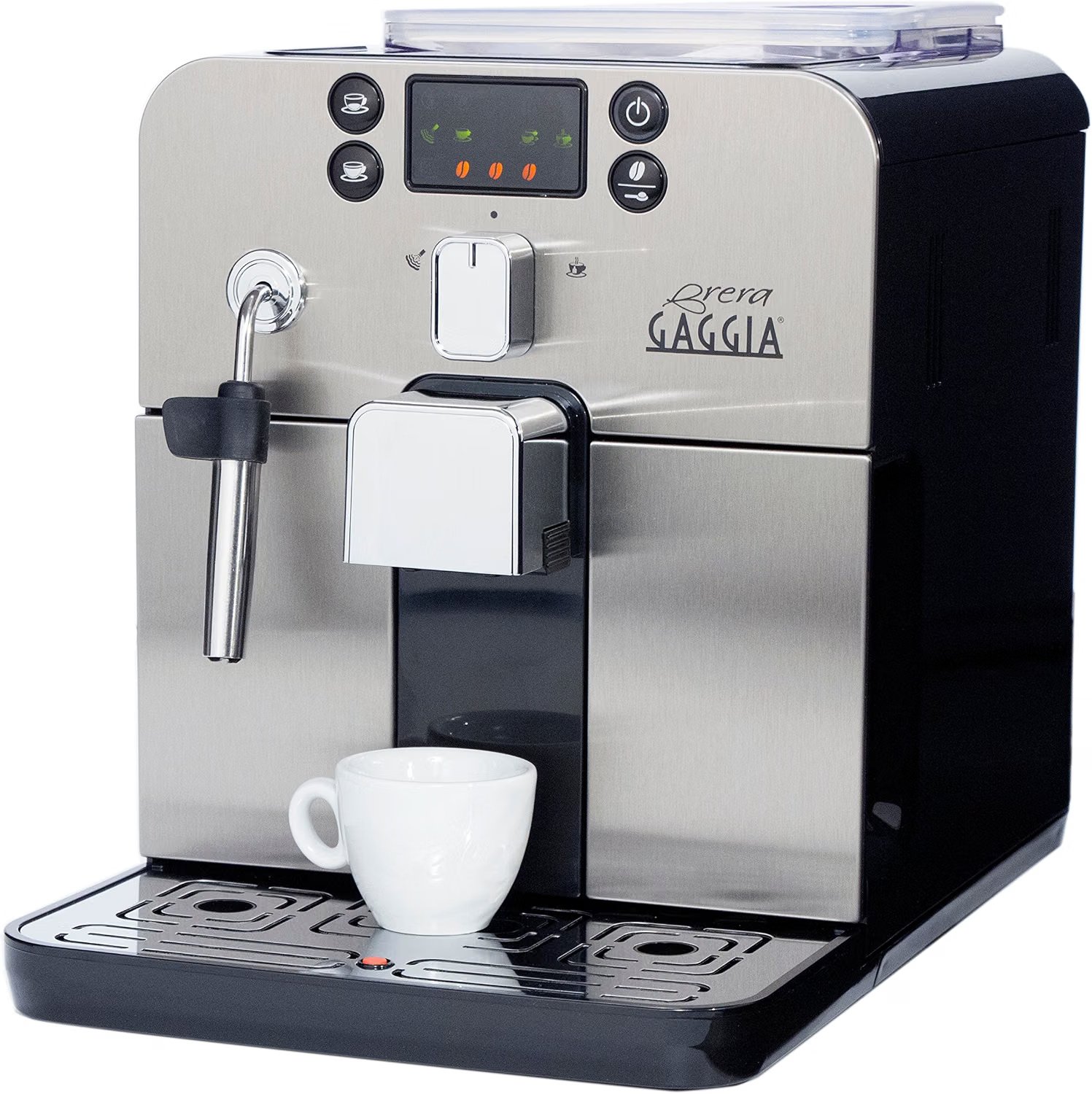
A straightforward choice for espresso-first buyers who want automatic grinding and brewing but are comfortable frothing milk manually with a steam wand.
Buy it ifYou want a compact bean-to-cup machine for espresso and lungo, with manual control over milk frothing.
Skip it ifYou expect one-touch cappuccinos, a color touchscreen, or a large menu of automatic milk recipes.
The Brera is the simplest machine in this group, and that is exactly why it belongs here. Gaggia gives you one-touch espresso and espresso lungo, a ceramic grinder with five settings, three aroma-strength selections, and front access to the water tank and waste container. It automates the coffee side of the routine without burying you in dozens of drink icons.
Milk is the dividing line. The stainless-steel Pannarello is a manual steam wand, so cappuccinos and lattes require you to texture milk yourself. That is more work than LatteGo or LatteCrema, but some buyers prefer the control and the simpler machine architecture. The 1.2-liter water tank is also modest, so high-volume households should expect more refills.
Coffee drinksEspresso + lungo
GrinderCeramic, 5 settings
Water tank1.2 L
What we like
Compact and straightforward controls
Ceramic adjustable grinder
Front-access tank and grounds container
What to consider
Milk frothing is manual
Small drink menu compared with premium rivals
1.2 L tank needs more frequent refilling
Specification source reviewed: Gaggia official Brera documentation. Editorial conclusions are our own.
Four decisions that matter more than the biggest drink count
Automatic milk or manual steam?
One-touch milk is the point of a premium super automatic for many buyers. If you rarely make milk drinks, a simpler machine such as the Brera can reduce cleaning and cost.
How many people will save drinks?
Profiles matter in shared homes. Philips and De'Longhi offer saved-user workflows here, while a simpler machine may be faster when only one person uses it.
Do you switch between regular and decaf?
Rivelia's removable hoppers are unusually useful if you change beans often. Otherwise, a standard single hopper is simpler and perfectly adequate.
What will your water do to the machine?
Water quality affects taste, scale, and maintenance. Before buying filters or setting a descaling routine, read our espresso machine water filter guide and follow the machine maker's water-hardness instructions.
Quick answers
Common questions before buying a super automatic espresso machine
What is a super automatic espresso machine?
A super automatic espresso machine grinds whole beans, doses coffee, and brews at the touch of a button. Many models also froth and dispense milk automatically. It is designed to reduce manual steps compared with a semi-automatic espresso machine.
Is a super automatic espresso machine worth it?
It can be worth it when convenience is the priority and you make several drinks each week. You pay for automation, integrated grinding, guided cleaning, and often automatic milk. If you enjoy manual dosing, tamping, and steaming, a semi-automatic machine gives you more hands-on control.
Which super automatic is easiest to clean?
For milk-system simplicity, the Philips 5500 stands out in this shortlist because LatteGo uses two main milk-system parts and no milk tube. Every machine still requires regular brew-group, drip-tray, grounds-bin, filter, and descaling care according to its manual.
Can super automatic espresso machines make good espresso?
Yes, but they optimize consistency and convenience rather than manual control. Fresh beans, grinder adjustment, water quality, temperature management, and recipe settings still matter. A well-dialed semi-automatic machine gives an enthusiast more control, while a super automatic makes repeatability easier.
Should I buy a super automatic or an automatic espresso machine?
Product naming is inconsistent. In shopping listings, “automatic,” “fully automatic,” and “super automatic” can overlap. Focus on the actual workflow: a true bean-to-cup super automatic should grind, dose, and brew from whole beans automatically. Our best automatic espresso machine guide covers the broader category.
Recommended next
Continue your research
Compare closely related published guides before you commit to a bean-to-cup machine.