5 Best Commercial Coffee Brewer Machines for Busy Service (2026)Skip to the article
Commercial batch coffee guide
5 Best Commercial Coffee Brewer Machines for Busy Service (2026)
A commercial brewer should fit the way coffee actually moves through your business. We compare five machines by water access, batch workflow, holding method, counter space, and the tradeoff each setup asks you to accept.
John CrestaniEspresso Equipment Specialist
Last Updated
The short version
Which commercial coffee brewer machine should you buy?
Among these five machines, the BUNN CWTF15-3 is our research-based starting pick for a fixed, plumbed commercial station that needs several pots ready at once. Choose the VEVOR if value and a two-carafe setup matter more, the SYBO SF-CB-2GA if you cannot add plumbing, the SYBO thermal-carafe model if coffee needs to travel to meetings or self-service areas, or the crosson if you want stacked upper-and-lower warmers in a narrower layout.
Testing transparency: This is a research-based comparison of manufacturer documentation, operating manuals, seller specifications, and workflow tradeoffs—not a hands-on laboratory test. Recommendations apply to these five models and configurations. Where documentation is inconsistent or listing-specific, we say so instead of inventing a specification.
How we evaluated
Commercial coffee is a workflow problem first
We compared the supplied products against four practical buying criteria: water access, service throughput, coffee holding, and ownership friction. A machine that looks fast on paper can still be the wrong choice if staff must constantly refill it, if old coffee sits on a warmer, or if the brewer does not fit the counter. For narrower use cases, see our best office coffee maker guide and restaurant coffee maker guide.
Water accessPlumbed automatic filling versus portable pour-over/manual fill.
Service throughputHow easily the brewer supports repeated 12-cup batches and multiple waiting pots.
Coffee holdingGlass decanter + warmer versus insulated thermal-carafe service.
Ownership frictionInstallation, cleaning, counter space, model matching, and service support.
Commercial coffee brewer machines compared
Amazon links in this table are paid links. On a phone, swipe sideways to see every column. Prices and availability change frequently, so this table intentionally does not display them.
Five commercial coffee brewers: water access, holding method, buyer fit, and main tradeoff
Espresso Mastered:The EspressoFinder.com Guide for Enthusiasts and Professionals
Choose smarter. Brew better from day one.
Pressure numbers and long feature lists can make almost every machine look impressive. This practical guide shows you what actually affects taste, workflow, and long-term value—before you spend your money.
Separate useful specifications from marketing noise
Match the grinder, milk system, and learning curve to your routine
Spot hidden accessory, cleaning, and upgrade costs
Use a clear checklist to compare any espresso machine
Free digital guide · Delivered by email · Privacy Policy
Our five picks, with the tradeoffs explained
There is no universal commercial winner. The right brewer depends on where the water comes from, how many pots you need ready, how long coffee will be held, and how much staff attention the station can absorb.
Best for plumbed multi-pot service
1. BUNN CWTF15-3 (12950.0212)
The strongest fit here for a fixed commercial station that needs automatic water fill and three heated serving positions without moving to a much larger batch system.
Buy it ifYou have a plumbed water connection and regularly need more than one decanter ready for service.
Skip it ifYou need a portable pour-over brewer or do not want installation tied to a water line.
BUNN lists the CWTF15-3 as a 12-cup automatic commercial brewer with three lower warmers. Its biggest workflow advantage is simple: once the water line is installed, staff are not repeatedly carrying pitchers to refill a reservoir. That can matter more than a small difference in brew-cycle time when coffee is made throughout the day.
The tradeoff is commitment. BUNN specifies plumbed water access, a 1/4-inch male flare fitting and a 20–90 PSI water-pressure range. It also lists the machine at 120 volts and 1670 watts. This is better treated as a fixed service appliance than a brewer you casually move between conference rooms.
Brewer typeAutomatic, plumbed
HoldingThree lower warmers
Size17.3 × 16.4 × 21.4 in listed
What we like
Automatic water access reduces refill steps
Three warmers support multiple ready decanters
Established commercial format with published installation specifications
What to consider
Requires a compatible water line and pressure
Uses more counter width than narrow single-column brewers
Servers may be sold separately depending on the listing
Specification source reviewed: BUNN Commercial documentation for model 12950.0212. Editorial conclusions are our own.
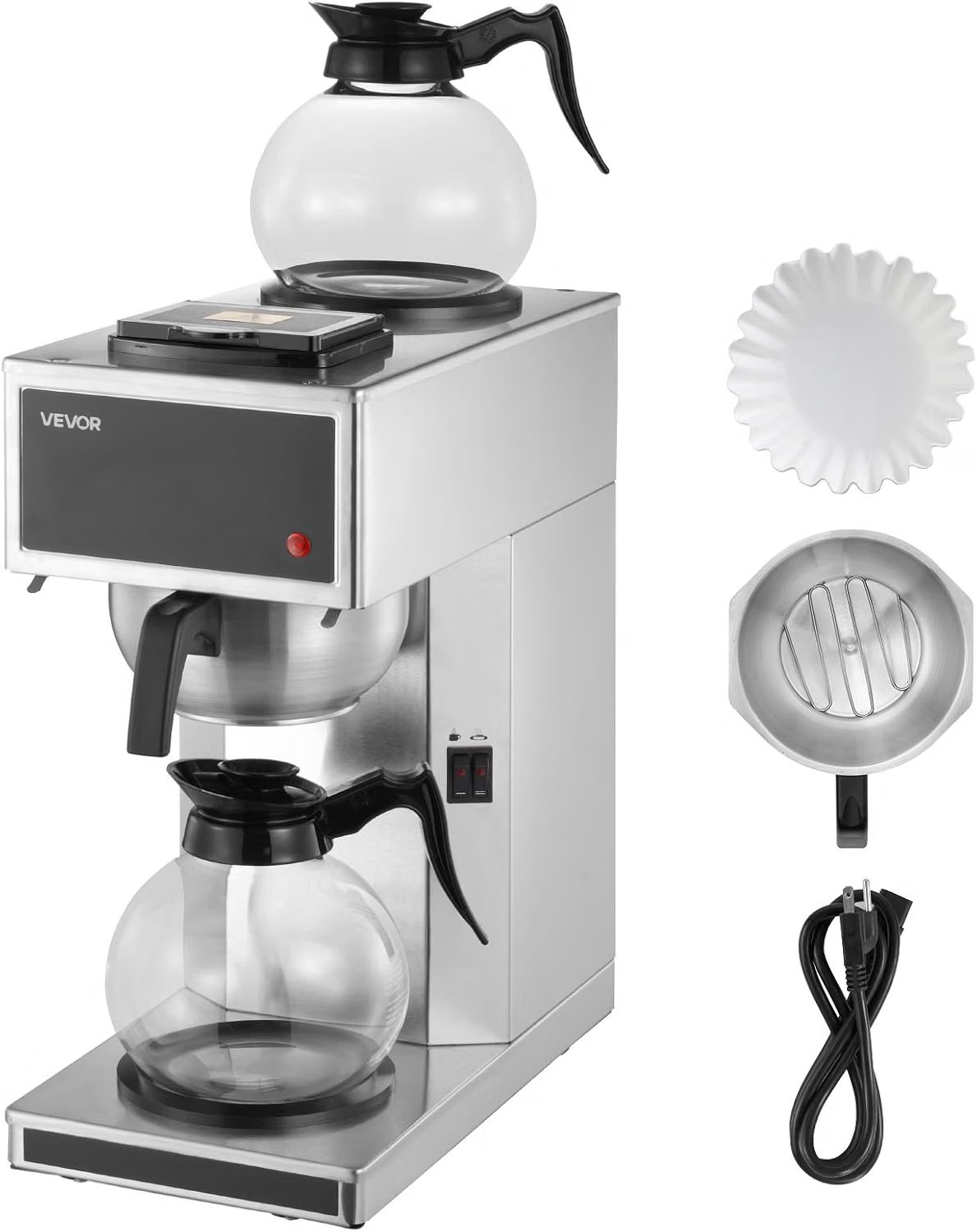
A practical two-pot setup for a small office, café counter or meeting space when you want commercial-style batch brewing without paying mainly for a long-established brand name.
Buy it ifYou want two included glass carafes and two independent warming positions in one straightforward setup.
Skip it ifYour counter is shallow or your operation needs a plumbed automatic brewer for repeated back-to-back batches.
VEVOR lists this commercial drip model with two glass carafes, two warming plates and a 2.8-liter water tank. The company claims a 12-cup batch in about six minutes. For a smaller service point, that combination is attractive because one pot can remain available while the next batch is prepared.
Counter planning matters. VEVOR lists model RB-286 at 17.20 × 8.15 × 24.41 inches, so the narrow front profile does not tell the whole space story. The 1.8-liter glass carafes are easy to see at a glance, but hot plates also mean coffee quality can decline if a pot sits too long. Brew in volumes your team can actually serve.
ModelRB-286 listed
Water tank2.8 L listed
CarafesTwo 1.8 L glass carafes
What we like
Two-pot workflow in a relatively narrow body
Mechanical controls are easy for shared staff use
Detachable funnel and stainless exterior simplify routine cleaning
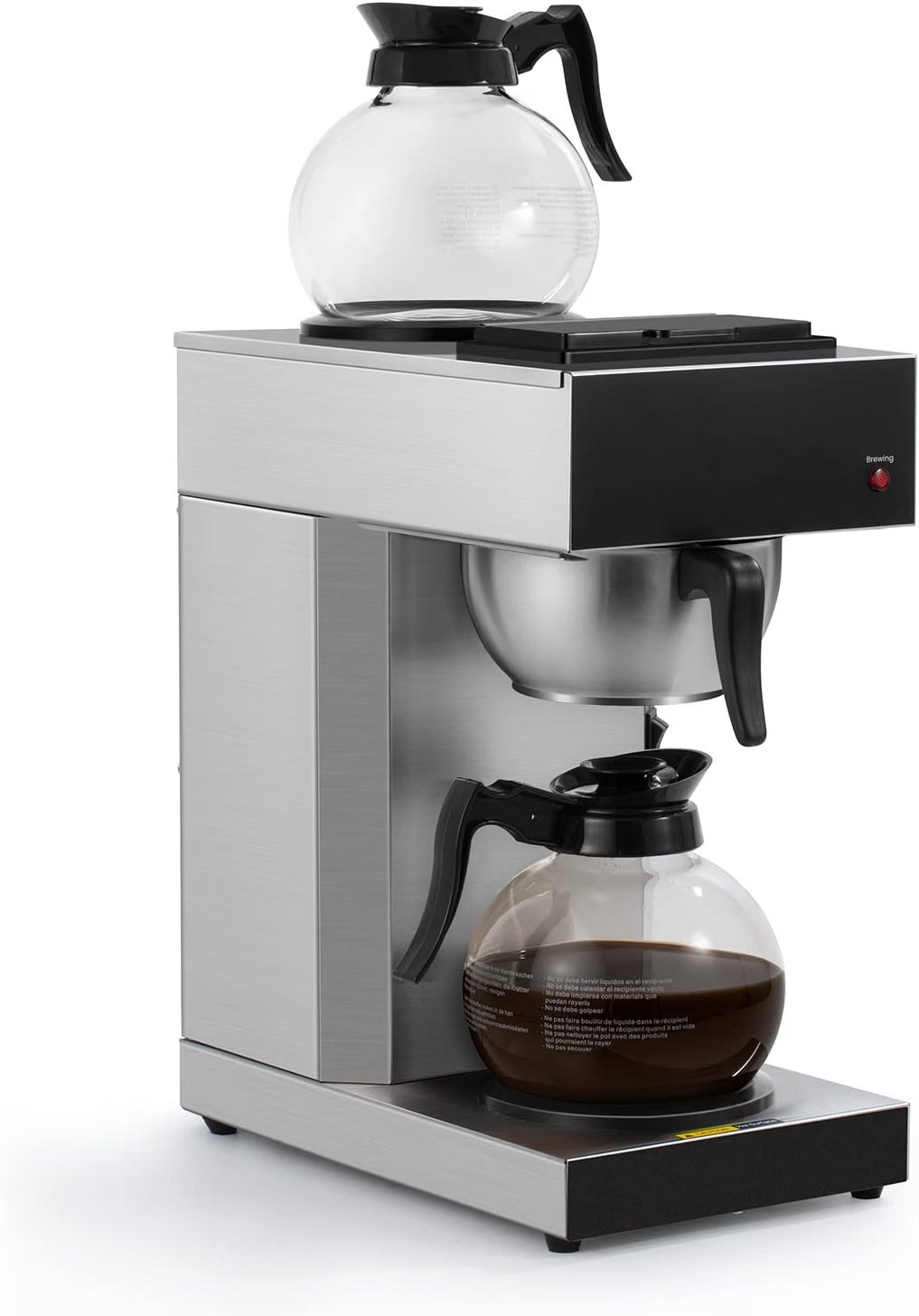
A useful middle ground for workplaces and food-service locations that want a commercial two-warmer format but cannot, or do not want to, plumb the brewer into a water line.
Buy it ifYou need a movable commercial brewer and staff can refill it manually between batches.
Skip it ifYou expect nonstop peak-volume brewing where manual filling becomes a bottleneck.
The SF-CB-2GA uses the familiar pour-over commercial layout: brew chamber above the decanter, a main hot plate below and an extra hot plate for a second pot. SYBO documentation lists roughly 12-cup capacity and a reservoir fill limit of 2.2 liters. That keeps installation simple compared with a plumbed brewer.
The operating manual is clear about commercial use and routine cleaning, but copies of the documentation show inconsistent wattage figures for this model. Rather than choose one number, we would verify the label on the exact Amazon unit before planning a dedicated circuit or extension-free counter setup.
CapacityAbout 12 cups
Reservoir2.2 L maximum fill listed
HoldingMain + extra hot plate
What we like
No permanent water-line requirement for the pour-over workflow
Two hot plates support staggered service
Simple controls are easy to hand off between staff
What to consider
Manual filling adds labor during repeated batches
Documentation copies show conflicting wattage values
Hot-plate holding is best used for short service windows
Specification source reviewed: SYBO SF-CB-2GA operating documentation. Conflicting electrical figures are intentionally not presented as settled fact.
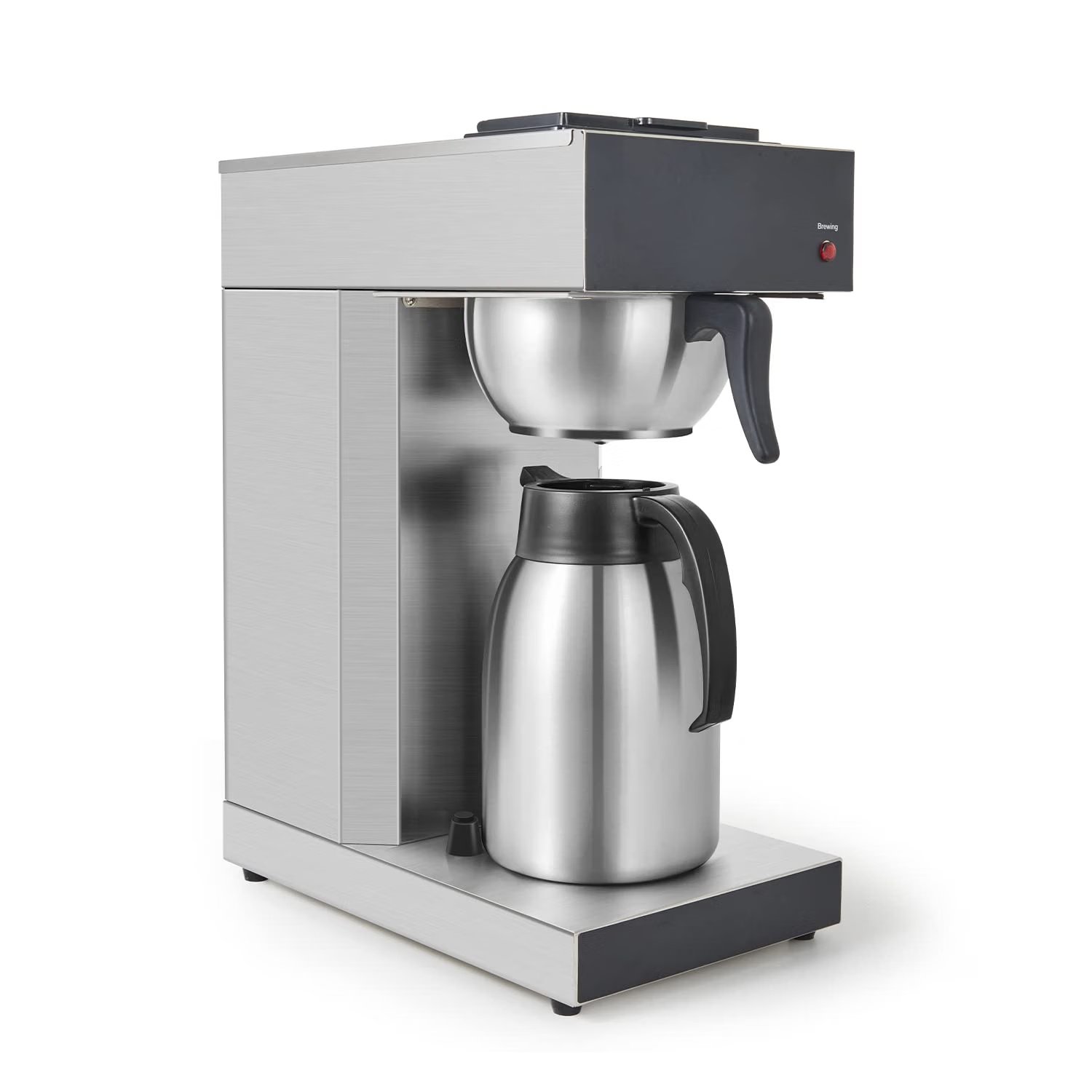
4. SYBO 12-Cup Commercial Brewer with 74 oz Thermal Carafe
A better fit than a glass-pot warmer system when coffee needs to move from the brewer to a conference room, self-service table or catered setup.
Buy it ifYou want to hold and transport a batch in an insulated carafe instead of leaving it on a hot plate.
Skip it ifYou need several visible glass decanters ready at once or cannot verify the exact model included with the listing.
The supplied product listing identifies this SYBO as a 12-cup commercial coffee maker with a 74-ounce thermal carafe. That changes the service pattern in a useful way: the brewed coffee can leave the machine without being tied to a powered warmer, making it easier to serve meetings, buffet lines and satellite stations.
Model matching is the important caveat. SYBO has several commercial brewer variants that share a similar body while using glass decanters, thermal carafes or airpots. Check the model number, carafe type and included accessories on the Amazon destination page before ordering. The recommendation here is for the thermal-carafe configuration, not every visually similar SYBO brewer.
Batch12-cup class
Server74 oz thermal carafe
WorkflowPortable thermal holding
What we like
Thermal service avoids constant hot-plate exposure
Carafe can move away from the brewer
Good format for meetings and self-service stations
What to consider
Exact model and included server must be verified
Thermal carafes hide remaining volume from view
One-carafe service may be limiting during simultaneous demand
Specification source reviewed: the supplied Amazon product title and SYBO commercial brewer documentation. Exact listing configuration should be confirmed before purchase.
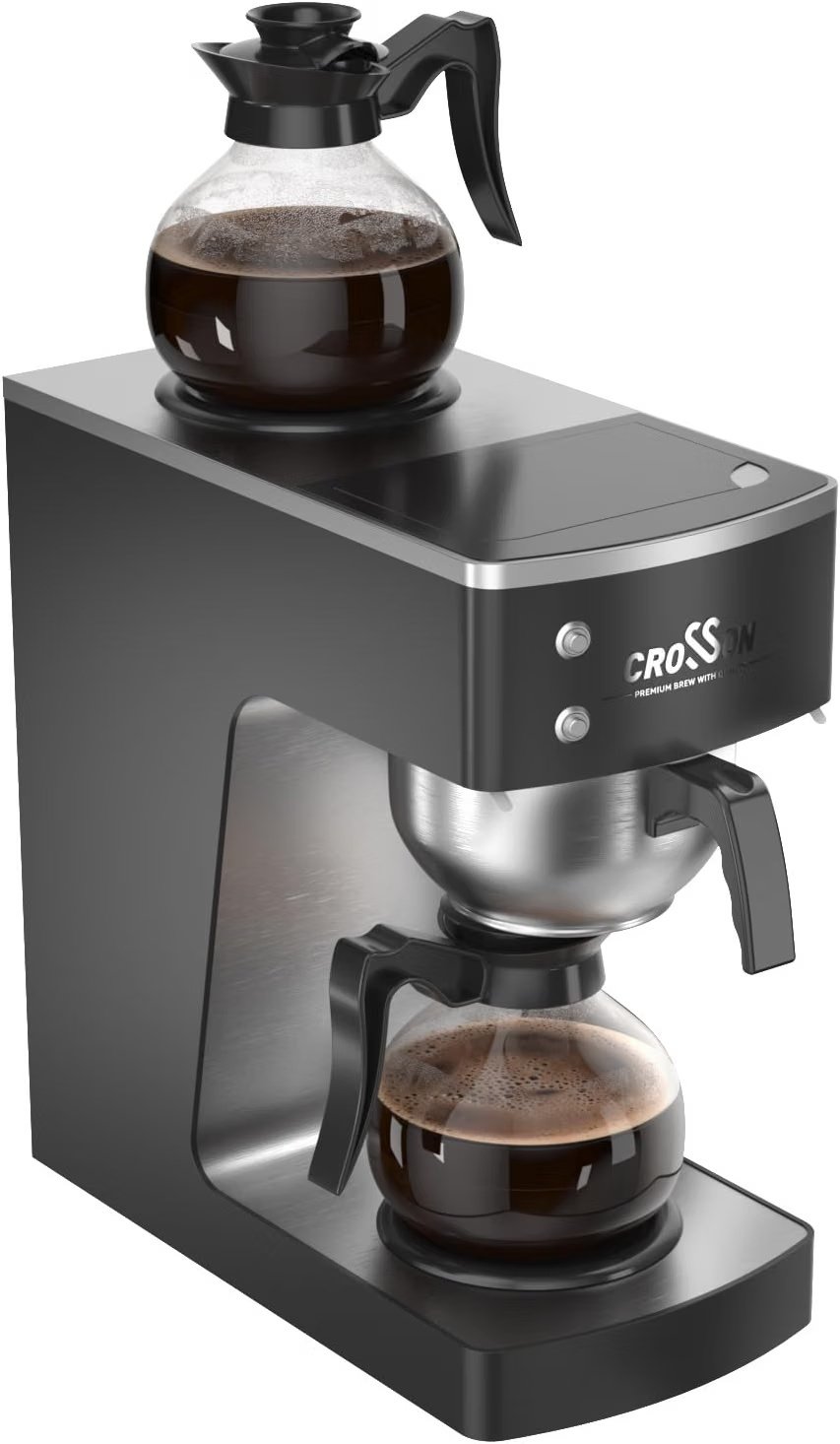
A space-conscious two-decanter layout for counters where stacking one warmer above the brew deck is more practical than spreading several warming plates sideways.
Buy it ifYou want upper-and-lower warmers and two decanters in a relatively narrow footprint.
Skip it ifYou prioritize a long commercial service history, a broad technician network, or automatic plumbed filling.
The crosson listing combines an upper and lower warmer with two 12-cup glass decanters. Seller documentation claims a full pot in roughly seven to eight minutes and describes a 304 stainless-steel funnel. The layout makes sense for a modest restaurant counter or office coffee station where two ready pots are useful but horizontal space is tight.
The evidence base is thinner than it is for BUNN. We found consistent seller documentation for the basic format, but not the same depth of official commercial specification material. Treat temperature and throughput claims as listing claims unless you independently test your exact unit.
ServingTwo 12-cup glass decanters
HoldingUpper + lower warmers
Funnel304 stainless claimed
What we like
Two-decanter service without a very wide warmer deck
Straightforward pour-over workflow
Stainless funnel is preferable to fragile or hard-to-source specialty parts
What to consider
Less independent long-term evidence
Seller performance claims are not laboratory measurements
Manual fill is less efficient during continuous rush periods
Specification source reviewed: current seller documentation for the crosson 12-cup commercial drip brewer. Performance claims remain unverified.
Four decisions to make before you buy a commercial coffee brewer
Plumbed or pour-over?
A plumbed brewer reduces repeated refill work and makes sense for a permanent high-use station. A pour-over brewer is easier to place, move, and install. If your needs are broader than drip coffee, compare our industrial coffee maker guide.
Warmers or thermal carafes?
Glass decanters make remaining volume obvious and are convenient for fast turnover. Thermal carafes are better when coffee must leave the brewer or sit away from power. For workplace-specific choices, see our guide to coffee machines for offices.
How many ready pots?
One brewer can serve a surprising number of people if demand is staggered. A breakfast rush, church service, conference break, or restaurant brunch is different: multiple warmers or backup thermal servers can prevent a queue.
What happens when something fails?
For a business, parts availability and service access can outweigh a lower purchase price. If downtime is expensive, prioritize established commercial support and standardized fittings over a longer feature list. You can also compare the broader commercial coffee brewer guide.
Quick answers
Common questions about commercial coffee brewer machines
What is a commercial coffee brewer machine?
A commercial coffee brewer machine is designed for repeated batch brewing in workplaces or food-service settings. Compared with a typical home drip maker, commercial models usually emphasize faster recovery, larger serving workflows, durable housings, multiple warmers or thermal servers, and simpler staff operation.
Is a plumbed commercial coffee brewer better than a pour-over model?
It is better for frequent back-to-back brewing because staff do not need to refill the machine manually. A pour-over model is easier to install and move, so it can be a better fit for smaller offices, temporary service points, catered events, or counters without a convenient water line.
How many cups should a commercial coffee brewer make?
A 12-cup brewer is a common format, but the more useful question is how quickly you need the next batch and how many full pots must be ready at the same time. High-demand service may need multiple warmers, extra servers, or a higher-capacity brewer.
Are thermal carafes better than glass decanters on warmers?
They solve different problems. Thermal carafes are easier to move and do not rely on a hot plate. Glass decanters make coffee level easy to see and work well when pots turn over quickly. Long holding times on a warmer can flatten flavor, so batch size should match demand.
What should I measure before installing a commercial brewer?
Measure width, depth, height, overhead clearance, outlet location and—if the brewer is plumbed—the water connection path. Also leave enough working space to remove the brew funnel, fill a reservoir, lift a thermal server, or move hot decanters safely.
What other commercial coffee equipment guides should I read?