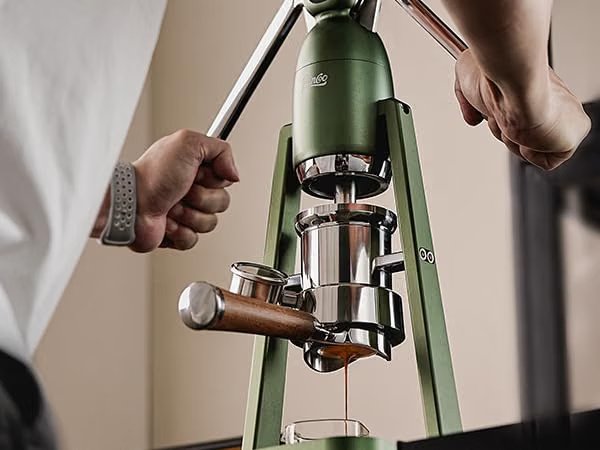
A lever espresso machine trades push-button repeatability for direct control. We compare five manual options by pressure feedback, water heating, milk capability, learning curve, and the daily workflow each one asks you to master.
John CrestaniEspresso Equipment Specialist
Last Updated
The short version
Which lever espresso machine should you buy?
Among these five, the Flair 49 PRO is our research-based starting pick for buyers who want the clearest manual pressure-control experience without paying for an integrated boiler. Choose the La Pavoni Europiccola EPC-8 if you want a compact self-heated classic with a steam wand; move to the Professional PC-16 for a larger boiler; choose the Stradivari PSW-16 when the traditional chrome-and-wood design is part of the appeal. The unbranded dual-lever option is the most experimental pick because its documentation is much thinner.
Testing transparency: This is a research-based comparison of manufacturer documentation, the exact product titles supplied for this page, and design tradeoffs. It is not a hands-on laboratory test. Recommendations apply to these five linked listings, and any uncertain seller claim is labeled rather than presented as measured fact.
How we evaluated
Lever machines reward control—but they also expose mistakes
A useful lever-machine comparison needs to look beyond chrome finishes and pressure numbers. We focused on four ownership questions: how directly you can control extraction, how brew water is heated, whether milk drinks are practical, and how much setup or technique the machine adds to a normal morning.
Pressure controlCan you see or feel what is happening during pre-infusion and extraction?
Thermal workflowDoes the machine heat its own water, or do you manage a kettle and preheat separately?
Milk drinksIs steaming built in, or will you need a separate milk solution?
Amazon links in this table are paid links. On a phone, swipe sideways to see every column. Prices and availability change frequently, so this table intentionally does not display them.
Five lever espresso machines: heating, pressure feedback, milk workflow, and main tradeoff
Espresso Mastered:The EspressoFinder.com Guide for Enthusiasts and Professionals
Choose smarter. Brew better from day one.
Pressure numbers and long feature lists can make almost every machine look impressive. This practical guide shows you what actually affects taste, workflow, and long-term value—before you spend your money.
Separate useful specifications from marketing noise
Match the grinder, milk system, and learning curve to your routine
Spot hidden accessory, cleaning, and upgrade costs
Use a clear checklist to compare any espresso machine
Free digital guide · Delivered by email · Privacy Policy
Our five lever-machine picks, with the tradeoffs explained
A lever machine is rarely the easiest path to espresso. The point is control, tactile feedback, and a workflow you enjoy enough to repeat. The right choice is therefore the one whose manual steps match how you actually want to brew.
Best overall manual control
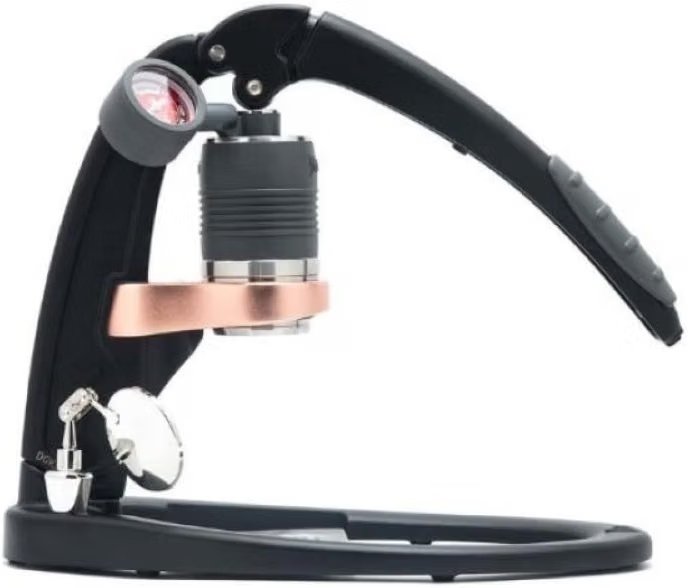
1. Flair UPDATED 49 PRO
The strongest starting point here if you want true manual pressure control, a visible gauge, and no built-in boiler or electronics.
Buy it ifYou want to feel and adjust extraction pressure directly and are comfortable heating water separately.
Skip it ifYou want a built-in steam wand, one-button convenience, or a machine that heats its own brew water.
The Flair 49 PRO strips espresso down to the variables that matter: coffee, water temperature, grind, dose, and the pressure you apply through the lever. Flair lists a 49 mm portafilter system, an integrated pressure gauge, two baskets, and an all-manual design with no electronics. That makes the brewing process unusually transparent—you can see the pressure and feel the resistance rather than letting a pump make every pressure decision for you.
The compromise is thermal workflow. You need a kettle, and the brew cylinder benefits from careful preheating. The bottomless basket also rewards a capable espresso grinder, although the included pressurized basket gives beginners an easier entry point. For readers comparing grinder options, our budget espresso grinder guide and single-dose grinder guide are useful next steps.
Portafilter49 mm
Water capacity90 ml listed
Pressure feedbackIntegrated gauge
What we like
Full manual pressure control
Pressure gauge makes profiling visible
No electronics in the brewing workflow
What to consider
Requires a kettle
Preheating adds steps
No built-in milk steaming
Specification source reviewed: Flair’s current 49 PRO product documentation. Editorial conclusions are our own.
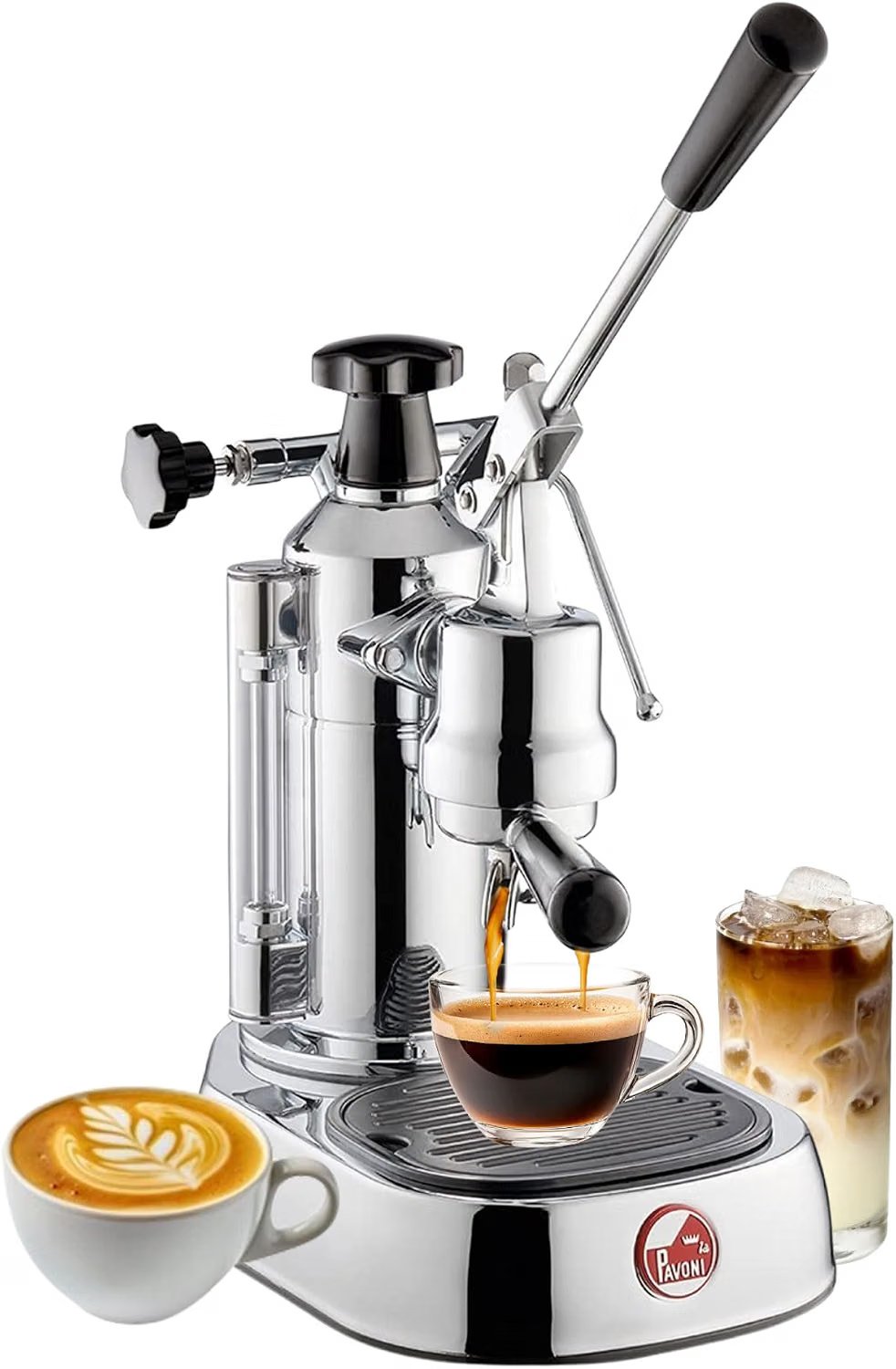
A classic choice for buyers who want a self-heated lever machine with steam capability in a smaller 8-cup format.
Buy it ifYou want a traditional electric boiler, manual piston lever, and steam wand in one compact machine.
Skip it ifYou want digital temperature control, repeatable automation, or a short learning curve.
The Europiccola is a very different experience from the Flair. Instead of bringing hot water from a kettle, you heat water inside the machine’s boiler, raise the lever to admit water to the group, then pull the lever down to create extraction pressure. Documentation for the EPC-8 family lists a 0.8-liter boiler, 8-cup capacity, a 1000-watt heating element, and a traditional steam wand.
That self-contained design is appealing, but it moves the difficulty from water preparation to heat management. Lever technique, grind size, dose, pre-infusion time, and group temperature all affect the shot. Before buying accessories, make sure you know the basket and portafilter dimensions for the exact revision; our espresso tamping guide explains why fit matters.
Boiler0.8 L listed
Heating1000 W listed
MilkTraditional steam wand
What we like
Built-in boiler removes the kettle step
Traditional lever-and-piston workflow
Steam wand supports milk drinks
What to consider
Temperature management takes practice
Smaller boiler than 16-cup Pavoni models
No modern digital controls
Specification source reviewed: La Pavoni EPC-8 instruction documentation and model catalog information.
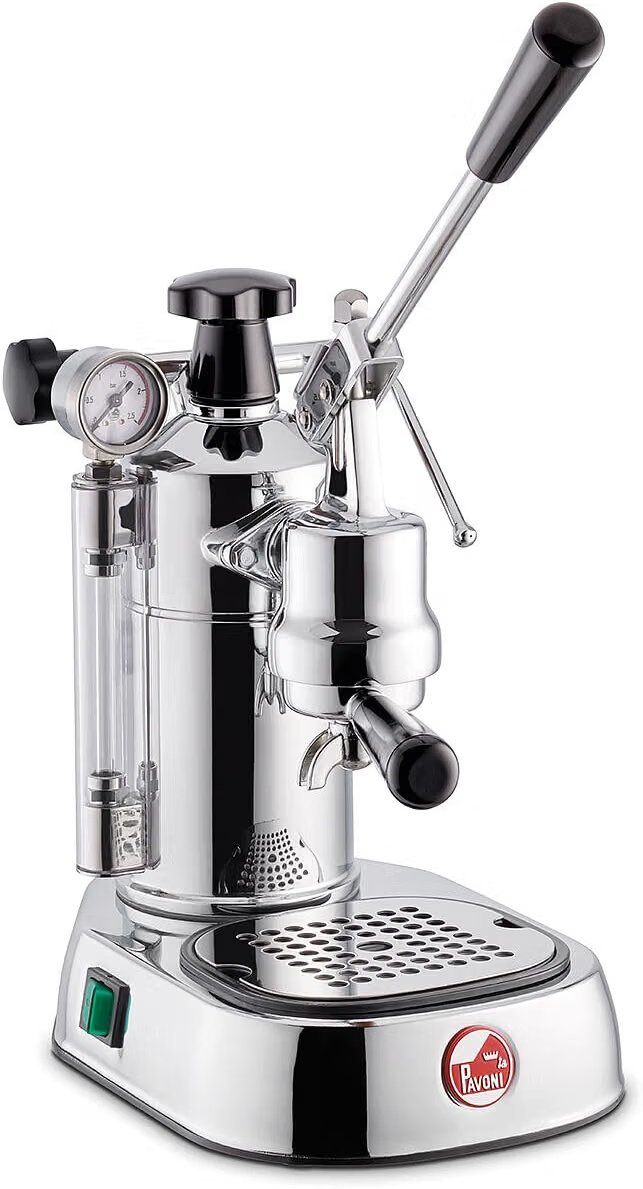
A larger traditional La Pavoni for enthusiasts who want more boiler capacity, a mounted boiler-pressure gauge, and steam capability.
Buy it ifYou like the Europiccola concept but want the larger 38-ounce boiler and 16-cup class.
Skip it ifYou want brew-pressure automation, PID temperature control, or a lightweight machine.
The PC-16 Professional keeps the same hands-on lever idea but scales the boiler up. La Pavoni documentation lists a 38-ounce boiler, 1000-watt heating element, 17-pound weight, and a mounted pressure gauge. That gauge is useful for understanding boiler state, but it should not be confused with a brew-pressure gauge on the coffee puck.
The larger boiler gives you more water and steam reserve than the Europiccola, which is useful when you make several drinks. It does not remove the core learning curve: you still control pre-infusion and extraction with the lever, and the group can get progressively hotter during a long session. If you are new to the broader workflow, read our guide on how to use an espresso machine alongside the manufacturer manual.
Boiler38 oz listed
Heating1000 W listed
Weight17 lb listed
What we like
Larger boiler than the Europiccola
Mounted boiler-pressure gauge
Traditional steam capability
What to consider
Heavy for its footprint
Heat management still depends on technique
Gauge does not show puck pressure
Specification source reviewed: La Pavoni Professional PC-16 instruction documentation.
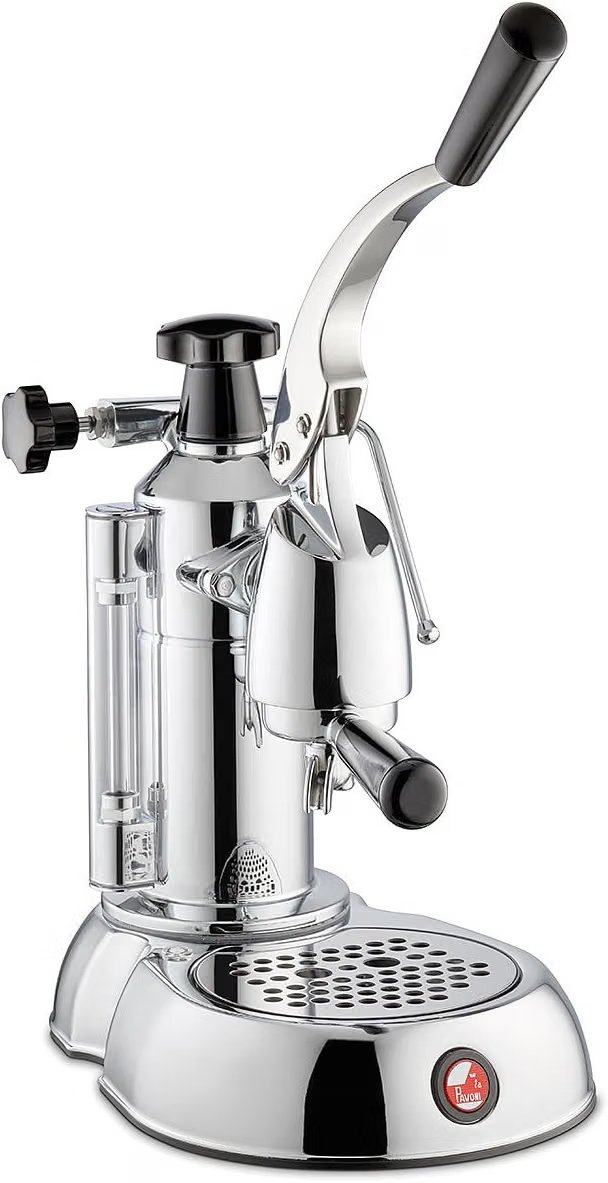
The aesthetic pick in this group: a 16-cup-class piston lever with a chrome body, wood accents, and traditional milk-frothing hardware.
Buy it ifYou want a display-worthy Italian lever machine and prefer wood handles over the plainer Professional styling.
Skip it ifYou care more about modern temperature control and repeatability than classic mechanical design.
The Stradivari PSW-16 shares much of the old-school La Pavoni appeal but puts more emphasis on design. Period La Pavoni specifications describe the 16-cup Stradivari with a 38-ounce boiler and wood accents, while the product entry supplied for this page describes a solid-brass boiler, dual frothing system, and piston lever design.
Its strengths and compromises are therefore familiar: no pump dictates the shot for you, but no modern controller rescues a poor grind, overheated group, or inconsistent lever technique either. A small espresso shot glass can make yield easier to observe while you learn, but a scale is still the more precise tool for repeatable recipes.
Capacity class16 cups listed
Boiler38 oz listed
ControlsManual piston lever
What we like
Distinctive chrome-and-wood styling
Large traditional boiler
Manual lever plus milk-frothing capability
What to consider
Technique-dependent consistency
More machine than espresso-only minimalists need
Classic design lacks modern temperature automation
Specification source reviewed: La Pavoni Stradivari catalog documentation plus the exact supplied product listing.
An interesting lower-information option if you specifically want to experiment with manual pressure profiling and pre-infusion without buying a traditional boiler machine.
Buy it ifYou are comfortable verifying the exact seller, warranty, included parts, and workflow before ordering.
Skip it ifYou want established manufacturer documentation, long-term parts support, or a proven accessory ecosystem.
The supplied catalog listing describes this model as a hand-press espresso machine with a dual-lever mechanism, pre-infusion, stainless-steel construction, portability, and “12Bar pressure profiling.” Those are seller-listing claims rather than independently verified measurements, so we would not rank it above the Flair or La Pavoni models on specifications alone.
Its appeal is the concept: a compact manual press can give you direct involvement in pressure and shot timing without a pump. The risk is ownership uncertainty. Before purchasing, confirm the exact brand, basket dimensions, replacement seals, pressure-gauge behavior if equipped, return terms, and required water-heating method on the Amazon page. For a broader look at non-electric brewing, see our manual coffee maker guide.
ControlDual-lever manual
Pre-infusionClaimed in listing
DocumentationLimited
What we like
Manual profiling concept
Portable format is listed
No pump-driven workflow
What to consider
Manufacturer details are unclear in supplied data
Key specifications need confirmation
Parts and service support are uncertain
Catalog source: the exact product title supplied in the Products & Affiliate Links sheet. Unverified claims are labeled as such.
Five decisions to make before buying a lever espresso machine
External kettle or built-in boiler?
A Flair-style manual press keeps the machine simple but moves water heating to a kettle. A La Pavoni-style boiler is self-contained and supports steaming, but adds thermal management and more hot metal to control.
Can your grinder make small adjustments?
Lever brewing makes grind changes easy to feel. If the shot races or stalls, the grinder is often the first variable to correct. Compare options in our best budget espresso grinder guide.
Do you want milk drinks every day?
The Flair 49 PRO is focused on espresso and has no built-in steam wand. The La Pavoni models combine lever extraction with steaming hardware, which is more convenient for cappuccinos and lattes.
How much technique do you want?
Manual machines reward consistent dosing, distribution, tamping, pre-infusion, and lever speed. Our espresso tamping guide covers one of the easiest variables to standardize.
Are parts and documentation easy to find?
Long-established models usually have clearer manuals and replacement-part ecosystems. That matters more with seals, gaskets, valves, and lever-group maintenance than it does with a disposable countertop appliance.
Measure height with the lever raised
A lever machine can need much more vertical clearance in use than it appears to need in a product photo. Measure beneath cabinets with the lever fully raised, not just with it parked down.
Quick answers
Common questions about lever espresso machines
What is a lever espresso machine?
A lever espresso machine uses a hand-operated lever and piston system to create or control brewing pressure instead of relying entirely on an electric pump. Some models heat their own water; others require hot water from a kettle.
Do lever espresso machines make better espresso?
Not automatically. They can give you unusually direct control over pre-infusion and pressure, but that control also makes grind, dose, water temperature, and technique more important. A good lever shot can be excellent; a poorly dialed-in one can be inconsistent.
Do I need an espresso grinder for a lever machine?
Usually yes if you want to use a non-pressurized basket and dial in fresh coffee precisely. Some systems include a pressurized basket that is more forgiving, but a capable grinder gives you much more control. See our single-dose coffee grinder guide for another grinder style to consider.
Is the Flair 49 PRO easier than a La Pavoni?
They simplify different things. The Flair avoids a built-in boiler and gives you a brew-pressure gauge, but you manage kettle water and preheating. A La Pavoni heats its own water and can steam milk, but its group temperature and boiler workflow add a different learning curve.
Can a lever espresso machine make cappuccino or latte drinks?
Only if it has a steam system or you use a separate frother. The La Pavoni models here include traditional milk-frothing hardware, while the Flair 49 PRO does not include a built-in steam wand.
Is a lever espresso machine good for beginners?
It can be if the beginner enjoys learning. A lever machine is a poor fit for someone who mainly wants speed and repeatability, but it can be very rewarding for someone who wants to understand how grind, temperature, pre-infusion, and pressure change the shot.
Recommended next
Continue your research
These published Espresso Finder guides cover the grinder, puck preparation, and manual-brewing decisions that matter most around a lever-machine purchase.