Espresso Machine Components: Every Main Part Explained
An espresso machine is a controlled water-and-pressure system. Here is what the pump, heating system, group head, portafilter, valves, steam wand, reservoir, filters, sensors, and supporting tools actually do—and which parts you should understand before buying, maintaining, or upgrading a machine.
John CrestaniEspresso Equipment Specialist
Last Updated
The short version
What are the main components of an espresso machine?
The core espresso machine components are the water reservoir or inlet, pump, heating system, brew/group head, shower screen, portafilter and filter basket, pressure/flow valves, steam system, controls or sensors, and the drain/drip-tray path. Some machines also integrate a grinder, while separate grinders, tampers, WDT tools, dosing funnels, and puck screens are workflow accessories rather than internal machine parts.
Terminology note: “Espresso machine components” can mean internal hardware, removable brew parts, or external barista tools. This guide separates those categories. For a broader diagram-style overview, also read our parts of an espresso machine guide.
How to understand the system
Follow the path from water to espresso
The easiest way to understand espresso machine components is to follow the workflow: water enters the machine, a pump creates flow and pressure, a heating system brings water toward brew temperature, valves route it, the group head distributes it over the coffee, and the portafilter contains the puck. A separate steam path then uses heated water or steam for milk. The exact layout varies by single-boiler, dual-boiler, heat-exchanger, and thermoblock designs.
Water & pressureReservoir, inlet, filter, pump, over-pressure and other flow-control valves move water through the system.
Heat managementBoilers, thermocoils, or thermoblocks heat brew water; some machines use a separate steam circuit.
Brew interfaceThe group head, shower screen, gasket, portafilter, basket, and coffee puck form the extraction zone.
Steam & maintenanceSteam valves and wands texture milk, while drains, drip trays, filters, and cleaning routines manage residue and scale.
Component-related products compared
Amazon links in this table are paid links. These are examples of serviceable parts and supporting tools from your supplied product list—not a claim that every item is an internal machine component. Prices and availability are intentionally omitted.
Five espresso component-related products: role, size or type, fit check, and category
Espresso Mastered:The EspressoFinder.com Guide for Enthusiasts and Professionals
Understand the machine before you upgrade it.
A long specification sheet is easier to judge once you understand the water path, heating system, brew group, grinder, and maintenance components that actually shape daily use.
Separate useful specifications from marketing noise
Match the grinder, milk system, and learning curve to your routine
Spot hidden accessory, cleaning, and upgrade costs
Use a clear checklist to compare any espresso machine
Free digital guide · Delivered by email · Privacy Policy
Five component-related picks, with fit checks explained
The products below are selected from your supplied affiliate list because each connects to a practical part of the espresso workflow. A grinder, tamper, and distribution tools are external accessories; a portafilter is a removable brew component; a compatible water filter is a service item in the machine's water path.
Grind-control component
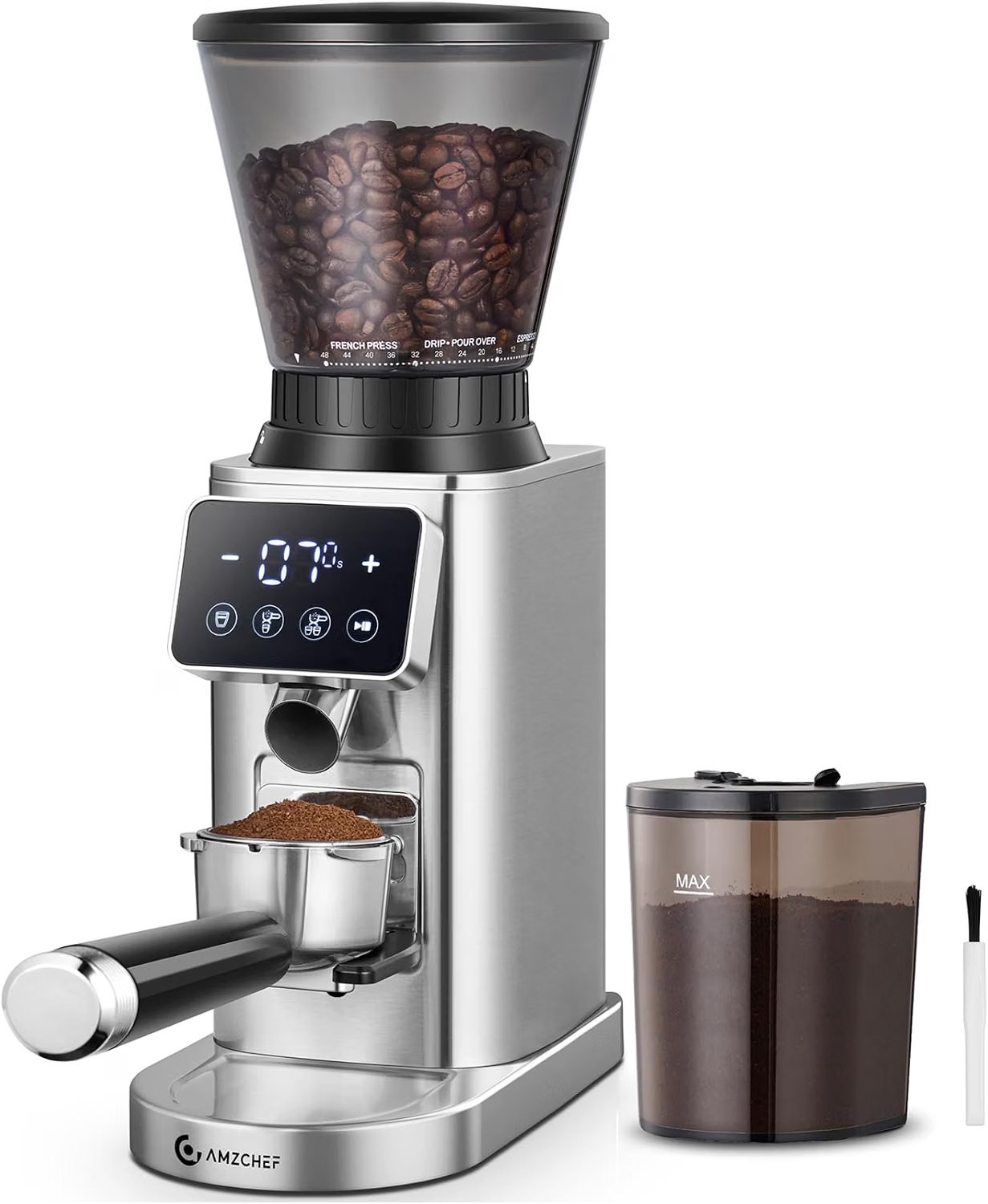
1. AMZCHEF Burr Coffee Grinder, 48 Settings
A separate burr grinder for buyers who want to control grind size independently from the espresso machine.
Buy it ifYour machine does not include a grinder, or you want a separate grinder you can upgrade independently.
Skip it ifYou already have an espresso-capable grinder or use a fully automatic machine with an integrated grinder.
The grinder is not an internal component on every espresso machine, but it is part of the espresso system because particle size controls how quickly water moves through the coffee bed. The supplied listing identifies this AMZCHEF model as a burr grinder with 48 settings, giving the user multiple adjustment steps rather than a single coarse/fine switch.
For a components-focused setup, the practical advantage of a separate grinder is modularity: the brewer and grinder can be replaced or upgraded independently. Before buying, confirm that the current Amazon listing is the same 48-setting model shown in your product image and that its adjustment range is suitable for espresso.
TypeElectric burr grinder
Adjustment48 settings listed
RoleControls coffee particle size
What we like
Separate component can be upgraded independently
48 settings are listed in the supplied product title
Pairs with machines that lack an integrated grinder
What to consider
Not an internal espresso-machine part
Exact burr design and espresso range should be confirmed on the listing
Adds another appliance to the counter
Product name and affiliate URL supplied in the EspressoFinder product sheet; functional context is editorial.
View on Amazon ↗Paid link · confirm fit, model, price, and availability
Brew-group interface
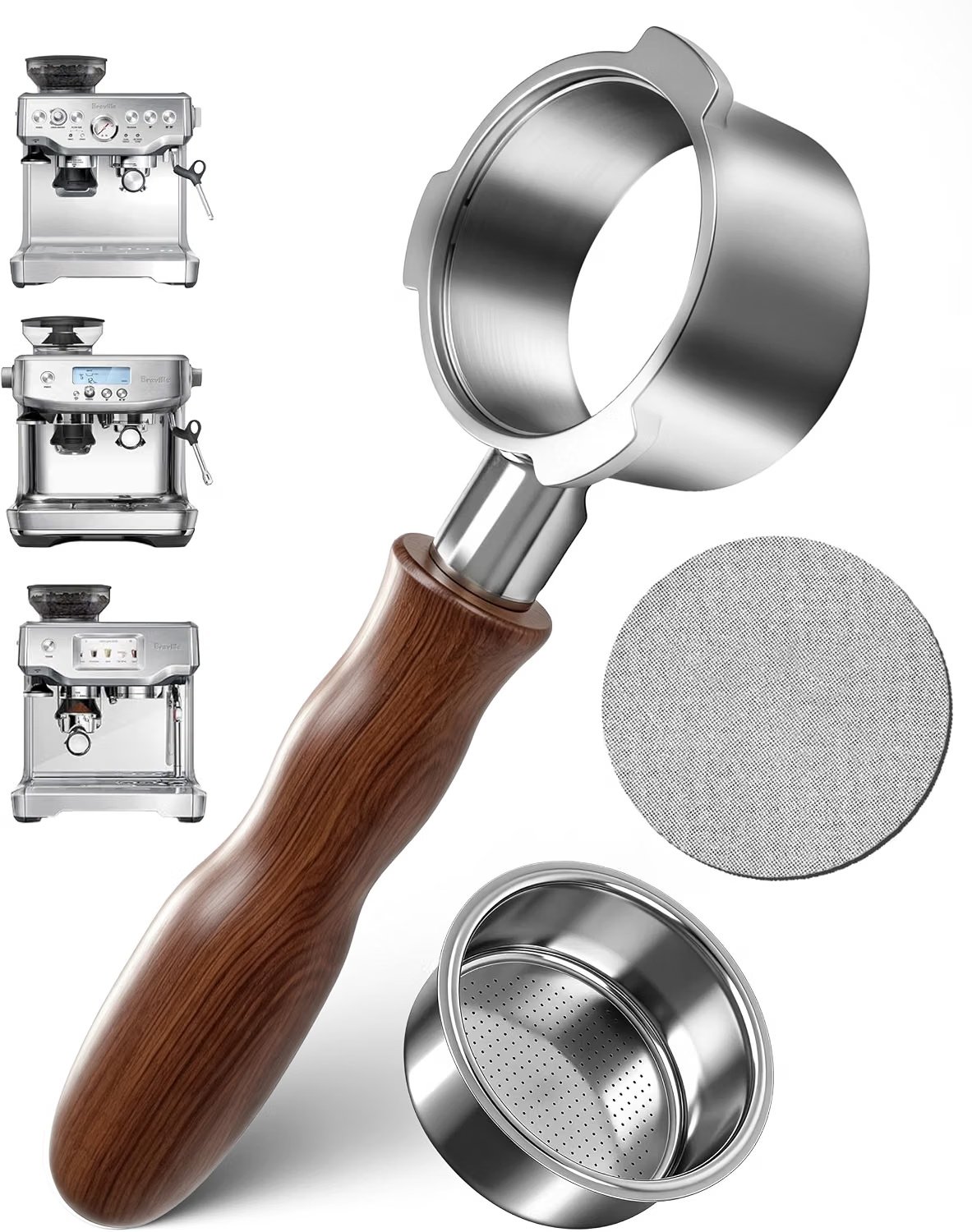
2. 54mm Bottomless Portafilter for Breville Barista Express, Pro & Touch
A visible-extraction portafilter option for compatible 54 mm Breville machines.
Buy it ifYou own a compatible Breville 54 mm machine and want a bottomless portafilter for shot diagnosis and workflow practice.
Skip it ifYour machine uses a different portafilter diameter, ear pattern, or locking geometry.
The portafilter is the removable handle-and-basket assembly that locks into the group head and holds the coffee during extraction. A bottomless version removes the spouted base, making the underside of the basket visible while a shot runs. That visibility can make channeling and uneven flow easier to notice, but it does not fix preparation by itself.
Compatibility matters more than appearance. “54 mm” describes a key dimension, but machines can still differ in locking tabs and basket fit. The supplied product is specifically named for Breville Barista Express, Pro, and Touch families, so verify your exact model before ordering. For a broader fit discussion, see our espresso portafilter guide.
Size54 mm listed
StyleBottomless
RoleHolds basket in group head
What we like
Makes the basket underside visible during extraction
Directly relates to the brew-group component
Designed around a named 54 mm Breville use case
What to consider
Compatibility is model-specific
Can expose messy spraying when puck prep is uneven
Not a universal 54 mm fit guarantee
Product name and affiliate URL supplied in the EspressoFinder product sheet; compatibility should be verified on the destination listing.
View on Amazon ↗Paid link · confirm fit, model, price, and availability
Puck-prep system
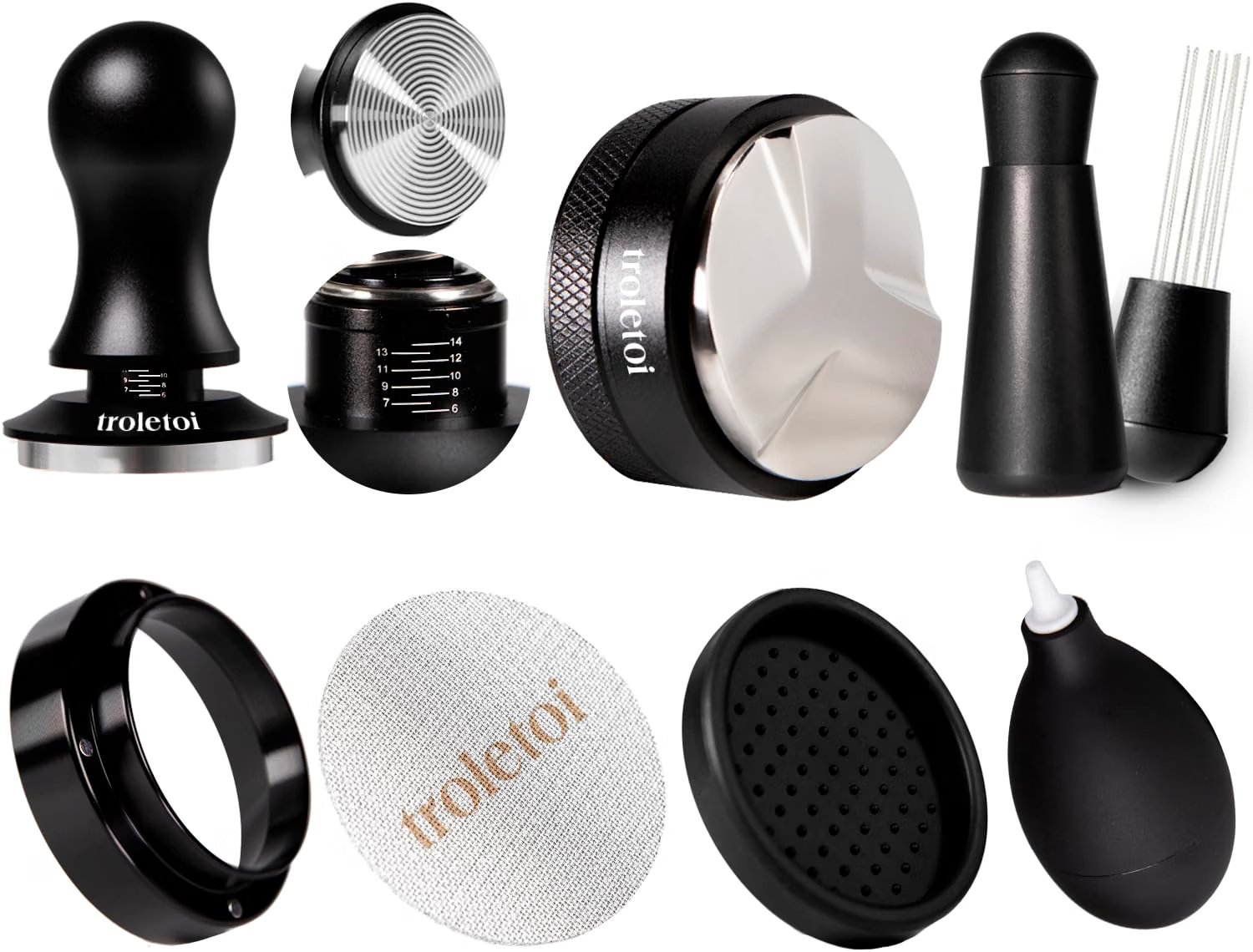
3. 7-Piece 53.3mm Espresso Accessories Kit for Breville 54mm Systems
A bundled set for buyers who want several puck-preparation tools sized around Breville 54 mm portafilters.
Buy it ifYou are starting from the stock accessories and want a matched tamper, distributor, puck screen, funnel, and WDT-style workflow.
Skip it ifYou already own well-fitting puck-prep tools or your basket is not compatible with the listed 53.3/54 mm sizing.
Tamping and distribution tools sit outside the machine, but they affect what happens inside the portafilter. The supplied listing names a 53.3 mm tamper, coffee distributor, puck screen, dosing funnel, and WDT tool in a seven-piece set intended for Breville 54 mm systems.
The main reason to consider a kit is coordination: the tools are sold around one size family instead of being assembled one by one. The downside is that a bundle can include pieces you may not use. If you are still learning the basics, our espresso tamping guide explains the preparation step before you add more tools.
Tamper53.3 mm listed
SystemBreville 54 mm listed
IncludesDistributor, screen, funnel, WDT tool
What we like
Multiple puck-prep tools in one purchase
Sizing is stated in the supplied product title
Useful for building a consistent prep station
What to consider
Accessories are not internal machine components
Some tools may duplicate items you already own
Fit should be checked against your exact basket
Included pieces and sizing come from the supplied product title; affiliate URL comes from the EspressoFinder product sheet.
View on Amazon ↗Paid link · confirm fit, model, price, and availability
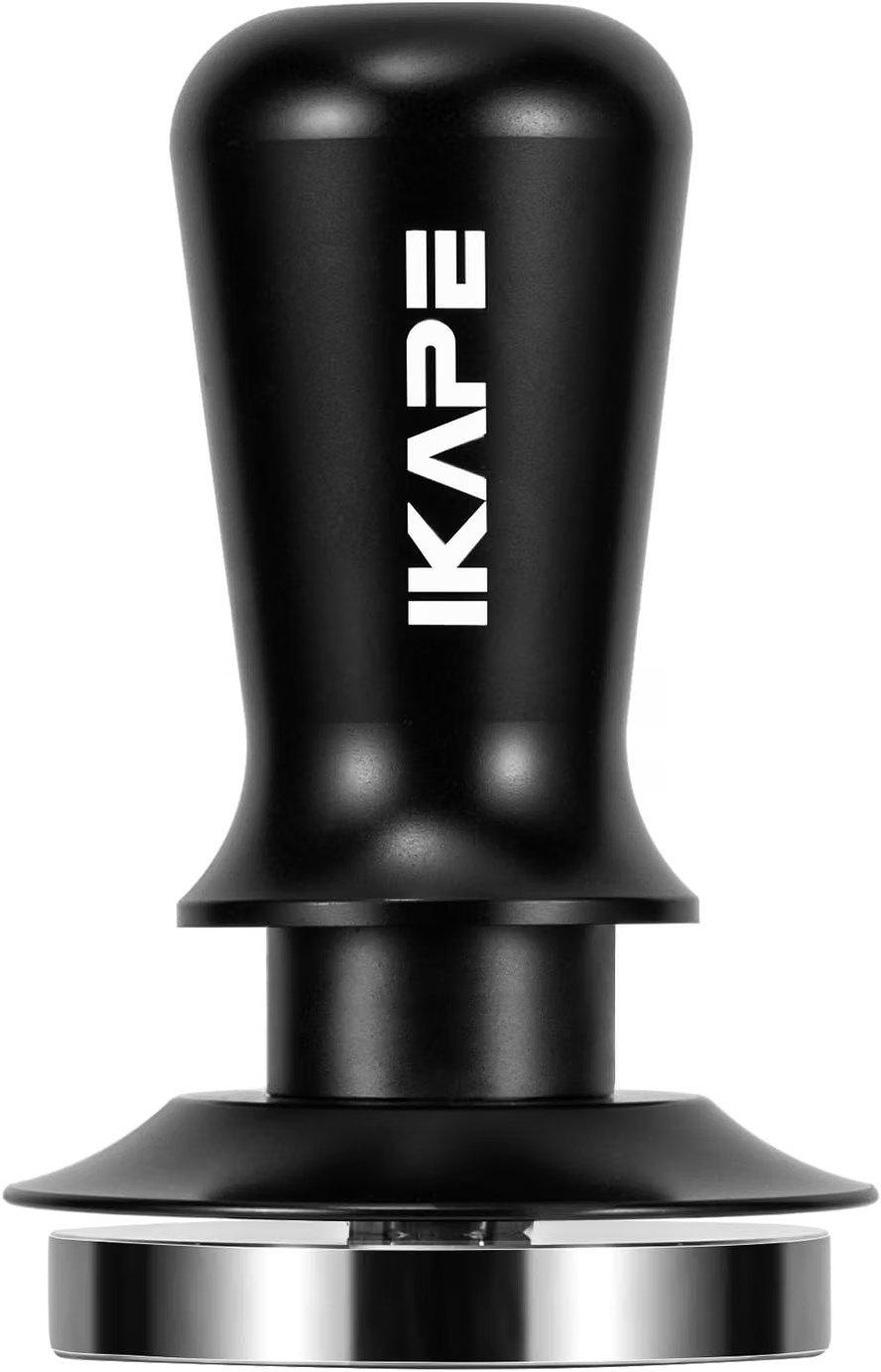
A dedicated 53.3 mm spring-loaded tamper for users who prefer a repeatable puck-preparation feel.
Buy it ifYou use a compatible Breville 54 mm basket and want a dedicated tamper rather than the stock combination tool.
Skip it ifYour basket is a different diameter or you already have a tamper that fits your basket closely.
A tamper compresses the ground coffee in the filter basket before the portafilter locks into the group head. The supplied IKAPE listing describes a 53.3 mm base, calibrated spring loading, and fit for Breville-series 54 mm portafilter baskets.
The important component relationship is size: a tamper must suit the basket it is used with. Spring loading may make the feel more repeatable for some users, but it does not replace good dosing and distribution. Match the tool to the actual basket rather than assuming every product labeled “54 mm” has identical internal dimensions.
Base53.3 mm listed
MechanismSpring-loaded listed
RoleCompresses coffee in basket
What we like
Dedicated size for a common Breville basket family
Spring-loaded mechanism is listed
Simple single-purpose tool
What to consider
Only useful with compatible baskets
Does not correct uneven distribution by itself
Fit should be verified before purchase
Sizing and mechanism are taken from the supplied product title; affiliate URL comes from the EspressoFinder product sheet.
View on Amazon ↗Paid link · confirm fit, model, price, and availability
Water-path maintenance
5. 6-Pack Replacement Water Filter for Breville Espresso Machines
A replacement-filter pack for compatible Breville machines where the water filter is part of the reservoir-to-boiler maintenance path.
Buy it ifYour compatible Breville machine uses this filter format and you want replacement filters on hand.
Skip it ifYour machine uses a different filter cartridge or your manufacturer specifies another water-treatment method.
Water is a working input and a maintenance issue. On machines designed for replaceable reservoir filters, the filter sits upstream of internal heating and flow components. Breville’s maintenance guidance notes that water filters can help reduce scale risk, while replacement timing depends on the specific machine and water conditions.
The supplied product is a six-pack of replacement filters for Breville espresso machines. Compatibility should be checked against your model before purchase. For a deeper look at water treatment and fit, see our espresso machine water filter guide.
Pack6 filters listed
RoleWater-path maintenance
FitBreville compatibility listed
What we like
Directly supports a serviceable machine component
Multi-pack can reduce repeat ordering
Relevant to scale-management routines on compatible machines
What to consider
Not universal across Breville models
Filter use does not eliminate all maintenance
Water-treatment needs vary by local water chemistry
Pack description and affiliate URL are from the supplied product sheet; maintenance context references Breville guidance.
View on Amazon ↗Paid link · confirm fit, model, price, and availability
Machine anatomy
How the main espresso machine components work together
1. Reservoir, filter, pump & valves
Water starts in a reservoir or plumbed inlet, may pass through a filter, then moves under pump pressure. Valves regulate routing, pressure relief, and discharge. Water quality matters because mineral deposits can affect the internal water path. See our espresso machine water filter guide.
2. Boiler, thermoblock or thermocoil
The heating system raises water temperature for brewing and, depending on design, steam. A single-boiler espresso machine shares one heater between jobs; dual-boiler machines separate brew and steam heating.
3. Group head, shower screen & portafilter
The group head is where heated water reaches the coffee. The shower screen spreads water, the gasket seals around the portafilter, and the basket holds the puck. Portafilter size and locking geometry are machine-specific; use our espresso machine portafilter guide when checking fit.
4. Steam system, controls & drain path
A steam valve meters steam to the wand for milk texturing. Sensors, switches, controllers, and pressure/temperature logic manage operation. After brewing or purging, water and residue are directed toward the drip tray or drain. For the full naming map, see all espresso machine parts.
Quick answers
Common questions about espresso machine components
What are the most important components inside an espresso machine?
The core internal systems are the water inlet or reservoir, pump, heating system, valves, brew/group head, steam circuit, sensors or controls, and drainage path. The portafilter and basket are removable brew components. A grinder may be integrated or separate.
Is the portafilter a component of the espresso machine?
Yes. It is a removable brew component that locks into the group head and holds the filter basket and coffee puck. Diameter alone does not guarantee compatibility because locking tabs and geometry can differ.
Is the grinder part of the espresso machine?
Only on machines with an integrated grinder. On traditional semi-automatic setups, the grinder is a separate appliance, but it remains a critical part of the espresso system because grind size influences flow through the coffee puck. See our budget espresso grinder guide.
What is the difference between a boiler and a thermoblock?
Both are heating systems, but they store and heat water differently. Boiler machines hold heated water in a vessel, while thermoblock-style systems heat water as it passes through a heated path. Exact behavior depends on the machine design.
Which espresso machine components need regular cleaning?
Common maintenance areas include the portafilter and baskets, group head and shower screen, steam wand, drip tray, water reservoir, and manufacturer-specified water filter. Internal descaling or backflushing should follow the machine's instructions rather than a universal schedule.
Can I replace espresso machine components myself?
User-serviceable items such as baskets, portafilters, water filters, and some gaskets are often straightforward when the manufacturer permits it. Pumps, boilers, mains-voltage wiring, and pressurized internal parts are better handled according to the service manual or by a qualified technician.
Recommended next
Continue your research
Continue with focused EspressoFinder guides on machine parts, portafilters, water treatment, boilers, and puck preparation.
☕Parts of an espresso machineComing soon☕Espresso portafilter fit and sizesComing soon☕Espresso machine water filtersComing soon