5 Best All Metal Coffee Makers for Less Plastic in 2026
“All metal” can mean two very different things: a metal-looking exterior, or a brew path where hot water and coffee avoid plastic. We compare five options from your supplied catalog by the materials that are actually documented, brewing style, capacity, and the compromises hidden behind the stainless-steel finish.
John CrestaniEspresso Equipment Specialist
Last Updated
The short version
What is the best all metal coffee maker?
If your real goal is to keep plastic out of the hot-water and coffee path, SimplyGoodCoffee THE BREWER is the strongest match in this five-product comparison. Its current manufacturer documentation specifies a plastic-free brew path built around stainless steel, borosilicate glass, and silicone seals. That also means it is not literally made only of metal. The Primula Classic is a simple cast-aluminum stovetop option, while the crosson commercial brewer and the two large stainless coffee urns are better fits when capacity and metal construction matter more than a documented plastic-free path.
Testing transparency: This is a research-based comparison of manufacturer and seller specifications, not a hands-on laboratory test. “Stainless steel,” “metal housing,” and “all metal” are not treated as synonyms for a plastic-free water path. Where the materials of seals, tubing, faucets, handles, reservoirs, or internal fittings could not be verified, the limitation is stated instead of assumed.
How we evaluated
The important question is where the metal actually is
This comparison separates visible construction from the surfaces that contact water and brewed coffee. A stainless-steel shell can still hide plastic tubing or a plastic filter basket, while a brewer with a glass reservoir may offer a more plastic-free brew path even though the appliance is not literally all metal. Recommendations are editorial judgments based on the documented materials and intended use of the five products selected from the supplied catalog.
Brew-path materialsWhat touches cold water, hot water, coffee grounds, and finished coffee?
Metal constructionIs stainless steel or aluminum used only as exterior trim, or in functional brewing parts?
Brewing workflowIs the brewer automatic drip, stovetop moka, commercial drip, or a high-capacity urn?
Ownership frictionConsider cleaning, breakable glass, counter space, refill volume, and whether replacement parts are practical.
All metal and metal-forward coffee makers compared
Amazon links in this table are paid links. On a phone, swipe sideways to see every column. Prices and availability change frequently, so this table intentionally does not display them.
Five coffee makers: best use, documented materials, brewing style, and the main material caveat
Espresso Mastered:The EspressoFinder.com Guide for Enthusiasts and Professionals
Choose smarter. Brew better from day one.
Pressure numbers and long feature lists can make almost every machine look impressive. This practical guide shows you what actually affects taste, workflow, and long-term value—before you spend your money.
Separate useful specifications from marketing noise
Match the grinder, milk system, and learning curve to your routine
Spot hidden accessory, cleaning, and upgrade costs
Use a clear checklist to compare any espresso machine
Free digital guide · Delivered by email · Privacy Policy
Our five picks, with the material tradeoffs explained
The keyword “all metal coffee maker” sounds simple, but the products are not. We ranked these by how well their documented construction matches the likely intent behind the search, then by how practical each brewing format is for its intended setting.
Best plastic-free brew path
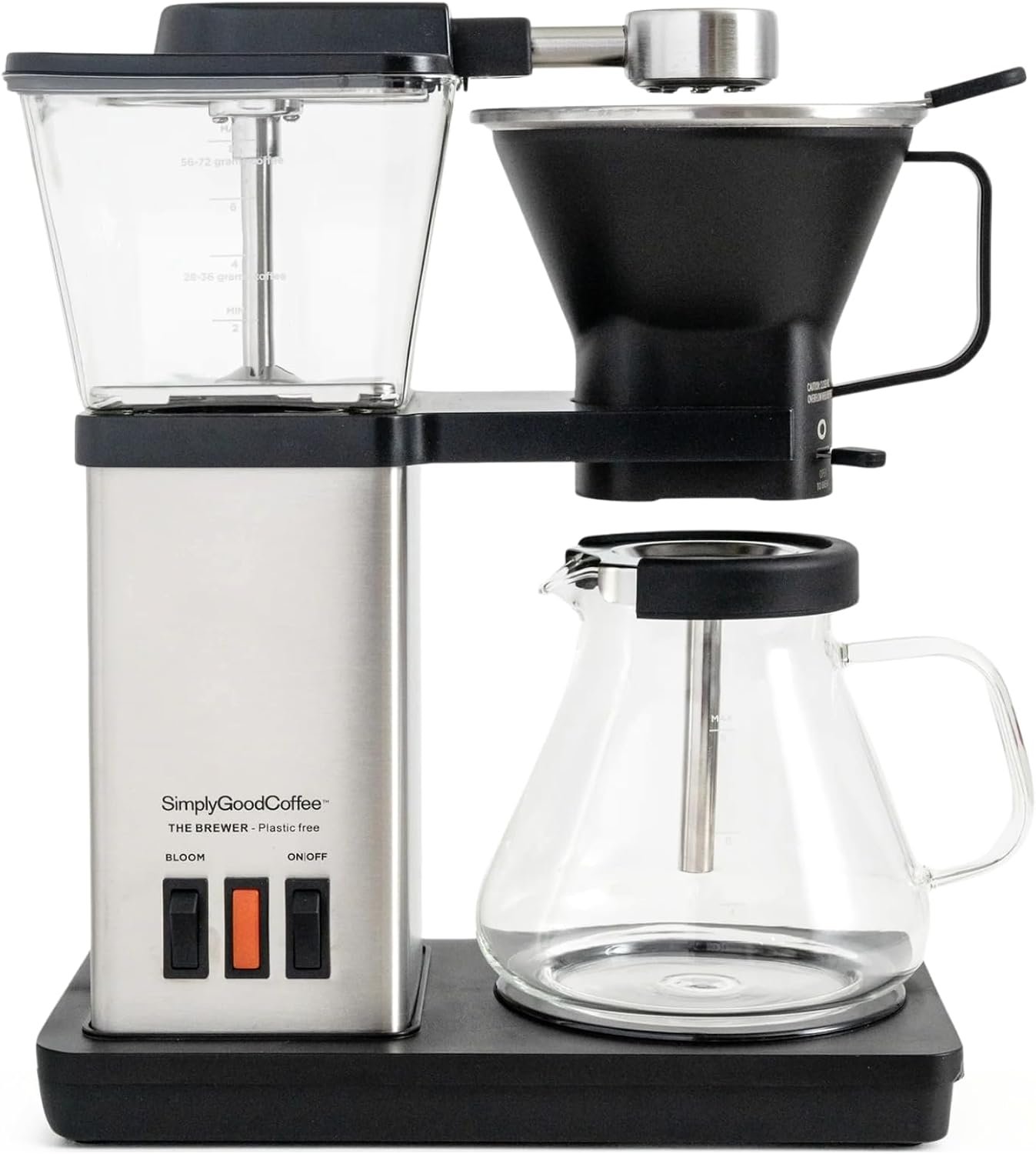
1. SimplyGoodCoffee THE BREWER - Plastic-Free
The strongest home choice here if “all metal” really means you want hot water and coffee to avoid plastic, while still keeping the convenience of an automatic drip machine.
Buy it ifYou want an automatic brewer with a manufacturer-documented plastic-free water and coffee path.
Skip it ifYou require an appliance made literally from metal only, because this brewer intentionally uses borosilicate glass and silicone seals too.
This brewer is the clearest match for the intent behind an all metal coffee maker search. The current manufacturer specification says no plastic or aluminum contacts the water or coffee. Instead, the functional brew path uses 304 stainless steel, a borosilicate-glass reservoir and carafe, plus medical-grade silicone where flexible seals are required.
That distinction matters. Calling it “100% all metal” would be inaccurate, but calling its brew path plastic-free is supported by the current documentation. The listed 8-cup/40-ounce capacity, 195–205°F brewing range, #4 cone filter basket and automatic bloom cycle make it a normal daily drip brewer rather than a niche manual setup. Because SimplyGoodCoffee has sold earlier models with different internal materials, confirm the Amazon destination is specifically the Plastic-Free version before ordering.
Brew path304 stainless steel, glass and silicone; no plastic or aluminum contact listed
Capacity8 cups / 40 oz listed
Brew temperature195–205°F listed
What we like
Best-documented plastic-free brew path in this comparison
Automatic drip workflow is familiar for everyday use
Stainless filter basket and showerhead reduce reliance on plastic brew components
What to consider
Not literally an all-metal appliance
Glass reservoir and carafe can break if mishandled
Exact Amazon listing should be checked to avoid confusing it with older SimplyGoodCoffee versions
Specification source reviewed: SimplyGoodCoffee’s current THE BREWER - Plastic-Free product documentation. Editorial conclusions are our own.
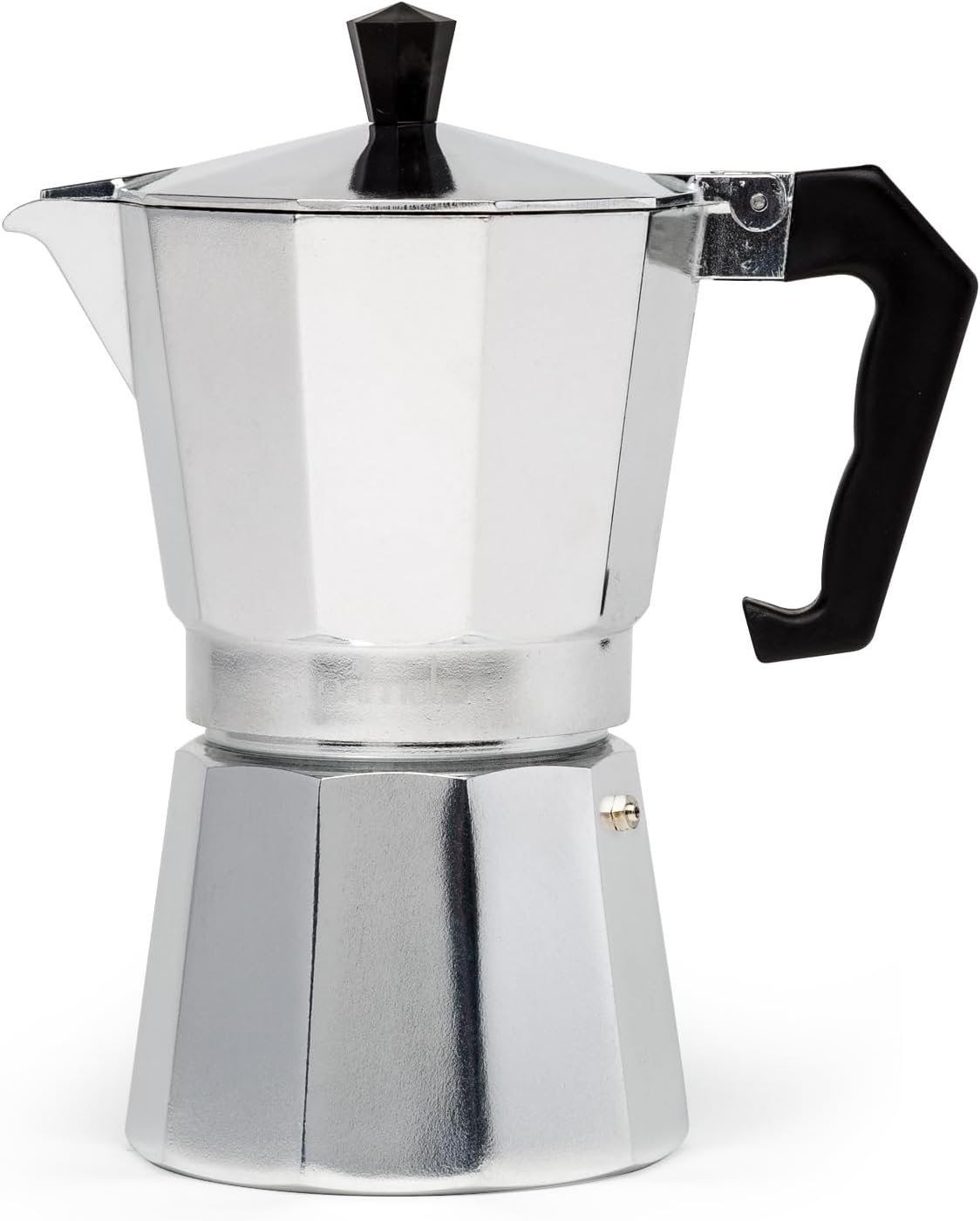
A straightforward metal-bodied option for people who would rather skip pumps, reservoirs, electronics and complicated internal plumbing.
Buy it ifYou want a compact manual brewer with a cast-aluminum body and reusable filter.
Skip it ifYou specifically want stainless steel, automatic drip coffee, or absolutely no nonmetal handle, knob or gasket components.
The Primula takes the opposite approach from an electric drip machine: simplify the brewer until there is very little hardware to hide. Its main brewing body is cast aluminum, and the filter is reusable. You fill the lower chamber, add ground coffee to the funnel, assemble the pot and heat it on the stove until pressure pushes brewed coffee into the upper chamber.
It is still not literally all metal. Product documentation describes a heat-resistant handle and knob, and the moka pot relies on a gasket to seal the two chambers. The important question is whether those parts conflict with your personal material preference. If you are comparing this style with other non-electric options, our manual coffee maker guide explains the broader tradeoffs, while the aluminum coffee pot guide goes deeper on aluminum construction.
Main materialCast aluminum
Capacity6 espresso-size cups listed
OperationManual stovetop
What we like
Simple design with few internal parts
Cast aluminum distributes heat across the body
Portable and usable on common gas, electric and ceramic stovetops
What to consider
Aluminum is not stainless steel
Handle, knob and gasket are not all metal
Moka coffee is concentrated and different from standard drip coffee
Specification sources reviewed: current Primula product/manual documentation for the Classic 6-cup stovetop model.
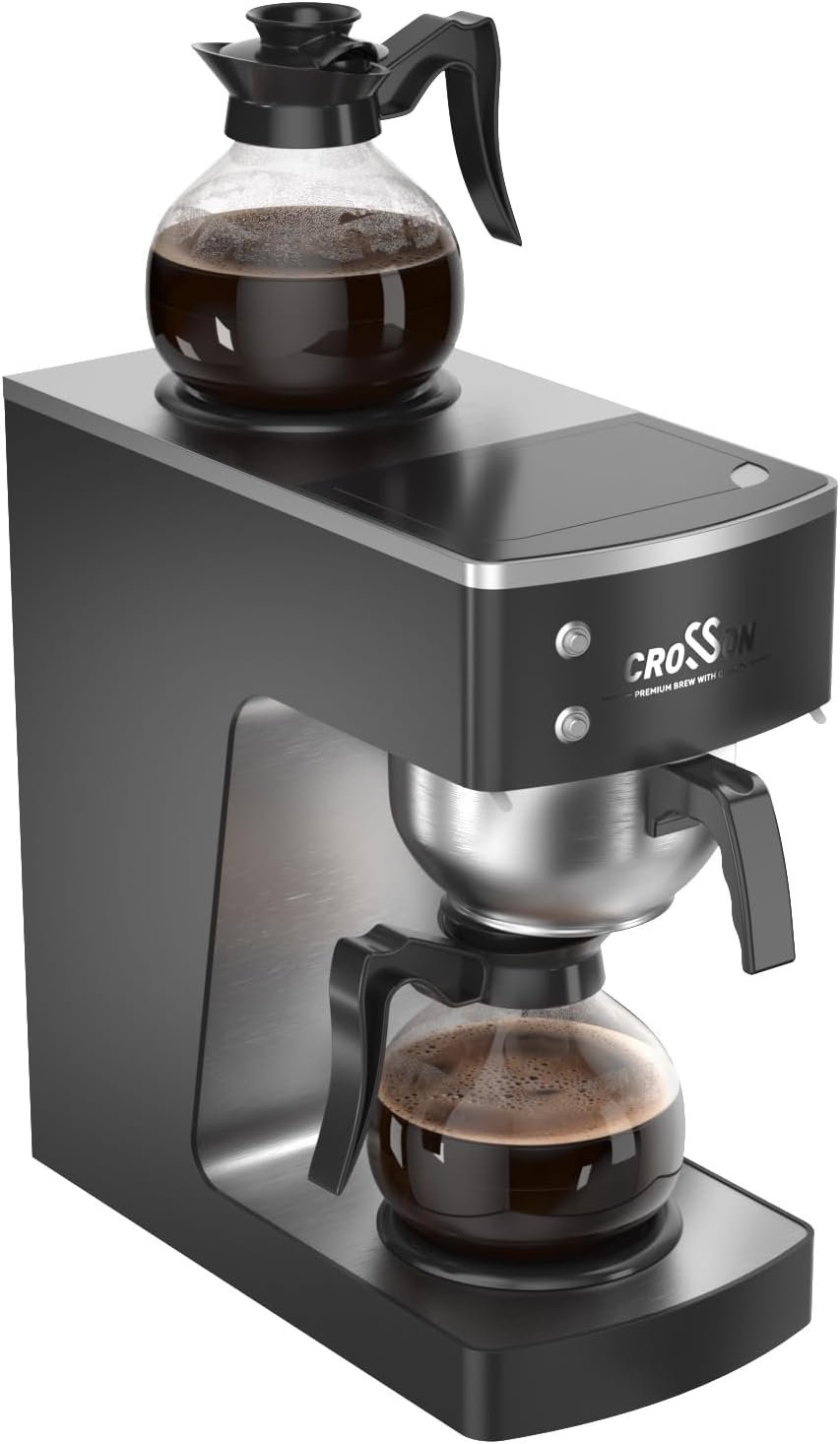
A better fit than a household machine when you want a stainless-forward pour-over brewer that can keep one pot serving while another sits on the second warmer.
Buy it ifYou need a 12-cup commercial-style brewer with a documented 304 stainless-steel funnel and two glass decanters.
Skip it ifYour non-negotiable requirement is a fully documented plastic-free internal water path.
The crosson stands out because its listing calls out a 304 stainless-steel funnel rather than relying only on a shiny exterior. That matters in a commercial drip brewer, where the funnel sits directly in the coffee-brewing workflow. The machine also pairs upper and lower warming positions with two glass decanters, which is more useful for an office counter, waiting room or low-volume service station than for a small household kitchen.
We would still stop short of calling the complete machine plastic-free. The available product material does not document every tube, seal and internal water-contact component. If commercial drip is the right format but you want to compare layouts and capacities first, see our commercial coffee brewer guide and restaurant coffee maker guide.
Capacity12-cup commercial format
Funnel304 stainless steel listed
Servers2 glass decanters listed
What we like
304 stainless-steel funnel is explicitly listed
Two-warmer arrangement suits continuous service
Commercial pour-over workflow is simple to understand
What to consider
Complete brew-path material list is not available
Glass decanters add breakage risk
Commercial footprint is unnecessary for many homes
Specification sources reviewed: current seller documentation for the crosson 12-cup commercial drip brewer. Full internal brew-path materials remain unconfirmed.
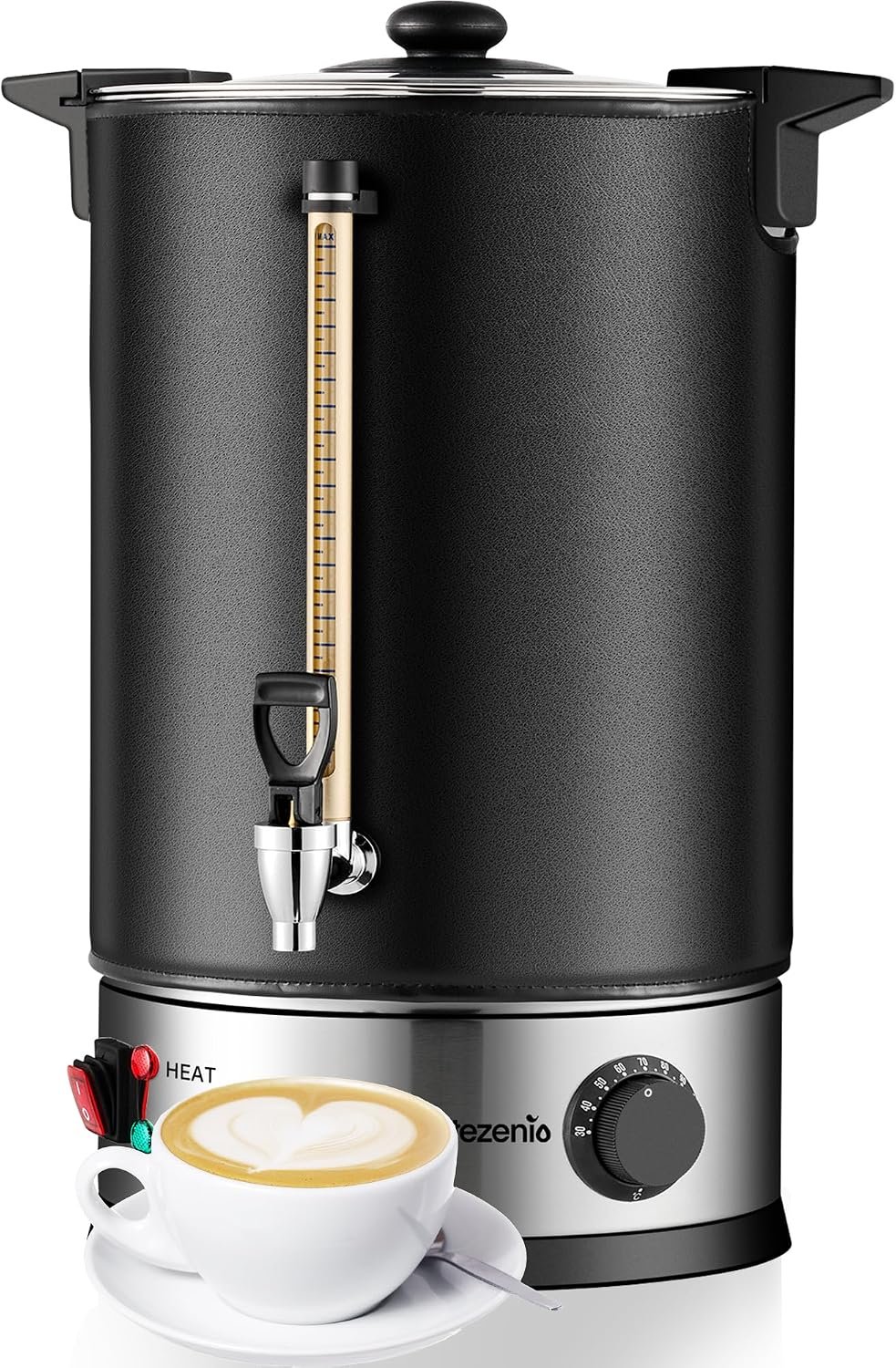
A high-capacity metal vessel for offices, events and buffet service where keeping a large batch hot matters more than countertop compactness.
Buy it ifYou regularly serve dozens of cups and want double-wall stainless-steel construction with an integrated percolator system.
Skip it ifYou brew only a few cups at a time or need every faucet, seal and level-window material independently verified as plastic-free.
This 50-cup urn solves a different problem from a home drip maker. Instead of optimizing for small batches, it combines brewing, holding and dispensing in one large stainless-steel body. Current seller specifications describe a double-wall vessel and temperature-control function, making it a logical option for meetings, break rooms, church functions and catered events.
The stainless vessel is the appeal, but “stainless coffee urn” still does not prove every small component is metal. Faucets, viewing windows, handles and internal seals can vary by production run. If the urn is going into a workplace rather than occasional events, compare it with the options in our best office coffee maker guide before committing to such a large batch size.
SystemElectric percolator with temperature control listed
What we like
Metal-heavy construction suits frequent service
Large batch reduces repeated brewing during events
Integrated keep-hot workflow is convenient for self-service
What to consider
Far too large for most household routines
Full material list for minor components is not published clearly
Large urns require more cleaning and storage space
Specification source reviewed: current seller documentation for the 50-cup double-insulated stainless coffee urn. Minor component materials remain unconfirmed.
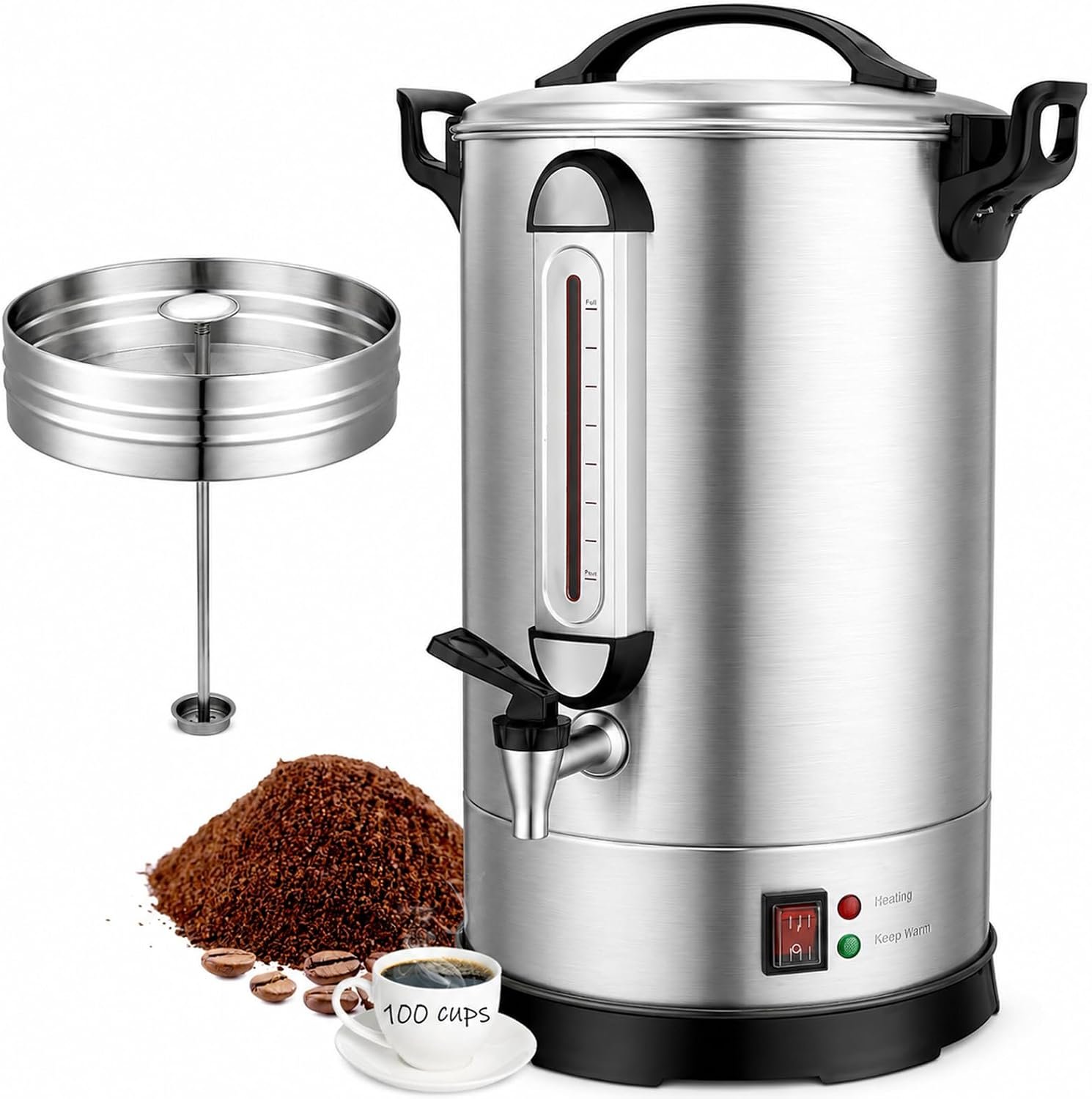
The volume-first choice for catering, churches and large functions, with a 304 stainless double-wall body and a listed 1300-watt brewing system.
Buy it ifYou genuinely need 100-cup-class capacity and prefer a heavy-duty stainless vessel over repeated small-batch brewing.
Skip it ifYou are shopping for a normal kitchen coffee maker, or if every small water-contact component must be proven metal before purchase.
The 100-cup urn pushes the same metal-forward idea into genuinely industrial territory. Its supplied product description specifies 304 stainless steel, a double-wall construction and a 1300-watt electric percolator. For a caterer, church, community hall or large workplace function, that combination can be more practical than running a 10- or 12-cup brewer repeatedly.
Capacity is also the main reason not to buy it. A huge urn occupies storage space, takes longer to prepare and clean, and is wasteful when you only need a few mugs. Our industrial coffee maker guide is the better next comparison if your use case is truly high-volume. As with the 50-cup model, do not infer that every valve, seal or handle is metal simply because the body is 304 stainless steel.
Capacity100 cups listed
Main material304 stainless-steel double wall listed
Power1300 W listed
What we like
304 stainless-steel double-wall construction is explicitly listed
Designed for large batches and extended service
Reusable percolator format reduces dependence on repeated paper-filter cycles
What to consider
Impractical for normal household volume
Large body needs dedicated storage and cleaning space
Minor internal and dispensing-part materials are not fully documented
Specification sources reviewed: current seller documentation for the 100-cup 304 stainless double-wall commercial coffee urn. Unlisted small-part materials are treated as unconfirmed.
Four questions to ask before buying an “all metal” coffee maker
Do you mean metal housing or a plastic-free brew path?
A stainless exterior is mostly cosmetic if hot water still travels through plastic tubing or a plastic basket. If material contact is your priority, look for documentation covering the reservoir, heater, tubing, showerhead, basket, carafe lid and seals—not just the body finish.
Stainless steel or aluminum?
Both are metals, but they behave differently. Stainless steel is common in commercial equipment and is highly corrosion-resistant; cast aluminum is lighter and transfers heat efficiently in moka pots. If this is the decision you are making, compare our aluminum coffee pot guide with stainless-focused models.
Home pot or commercial brewer?
A metal commercial chassis may look durable, but 12-cup warmers and 50- to 100-cup urns solve very different problems from an 8-cup kitchen brewer. For higher-volume setups, start with our commercial coffee brewer machine guide rather than buying excess capacity simply for the material.
Which nonmetal parts are acceptable?
Even strong metal-forward designs may use silicone gaskets, glass carafes, insulated handles, viewing windows or electrical insulation. Decide whether your goal is literally all metal, no plastic touching hot liquid, less plastic overall, or simply a durable metal body. Those are different requirements.
Quick answers
Common questions about all metal coffee makers
Are there coffee makers made entirely from metal?
Truly metal-only coffee makers are uncommon, especially electric models. Electrical insulation, seals, handles and valves often require other materials. A better shopping question is usually whether plastic touches the water or brewed coffee. This guide separates that brew-path question from exterior construction.
Is SimplyGoodCoffee THE BREWER actually all metal?
No. Its current documentation describes a plastic-free brew path made from stainless steel, borosilicate glass and medical-grade silicone. That makes it a strong match for buyers avoiding plastic contact, but “all metal” would be an inaccurate description.
Does stainless-steel housing mean the coffee never touches plastic?
No. Housing describes the outside structure. Internal tubing, reservoirs, filter baskets, lids, seals and valves may use different materials. Look for a complete material statement for the water and coffee path if that detail matters to you.
Is an aluminum moka pot an all metal coffee maker?
The brewing body can be predominantly metal, but a moka pot commonly includes a nonmetal gasket plus a heat-resistant handle and knob. The Primula in this guide uses a cast-aluminum body but should not be described as literally metal-only.
Is stainless steel automatically better for coffee?
No single material guarantees better taste. Water quality, grind size, coffee freshness, brew temperature and extraction time have a much larger effect on the cup. Material choice is more useful as a durability, maintenance and personal-contact preference. If your water is the bigger concern, see our water filtration for coffee guide.
Recommended next
Continue your research
Compare manual, commercial and industrial coffee makers if brew-path materials, capacity, and long-term durability matter more to you than cosmetic stainless-steel trim.