Parts of an Espresso Machine: Complete Component Guide (2026)Skip to the article
Parts of an Espresso Machine: What Every Component Does
An espresso machine looks complicated because several small systems work at once. This guide follows the path from water reservoir to cup, explaining the pump, heater, group head, portafilter, basket, steam wand, valves, controls, and the removable parts you clean or replace.
John CrestaniEspresso Equipment Specialist
Last Updated
The short version
What are the main parts of an espresso machine?
The core parts of an espresso machine are the water reservoir or inlet, pump, heating system, group head, portafilter and filter basket, pressure and temperature controls, steam wand, valves, drip tray, and user controls. On machines with a built-in grinder, the hopper, burrs, grind chute, and dosing system form another major subsystem. These parts work in sequence: the machine stores and moves water, heats it, pushes it through compacted coffee, then routes steam or hot water for milk drinks and Americanos.
Useful distinction: a part is a physical piece of the machine; a system is a group of parts working together. For example, the brew system includes the pump, heater, group head, basket, seals, and valves. For a broader glossary, see our espresso machine components guide.
How it works
Think of an espresso machine as four connected systems
Instead of memorizing dozens of names, follow the machine in the same order it makes a drink. Water enters, pressure moves it, heat raises it to brewing or steaming temperature, and the brew group delivers it through the coffee bed. Controls and safety valves coordinate the process.
1. Water systemReservoir or plumbed inlet, filter, flow meter on some machines, tubing, and pump move water through the machine.
2. Heating systemA boiler, thermoblock, thermocoil, or multi-heater design brings water to the required temperature.
3. Brew systemThe group head, gasket, shower screen, portafilter, and basket hold and distribute water through the coffee puck.
4. Steam and control systemSteam valves, wand, sensors, thermostats or PID controls, solenoids, gauges, and electronics manage brewing and milk texturing.
Espresso machine parts: quick reference
This table covers the parts most owners will hear about when buying, using, cleaning, or troubleshooting an espresso machine. Exact layouts vary by machine type.
Main espresso machine parts and what they do
Part
What it does
Where it is
What owners notice
Maintenance
Water reservoir / inlet
Supplies water to the hydraulic system
Rear, side, or plumbed line
Low-water warnings, refill access
Rinse regularly; follow filter guidance
Pump
Moves water and creates brew-system pressure
Inside the chassis
Sound during extraction and refill cycles
Usually serviced, not routinely removed
Boiler / thermoblock / thermocoil
Heats brew water and, depending on design, steam
Inside the machine
Warm-up time and brew/steam workflow
Water quality and scale control matter
Group head
Delivers heated water to the coffee puck
Front brew area
Where the portafilter locks in
Brush and backflush only when manufacturer permits
Portafilter
Holds the basket and coffee during extraction
Locks into the group head
Handle, spouts, or bottomless base
Rinse after use; keep ears and basket clean
Filter basket
Contains the coffee puck and meters flow through holes
Inside the portafilter
Dose size and basket geometry affect workflow
Keep holes clear and free of coffee oils
Group gasket
Seals the portafilter against the group head
Around the group-head opening
A worn seal can leak around the portafilter
Replace when worn using the correct part
Shower screen
Spreads water across the coffee bed
Under the group head
Visible above the puck
Clean according to the machine manual
Steam wand
Directs steam into milk for heating and texture
Side/front of machine
Articulation, steam tip, purge behavior
Wipe and purge after milk use
OPV / pressure regulation
Limits or regulates pressure in compatible designs
Inside hydraulic path
Usually not a daily-use control
Service item unless machine is designed for adjustment
Three-way solenoid
Routes water and can relieve pressure after a shot
Inside brew circuit
Drier puck and backflush behavior on equipped machines
Cleaning depends on machine design
Drip tray
Catches rinse water and spills
Below the group head
Fill indicator, grate, easy removal
Empty and wash frequently
Free guide for serious coffee lovers
Espresso Mastered:The EspressoFinder.com Guide for Enthusiasts and Professionals
Choose smarter. Brew better from day one.
Pressure numbers and long feature lists can make almost every machine look impressive. This practical guide shows you what actually affects taste, workflow, and long-term value—before you spend your money.
Separate useful specifications from marketing noise
Match the grinder, milk system, and learning curve to your routine
Spot hidden accessory, cleaning, and upgrade costs
Use a clear checklist to compare any espresso machine
Free digital guide · Delivered by email · Privacy Policy
Useful replacement parts and espresso accessories
The products below are not a list of every internal machine part. They are removable parts or workflow tools from your supplied Amazon list that connect directly to the components explained above. Always verify size, machine model, and compatibility before ordering.
Portafilter example
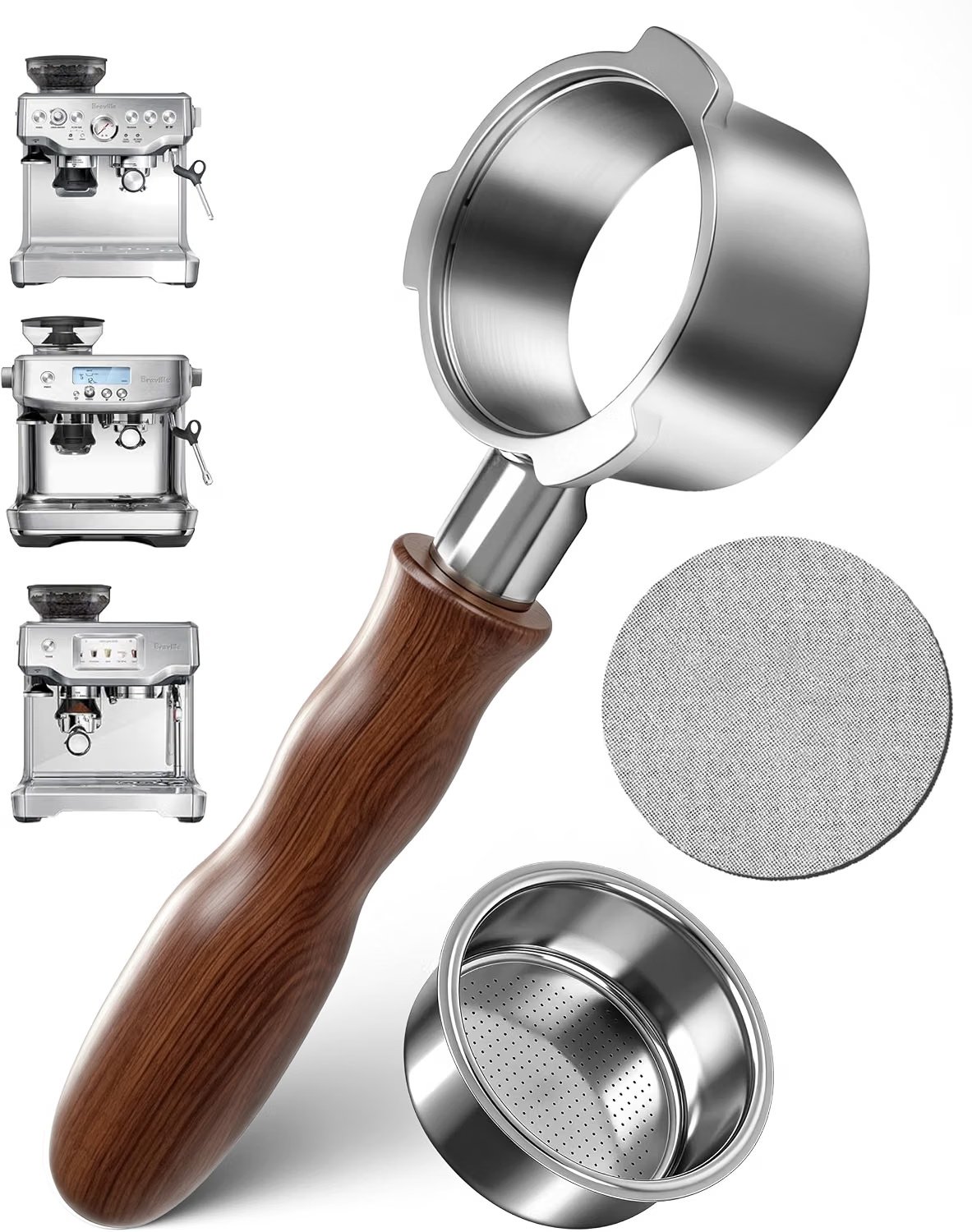
1. 54mm Bottomless Portafilter for Breville Barista Express Pro Touch
A removable brew-group part for compatible 54 mm Breville machines, useful for seeing the underside of the basket during extraction.
Buy it ifYour exact Breville model uses the listed 54 mm fit and you want a bottomless portafilter format.
Skip it ifYour machine uses a different diameter, ear pattern, or locking geometry.
The portafilter is the handle-and-basket carrier that locks into the group head. A bottomless version removes the spouted floor beneath the basket, which makes the extraction visible from below. That visibility can help you observe uneven flow, but it does not fix puck preparation by itself.
Compatibility is more specific than diameter alone. Two portafilters can both be described as 54 mm yet use different locking ears or depths. Check your machine model before purchase. For a deeper explanation, see our espresso portafilter guide.
Listed size54 mm
Part typeBottomless portafilter
CompatibilityVerify exact Breville model
What it can help with
Shows extraction from beneath the basket
Replaces the removable portafilter assembly
Pairs with compatible 54 mm baskets and tools
What to consider
Fit is machine-specific
Can spray if puck preparation is uneven
Does not change the machine's heater or pump
Product name and fit wording are taken from your supplied product list; verify the live Amazon listing before publishing or buying.
View on Amazon ↗Paid link · verify compatibility, price, and availability
Puck-prep toolkit
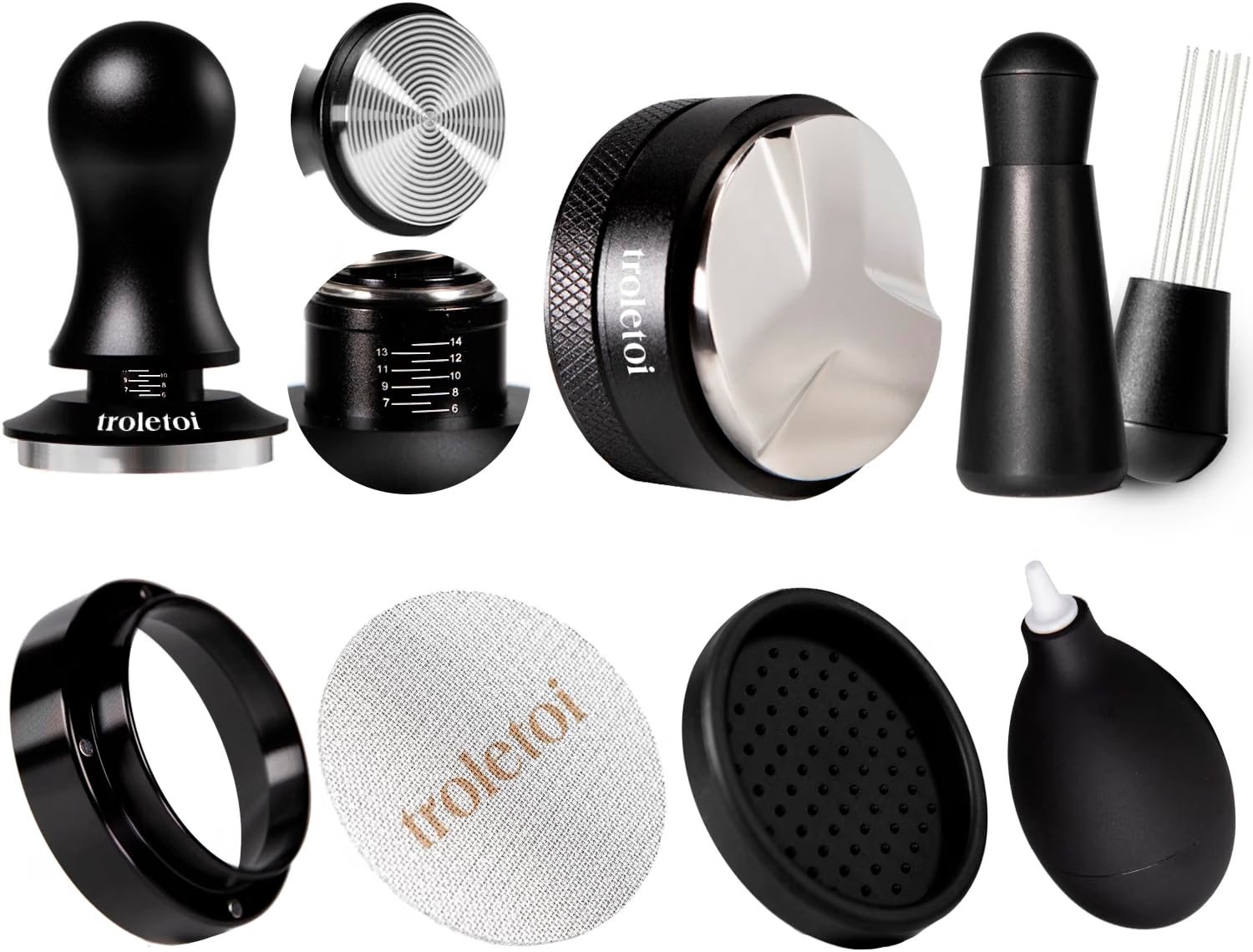
2. 7 PCS Espresso Accessories Kit for Breville 54mm Systems
A bundled set that supports the portafilter-and-basket stage rather than replacing the machine's internal pump, heater, or valves.
Buy it ifYou use a compatible Breville 54 mm portafilter and want several puck-prep tools in one set.
Skip it ifYour basket diameter differs or you already own the individual tools you use.
The supplied product title lists a 53.3 mm tamper, coffee distributor, puck screen, dosing funnel, and WDT tool. These are accessories around the filter basket, but understanding them helps explain what happens immediately before the portafilter locks into the group head.
The dosing funnel helps contain grounds, WDT tools break up clumps, the distributor levels the surface, and the tamper compresses the puck. The machine still controls water, heat, and pressure. For technique, see our espresso tamping guide.
Listed tamper53.3 mm
System fitBreville 54 mm listed
Tool count7 pieces listed
What it can help with
Organizes several puck-prep steps
Targets compatible 54 mm systems
Includes both dosing and distribution tools
What to consider
Not an internal repair-parts kit
Size must match your basket
More tools do not automatically mean better espresso
Product contents and size wording are based on the supplied product title; confirm the current listing.
View on Amazon ↗Paid link · verify size, price, and availability
Tamping tool
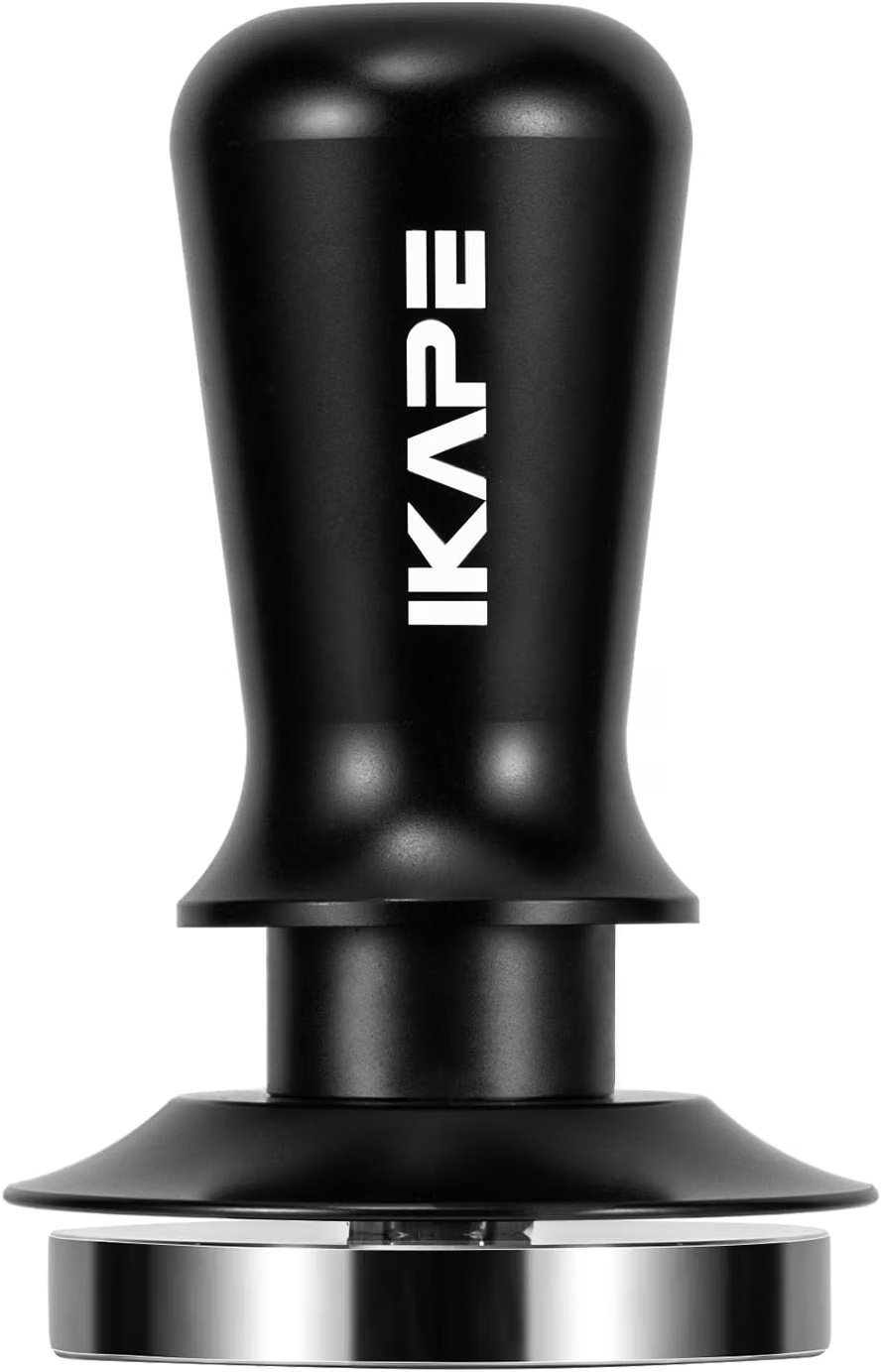
3. IKAPE 53.3mm Calibrated Espresso Tamper
A dedicated puck-preparation tool sized in the listing for compatible Breville 54 mm portafilter baskets.
Buy it ifYou want a dedicated tamper and your basket fits the listed 53.3 mm base.
Skip it ifYour basket requires a different tamper diameter or you prefer a simpler fixed tamper.
A tamper is not technically part of the espresso machine, but it interacts directly with one of the most important removable parts: the filter basket. Its job is to compress the prepared coffee bed before the portafilter is locked into the group head.
The supplied listing describes a spring-loaded, calibrated design with a threaded stainless-steel base. Treat those as listing claims and verify the current product page. More important than the mechanism is correct fit and a level, repeatable tamp.
Listed size53.3 mm
Tool typeSpring-loaded tamper
Fit wordingBreville 54 mm basket
What it can help with
Repeatable puck preparation
Dedicated fit for the listed basket family
Simple single-purpose workflow
What to consider
Not compatible with every 54 mm system
Does not correct grind-size problems
Verify the live listing before purchase
Size and design terms are taken from the supplied product title.
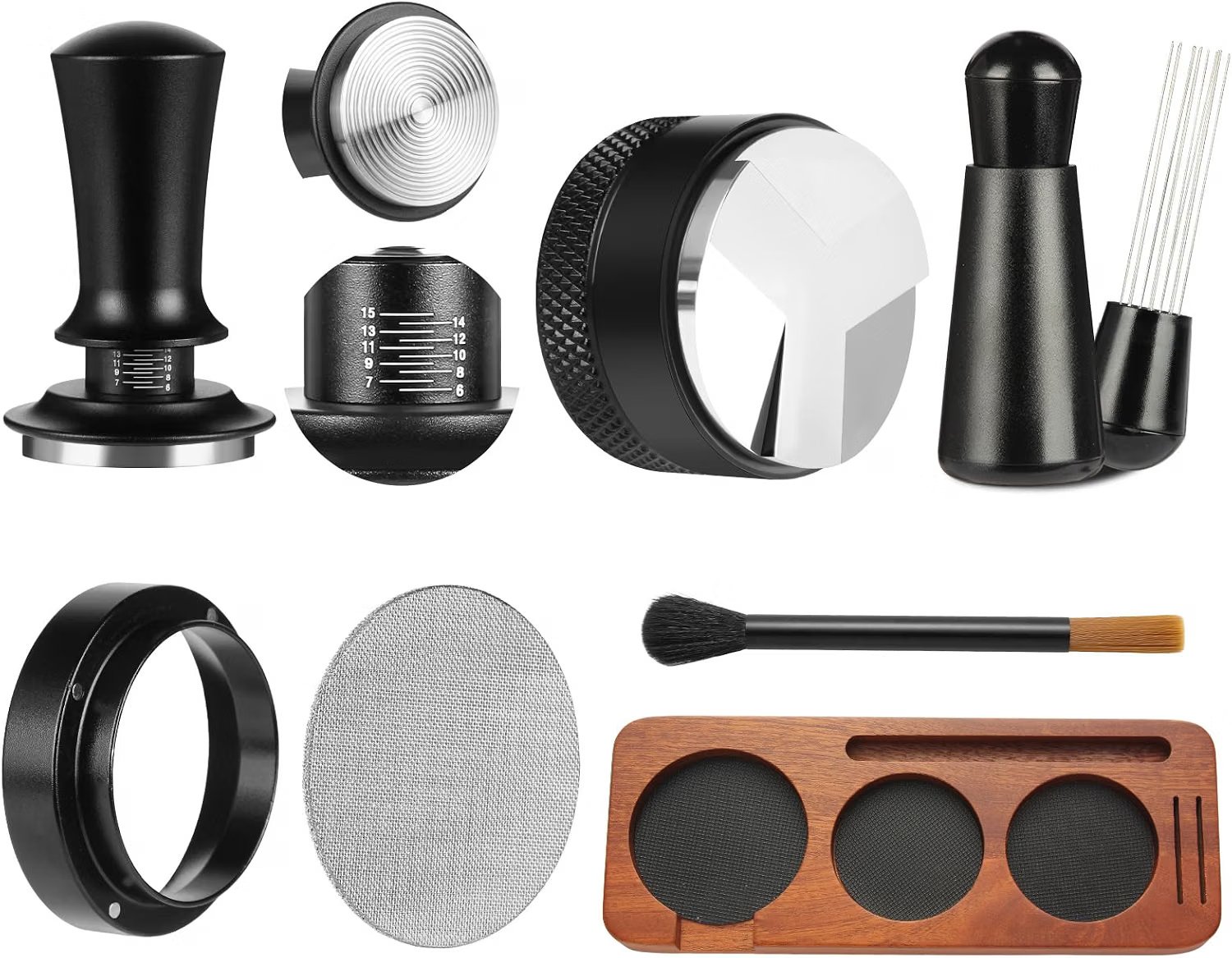
4. 7 PCS Espresso Accessories with WDT and Tamping Tools
A general accessory bundle focused on the coffee-preparation stage before water reaches the puck.
Buy it ifThe live listing confirms the tool sizes fit your basket and the included pieces match your workflow.
Skip it ifYou need a specific replacement component such as a gasket, pump, valve, or steam-wand part.
WDT stands for Weiss Distribution Technique. A thin-needle tool is used to redistribute grounds before tamping, which makes it an accessory around the basket rather than a machine component. It belongs in this guide because owners often confuse workflow accessories with actual espresso-machine parts.
When shopping, separate what the machine needs to function from what helps you prepare coffee. The pump, heater, group head, gasket, and valves are functional machine parts; WDT tools, tampers, funnels, and distributors are optional workflow tools.
Listed set7 pieces
Main usePuck preparation
CompatibilityCheck live listing dimensions
What it can help with
Separates distribution from tamping steps
Bundles several prep tools
Useful for learning the basket workflow
What to consider
Not a machine repair kit
Dimensions are not established by the supplied title
Extra tools add counter clutter
The supplied title identifies the set as seven pieces with WDT and tamping tools; check the current listing for exact contents and dimensions.
View on Amazon ↗Paid link · verify contents, price, and availability
Water-system consumable
5. 6 Pack Replacement Water Filter for Breville Espresso Machine
A maintenance consumable for compatible Breville water systems, where the machine is designed to use this filter format.
Buy it ifYour Breville manual specifies this filter style and the current listing confirms your exact model.
Skip it ifYour machine uses another cartridge or your water setup follows a different filtration method.
Water touches nearly every hydraulic part inside an espresso machine, so filtration can affect maintenance as much as taste. A reservoir filter sits upstream of the pump and heater on compatible machines. It is different from descaling: filtration changes what enters the machine, while descaling addresses mineral deposits already inside.
Water treatment should match local water chemistry
The supplied product title identifies this as a six-pack Breville replacement filter; verify model compatibility on the live listing.
View on Amazon ↗Paid link · verify model, price, and availability
Maintenance guide
Which espresso machine parts should owners actually maintain?
Clean often: basket, portafilter, screen, wand
Coffee oils and milk residue build up on the parts that touch grounds or milk. Rinse removable brew parts after use, wipe and purge the steam wand, and follow the manual for deeper cleaning.
Inspect: gasket, seals, O-rings
Rubber and silicone sealing parts wear. Leaks around the group head or fittings can indicate a seal that needs inspection, but use the correct part for your model.
Protect: pump, heater, valves
These internal parts usually are not routine user-removal items. Correct water treatment, cleaning cycles, and manufacturer-approved descaling reduce avoidable stress.
Tampers, WDT tools, dosing funnels, knock boxes, scales, and shot glasses are accessories. They may improve workflow, but the machine can be mechanically complete without them.
Know what changes by machine type
A pump-driven machine uses an electric pump, while a manual lever espresso machine creates pressure differently. Super-automatic machines also add grinders, brew groups, dosing mechanisms, and automated milk paths.
If you are learning the complete workflow rather than individual parts, our how to use an espresso machine guide connects these components to the actual brewing steps. If your machine has no built-in grinder, compare options in our budget espresso grinder guide.
Quick answers
Common questions about espresso machine parts
What part of an espresso machine makes the pressure?
On most electric pump machines, the pump moves water and creates pressure in the hydraulic system. The actual pressure reaching the coffee is also influenced by resistance in the coffee puck and by pressure-regulation components in the machine.
What is the part that holds the espresso grounds?
The filter basket holds the ground coffee. The basket sits inside the portafilter, and the portafilter locks into the group head during brewing.
What is the group head on an espresso machine?
The group head is the brew interface at the front of the machine. It delivers heated water through the shower screen into the coffee basket and provides the locking point for the portafilter.
What is the difference between a portafilter and a filter basket?
The portafilter is the handled carrier that locks into the machine. The filter basket is the removable metal cup inside the portafilter that actually holds the coffee.
Which espresso machine parts need replacement most often?
Wear patterns vary, but user-replaceable items commonly include water filters, group gaskets, O-rings, baskets, and other seals or consumables. Follow the exact machine manual because compatibility and service access differ by model.
Is the grinder part of the espresso machine?
Only on machines with an integrated grinder. On semi-automatic machines without one, the grinder is separate equipment. Super-automatic and many all-in-one machines include a hopper, burr set, motor, chute, and dosing mechanism inside the machine.
What does a three-way solenoid valve do?
On machines equipped with one, a three-way solenoid can redirect water and release pressure from the group after brewing. That is why some machines leave a relatively dry puck and support detergent backflushing.
Recommended next
Continue your research
Continue with focused guides on portafilters, tamping, and water filtration—the parts and maintenance topics most closely connected to this page.