Coffee is mostly water, but the best filter is not simply the one that removes the most minerals. It is the cartridge that fits your machine, addresses your local water, and follows the replacement schedule your brewer was designed around.
John CrestaniEspresso Equipment Specialist
Last Updated
The short version
Which coffee water filter should you buy?
Start with your machine model, not a universal “best” filter. Choose the 6-pack Breville replacement filters for older-style Breville holders, the ClaroSwiss-compatible pack for supported newer Breville machines, the cationic resin 2-pack only when your LELIT setup calls for the PLA930M format, or the De’Longhi filter when the destination listing and your manual identify the same De’Longhi cartridge family.
Water filtration can reduce chlorine, odors, some metals, and scale-forming minerals, depending on the media inside the cartridge. It does not automatically correct every water-chemistry problem, and it does not give you permission to ignore the machine’s descaling instructions. For a focused explanation of fit and maintenance, see our espresso machine water filter guide.
Testing transparency: This is a research-based compatibility comparison using the supplied Amazon product titles and current manufacturer guidance. We did not laboratory-test contaminant reduction, cartridge capacity, flow rate, or taste. Compatibility claims that could not be confirmed from a manufacturer page are labeled as listing claims.
How we evaluated
Compatibility comes before filtration claims
A cartridge is useful only if it seats correctly, matches the machine’s filter holder, and addresses the water issue you actually have. We assessed the supplied products against four practical criteria. We also separated the filter cartridge from other espresso machine components because the filter, tank coupling, boiler, and descale program play different roles.
Machine fitDoes the exact model family and filter-holder style match?
Filter mediaIs the product intended to reduce taste-and-odor compounds, hardness minerals, or both?
Replacement clarityDoes the manufacturer provide a time or water-volume interval?
Ownership frictionConsider pack size, installation, reminders, and the need to keep descaling.
Coffee-machine water filters compared
Amazon links in this table are paid links. Confirm your exact machine model and filter-holder shape before ordering. Prices and availability change frequently, so they are intentionally omitted.
Four water filters for coffee machines compared by buyer fit, filter type, replacement guidance, and main tradeoff
Filter
Best for
Filter approach
Replacement guidance
Main tradeoff
Amazon paid links
Breville replacement filter 6-pack
Owners of compatible older-style Breville filter holders
Replacement cartridge; exact media should be checked on listing
Follow the manual; Barista Express guidance uses 60 days or 10.6 gallons
Espresso Mastered:The EspressoFinder.com Guide for Enthusiasts and Professionals
Choose smarter. Brew better from day one.
Pressure numbers and long feature lists can make almost every machine look impressive. This practical guide shows you what affects taste, workflow, and long-term value before you spend your money.
Separate useful specifications from marketing noise
Match the grinder, water system, and learning curve to your routine
Spot hidden accessory, cleaning, and maintenance costs
Use a clear checklist to compare any espresso machine
Free digital guide · Delivered by email · Privacy Policy
Four coffee water filters, with the tradeoffs explained
The products below solve different compatibility problems. Their order reflects how clearly a buyer can match each option to a machine and maintenance routine, not an unsupported claim that one cartridge produces universally better-tasting coffee.
Best multipack value
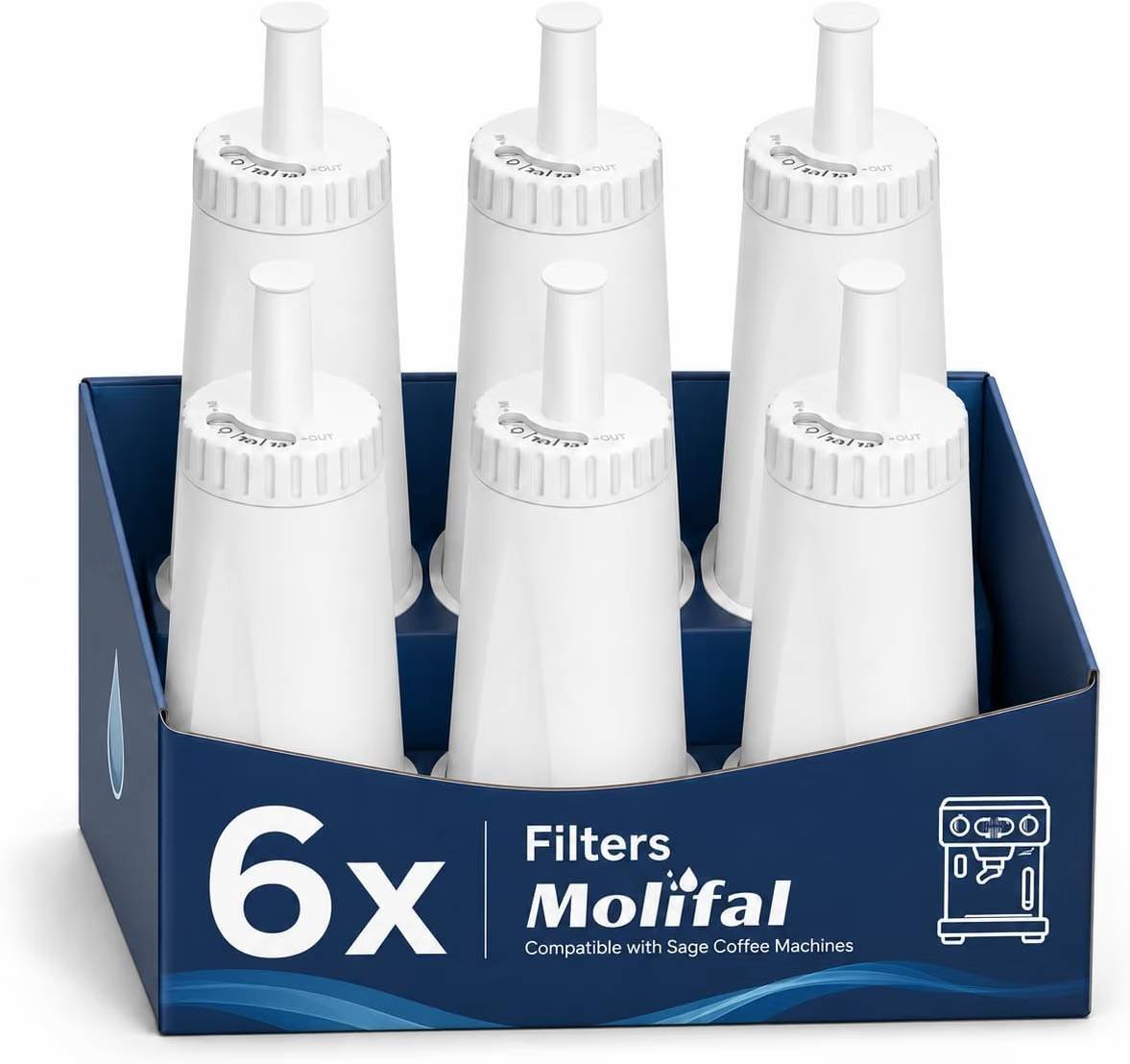
1. 6-Pack Replacement Water Filter for Breville Espresso Machines
A practical stock-up option when your machine uses the older Breville-style cartridge and you have already confirmed the holder shape and model compatibility.
Buy it ifYour current filter matches the product photos and your Breville manual calls for the same replacement style.
Skip it ifYour machine uses a ClaroSwiss cartridge or you cannot verify the filter-holder generation.
The appeal is simple: six filters reduce the chance that you will postpone a routine replacement because you forgot to reorder. That matters because an exhausted cartridge may continue to pass water while doing less useful work. A multipack also makes it easier to keep a physical replacement schedule rather than waiting for a taste change or a scale warning.
The risk is compatibility shorthand. Breville has used different filter systems across machines and generations. The manufacturer’s Barista Express guidance says its included filter processes water for 60 days or 10.6 gallons, but that schedule does not prove every third-party cartridge fits every Barista model. Compare the exact machine number, existing cartridge, holder, and destination listing before buying.
Pack size6 filters
Best matchCompatible older-style Breville holders
Schedule example60 days or 10.6 gallons for Barista Express guidance
What we like
Enough replacements for a planned maintenance routine
Lower reorder frequency than a single cartridge
Useful when the exact compatible filter is already known
What to consider
Third-party title does not establish universal Breville fit
Filter media details should be checked on the live listing
Not interchangeable with every ClaroSwiss-style holder
Compatibility method: supplied Amazon product title plus Breville’s official Barista Express replacement guidance. Confirm the exact machine model and holder before ordering.
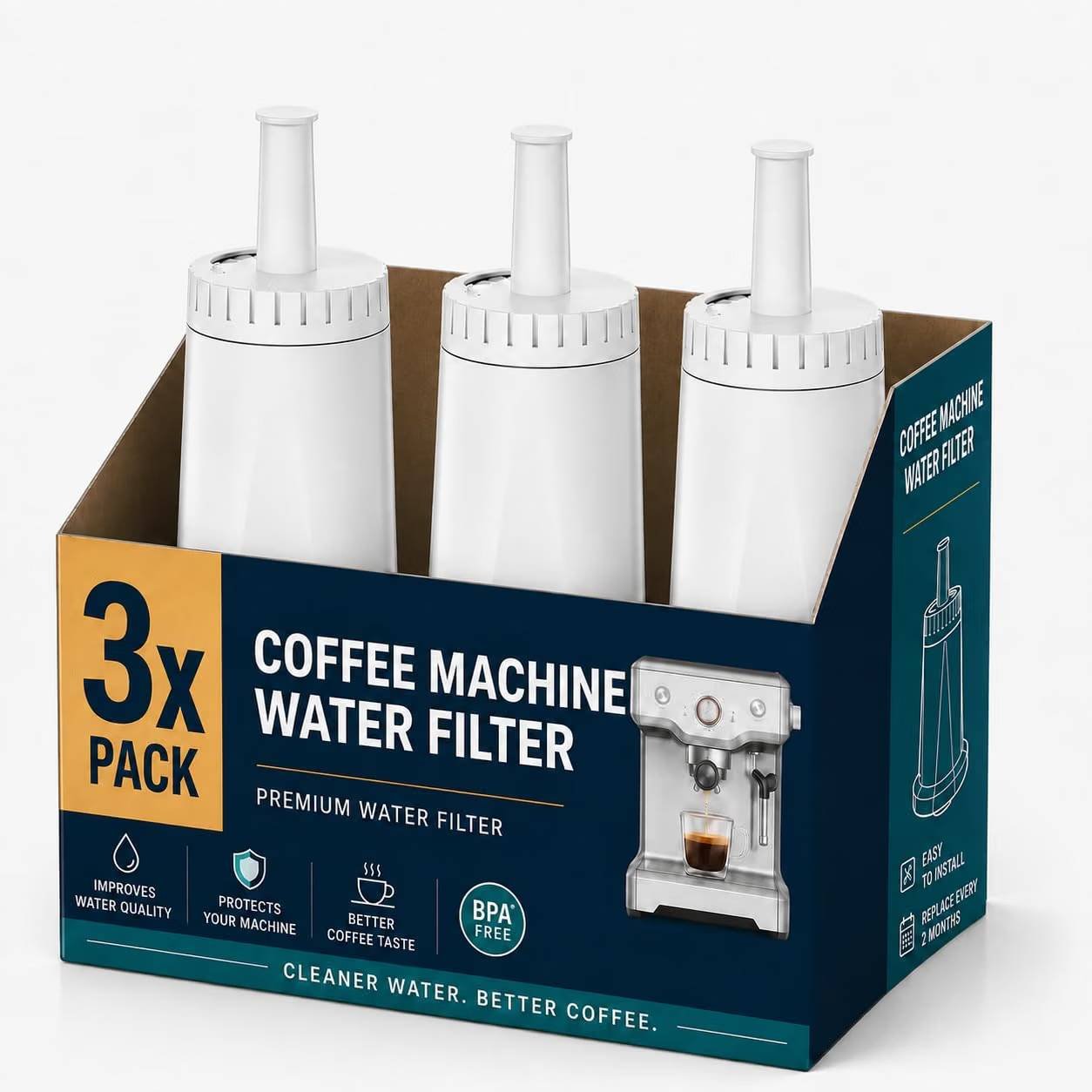
2. Water Filters for Breville ClaroSwiss-Compatible Machines
The more appropriate Breville direction when the manual specifies the ClaroSwiss format used by supported Touch, Oracle, and Dual Boiler families.
Buy it ifYour model number and holder match the compatibility list for the live product.
Skip it ifYou are relying only on the Breville brand name rather than the exact model code.
Breville’s official ClaroSwiss page says the filter reduces chlorine, heavy metals, and minerals, with a 90-day replacement interval. Its current U.S. compatibility list includes the Oracle Dual Boiler BES995, Oracle Touch BES990, Oracle Jet BES985, Oracle BES980, Dual Boiler BES920, Barista Touch Impress BES881, and Barista Touch BES880, plus selected Luxe Brewers.
The supplied Amazon title also names additional machines. Treat those names as listing claims until your manual or Breville support confirms them. This distinction is especially important for products that share similar names but use a different tank coupling or filter cage. If you are comparing machines, our guide to the best dual boiler espresso machines explains why scale control matters more in equipment with expensive boilers and valves.
Official interval90 days
Official claimsReduces chlorine, heavy metals, and minerals
Fit priorityExact model and holder confirmation
What we like
Clear manufacturer replacement interval
Targets both taste-related compounds and scale-forming minerals
Strong fit for officially supported Breville families
What to consider
Not every Breville machine uses the same cartridge
Third-party compatibility may exceed the official list
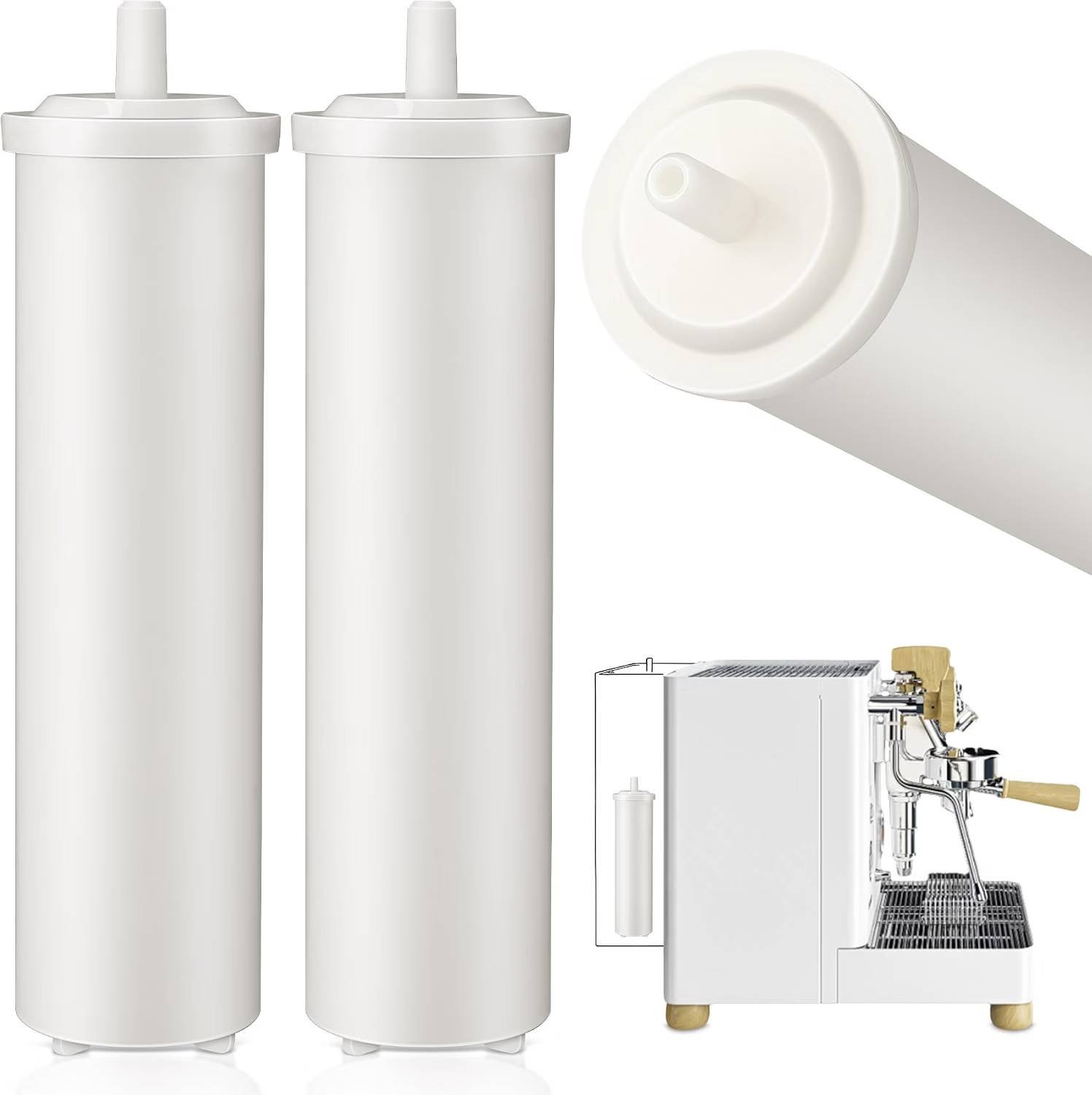
3. 2-Pack 70L Cationic Resin Filter Compatible with LELIT PLA930M
A targeted softening option for LELIT owners who have verified that their tank and manual call for the PLA930M cartridge format.
Buy it ifYour exact LELIT setup specifies PLA930M and you want a resin cartridge aimed at hardness reduction.
Skip it ifYou need chlorine and odor reduction but have not confirmed that this cartridge includes activated carbon.
Cationic resin is primarily a softening tool. It exchanges hardness-forming calcium and magnesium ions for sodium ions, which can lower scale risk inside a boiler. That is a different job from an activated-carbon filter designed mainly around chlorine, odors, and some organic compounds. The right choice depends on your incoming water and machine, not on which product has the longest contaminant list.
The live listing describes a 70-liter capacity, but cartridge life is not a fixed promise under every water condition. Harder water consumes resin capacity faster, while softer water may allow more volume. Because we could not confirm a complete official model list for this third-party cartridge, treat PLA930M compatibility as the controlling requirement and check your manual or LELIT support before installation.
Pack size2 filters
MediaCationic resin
Capacity claim70 L per listing; water-dependent
What we like
Clearly aimed at reducing hardness-related scale
Two-pack supports planned replacement
Useful format for verified PLA930M installations
What to consider
Capacity varies with incoming hardness
Official compatibility was not verified for every LELIT model
Softening alone may not solve chlorine taste or odor
Specification basis: supplied Amazon product title. The 70 L capacity and PLA930M compatibility are listing claims; confirm the exact machine, holder, and replacement guidance with the current manual.
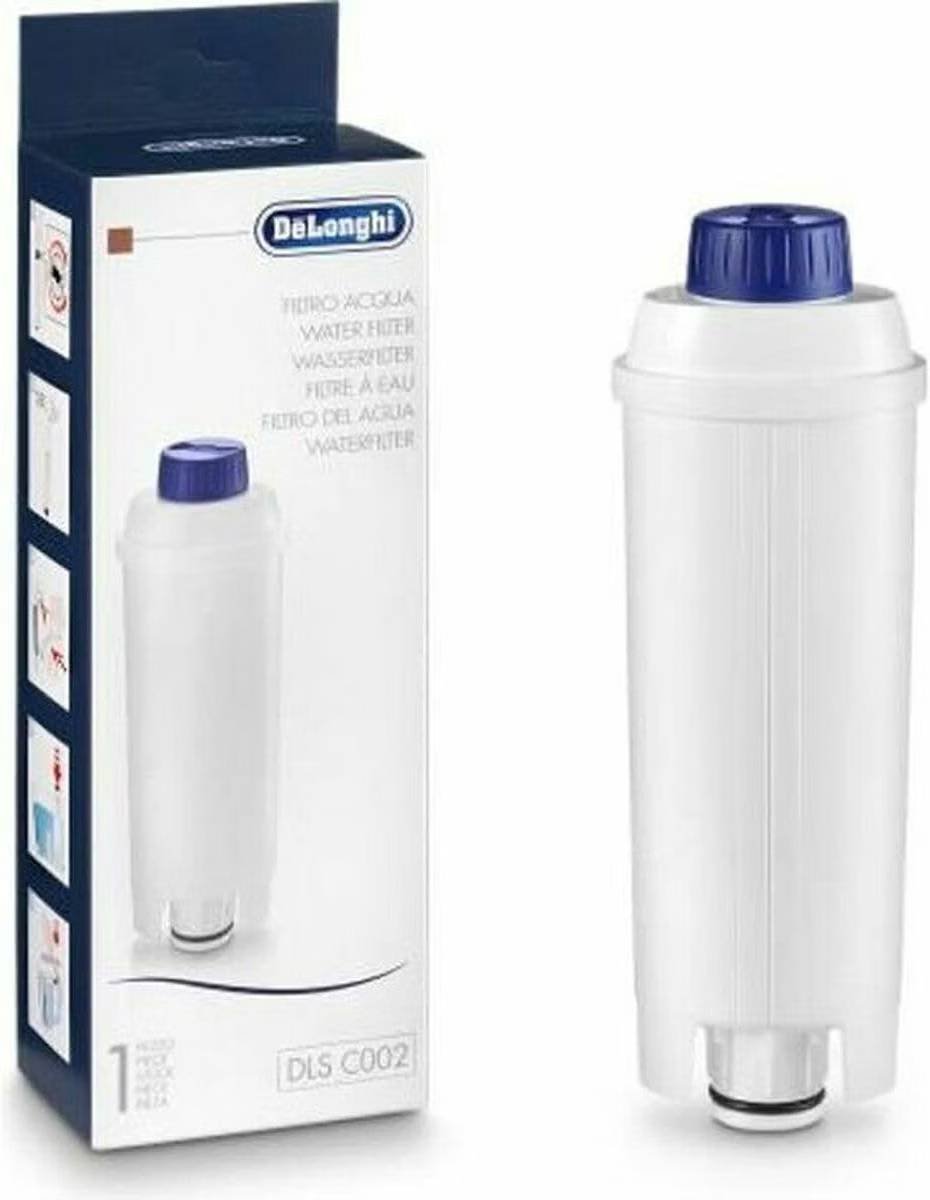
A straightforward choice when your machine manual specifies the same De’Longhi cartridge code shown on the Amazon destination page.
Buy it ifYour applicable ECAM, EXAM, Dedica, La Specialista, or listed combination machine calls for DLSC002.
Skip it ifYour machine has no tank coupling or the manual names a different cartridge.
De’Longhi’s official DLSC002 page is unusually specific. It describes active carbon for odors, chlorine, and other contaminants, plus ion-exchange technology to soften water. The company gives a service life of up to two months and says a fresh filter can reduce the frequency of limescale removal by approximately 20 percent. That wording matters: reduced descaling frequency is not the same as no descaling.
Official U.S. compatibility includes all applicable ECAM and EXAM models, all Dedica and La Specialista models, plus ESAM6900, BCO430, BCO432, COM530, and COM532. Still verify the Amazon destination page identifies the correct cartridge because the supplied affiliate-sheet name is simply “DeLonghi Water Filter.” Owners considering a new automatic machine can also review our best-rated super-automatic espresso machine guide for maintenance differences between model families.
Official mediaActive carbon and ion exchange
Official intervalUp to 2 months
InstallationTank coupling on applicable machines
What we like
Clear official filter-media explanation
Addresses both taste-related contaminants and hardness
Broad documented compatibility across current families
What to consider
Two-month interval can mean frequent replacement
Not every historical De’Longhi machine accepts the filter
Four decisions that matter more than the pack size
What does your water need?
Chlorine taste points toward activated carbon. Scale risk points toward softening or hardness reduction. A basic hardness and alkalinity test is more useful than guessing from taste alone.
Does the cartridge physically fit?
Match the machine model, tank coupling, filter holder, and cartridge shape. Brand compatibility by itself is not precise enough when a manufacturer has used several filter generations.
How will you track replacement?
Use the manufacturer’s time or volume limit, whichever comes first. Add a calendar reminder when you install the cartridge instead of waiting for a visible warning or taste change.
What maintenance remains?
A filter can lower scale formation without eliminating it. Keep following the manual’s cleaning and descaling program, especially when learning how to use an espresso machine.
Important distinction: Filtration removes or reduces selected substances, softening targets hardness ions, and descaling removes mineral deposits that have already formed. See our overview of the parts of an espresso machine to understand where scale can restrict water flow and heat transfer.
Quick answers
Common questions about water filtration for coffee
Does filtered water make coffee taste better?
It can. Reducing chlorine, unpleasant odors, or excessive hardness may improve flavor, but removing nearly all minerals can make coffee taste flat and may create other machine concerns. The goal is suitable water, not maximum removal.
Is a coffee-machine filter the same as a water softener?
Not always. Activated carbon mainly addresses chlorine, odors, and selected contaminants. Ion-exchange resin targets hardness minerals. Some cartridges combine both media, while others perform only one job.
Do I still need to descale when I use a filter?
Usually, yes. A compatible filter can reduce scale formation and may extend the interval, but you should follow the machine manual’s water-hardness setting and descale prompt. Never assume a filter makes the boiler scale-proof.
How often should I replace a coffee-machine water filter?
Use the manufacturer’s interval for your exact cartridge. Current examples include 90 days for Breville ClaroSwiss, up to two months for De’Longhi DLSC002, and 60 days or 10.6 gallons in Breville’s Barista Express guidance. Water quality and usage can shorten effective life.
Can I use bottled water instead of a filter?
Only after checking the mineral analysis. “Bottled” does not automatically mean low-scale or coffee-friendly. Distilled or reverse-osmosis water without appropriate remineralization may also fall outside the machine manufacturer’s guidance.
What should I test in tap water for coffee?
Start with total hardness and alkalinity, then consider chlorine or chloramine if taste and odor are concerns. Alkalinity strongly influences perceived acidity, while hardness and carbonate balance affect both extraction and scale risk.
Recommended next
Continue your coffee-water research
Use these published guides to confirm filter fit, understand the water path, and maintain your espresso machine correctly.