Best Commercial Espresso Machine for a Small Coffee Shop (2026)Skip to the article
Best Commercial Espresso Machine for a Small Coffee Shop: 5 Low-Volume Picks (2026)
For a genuinely busy café, a purpose-built commercial machine is usually the right answer. For micro cafés, carts, bakeries, tasting rooms, and very low-volume shops, these five compact machines are the closest fits in our current affiliate inventory—ranked by workflow, boiler design, grinder setup, and the limitation you need to accept.
John CrestaniEspresso Equipment Specialist
Last Updated
The short version
What is the best espresso machine for a small coffee shop?
From the products in this affiliate inventory, the Gevi Dual Boiler ECMF0 is the strongest starting point for a micro café or very low-volume coffee shop because it combines a dual-boiler layout, 58 mm group, built-in grinder, and manual steam wand. The Philips Barista Brew is easier to standardize for light staff use, while the Gaggia Classic E24 makes more sense if you already have a separate grinder. The La Pavoni PC-16 is a niche lever choice; the De’Longhi Dinamica Plus is the easiest automated option for a tiny counter where staff consistency matters more than manual espresso control.
Commercial-use transparency: The machines on this page are compact home/prosumer models, not conventional one- or two-group café workhorses. Do not assume a consumer espresso machine is approved for commercial food service. Confirm local health, electrical, insurance, warranty, and sanitation requirements before buying. If espresso is your core product or you expect sustained queues, start with our 2-group espresso machine guide instead.
How we evaluated
Small-shop capacity is a workflow question, not a “20 bar” question
This is a research-based comparison of manufacturer specifications and design tradeoffs, not a hands-on café stress test. We ranked only the relevant machines in the supplied affiliate list. The criteria focus on what changes service at a small counter: whether brewing and steaming can happen without long waits, how grinding is handled, how standard the portafilter ecosystem is, and how quickly the setup becomes the bottleneck as orders increase.
Peak workflowCan the machine move from espresso to milk drinks without excessive stop-start waiting?
Grinder strategyIs the grinder integrated for convenience, or separate for easier upgrades and backup planning?
Barista consistencyHow much technique and retraining does the machine demand from staff?
Business frictionConsider water refills, cleaning, warranty, repairability, counter space, and commercial-use approval.
Small coffee shop espresso machines compared
Amazon links in this table are paid links. On a phone, swipe sideways to see every column. Prices and availability change frequently, so this table intentionally does not display them.
Five compact espresso machines: best use, heating system, grinder, portafilter, and main tradeoff
Espresso Mastered:The EspressoFinder.com Guide for Enthusiasts and Professionals
Choose smarter. Brew better from day one.
Pressure numbers and long feature lists can make almost every machine look impressive. This practical guide shows you what actually affects taste, workflow, and long-term value—before you spend your money.
Separate useful specifications from marketing noise
Match the grinder, milk system, and learning curve to your routine
Spot hidden accessory, cleaning, and upgrade costs
Use a clear checklist to compare any espresso machine
Free digital guide · Delivered by email · Privacy Policy
Our five small-shop picks, with the tradeoffs explained
No compact machine becomes “commercial” simply because it has a large pump number or a metal body. The best choice here is the one that fits your real order pattern—and that you can replace with true commercial equipment before the machine becomes the bottleneck.
Best overall for a micro café
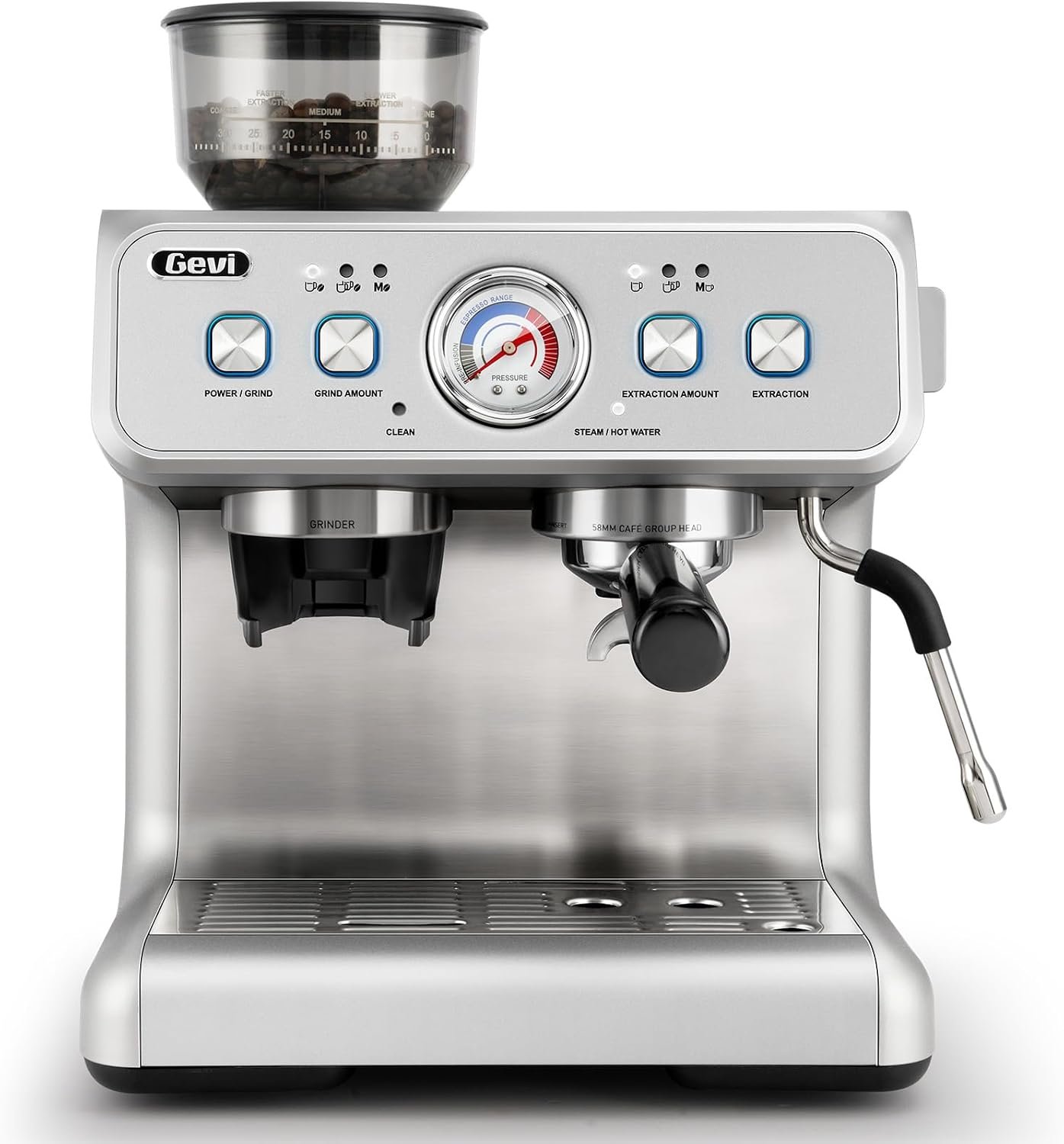
1. Gevi Dual Boiler ECMF0
The strongest low-volume shop fit in this affiliate list because its dual-boiler layout can brew and steam without the same stop-start rhythm as a single-boiler machine.
Buy it ifYou run a cart, bakery counter, studio café, or micro shop where compact size matters and milk drinks come in short bursts.
Skip it ifYou expect sustained rush-hour queues, need plumbed-in service, or require a machine explicitly approved for commercial food-service use.
Within this five-machine shortlist, the Gevi ECMF0 has the most café-like workflow. Gevi lists a dual-boiler system, a 58 mm group, a built-in 30-step grinder, manual steam, PID plus NTC temperature control, and a pressure gauge. The practical advantage is the dual-boiler layout: brewing and milk steaming do not have to share one heating circuit, which matters more in a small service setting than a headline pump-pressure number.
The limitation is just as important. Gevi markets the ECMF0 as a home-barista machine, not a conventional commercial café workhorse. That makes it a plausible option for a micro café, pop-up, tasting counter, or backup station, but not a substitute for a service-supported one- or two-group machine if espresso is your core revenue stream. If you expect frequent back-to-back milk drinks, compare this approach with our dual-boiler espresso machine guide and then step up to true commercial equipment if the queue demands it.
SystemDual boiler
GrinderBuilt in, 30-step listed
Group58 mm
What we like
Dual-boiler layout is the best match here for brewing and steaming in quick succession
58 mm group gives access to a broad accessory ecosystem
Integrated grinder saves counter space in a tiny bar
What to consider
Manufacturer positions it for home baristas
Long-term café-duty durability is not established by the available evidence
Integrated grinder becomes a single point of failure in business use
Specification source reviewed: GEVI ECMF0 official product documentation. Commercial-use approval and warranty terms should be verified for your location.
A staff-friendly semi-automatic option with a 58 mm portafilter, built-in grinder, pressure guidance, and a large enough reservoir for light service without constant refilling.
Buy it ifYou want an approachable station for light service and prefer a 58 mm portafilter plus integrated grinder in one appliance.
Skip it ifYour menu is milk-heavy during a real morning rush or you need a machine designed for continuous commercial duty.
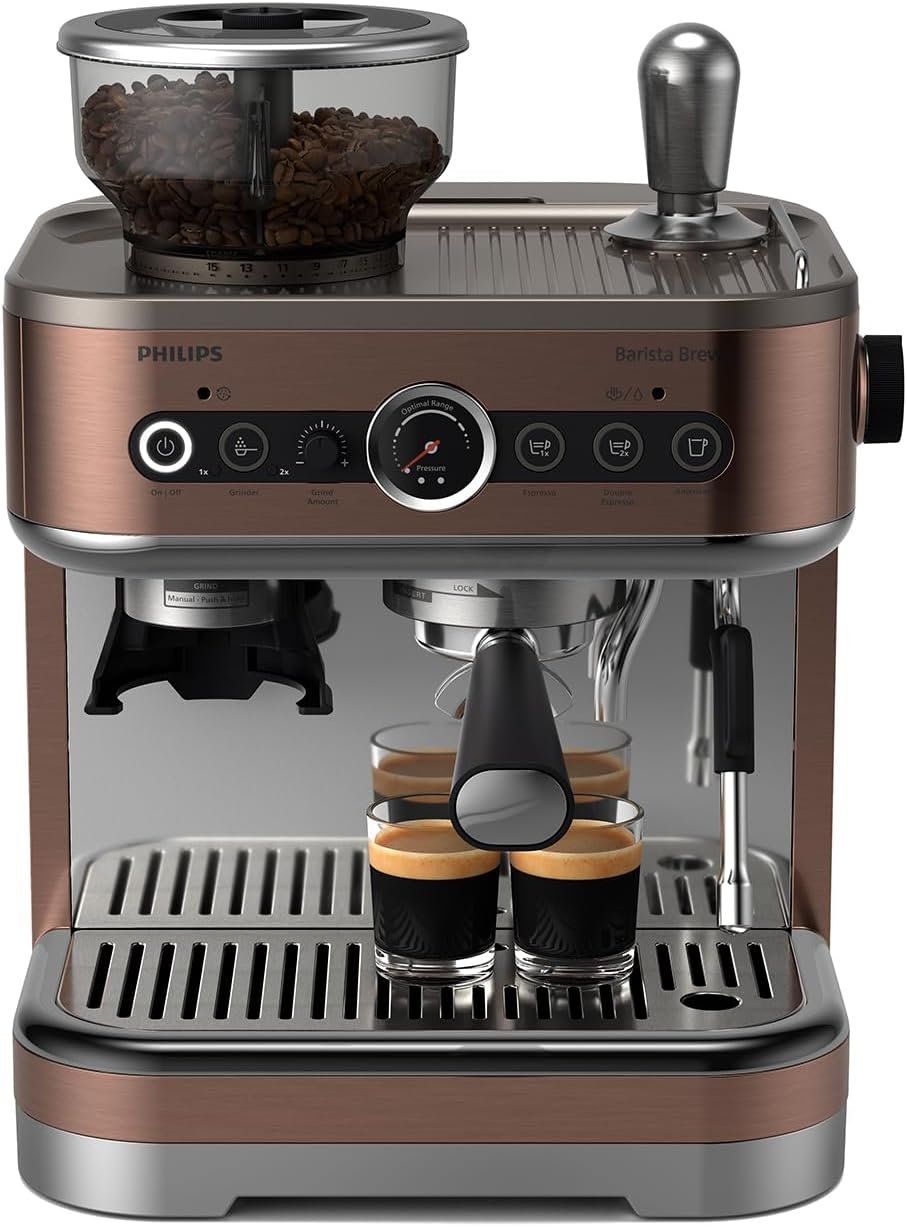
The Philips Barista Brew is appealing when several people may need to use the station. Philips lists a 58 mm stainless-steel portafilter, a metal conical-burr grinder with 15 grind sizes, a 280 g dual bean container on the PSA3228/41 version, a 2.3 L maximum water tank, adjustable coffee temperature, and a pressure gauge. Those are practical features for dialing in a house espresso without adding a separate grinder immediately.
Its main advantage is guided workflow rather than raw throughput. That can suit a bakery, salon café, office lobby, dessert shop, or food counter where espresso is an add-on rather than the entire business. If speed and repeatability matter more than barista involvement, compare it with a commercial automatic espresso machine before deciding.
Portafilter58 mm stainless steel
Grinder15 settings listed
Water tank2.3 L max listed
What we like
58 mm portafilter suits standard barista tools
Built-in grinder reduces equipment count on a narrow counter
Pressure gauge and adjustable settings can help train a consistent routine
What to consider
Semi-automatic workflow still depends on staff technique
Not positioned by Philips as a conventional commercial café machine
Integrated grinder and reservoir design are less modular than a separate café setup
Specification source reviewed: Philips USA Barista Brew PSA3228/41 product documentation.
A compact, traditional 58 mm machine for operators who prefer a separate grinder and a simpler espresso station over an all-in-one appliance.
Buy it ifYou already own a capable espresso grinder and want a familiar 58 mm manual workflow in a small footprint.
Skip it ifYour bar needs to steam milk and pull shots continuously with minimal recovery time.
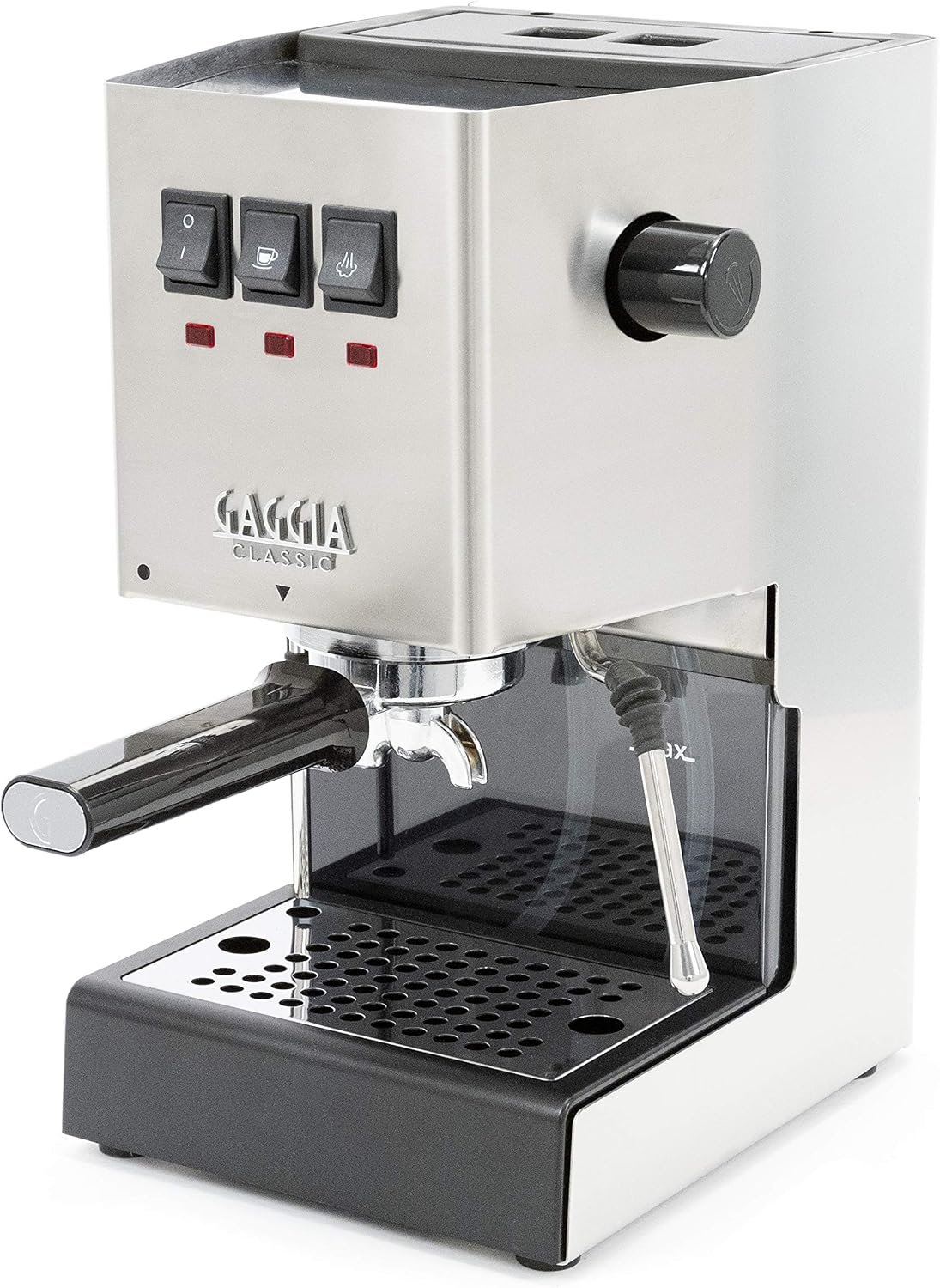
Gaggia’s Classic E24 keeps the workflow deliberately traditional. Gaggia lists a 58 mm stainless-steel filter holder, a lead-free brass group and boiler, a professional steam wand, a 2.1 L water tank, and three rocker switches. For a low-volume counter, that simplicity can be attractive because the grinder remains a separate component that can be upgraded or serviced without replacing the espresso machine.
The tradeoff is throughput. This is a single-boiler manual machine, so it is not the model to choose for a queue of lattes. It makes more sense for a tasting room, boutique, small bakery, or secondary espresso station where orders arrive at a calmer pace. Budget for a real espresso grinder; our budget espresso grinder guide is a better starting point than relying on pre-ground coffee.
Portafilter58 mm stainless steel
BoilerSingle lead-free brass
Water tank2.1 L
What we like
58 mm format works with a wide range of café-style accessories
Separate grinder lets you upgrade the grinding side independently
Straightforward controls are easy to understand
What to consider
Single-boiler workflow slows milk-heavy service
No built-in grinder
Manual technique and puck preparation strongly affect consistency
Specification source reviewed: Gaggia Classic E24 official product documentation.
A distinctive manual-lever option for a tiny concept where the preparation ritual is part of the customer experience, not a machine for fast multi-barista throughput.
Buy it ifYou serve a small number of espresso-focused drinks and want a visible manual ritual that one trained operator can own.
Skip it ifYou need fast handoffs, easy staff cross-training, or repeatable high-volume milk service.
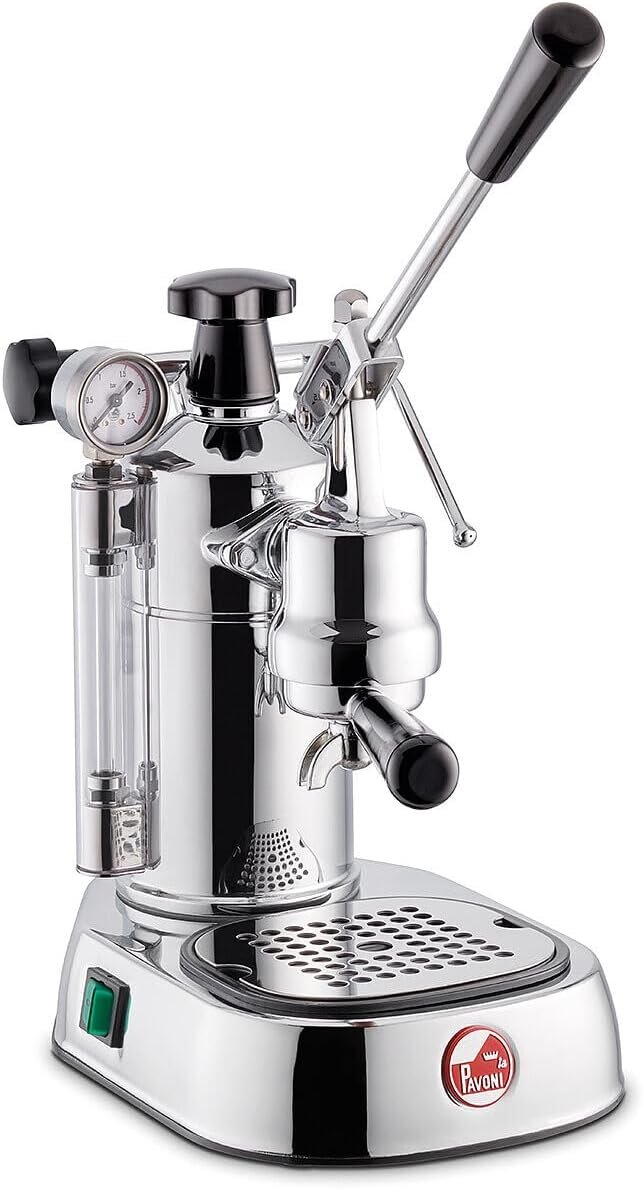
The La Pavoni Professional is different from every pump machine on this page. The operator supplies brew pressure through the lever, and the machine uses a brass boiler with a pressurestat, boiler gauge, and steam wand. La Pavoni’s current Professional line is rated for up to 16 espresso cups per boiler fill, while US PC-16 documentation and listings use model-specific capacity figures. That makes exact model verification especially important before purchase.
For a boutique counter, the lever can become part of the show. For a normal coffee-shop rush, it can become the bottleneck. Shot temperature and pressure depend much more on the operator, and a new employee will not become consistent after a five-minute handoff. If your concept values craft over speed, also see our manual lever espresso machine guide.
BrewingManual lever pressure
BoilerBrass, model-specific capacity
GrinderSeparate grinder required
What we like
Lever operation gives the barista direct control over the extraction profile
Compact footprint and striking presentation suit a boutique concept
Steam wand supports milk drinks in light service
What to consider
Steepest learning curve in this group
Poor choice for a queue with multiple operators
Model-specific US and EU specifications differ, so exact listing verification matters
Specification source reviewed: La Pavoni Professional documentation plus PC-16 model documentation; capacity and electrical details vary by market.
A one-touch alternative for a tiny counter that values staff consistency and simple drink preparation more than traditional portafilter control.
Buy it ifEspresso is a secondary menu item and you want a built-in grinder, automatic milk system, saved user profiles, and one-touch recipes that reduce training.
Skip it ifYou expect sustained café rushes, need a traditional commercial group head, or require equipment specifically approved and warrantied for commercial service.
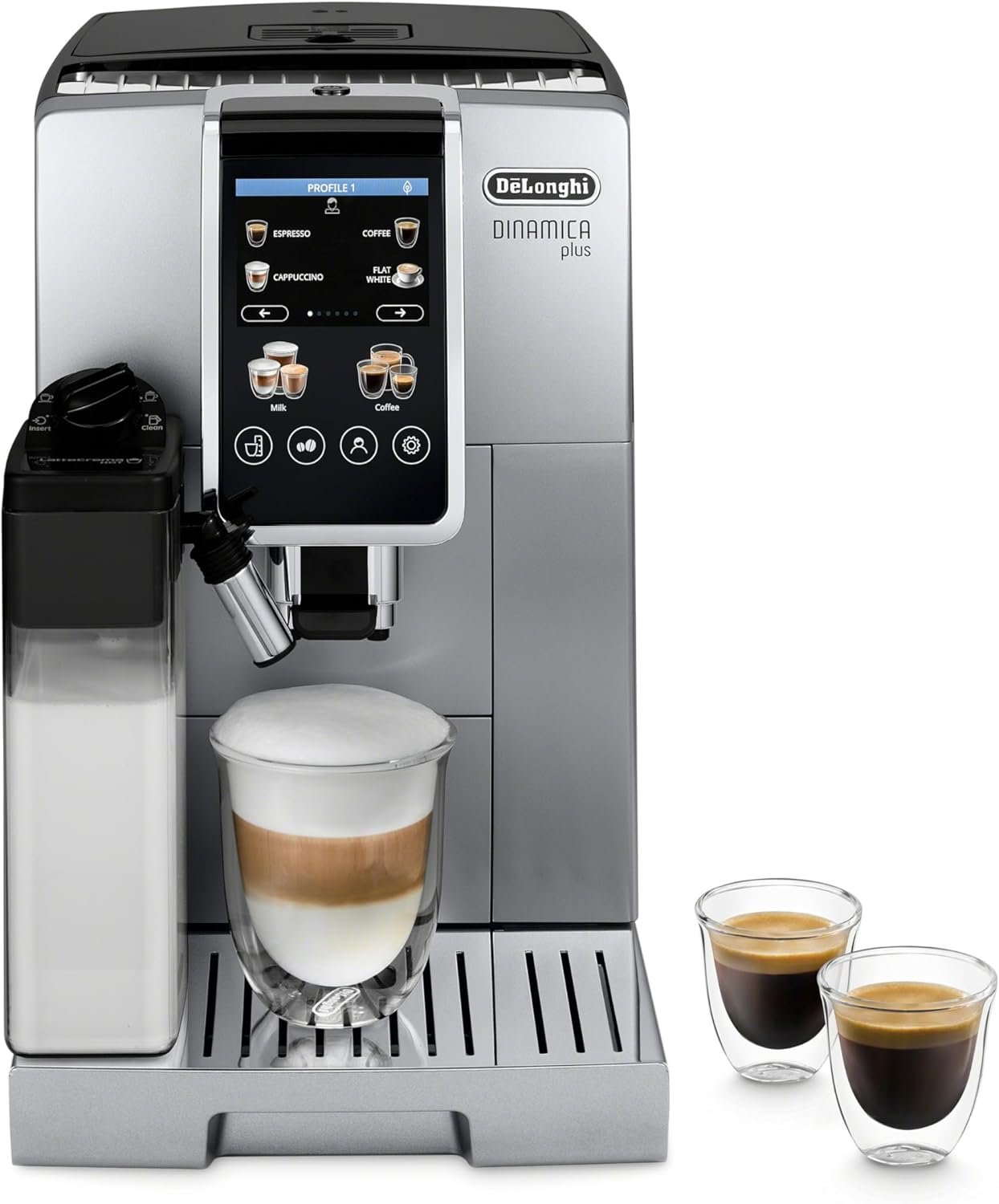
De’Longhi’s current US Dinamica Plus ECAM38085SB is a fully automatic machine built around convenience. The manufacturer lists 24 one-touch recipes, a built-in conical-burr grinder with 13 settings, four user profiles, a 3.5-inch color touch display, and the LatteCrema Hot system with three milk-froth settings. The listed water-container capacity is 60.87 ounces, so a busy counter would refill it far more often than a plumbed commercial machine.
That automation can be useful in a bakery, tasting room, office-style café, or micro shop where espresso is not the main revenue engine and different staff members need repeatable drinks with minimal dialing-in. But De’Longhi markets this model as a home espresso machine, so do not treat its one-touch workflow as proof of commercial-duty capacity. For higher-volume automated service, compare it with the purpose-built options in our commercial automatic espresso machine guide.
GrinderBuilt in, 13 settings
Water tank60.87 oz listed
Recipes24 one-touch recipes
What we like
One-touch drink preparation reduces barista training
Automatic LatteCrema milk system offers three froth settings
Four user profiles can help standardize preferred drink setups
What to consider
Home-positioned machine rather than a purpose-built commercial workhorse
60.87 oz reservoir and internal waste capacity create refill and emptying friction
Less manual control than a traditional 58 mm portafilter setup
Specification source reviewed: De’Longhi US Dinamica Plus ECAM38085SB official product documentation.
Five decisions to make before buying a café espresso machine
1. Measure the rush, not the daily average
A shop can sell only a modest number of espresso drinks per day and still overwhelm a small machine if most orders arrive in the same 30 minutes. If a queue is normal, investigate a true 2-group espresso machine instead of trying to save money on a prosumer model.
2. Prioritize steam recovery for milk drinks
A latte-heavy menu creates a very different workload from straight espresso. Dual-boiler or commercial heat-exchange designs are more useful than headline pump pressure because they reduce waiting between extraction and steaming.
3. Decide whether the grinder should be separate
An integrated grinder saves space, but a separate grinder is easier to upgrade, repair, replace, or keep as a backup. For a real business, redundancy matters. See our espresso grinder guide when planning the complete station.
4. Plan water quality before opening day
Scale can damage heating systems and change taste. Your treatment should match local water chemistry and the machine maker’s guidance. Start with our coffee water filtration guide rather than adding a random filter after scale appears.
5. Confirm business-use approval and support
Before buying, ask whether the exact model is allowed for your type of food-service operation, whether business use changes the warranty, and who can service it locally. A cheaper machine is expensive if one failure closes your espresso station.
Can I use a home espresso machine in a small coffee shop?
Possibly for very light service, but do not assume it is permitted or supported. Check the exact machine’s business-use warranty plus your local health, sanitation, electrical, and insurance requirements. If espresso is a major menu category, purpose-built commercial equipment is usually the better risk decision.
Is a dual-boiler machine better for a small coffee shop?
Usually, if you make many milk drinks. A dual-boiler design can keep brewing and steaming functions thermally separate, reducing the waiting that slows a single-boiler workflow. That is why the Gevi dual-boiler model ranks first within this specific affiliate shortlist.
Do I need a 2-group espresso machine?
Not every tiny shop needs two groups, but a two-group machine becomes valuable when multiple drinks are made at once, more than one barista works the bar, or morning queues are part of normal service. Compare layouts in our 2-group espresso machine guide.
Is a built-in grinder a good idea for a coffee shop?
It saves space and reduces upfront equipment count, but it also ties two critical functions to one appliance. A separate grinder is easier to upgrade, service, replace, or back up. For business use, that modularity can matter more than convenience.
What matters more than pump pressure?
For a small shop, pay more attention to temperature stability, steam capacity, grinder quality, workflow, water supply, cleaning, local service, and downtime risk. “15 bar” or “20 bar” is not a useful shortcut for café throughput.
What should I budget for besides the espresso machine?
Plan for a grinder if it is not integrated, tamper and puck-prep tools, water treatment, milk pitchers, scales, cleaning chemicals, knock box, spare baskets and gaskets, and a downtime plan. If your shop also serves batch coffee, compare a commercial coffee brewer separately rather than forcing the espresso machine to cover every drink.
Recommended next
Continue your commercial coffee research
These published EspressoFinder guides are the most relevant next reads if your shop needs more throughput, automation, or better water management.