There is no single best espresso machine for every kitchen. We compare 15 strong options by workflow, grinder, milk system, automation, learning curve, and the compromise each one asks you to accept.
John CrestaniEspresso Equipment Specialist
Last Updated
The short version
Which espresso machine should you buy?
Among these 15 machines, the Smeg EGF03 is our research-based starting pick for buyers who want a built-in grinder, a 58 mm portafilter, and a hands-on semi-automatic workflow with faster transitions between brewing and steaming. Choose the Ninja Luxe Café Premier if you want more guidance and coffee-style versatility, or the Philips 5500 LatteGo if one-touch milk drinks and easy daily cleanup matter more than manual control.
Testing transparency: This is a research-based comparison of manufacturer specifications, product design, and buyer-fit tradeoffs—not a hands-on laboratory test of all 15 machines. Recommendations apply to the models listed here. Where a series contains multiple variants, we flag model-matching issues rather than pretending every specification is universal.
How we evaluated
A useful ranking needs more than pressure numbers
This comparison assesses official manufacturer specifications against four everyday buying criteria: workflow, espresso control, milk-drink usability, and ownership friction. The list intentionally mixes semi-automatic and automatic machines because the “best” choice depends heavily on how much work you want the machine to do for you. For a narrower one-touch shortlist, see our best super-automatic espresso machines guide.
Daily workflowHow many steps stand between fresh beans and a finished drink?
Espresso controlCan you meaningfully adjust grind, dose, extraction, or temperature?
Milk drinksIs frothing manual, guided, or fully automatic—and how much cleanup follows?
Ownership frictionWe consider counter space, cleaning, accessories, model complexity, and learning curve.
15 espresso machines compared
Amazon links in this table are paid links. On a phone, swipe sideways to see every column. Prices and availability change frequently, so this table intentionally does not display them.
Fifteen espresso machines: buyer fit, type, grinder, milk workflow, and main tradeoff
Espresso Mastered:The EspressoFinder.com Guide for Enthusiasts and Professionals
Choose smarter. Brew better from day one.
Pressure numbers and long feature lists can make almost every machine look impressive. This practical guide shows you what actually affects taste, workflow, and long-term value—before you spend your money.
Separate useful specifications from marketing noise
Match the grinder, milk system, and learning curve to your routine
Spot hidden accessory, cleaning, and upgrade costs
Use a clear checklist to compare any espresso machine
Free digital guide · Delivered by email · Privacy Policy
Our 15 picks, with the tradeoffs explained
A ranking is only useful when the weak points are visible. The machine at number one is not automatically right for you; the best choice is the workflow whose compromises fit your routine.
Best premium hands-on all-in-one
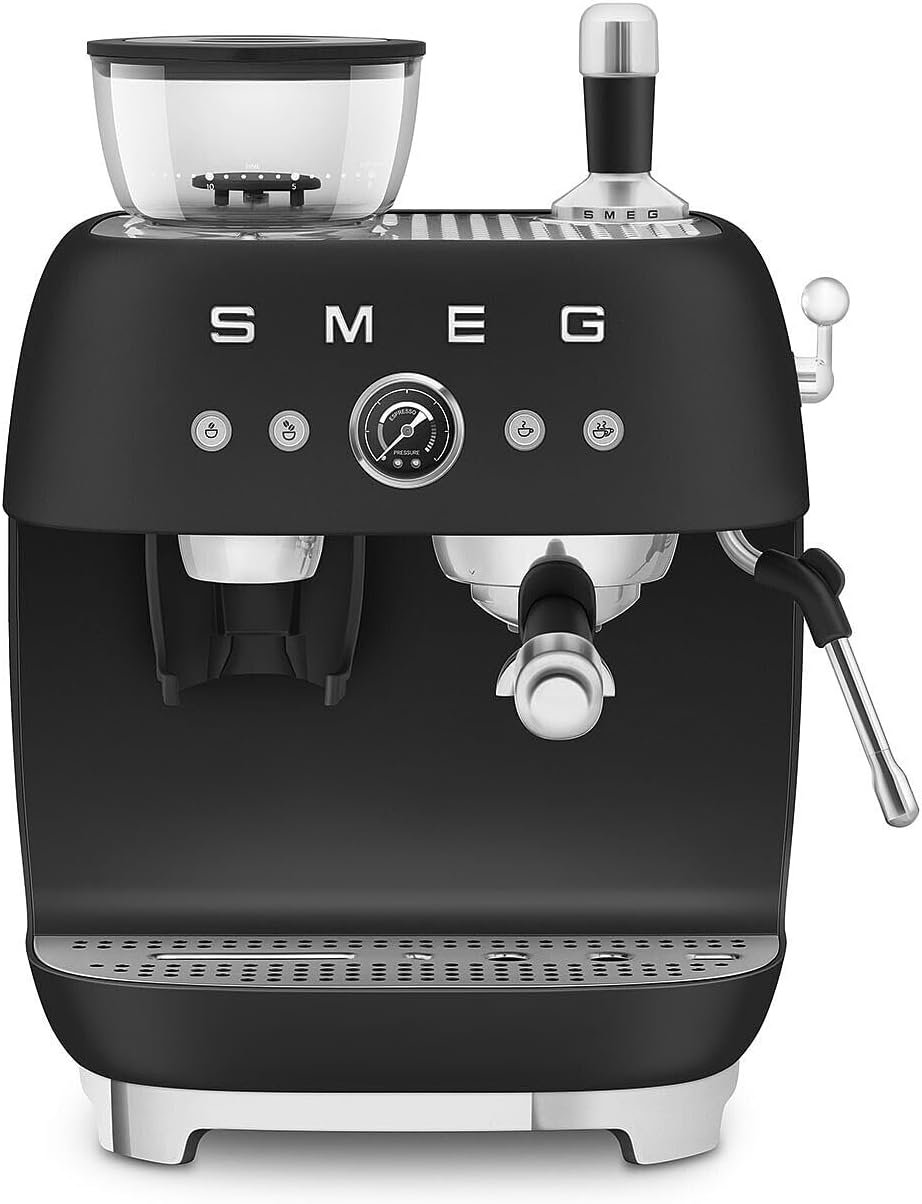
1. Smeg EGF03 Semi-Automatic Espresso Machine
A premium integrated-grinder option for buyers who want traditional portafilter control, a 58 mm format, and a dual-heating design in one distinctive machine.
Buy it ifYou want to grind, dose, tamp, pull shots, and texture milk yourself while keeping the grinder built into the machine.
Skip it ifYou want one-touch drinks, a compact low-profile machine, or the simplest possible learning curve.
The Smeg EGF03 keeps the core espresso process visible while combining several pieces of equipment into one body. Smeg lists an integrated conical-burr grinder, a professional 58 mm filter holder, a pressure gauge, and a manual steam wand. That makes it a useful bridge between a traditional semi-automatic setup and the convenience of an all-in-one machine.
Its dual thermoblock heating system is the practical feature that separates it from simpler single-heater designs: Smeg describes dedicated heating for the coffee and steam circuits so the steam function can be ready immediately after brewing. The tradeoff is that this is still a hands-on machine. You will need to learn grind adjustment, dosing, tamping, extraction, and milk texture rather than pressing a drink icon and walking away.
GrinderIntegrated conical burr
Portafilter58 mm
HeatingDual thermoblock
What we like
Built-in grinder keeps the setup self-contained
58 mm portafilter supports a broad accessory ecosystem
Dual thermoblock design reduces the wait between brewing and steaming
What to consider
Still requires real semi-automatic espresso technique
Taller, more substantial body than compact manual machines
More complex than a simple espresso-only setup
Specification source reviewed: Smeg’s official EGF03 product documentation. Editorial conclusions are our own.
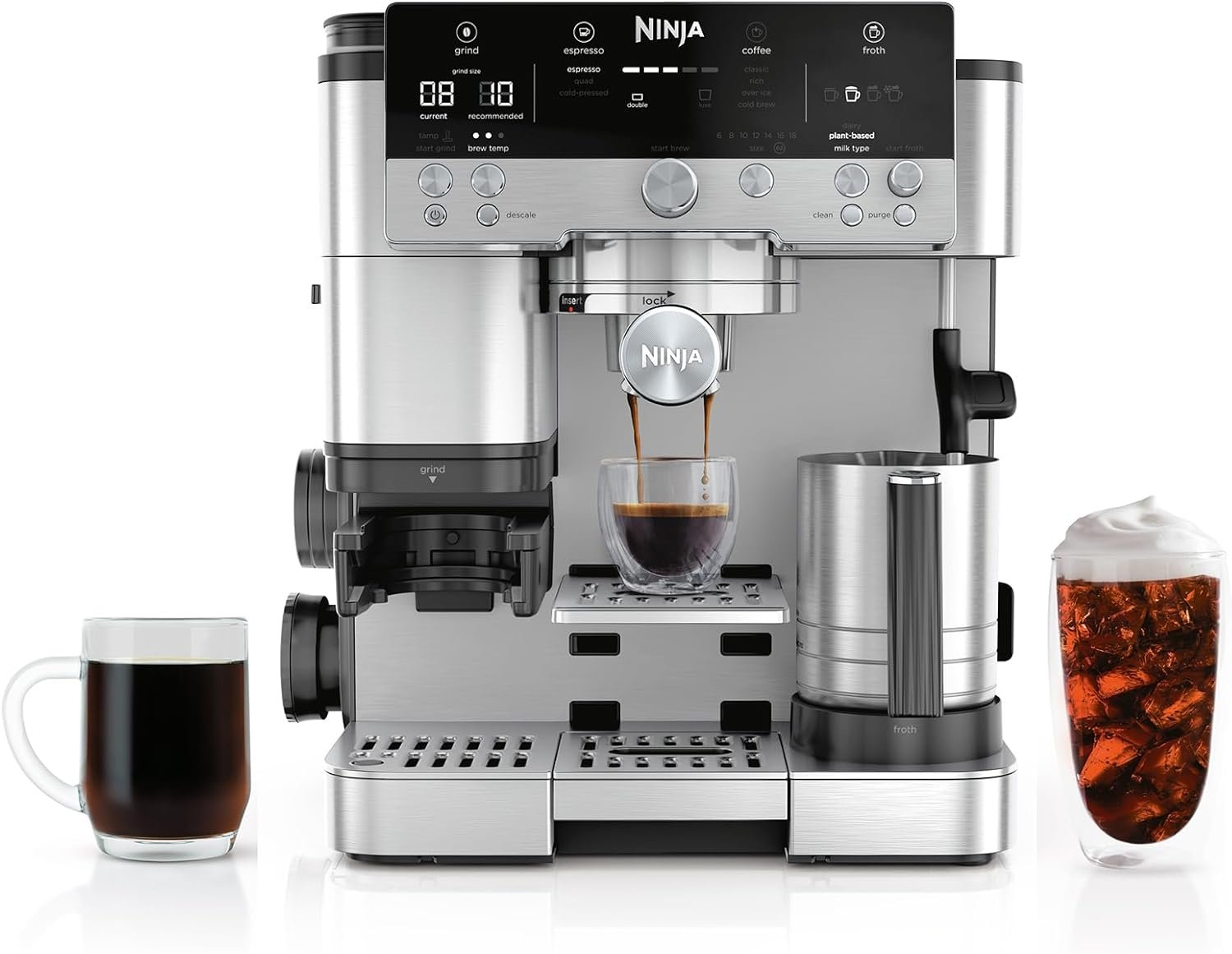
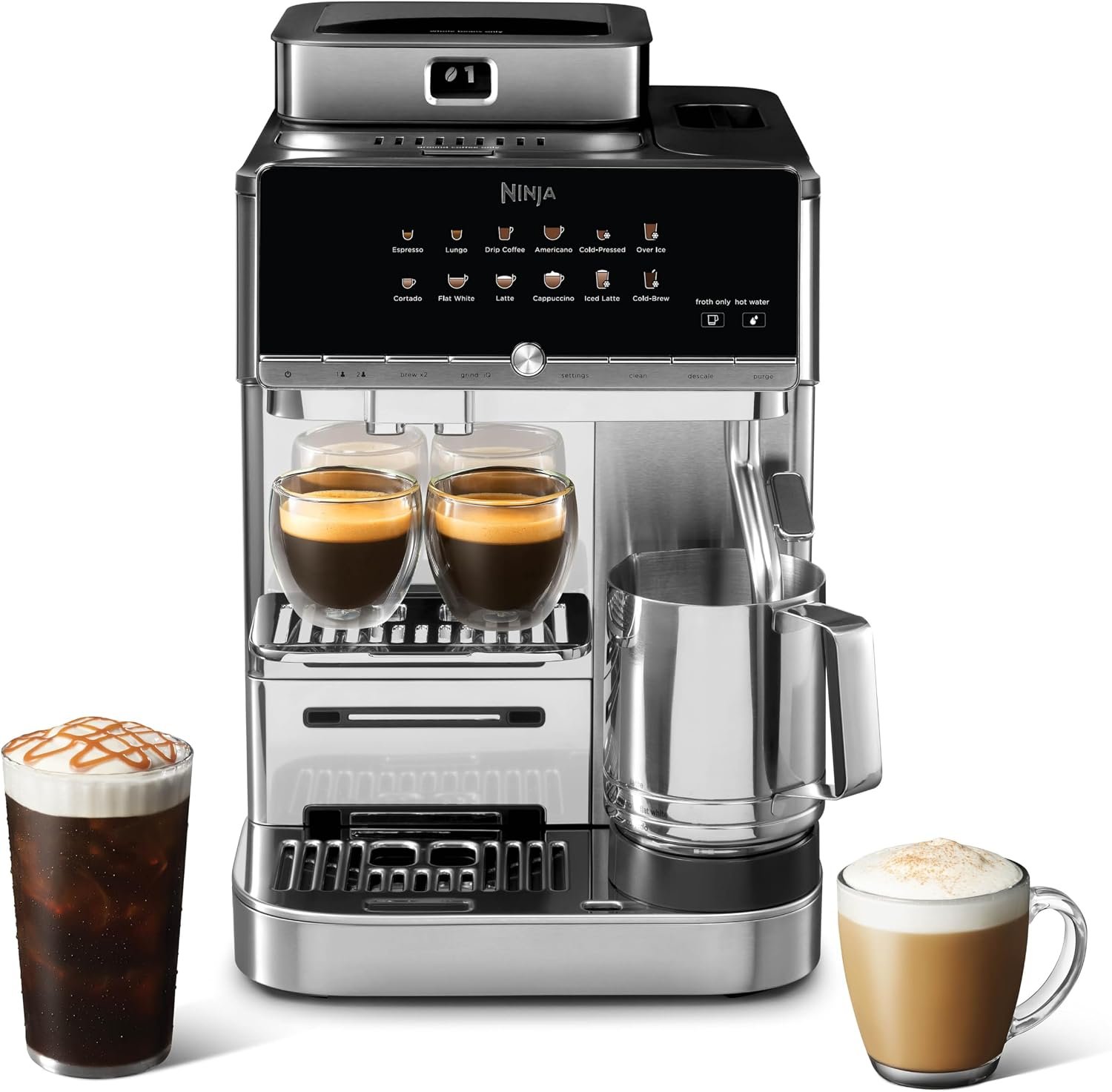
A strong fit for households that want espresso, drip coffee, and cold brew from one machine while still keeping a portafilter-based workflow.
Buy it ifYou want guidance, weight-based dosing, and hands-free frothing without giving up the ritual of using a portafilter.
Skip it ifYou only drink straight espresso and prefer a simpler machine with fewer coffee modes.
The Luxe Café Premier is unusual because it tries to reduce the intimidating parts of semi-automatic espresso without turning the process into a sealed one-touch system. Barista Assist recommends grind settings, a built-in scale handles weight-based dosing, and the conical burr grinder offers 25 settings across espresso and coffee.
Its biggest advantage is versatility: espresso, drip-style coffee, and rapid cold brew share the same countertop footprint. That breadth also creates the main compromise. There are more modes, more components, and more screen-guided decisions than on a traditional espresso-only machine. It makes the most sense when several people in the home want different drink styles.
GrinderIntegrated conical burr, 25 settings
DosingBuilt-in weight-based scale
BrewingEspresso, drip coffee, cold brew
What we like
Guided settings reduce early dial-in frustration
One machine covers several coffee styles
Hands-free frothing simplifies milk drinks
What to consider
Larger and more complex than espresso-only machines
Extra modes may be unnecessary for purists
Still requires portafilter handling and cleanup
Specification source reviewed: SharkNinja’s official ES601 product documentation. Editorial conclusions are our own.
A convenience-first super-automatic for buyers who want a broad hot-and-iced menu, quick milk cleanup, and minimal manual espresso work.
Buy it ifYour priority is pressing a button for a wide range of black coffee and milk drinks.
Skip it ifYou want to control dose distribution, tamping, portafilter baskets, or manual steaming.
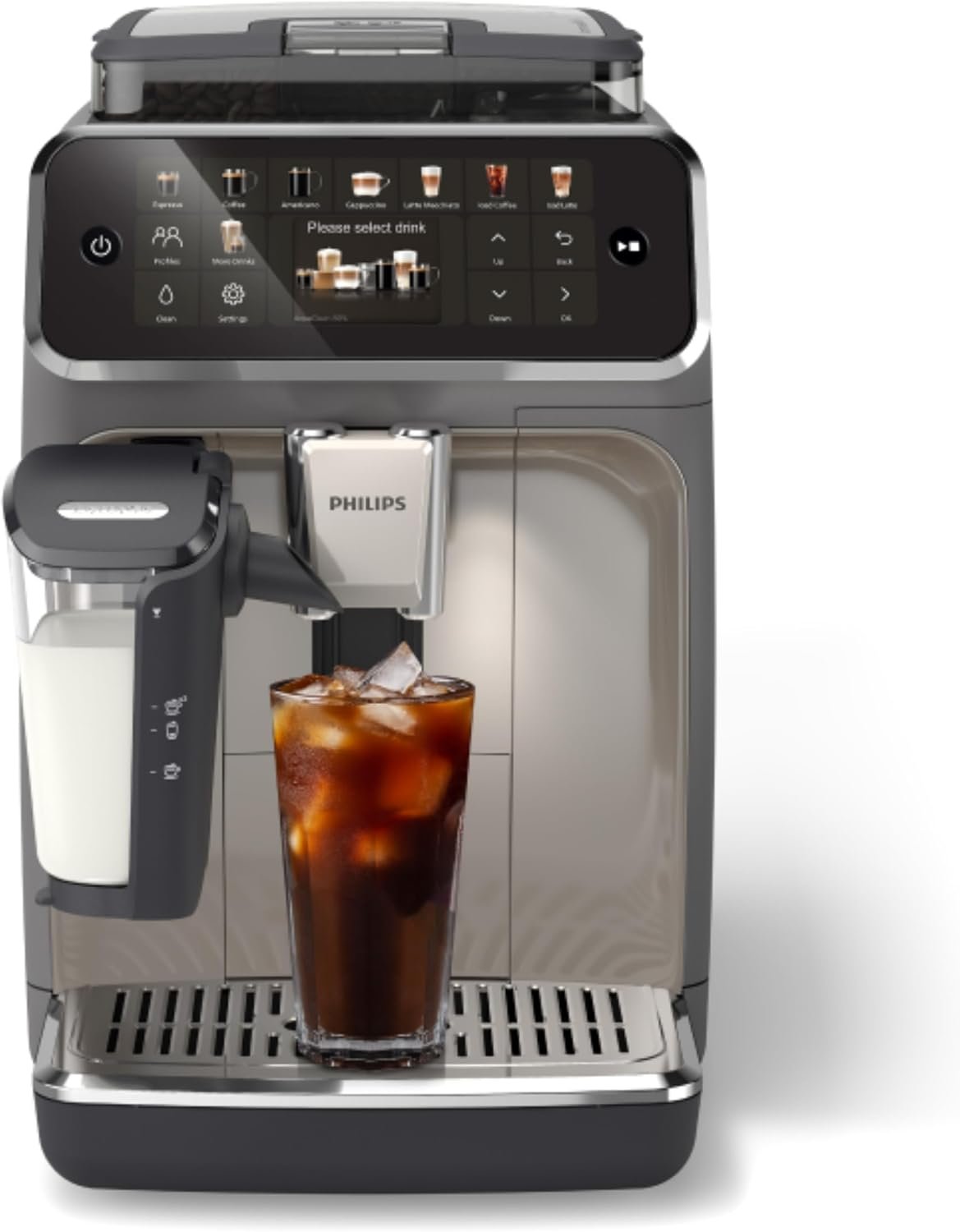
Philips positions the 5500 LatteGo around variety and low-friction daily use. The series offers 20 hot and iced recipes, an intuitive display, a ceramic grinder, and the two-part LatteGo milk system. That makes it especially appealing in a household where cappuccino, latte, iced coffee, and straight espresso all need to coexist.
The tradeoff is the same one shared by most super-automatic machines: you gain consistency and speed by handing over much of the extraction process. You can customize drinks, but you cannot manipulate the puck in the same way you can with a portafilter machine. Choose it for convenience, not because it offers the deepest manual control.
Recipes20 hot and iced drinks
MilkTwo-part LatteGo system
WorkflowFully automatic bean-to-cup
What we like
Large one-touch drink menu
Milk system is designed for fast cleanup
Good fit for multi-user households
What to consider
Less control over puck preparation
More internal parts to maintain than a manual machine
Best value only if you use the drink variety
Specification source reviewed: Philips’ official 5500 LatteGo product documentation. Editorial conclusions are our own.
One of the most interesting fully automatic choices for homes that switch between regular, decaf, or different roast styles throughout the day.
Buy it ifYou regularly change beans and want the machine to remember drink preferences for multiple users.
Skip it ifYou do not need bean switching and would rather spend less on a simpler automatic machine.
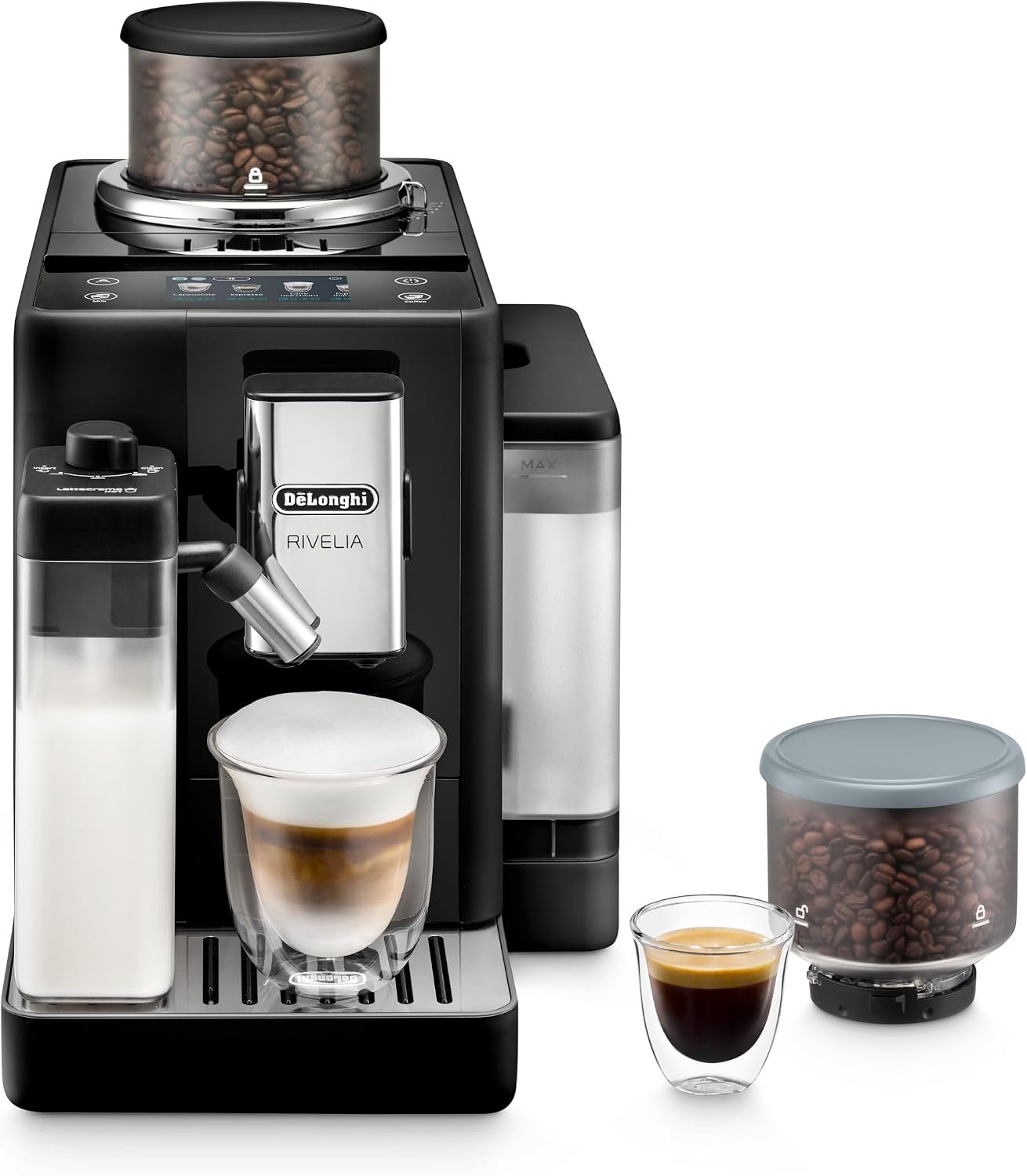
Rivelia’s standout feature is the Bean Switch System. De'Longhi supplies two removable bean hoppers so you can move between coffees without emptying a fixed hopper by hand. The machine also uses Bean Adapt features to adjust preparation around the selected beans and provides a full-touch interface with a broad preset drink menu.
That flexibility is meaningful for a household split between caffeinated and decaf coffee, or between dark-roast milk drinks and lighter straight espresso. The cost is complexity and price relative to entry-level super-automatics. If you rarely change beans, much of what makes Rivelia distinctive will go unused.
Bean systemTwo removable bean hoppers
Interface3.5-inch full-touch display
Drinks18+ preset recipes on current U.S. model
What we like
Bean switching is genuinely useful for regular and decaf
Automatic milk frothing
User-oriented personalization features
What to consider
Premium price for features not everyone needs
Less hands-on control than semi-automatic machines
Extra removable parts add cleaning tasks
Specification source reviewed: De'Longhi’s official Rivelia product documentation. Editorial conclusions are our own.
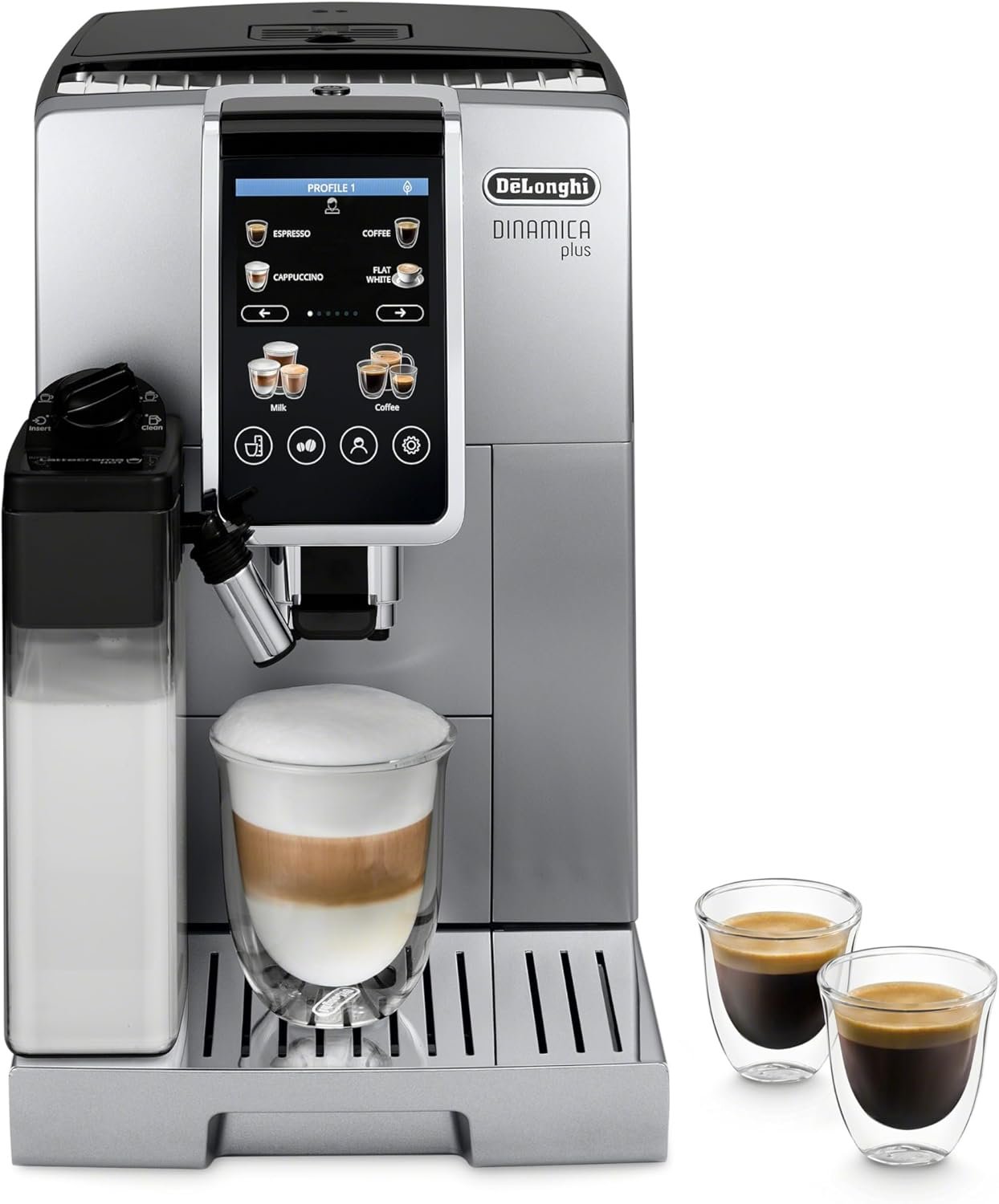
A polished fully automatic option for families that want saved profiles, many recipes, and adjustable automatic milk texture.
Buy it ifSeveral people want different saved drinks and you value one-touch milk beverages.
Skip it ifYou prefer a basic espresso-and-coffee menu or want manual steam-wand control.
The Dinamica Plus is built around repeatability. De'Longhi lists 24 one-touch recipes on the current U.S. model, a 13-setting conical burr grinder, four user profiles, and the LatteCrema Hot system with selectable froth levels. That combination reduces the need to rebuild a favorite drink every morning.
Its weakness is not a lack of features but whether you need them. A single espresso drinker may be paying for profiles, recipes, and automatic milk controls that stay unused. For a busy household with different preferences, those same features can remove the most repetitive parts of the routine.
Recipes24 one-touch recipes
GrinderBuilt-in conical burr, 13 settings
ProfilesUp to 4 user profiles
What we like
Strong personalization for multiple users
Automatic milk texture settings
Wide drink selection
What to consider
Feature-rich interface may be more than one user needs
Automatic workflow limits manual puck control
Milk system requires routine cleaning
Specification source reviewed: De'Longhi’s official Dinamica Plus ECAM38085SB documentation. Editorial conclusions are our own.
A modern bean-to-cup system for buyers who want automatic grind adjustment, hot and cold milk texture, and one-touch café drinks.
Buy it ifYou want a highly automated grinder-to-cup workflow with minimal dial-in work.
Skip it ifYou want a compact machine or prefer to make espresso with a traditional portafilter.
AutoBarista Pro leans heavily into automation. Ninja lists 13 one-touch drinks, Grind iQ adjustment across 50 settings, and FrothPerfect hands-free microfoam for dairy or plant-based milk. It is designed to remove the usual sequence of adjusting grind, dosing, tamping, and steaming separately.
That convenience comes in a substantial chassis, and the machine is best suited to someone who values repeatable drinks more than hands-on technique. Buyers comparing automatic systems may also want to read our best automatic espresso machine guide before deciding how much automation they actually want.
Drinks13 one-touch presets
GrinderGrind iQ with 50 settings
Reservoir80 oz listed
What we like
Automated grind-size and dose logic
Hot or cold hands-free frothing
Fresh-ground bean-to-cup workflow
What to consider
Large footprint and substantial weight
Less tactile control for espresso hobbyists
More internal systems to clean and service
Specification source reviewed: SharkNinja’s official AE1051 product documentation. Editorial conclusions are our own.
A straightforward entry into one-touch espresso and milk drinks for buyers who care more about easy cleanup than a huge recipe library.
Buy it ifYou want a small set of popular drinks and an uncomplicated milk system.
Skip it ifYou want a long menu of specialty drinks, multiple user profiles, or advanced customization.
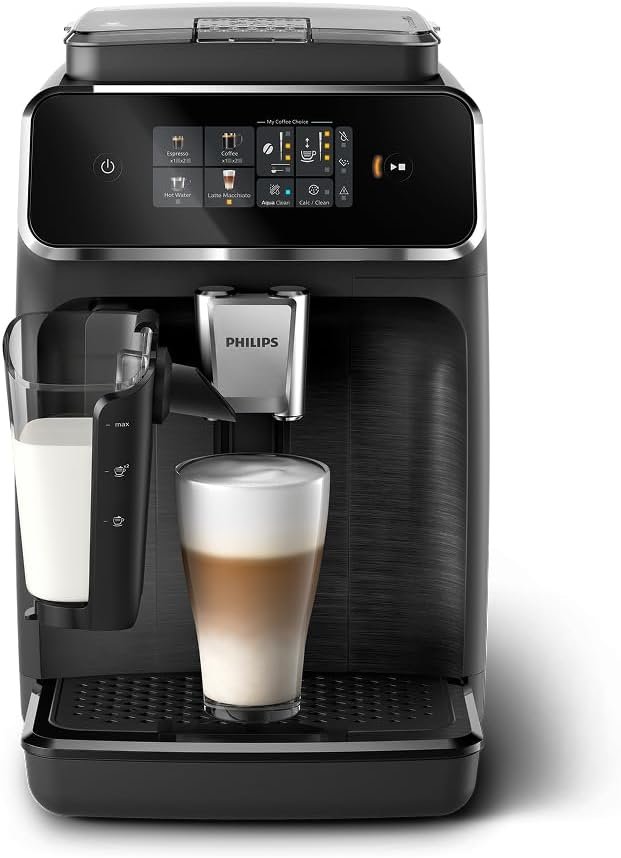
The 2300 Series keeps the proposition simple. Philips lists four core beverages plus hot water, with the LatteGo milk system handling milk froth in a two-part, tube-free design. For someone moving from capsules or drip coffee into fresh-bean espresso drinks, that narrower menu can actually make the machine easier to live with.
Compared with the 5500, you give up much of the expanded drink library and higher-end convenience features. That makes the 2300 a better fit when your routine is predictable: espresso, coffee, latte macchiato, and a few milk drinks rather than constant menu exploration.
Drinks4 core beverages plus hot water
MilkTwo-part LatteGo system
WorkflowFully automatic bean-to-cup
What we like
Simple interface and focused drink menu
Milk system has no tubes
Good transition from pod machines to fresh beans
What to consider
Far fewer recipes than premium super-automatics
Limited hands-on espresso control
Less useful for households wanting many saved drinks
Specification source reviewed: Philips’ official Series 2300 EP2330 documentation. Editorial conclusions are our own.
A compelling newer Magnifica option for buyers who want fresh-ground coffee plus automatic hot and cold milk preparation.
Buy it ifCold milk drinks matter almost as much as cappuccino and latte in your daily routine.
Skip it ifYou only drink straight espresso or do not need automatic cold-foam features.
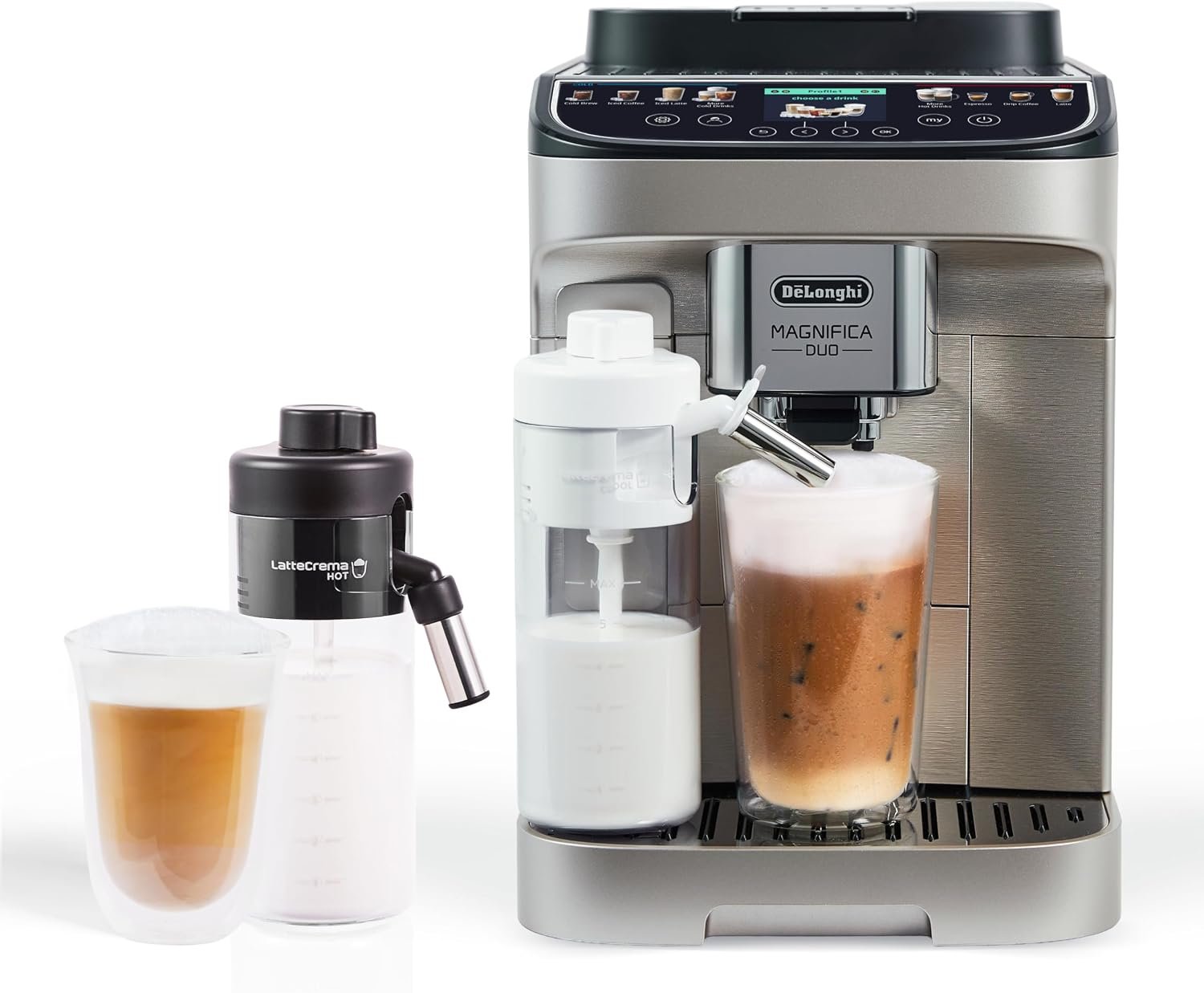
Magnifica Duo extends De'Longhi’s approachable Magnifica formula with LatteCrema Hot & Cool functionality. The machine is fully automatic, grinds fresh beans internally, and is designed to produce both hot and cold milk-based drinks without the manual steaming step.
Because it is a newer model family, shoppers should verify that the Amazon listing matches the ECAM33080SXB version and accessories they expect. If cold drinks are not part of your routine, a simpler Magnifica can be a more efficient purchase. The extra value here is specifically the broader milk workflow.
ModelECAM33080SXB on current U.S. listing
MilkLatteCrema Hot & Cool
WorkflowFully automatic fresh-bean system
What we like
Automatic hot and cold milk preparation
Fresh-ground bean-to-cup convenience
Familiar Magnifica-style simplicity
What to consider
Cold-milk capability may be unnecessary for some buyers
Less manual espresso control
Confirm exact Amazon model and included milk parts
Specification source reviewed: De'Longhi’s official Magnifica Duo product documentation. Editorial conclusions are our own.
A premium fully automatic choice for buyers who want a large touchscreen, broad drink library, connected controls, and an integrated milk system.
Buy it ifYou value a polished screen-driven interface, many presets, and smart-home features.
Skip it ifYou want a compact value machine or do not care about app-connected controls.
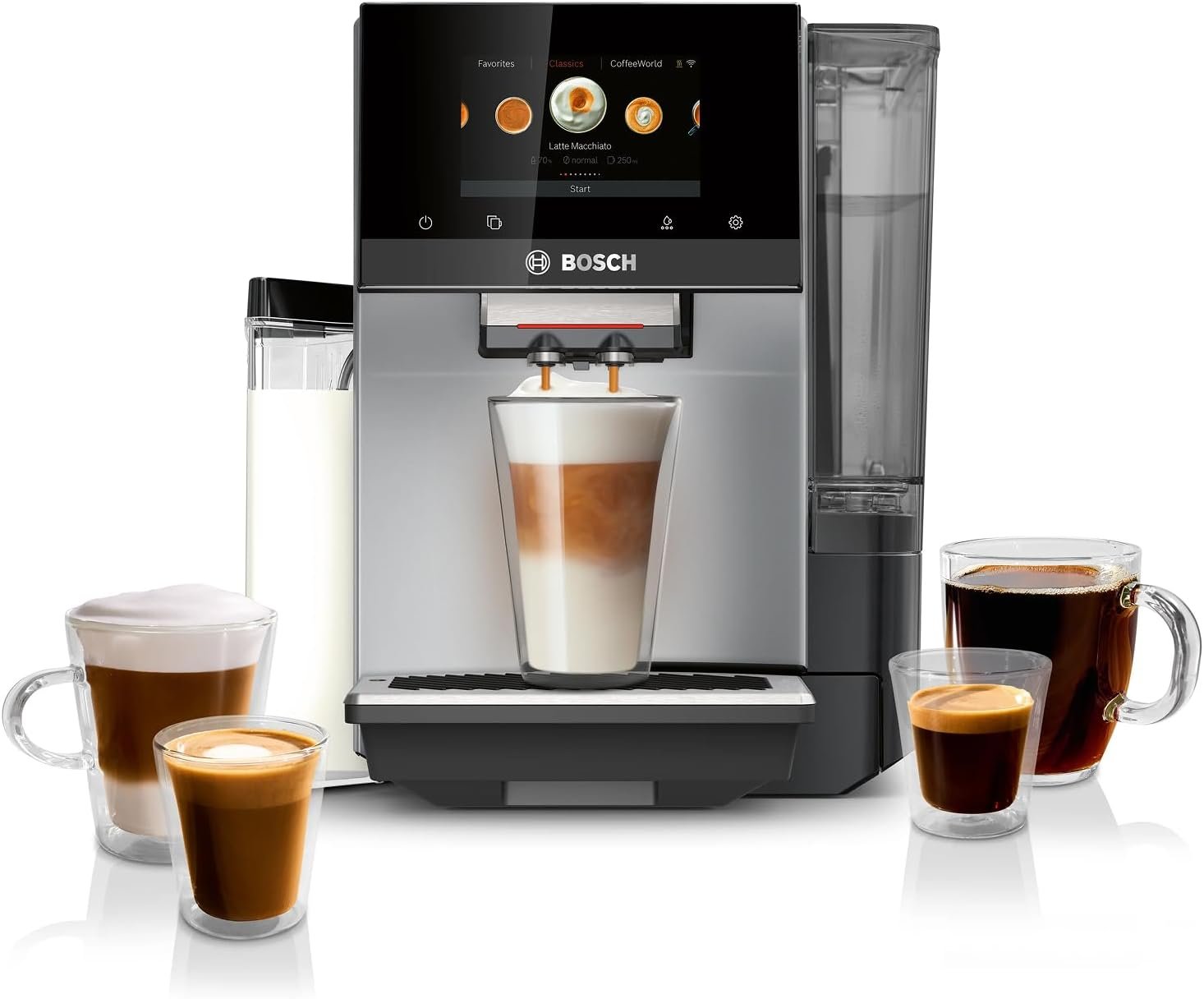
Bosch’s 800 Series VeroCafe is built around breadth and interface. Current U.S. variants list roughly 35 to 36 beverages, a 5-inch full-color touchscreen, integrated milk systems, and Home Connect functionality. That makes it one of the most feature-dense automatic machines in this comparison.
The important caveat is model matching. Bosch sells several 800 Series variants with different milk containers, colors, profile counts, and convenience features. The supplied Amazon link should therefore be checked against the exact silver model shown in the listing before purchase rather than assuming every 800 Series specification applies.
Drinks35+ beverages on current 800 Series variants
Display5-inch full-color touchscreen
ConnectivityHome Connect on supported variants
What we like
Very broad beverage selection
Premium touchscreen experience
Connected features and integrated milk workflow
What to consider
High price relative to simpler automatics
Specifications vary by 800 Series SKU
Large feature set can be unnecessary for basic espresso
Specification source reviewed: Bosch’s official U.S. 800 Series VeroCafe documentation. Editorial conclusions are our own.
A design-led connected machine for buyers who want espresso, milk drinks, and true drip-style coffee from a highly integrated platform.
Buy it ifYou care about a modern interface, app connectivity, and a front-access design that works in tighter cabinetry.
Skip it ifYou want a traditional serviceable espresso platform or prefer simple physical controls.
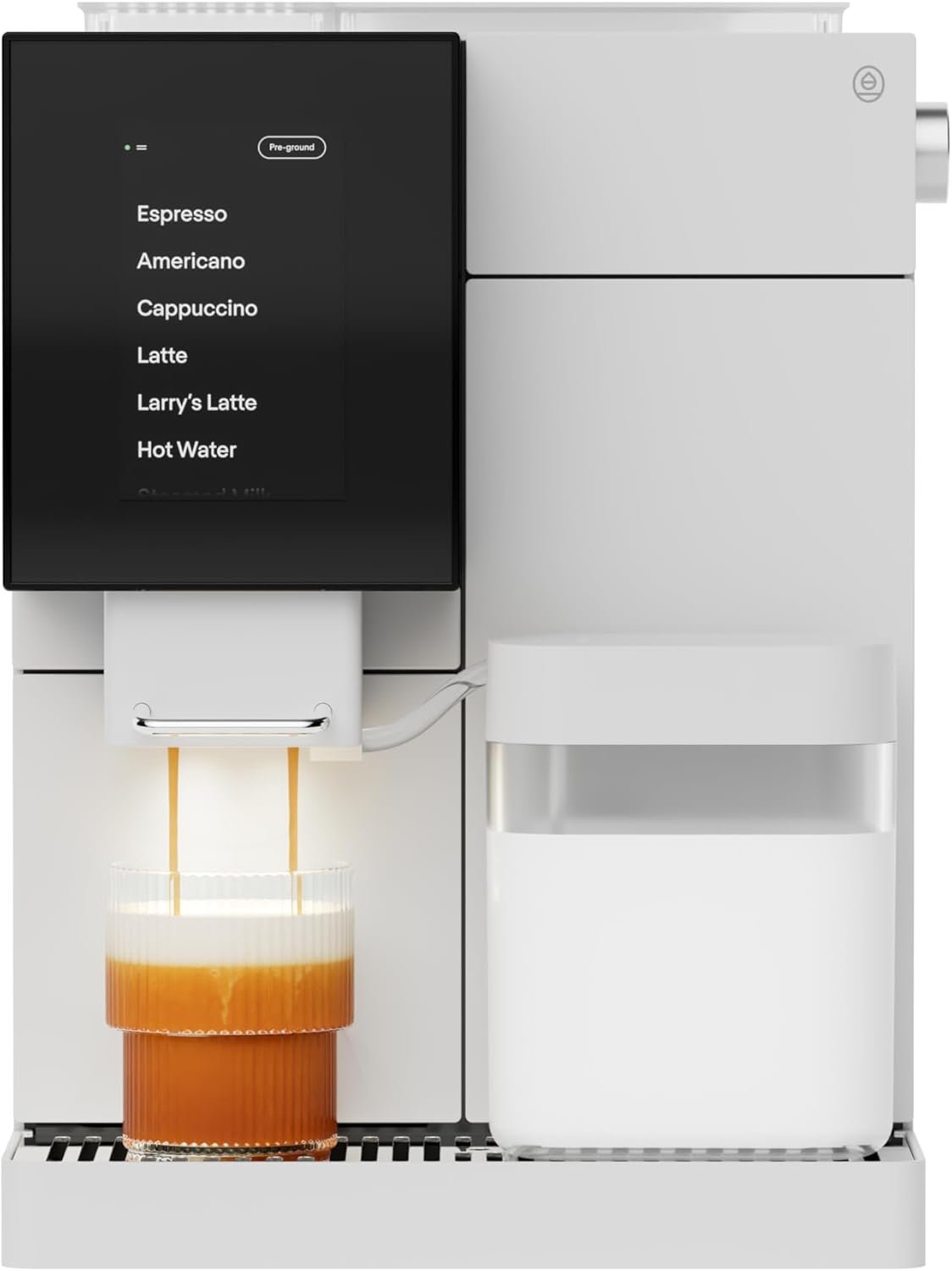
TK-02 takes a software-first approach to automatic coffee. Terra Kaffe uses a 5-inch capacitive display, a 48 mm conical burr grinder, front-facing water and waste compartments, and a hybrid brew unit intended to handle both espresso and drip-style coffee. The machine also connects to the Terra Kaffe app for additional control.
The strongest reason to buy it is the integrated experience, not a single specification. That also creates lock-in: more of the workflow depends on proprietary software, internal mechanisms, and the brand’s ecosystem. Buyers who prefer a machine that can be understood and repaired like a traditional semi-automatic may find that tradeoff uncomfortable.
Grinder48 mm conical burr
Water tank75 fl oz listed
Display5-inch capacitive touchscreen
What we like
Front-access design can help under cabinets
Handles espresso and drip-style coffee
Modern connected interface
What to consider
Premium ecosystem-dependent design
Less traditional user-serviceable workflow
Automatic platform limits puck-level control
Specification source reviewed: Terra Kaffe’s official TK-02 product and support documentation. Editorial conclusions are our own.
An ambitious value-focused semi-automatic that combines a dual-boiler system, built-in grinder, pressure gauge, and 58 mm group format.
Buy it ifYou want to brew and steam with less waiting while keeping a hands-on portafilter workflow.
Skip it ifYou prioritize long-term service history and third-party documentation over a long feature list.
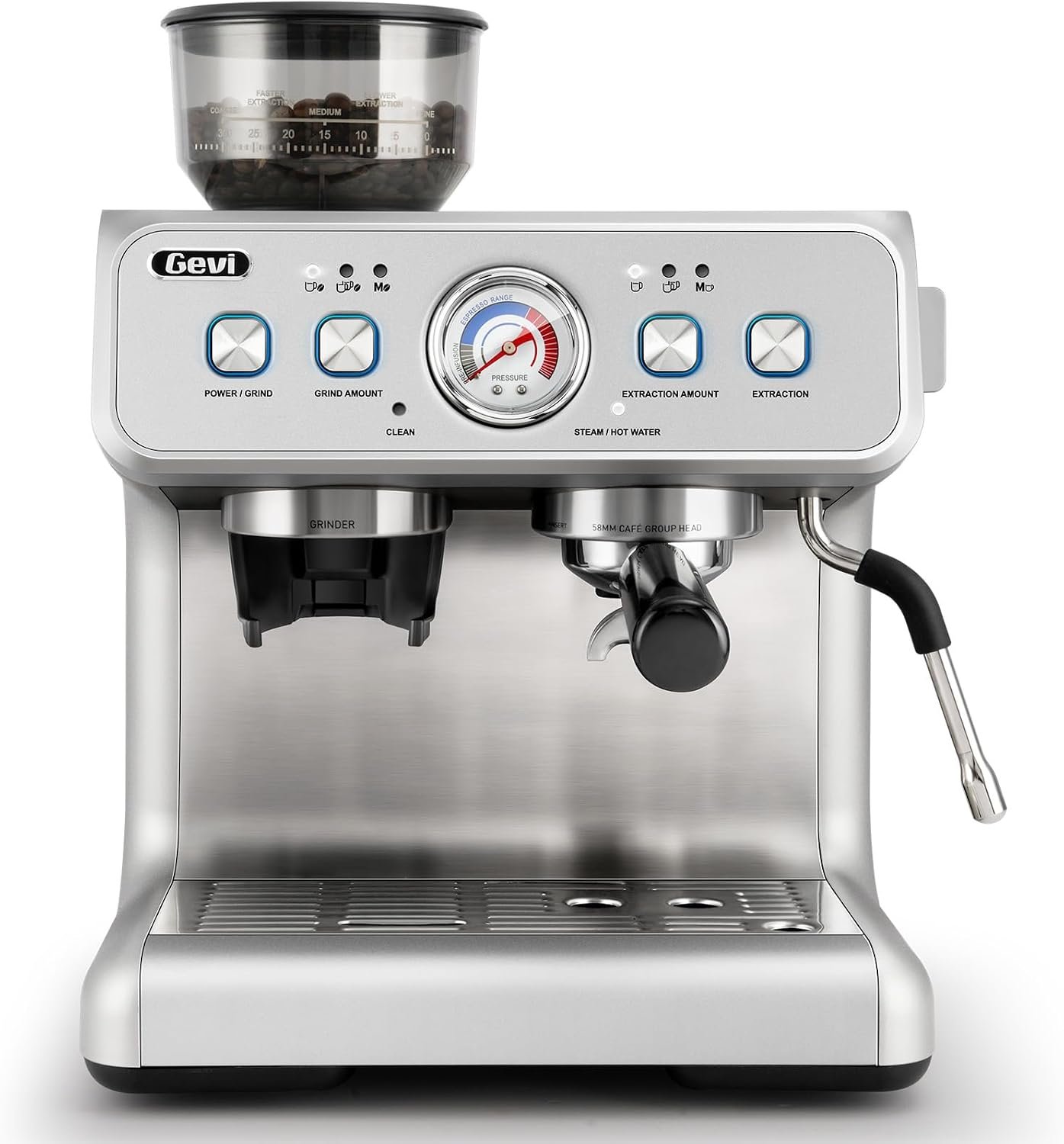
The ECMF0’s appeal is easy to see on paper. Gevi lists dual boilers, PID and NTC temperature control, a 30-step built-in grinder, pressure gauge, and a 58 mm group head. The dual-boiler layout is particularly useful for milk drinks because brewing and steam preparation do not have to share one heating path.
The caveat is evidence depth. Gevi provides detailed specifications, but the platform has less long-term independent coverage than classic enthusiast machines. If dual-boiler architecture is your priority, compare it with our dual-boiler espresso machine guide before deciding whether integrated convenience or a more established service ecosystem matters more.
A modern semi-automatic package for buyers who want a 58 mm portafilter, built-in grinder, pressure gauge, and PID-based temperature control.
Buy it ifYou want commercial-style 58 mm accessories without assembling a grinder and machine separately.
Skip it ifYou want one-touch milk drinks or a compact low-height machine.
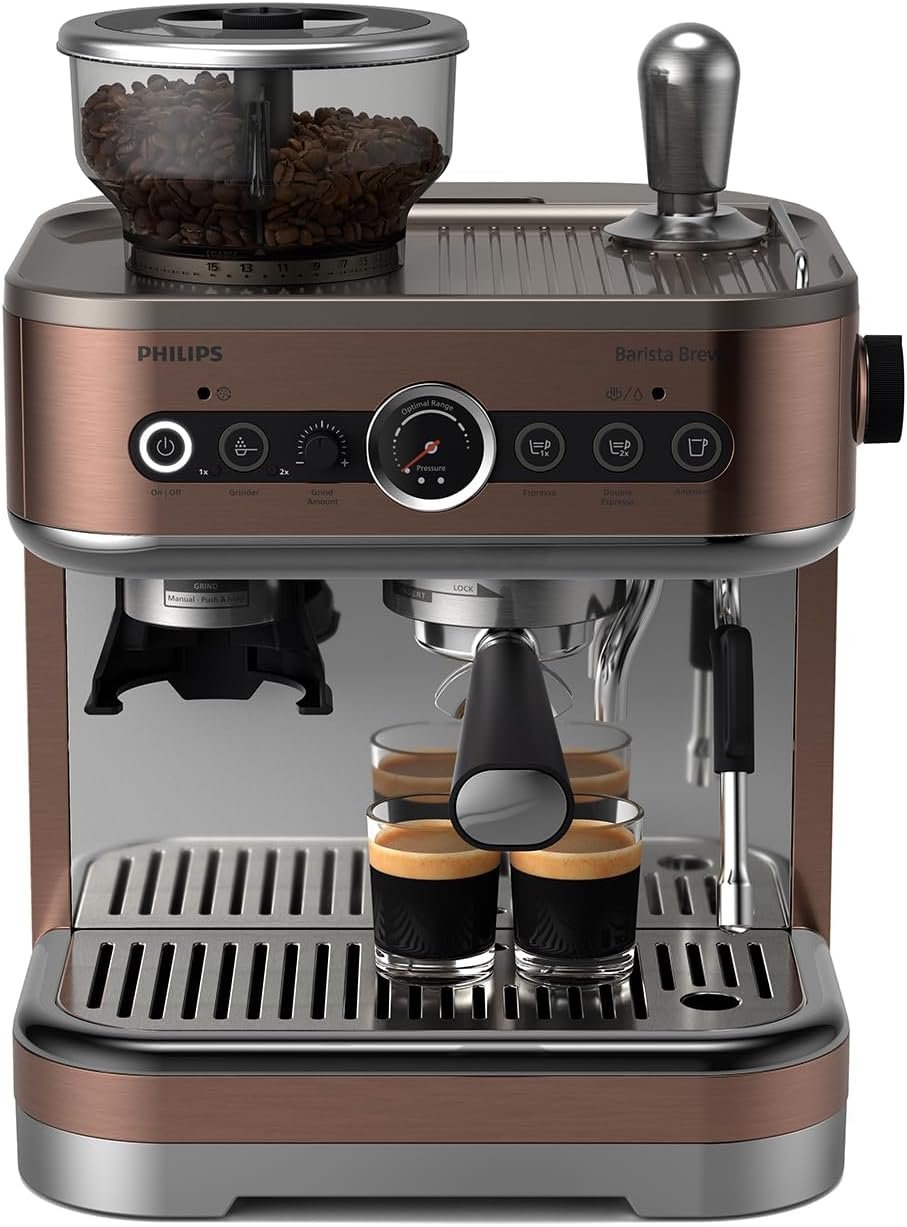
Philips Barista Brew sits between beginner all-in-ones and more traditional enthusiast machines. The current U.S.-voltage documentation lists a metal conical burr grinder with 15 grind sizes, a 58 mm stainless-steel portafilter, pressure gauge, PID temperature control, and a 2.3-liter water tank.
It still asks you to dose, tamp, lock in the portafilter, and texture milk manually, so it is not a shortcut around learning espresso. That is exactly why it may appeal to someone who wants more involvement than a super-automatic offers. If you are new to the process, our guide to using an espresso machine can help set expectations.
GrinderMetal conical burr, 15 settings
Portafilter58 mm stainless steel
Water tank2.3 L listed
What we like
58 mm accessory ecosystem
Built-in grinder and pressure gauge
PID temperature control listed
What to consider
Manual puck preparation is still required
Tall body needs cabinet clearance
15 grind settings may feel limiting to advanced users
Specification source reviewed: Philips’ official Barista Brew PSA3228 documentation. Editorial conclusions are our own.
A traditional choice for espresso hobbyists who want a 58 mm manual platform, brass boiler and group, and a machine that rewards technique.
Buy it ifYou already own—or plan to buy—a capable espresso grinder and want a hands-on machine with a classic layout.
Skip it ifYou want fast one-touch drinks, an integrated grinder, or automatic milk frothing.
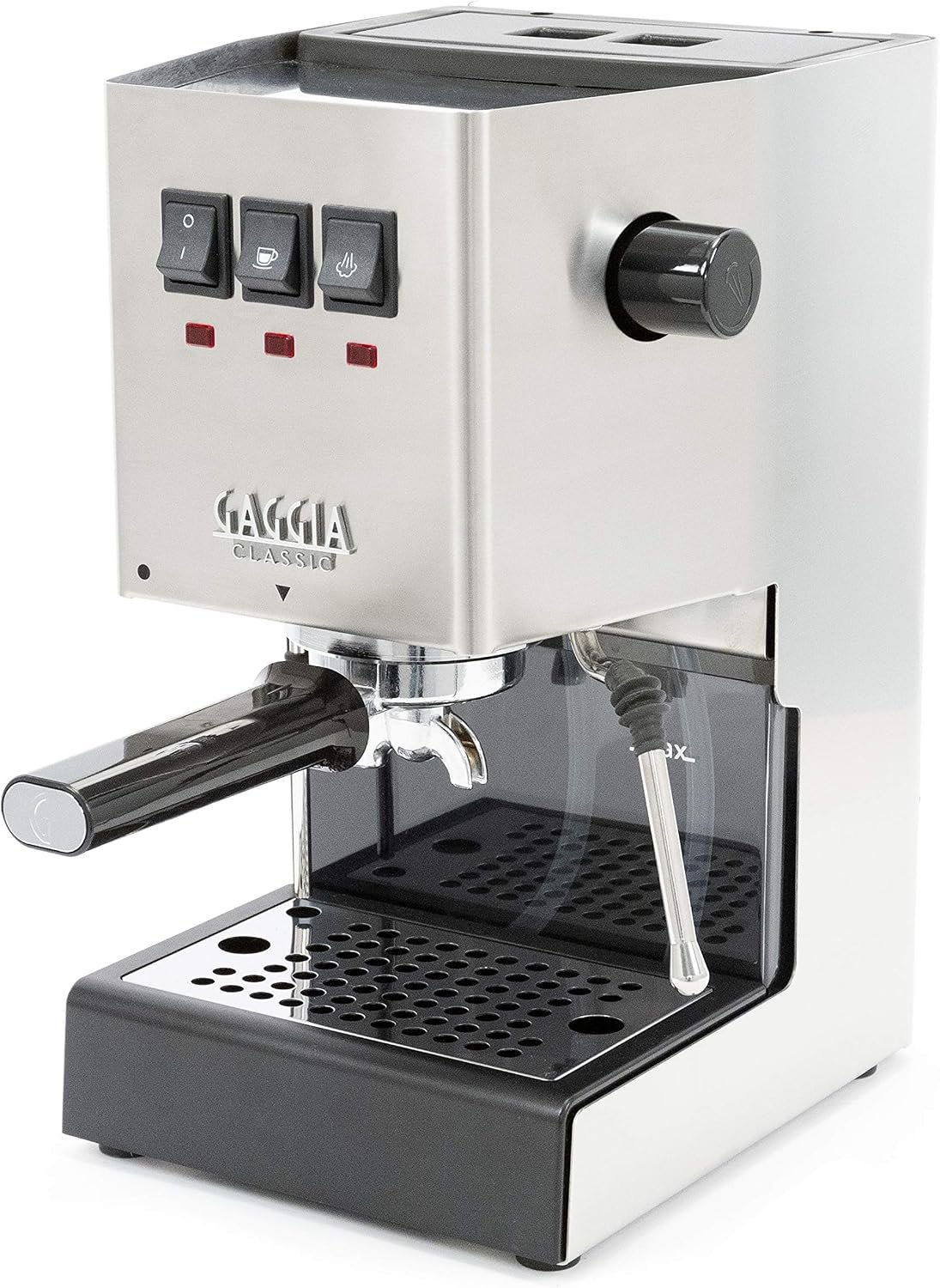
The Classic E24 is the opposite of the screen-heavy machines above. Gaggia uses three rocker switches, a professional 58 mm stainless-steel filter holder, a lead-free brass boiler and group, a three-way solenoid valve, and a manual stainless-steel steam wand. There is no built-in grinder and very little software between you and the shot.
That simplicity gives you control but also exposes weak preparation. Grind quality, dose, distribution, tamping, and temperature routine all matter. For the right buyer, that is the attraction. For someone who wants a cappuccino before work with one button, it is unnecessary friction. A separate espresso-capable grinder should be part of the budget.
Portafilter58 mm stainless steel
BoilerLead-free brass
Water tank2.1 L listed
What we like
Traditional 58 mm platform
Simple physical controls
Strong upgrade-and-accessory culture around the Classic design
What to consider
Requires a separate grinder
Manual temperature and milk workflow
Learning curve is much higher than automatic machines
Specification source reviewed: Gaggia’s official Classic E24 documentation. Editorial conclusions are our own.
A convenience-oriented semi-automatic for households that want an integrated grinder, adjustable shot settings, and a very large removable water tank.
Buy it ifYou make several drinks a day and dislike frequent reservoir refills.
Skip it ifYour upper cabinets are low or you prefer a more compact traditional espresso machine.
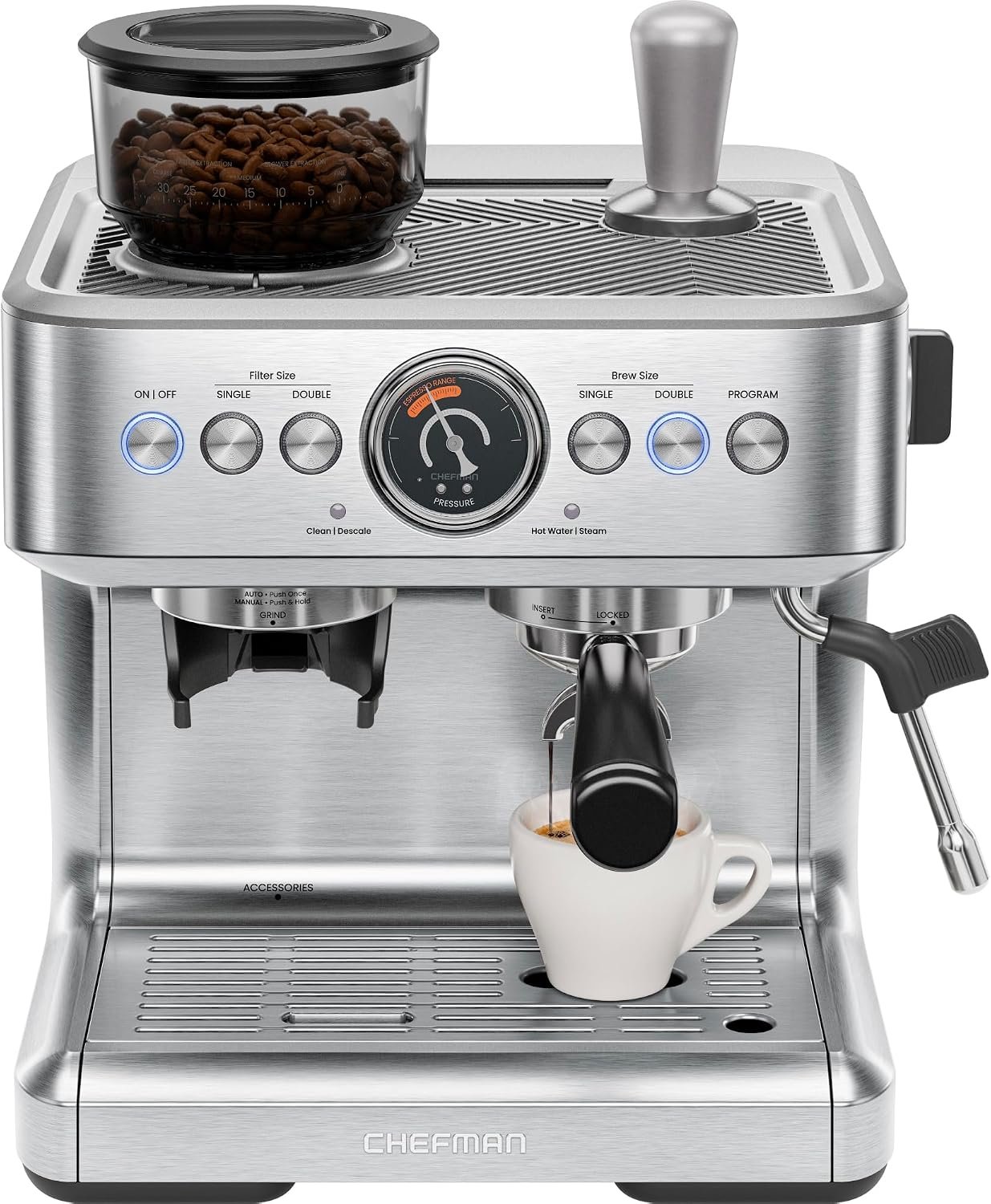
Chefman’s Crema Supreme emphasizes practical convenience. The RJ54-G-SS combines a conical burr grinder with 30 settings, adjustable shot temperature and volume, a manual steam wand, and a 3-liter removable reservoir. That tank capacity is its clearest day-to-day advantage in a busy kitchen.
The main caution is size. Chefman lists the machine at 19.2 inches tall, so it needs more vertical clearance than product photos may suggest. Measure the usable space under your cabinets, not just the counter footprint. The current manufacturer page also does not make every portafilter detail equally prominent, so confirm the exact Amazon listing before buying accessories.
GrinderIntegrated conical burr, 30 settings
Water tank3 L removable
Height19.2 in listed
What we like
Large reservoir reduces refill frequency
Adjustable shot temperature and volume
Integrated grinder keeps the setup self-contained
What to consider
Tall chassis needs generous clearance
Digital controls will not suit every buyer
Confirm exact portafilter details before buying accessories
Specification source reviewed: Chefman’s official RJ54-G-SS documentation. Editorial conclusions are our own.
An older but straightforward bean-to-cup design for buyers who want compact dimensions, a ceramic grinder, and manual milk frothing.
Buy it ifYou want automatic espresso from fresh beans but prefer a simple steam wand over a milk carafe system.
Skip it ifYou want a large touchscreen, many preset recipes, or modern app connectivity.
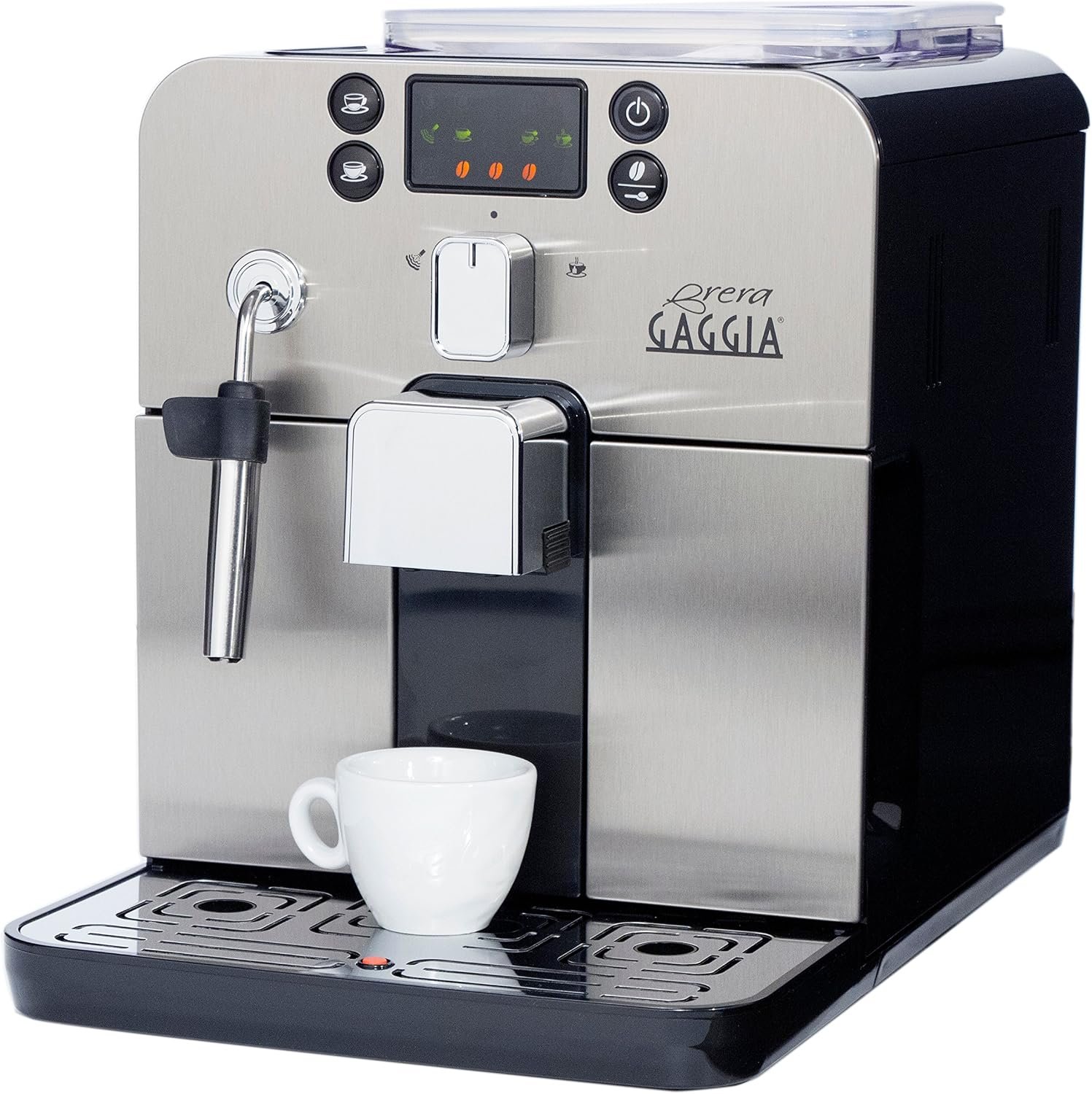
The Brera is refreshingly simple compared with newer super-automatics. Gaggia lists a ceramic grinder with five adjustment levels, one-touch espresso and lungo, a 1.2-liter front-access water tank, and a stainless-steel Pannarello for manual milk frothing. Its narrow 25.6 cm width also helps on crowded counters.
Age is the tradeoff. Five grinder settings and a button-and-LCD interface look basic next to modern machines with dozens of drinks and touchscreens. But basic can be an advantage if you only want fresh-ground espresso, longer coffee, hot water, and occasional steamed milk without learning a large menu system.
GrinderCeramic, 5 settings
Water tank1.2 L
MilkManual stainless-steel Pannarello
What we like
Compact width and front-access tank
Ceramic grinder
Simple interface with fewer distractions
What to consider
Only five grinder settings
Small reservoir compared with newer rivals
Limited drink automation
Specification source reviewed: Gaggia’s official Brera product documentation. Editorial conclusions are our own.
Four decisions that matter more than “15 bar” or “20 bar”
Automatic or hands-on?
A fully automatic machine grinds, doses, brews, and often froths with one touch. A semi-automatic gives you more control but asks you to learn. If convenience is the priority, compare our automatic espresso machine picks.
Integrated or separate grinder?
An integrated grinder keeps the counter tidy. A separate grinder can offer more adjustment and easier upgrades. Manual machines such as the Gaggia Classic E24 should be budgeted together with an espresso-capable grinder.
Single or dual heating system?
If you make several milk drinks in a row, faster transitions between brewing and steaming matter. A true dual-boiler design can reduce waiting; see our best dual-boiler espresso machine guide for a focused comparison.
Ignore the headline pump number
A 20-bar pump is not automatically better than a 15-bar pump. Extraction control, temperature, grind quality, and pressure regulation are more meaningful. Our 20-bar espresso machine guide explains the distinction.
Quick answers
Common questions before buying an espresso machine
What is the best espresso machine for most beginners?
For a beginner who wants to learn espresso, an integrated-grinder semi-automatic such as the Smeg EGF03 or Ninja Luxe Café Premier reduces the number of separate purchases. If you do not want to learn dosing, tamping, and steaming, a fully automatic machine such as the Philips 2300 may fit better.
Is a fully automatic espresso machine worth it?
It can be if convenience is your priority. Fully automatic machines trade some manual control for repeatability, saved recipes, and faster milk drinks. They make the most sense when you value daily speed more than experimenting with portafilter baskets and puck preparation.
Is 20 bar better than 15 bar?
No. Those figures normally describe maximum pump capability, not the ideal pressure at the coffee puck during extraction. Temperature stability, grind quality, dose, puck preparation, and pressure management matter more than the largest number printed on the machine.
Do I need a separate espresso grinder?
Only if the machine does not include one—or if you want more grind control than the built-in grinder provides. A separate grinder is essential for machines such as the Gaggia Classic E24. Integrated-grinder machines are easier to buy as one package but can be harder to upgrade piece by piece.
How should I choose between a super-automatic and a manual machine?
Choose a super-automatic if you want beans-to-cup convenience with minimal technique. Choose a manual or semi-automatic machine if adjusting grind, dose, yield, and milk texture sounds enjoyable rather than annoying. For the most traditional approach, see our manual lever espresso machine guide.
Recommended next
Continue your research
Explore related Espresso Finder guides on automatic machines, dual-boiler systems, grinders, brewing, and maintenance.