Dual Boiler Espresso Maker: 2 Home Machines Worth Comparing in 2026
A dual boiler espresso maker is designed to keep brewing and milk steaming on separate heating paths, reducing the wait between pulling a shot and texturing milk. We compare two models that explicitly list dual-boiler systems, focusing on workflow, grinder setup, milk handling, portafilter size, and the compromises that matter at home.
John CrestaniEspresso Equipment Specialist
Last Updated
The short version
Which dual boiler espresso maker should you buy?
Among the two dual-boiler models compared here, the Gevi Dual Boiler is the stronger starting point for a hands-on home barista who wants a built-in grinder, a 58 mm portafilter, manual steaming, and more control over the espresso workflow. The AIRMSEN BCM2308 is the easier fit for someone who prioritizes fast milk drinks, touchscreen controls, and an automatic milk-frothing system.
Testing transparency: This is a research-based comparison of manufacturer specifications and design tradeoffs, not a hands-on laboratory test. We only classify a machine as dual boiler when the product listing or manufacturer documentation explicitly describes two independent boiler/heating systems.
How we evaluated
A dual boiler should improve workflow, not just add another specification
This comparison looks at the two qualifying products against four everyday criteria: whether the heating system supports brewing and steaming without the usual temperature wait, how much control the espresso side provides, how approachable the milk workflow is, and what extra ownership friction comes with the design. Manufacturer claims are treated as specifications, not independently measured performance.
Heating architectureAre brewing and milk functions supported by genuinely separate heating systems?
Espresso controlHow much help do the grinder, PID controls, gauge, and portafilter give you when dialing in?
Milk workflowIs the system manual and flexible, or automatic and convenience-focused?
Ownership frictionConsider cleaning, counter space, water care, accessories, and the learning curve.
Dual boiler espresso makers compared
Amazon links in this table are paid links. On a phone, swipe sideways to see every column. Prices and availability change frequently, so this table intentionally does not display them.
Two dual boiler espresso makers: buyer fit, heating, grinder, milk system, and main tradeoff
Espresso Mastered:The EspressoFinder.com Guide for Enthusiasts and Professionals
Choose smarter. Brew better from day one.
Pressure numbers and long feature lists can make almost every machine look impressive. This practical guide shows you what actually affects taste, workflow, and long-term value—before you spend your money.
Separate useful specifications from marketing noise
Match the grinder, milk system, and learning curve to your routine
Spot hidden accessory, cleaning, and upgrade costs
Use a clear checklist to compare any espresso machine
Free digital guide · Delivered by email · Privacy Policy
Our two dual-boiler picks, with the tradeoffs explained
The important difference is not simply that both machines advertise two heating systems. The Gevi is built around a more traditional home-barista workflow, while the AIRMSEN leans toward quick, automatic milk drinks.
Best for manual control
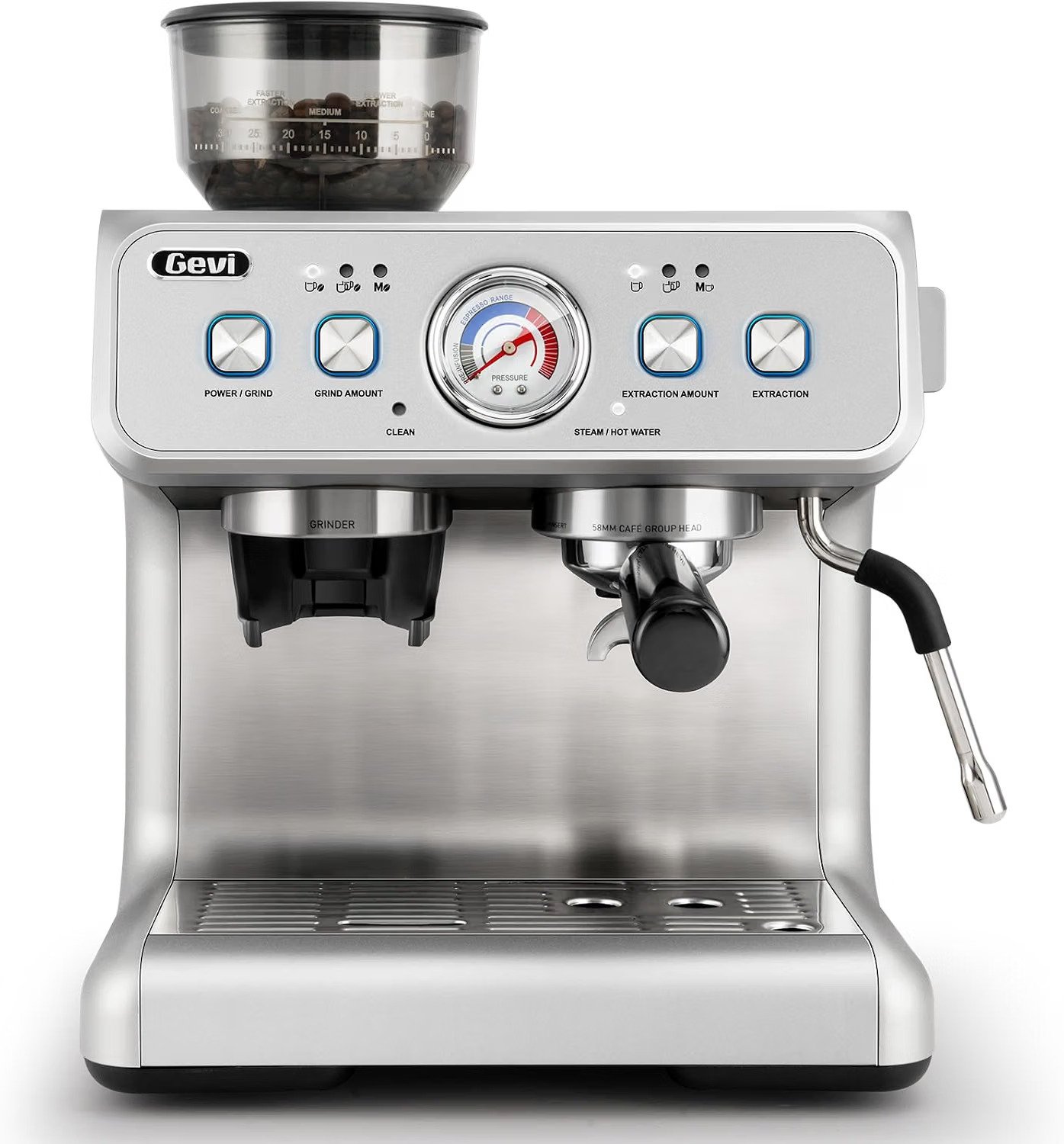
1. Gevi Dual Boiler Espresso Machine With Built-In Burr Grinder
The stronger choice for someone who wants a single machine to grind, brew, and steam while keeping a 58 mm, hands-on espresso workflow.
Buy it ifYou want a built-in grinder, manual steam wand, pressure feedback, and a 58 mm portafilter in one setup.
Skip it ifYou want one-touch milk drinks or a smaller, simpler appliance with fewer adjustments.
Gevi’s current BrewCombo documentation identifies the ECMF0 as a dual-boiler machine with a built-in 30-step grinder, PID + NTC temperature control, pressure gauge, 58 mm group head, and manual steam wand. That combination makes it the more enthusiast-oriented machine in this comparison: the grinder and pressure feedback give you variables to adjust, while the 58 mm format opens the door to a broader espresso portafilter and accessory ecosystem.
The tradeoff is involvement. You still need to learn dose, grind, distribution, espresso tamping, shot timing, and manual milk texture. For buyers who enjoy that process, the dual-boiler architecture is useful because brewing and steaming no longer need to compete for one heating path. For someone who wants a latte with minimal technique, the AIRMSEN is easier.
HeatingDual-boiler system
GrinderBuilt in, 30-step listed
Group head58 mm listed
What we like
Separate boiler workflow for brewing and steaming
Built-in grinder reduces the number of separate appliances
58 mm format gives broad accessory flexibility
What to consider
More technique than an automatic milk system
Larger all-in-one footprint than a compact machine
Amazon model details should be matched to the current Gevi listing before purchase
A convenience-first dual-boiler design for buyers who want the machine to handle milk frothing automatically instead of learning a manual steam wand.
Buy it ifYou make cappuccinos and lattes often and value touchscreen simplicity, automatic frothing, and fast transitions.
Skip it ifYou want an integrated burr grinder or manual microfoam control for practicing latte art technique.
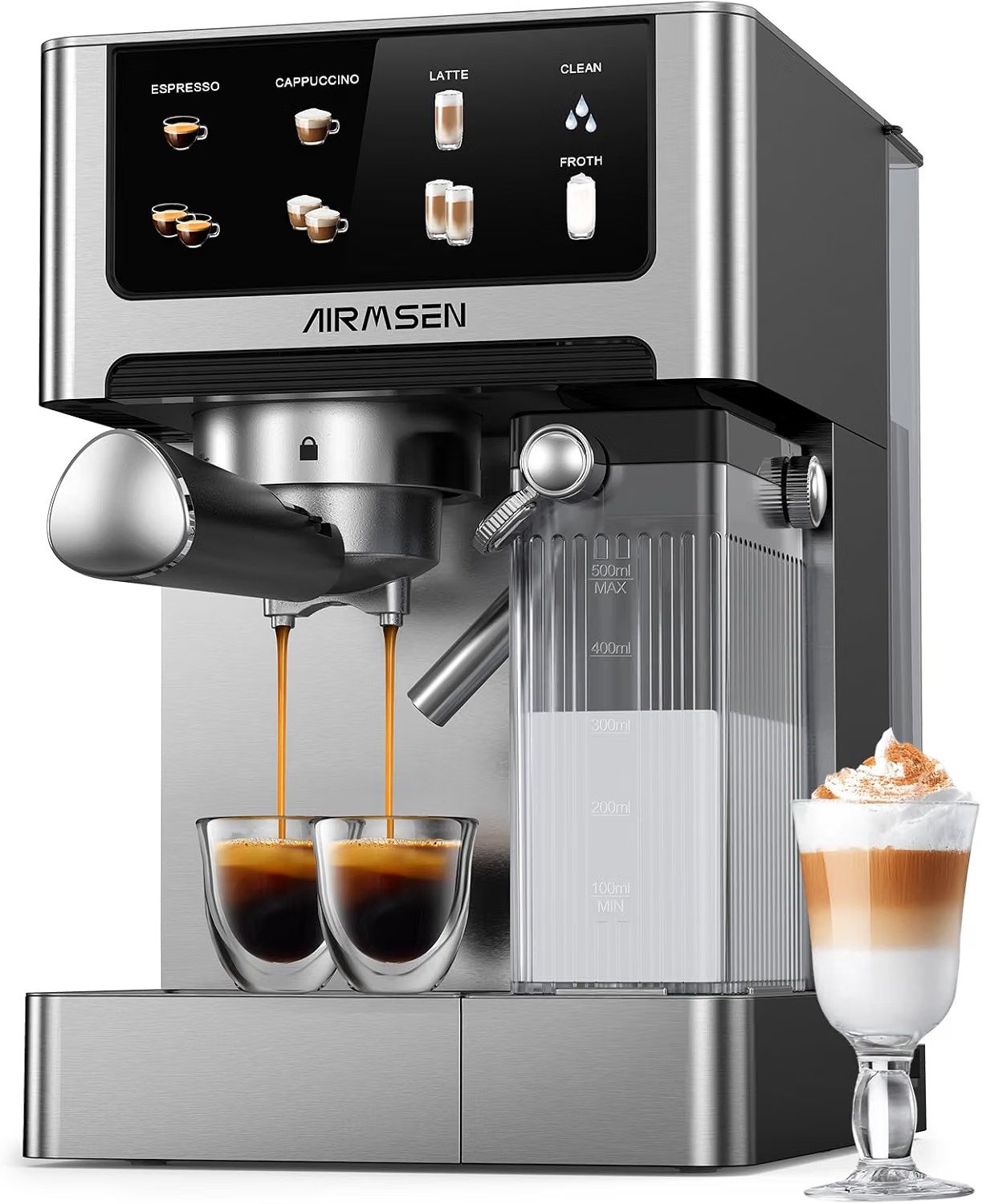
AIRMSEN describes the BCM2308 as using independent 1350W and 1000W boilers that can work in parallel for espresso and milk. The product page also lists a 60-ounce removable water tank, touchscreen controls, a 20-bar pump, and an automatic milk-frothing system. That makes it a very different interpretation of the dual boiler idea: less about manual barista control, more about reducing the time and attention needed for milk drinks.
The biggest omission is an integrated grinder, so budget and counter space for a separate espresso-capable grinder. That is not necessarily a weakness—separate grinders can be upgraded independently—but it changes the total setup cost and footprint. If grinder choice matters, our best budget espresso grinder guide is a useful next step.
Heating1350W + 1000W independent boilers
Water tank60 oz / 1.8 L listed
Portafilter51 mm listed
What we like
Independent heating systems target faster espresso-and-milk workflow
Automatic milk frother lowers the learning curve
Compact listed dimensions for a dual-heating appliance
What to consider
No built-in grinder
Automatic milk system gives less hands-on texture control
Four decisions that matter before buying a dual boiler espresso maker
Do you really need two heating systems?
A dual boiler matters most when you regularly make milk drinks or several drinks back to back. If you mainly drink straight espresso, a well-designed single boiler espresso machine can be simpler and less expensive to own.
Manual steam wand or automatic milk?
Manual steaming gives more control over microfoam and latte-art texture. Automatic frothing is easier and more repeatable, but gives you fewer ways to change the milk texture yourself.
Built-in or separate grinder?
A built-in grinder shortens the routine and saves counter space. A separate grinder can provide a clearer upgrade path and lets you replace the grinder without replacing the espresso machine.
How will you manage water?
Two heating systems do not remove scale risk. Follow the manufacturer’s water guidance, and review our water filtration for coffee guide before choosing filters or a descaling routine.
Quick answers
Common questions about dual boiler espresso makers
What is a dual boiler espresso maker?
A dual boiler espresso maker uses separate heating systems for espresso brewing and steam or milk production. The practical benefit is that the machine does not need to shift one boiler between brewing temperature and steam temperature.
Can a dual boiler espresso machine brew and steam at the same time?
Many true dual-boiler machines are designed to support brewing and steaming simultaneously or with minimal delay because the two functions have separate heaters. Check the exact manufacturer documentation, because “dual heating,” “dual thermoblock,” and “dual boiler” are not always used consistently across listings.
Is a dual boiler worth it for home use?
It can be if you make several milk drinks, want faster back-to-back preparation, or dislike waiting for a single boiler to change temperature. For occasional straight espresso, the extra size, complexity, and maintenance may not be worthwhile.
What is the difference between a single boiler and a dual boiler?
A single boiler normally handles brewing and steaming at different temperatures in sequence. A dual boiler separates those jobs. For a deeper comparison, see our dual boiler espresso machine guide and single boiler guide.
Do dual boiler machines need more maintenance?
They can have more internal components and water pathways to maintain. Good water management, routine cleaning, and following the manufacturer’s service guidance matter more than using a one-size-fits-all descaling schedule.
Recommended next
Continue your research
Compare boiler designs, portafilter choices, and other espresso-machine buying factors before you decide.