Commercial Espresso Machine for Sale: 5 Buyer Options for 2026
If you are shopping for a commercial espresso machine for sale, start with the service model—not the biggest pressure number. This guide compares five machines from our available product list, explains where each fits, and shows when a true plumbed commercial machine is the safer business purchase.
John CrestaniEspresso Equipment Specialist
Last Updated
The short version
Which commercial espresso machine should you buy?
For a true café with rush-hour volume, a plumbed commercial machine—often a 2-group model—is the safer starting point. The five products below are better treated as prosumer, office, training, boutique, or light-duty options. For higher-volume planning, compare our 2-group espresso machine guide and our guide to the best commercial espresso machine for a small coffee shop.
Commercial-fit transparency: The supplied affiliate list does not include a verified plumbed 2-group café machine. We therefore do not label these five models as café-duty simply because they can make espresso. Confirm electrical load, plumbing, warranty, service support, and any required sanitation or commercial certification before using any machine in a regulated business.
How we evaluated
Commercial fit is more than pump pressure
We compared the listed machines by the questions a business buyer actually has to answer: how quickly drinks can be produced, whether brewing and steaming compete for the same heating system, how much staff training is required, and what happens when the machine needs water, cleaning, or service. Manufacturer specifications describe design and capacity; they do not prove café duty cycle or code compliance.
Rush-hour workflowCan the machine keep up when several milk drinks arrive together?
Brew and steam systemDual-boiler, single-boiler, lever, and super-automatic designs behave very differently under load.
Water and maintenanceTank refills, drainage, descaling, and coffee-water filtration directly affect uptime.
Business suitabilityWarranty terms, parts, electrical requirements, local codes, and service access matter more than a marketing pressure number.
Commercial espresso machine options compared
Amazon links in this table are paid links. On a phone, swipe sideways to see every column. Prices and availability change frequently, so they are not shown here.
Five buyer options: workflow, hardware, and the commercial-use limitation to understand
Machine
Best for
System
Key hardware
Main tradeoff
Amazon paid links
Gevi Dual Boiler ECMF0
Low-volume service where one machine must grind, brew, and steam
Dual boiler
58 mm
Manufacturer positions this as a home-barista machine, not a high-volume café workhorse.
Espresso Mastered:The EspressoFinder.com Guide for Enthusiasts and Professionals
Choose smarter. Brew better from day one.
Pressure numbers and long feature lists can make almost every machine look impressive. This practical guide shows you what actually affects taste, workflow, and long-term value—before you spend your money.
Separate useful specifications from marketing noise
Match the grinder, milk system, and learning curve to your routine
Spot hidden accessory, cleaning, and upgrade costs
Use a clear checklist to compare any espresso machine
Free digital guide · Delivered by email · Privacy Policy
Five machines for different light-commercial and prosumer scenarios
The useful question is not “Which one has the biggest pressure number?” It is “Which workflow matches the number of drinks, staff skill, and downtime risk in my business?” If your plan involves a real morning rush, compare these against a purpose-built commercial automatic espresso machine or multi-group system before buying.
Best all-in-one semi-automatic
Gevi Dual Boiler ECMF0
A strong prosumer-style choice for a low-volume office, tasting room, or hospitality counter that wants a 58 mm portafilter, integrated grinder, and separate brewing/steam capability in one footprint.
Best fitLow-volume service where one machine must grind, brew, and steam
Skip it ifBusy cafés that need simultaneous multi-group production, plumb-in service, and a commercial service network
SystemDual boiler
Portafilter58 mm
GrinderBuilt in, 30-step
Why it can work
Dual-boiler architecture reduces the wait between brewing and steaming.
58 mm group format is closer to common café accessory sizing.
Built-in grinder can simplify a compact counter setup.
Commercial-use cautions
Manufacturer positions this as a home-barista machine, not a high-volume café workhorse.
Integrated grinder means the brewing and grinding systems share one appliance failure point.
Do not assume local commercial certification or health-code acceptance without verification.
Specification note: Manufacturer documentation lists a dual-boiler system, PID/NTC temperature control, 58 mm group, and built-in grinder.
A compact manual machine with a 58 mm professional-style filter-holder, brass boiler/group, three-way solenoid valve, and steam wand. It is best treated as a light-duty or training machine rather than a primary café bar machine.
Best fitTraining, low-volume counters, back-office coffee, and buyers who want traditional portafilter technique
Skip it ifContinuous rush-hour service or businesses that cannot tolerate recovery time between drinks
Portafilter58 mm
Water tank2.1 L
BoilerLead-free brass
Why it can work
58 mm stainless-steel filter-holder supports a familiar barista workflow.
Brass boiler and brass group are designed to hold brewing heat better than lighter assemblies.
Three-way solenoid valve improves puck drying and cleanup.
Commercial-use cautions
Single-boiler workflow limits simultaneous brewing and steaming.
No built-in grinder, so a separate espresso grinder is required.
Gaggia markets the E24 for home baristas; commercial suitability must be verified separately.
Specification note: Gaggia lists a 58 mm filter-holder, 2.1 L tank, brass boiler/group, 15-bar nominal pump, and professional steam wand.
A semi-automatic package that combines a 58 mm stainless-steel portafilter, integrated conical-burr grinder, calibrated tamper, and large water tank. It can suit light hospitality use where guided workflow matters more than café-grade duty cycle.
Best fitSmall offices, guest areas, or light service where staff need a more guided semi-automatic workflow
Skip it ifHigh-volume cafés that need plumbed water, multiple groups, and fast service redundancy
Portafilter58 mm
Grinder15 settings
Water tank2.3 L
Why it can work
58 mm portafilter and included baskets provide a familiar espresso format.
Integrated grinder and calibrated tamper reduce extra equipment on the counter.
Large water tank and Americano button add convenience for mixed drink demand.
Commercial-use cautions
Still a consumer/prosumer semi-automatic, not a substitute for a plumbed café machine.
One integrated grinder limits redundancy if the grinder needs service.
Manual milk steaming still depends on operator skill and pace.
Specification note: Philips lists a 58 mm portafilter, 15 grinder settings, 2.3 L tank, 280 g bean container, and 15-bar pump.
A classic manual lever machine for buyers who value craftsmanship and hands-on control. The 38 oz boiler, pressure gauge, and manual piston workflow make it distinctive, but its refill and recovery routine makes it a niche fit for commercial-style use.
Best fitBoutique tasting counters, demonstrations, or low-volume service where the lever experience is part of the appeal
Skip it ifFast-paced cafés where speed, easy training, and continuous drink output are the priorities
OperationManual lever
Boiler38 oz
Power1000 W
Why it can work
Manual lever gives the operator direct control over extraction.
Pressure gauge and solid-brass boiler support a traditional espresso workflow.
Small footprint can work on a compact specialty counter.
Commercial-use cautions
Requires more skill and attention than pump-driven or automatic machines.
Boiler refill/recovery is not designed for uninterrupted café rushes.
No grinder is included, and commercial compliance still needs separate verification.
Specification note: PC-16 documentation lists a 38 oz boiler, 1000 W heater, mounted pressure gauge, and manual lever operation.
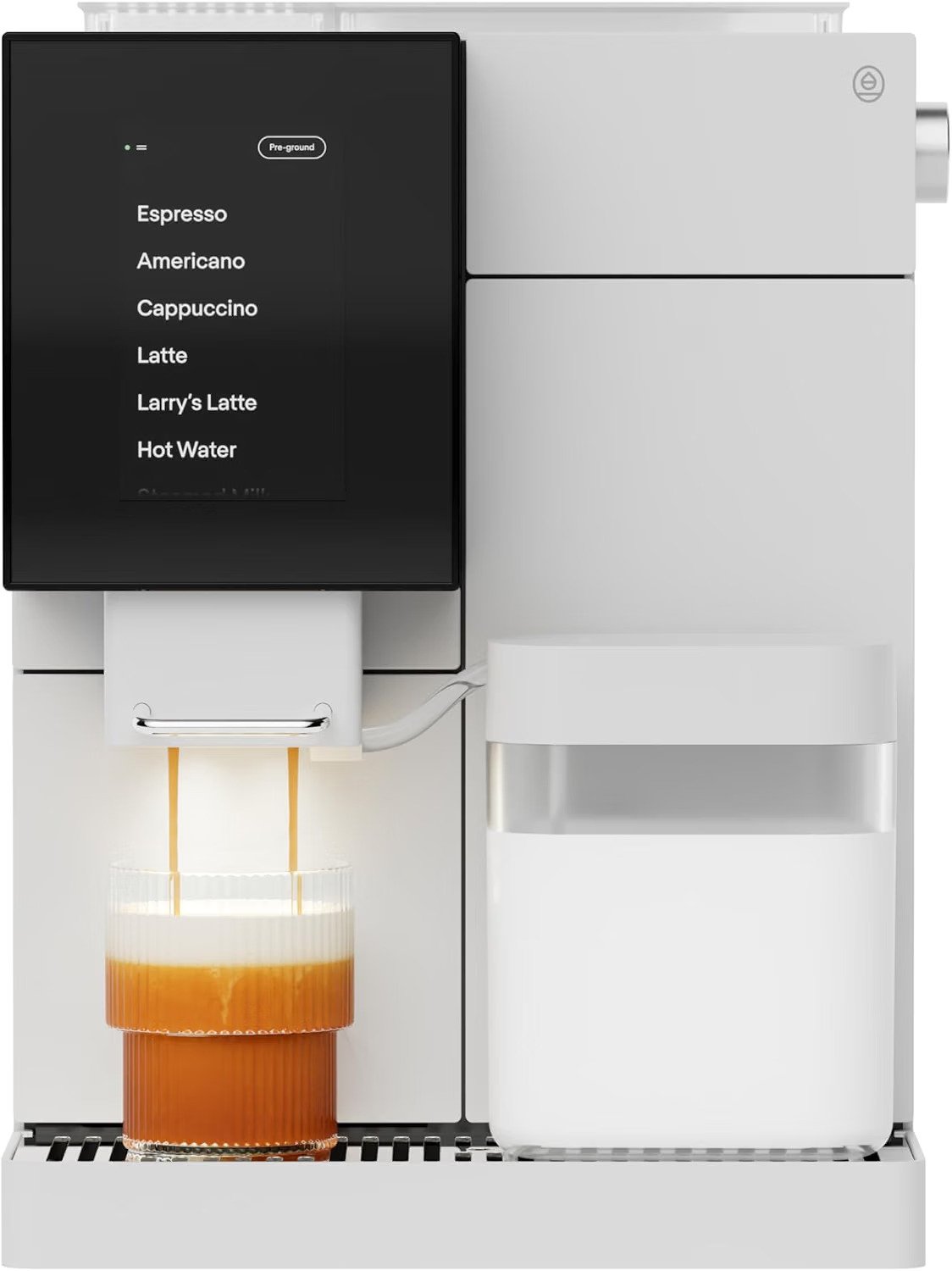
A premium bean-to-cup option for offices and hospitality spaces that want repeatable drinks with less barista training. Its 16 oz hopper, 75 fl oz tank, milk carafe, and automatic grinder suit convenience-focused service better than manual café theater.
Best fitOffices, lounges, waiting areas, and hospitality spaces where self-service consistency matters
Skip it ifTraditional espresso bars that need manual control, plumbed water, or high-volume multi-group output
Grinder48 mm conical burr
Water tank75 fl oz
Bean hopperUp to 16 oz
Why it can work
Super-automatic workflow reduces staff training and drink-to-drink variation.
Large front-access water/waste design is practical for office-style service.
Built-in milk system and app controls support self-service environments.
Commercial-use cautions
Tank-fed design still requires manual water and waste management.
Less direct barista control than a semi-automatic commercial machine.
Premium smart features do not replace commercial duty-cycle certification or local service requirements.
Specification note: Terra Kaffe lists a 48 mm conical burr grinder, 75 fl oz tank, up-to-16 oz hopper, 9-bar pump, and 1400 W power.
Four checks before you buy a commercial espresso machine
1. Size the machine for the busiest 15 minutes
Average daily cups can hide the real problem: clustered orders. A machine that handles 40 drinks across a day may still struggle with 10 milk drinks in a short rush. If you expect queues, start with a purpose-built 2-group espresso machine.
2. Choose the right boiler and workflow
A dual-boiler design can brew and steam with less waiting than a single-boiler machine. Super-automatic machines reduce training but give the operator less manual control. Compare our dual-boiler espresso machine guide if milk drinks dominate your menu.
3. Plan water, drainage, and filtration
Tank-fed machines are simple to install but create refill and waste-handling work. Plumbed machines demand more installation but remove a major service bottleneck. Water chemistry matters for taste and scale, so review water filtration for coffee equipment before installation.
4. Verify service and local compliance
Before paying, confirm voltage, amperage, plug type, plumbing, drain needs, warranty coverage in a business environment, parts availability, and any local sanitation or certification requirements. For food-service planning, our restaurant coffee maker guide covers a broader service context.
Quick answers
Commercial espresso machine buying questions
What should I look for in a commercial espresso machine for sale?
Start with expected rush-hour drink volume, boiler configuration, steam capacity, plumbing, electrical requirements, service support, and local compliance. Pressure ratings alone do not tell you whether a machine can survive daily business use.
Can I use a home espresso machine in a coffee shop?
Sometimes for training, backup, tastings, or very light service, but you should not assume a home/prosumer machine is approved or warranted for commercial use. A busy shop usually benefits from purpose-built equipment with better throughput, service access, and installation support.
Do I need a 2-group espresso machine?
If two baristas may need to pull shots during the same rush, or if milk drinks arrive in batches, a 2-group machine can provide far more practical headroom than a compact single-group prosumer machine. Read our 2-group espresso machine guide for that buying path.
Is a dual-boiler machine better for a small business?
It can be. Separate brew and steam heating systems reduce waiting and make milk-drink service smoother. But boiler architecture is only one factor; recovery, serviceability, water supply, grinder quality, and real duty cycle still matter.
What is the best commercial espresso machine for a small coffee shop?
The best choice depends on peak orders, menu, staff skill, available electrical service, plumbing, and local repair support. For a shop rather than a light-duty office or hospitality counter, use our dedicated small coffee shop commercial espresso machine guide.
Recommended next
Continue your commercial coffee research
Compare higher-volume café systems, automatic business workflows, and small-shop buying priorities before you commit to equipment.