A cheaper grinder is only a bargain if it can make small enough adjustments for espresso and fit the way you dose coffee every morning. We compare three budget-focused electric grinders by burr design, adjustment range, hopper versus single-dose workflow, mess, and the compromise each one asks you to accept.
John CrestaniEspresso Equipment Specialist
Last Updated
The short version
What is the best budget espresso grinder?
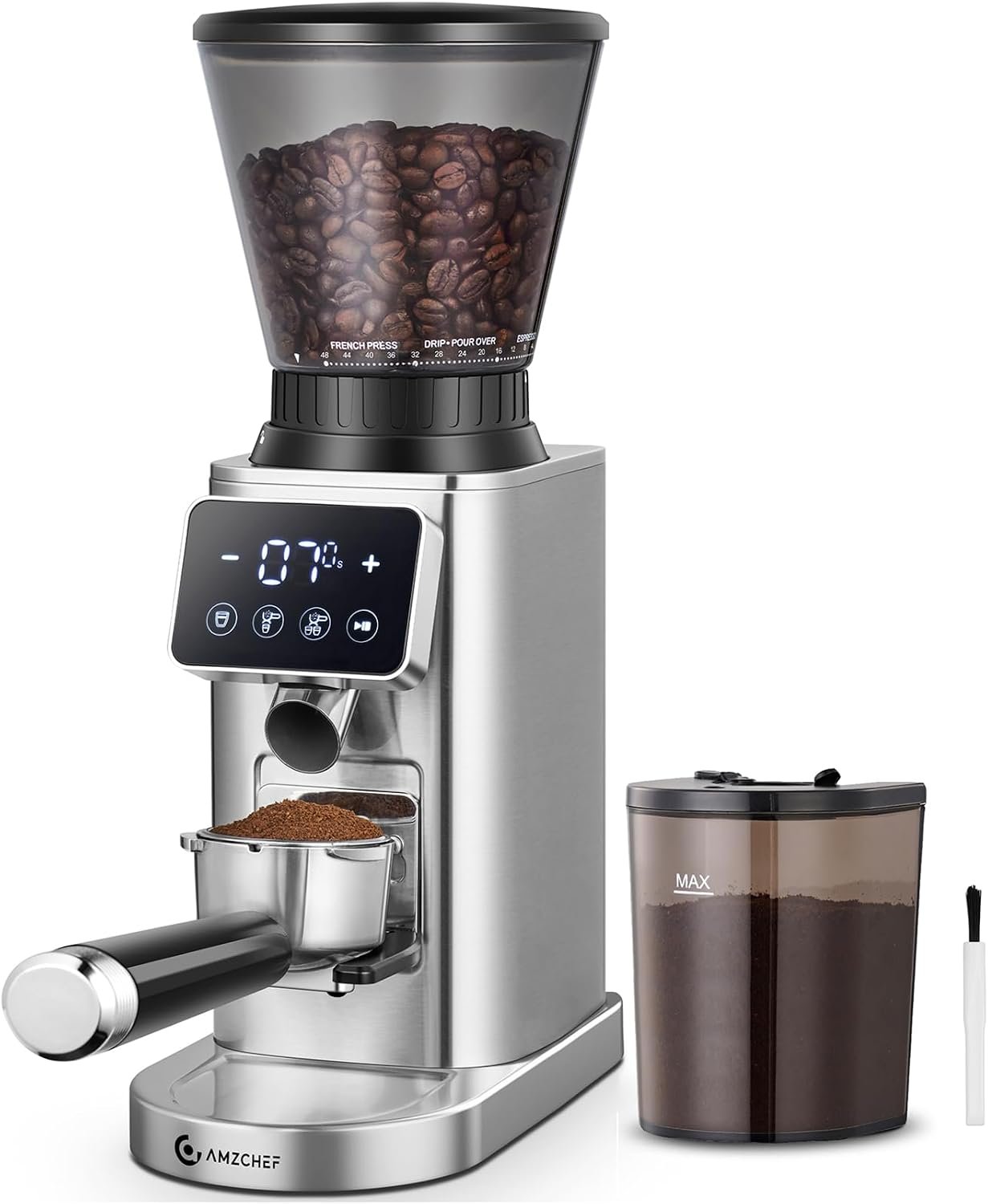
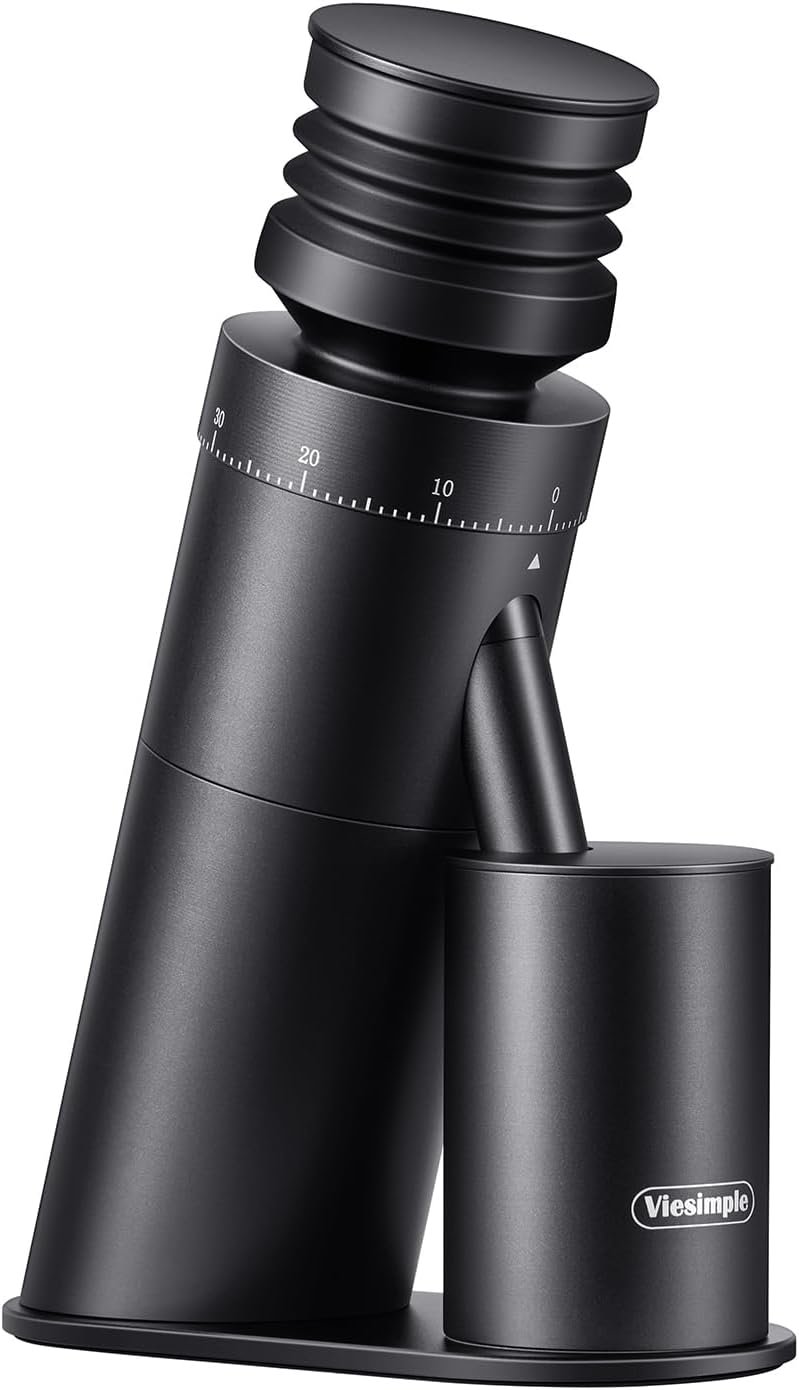
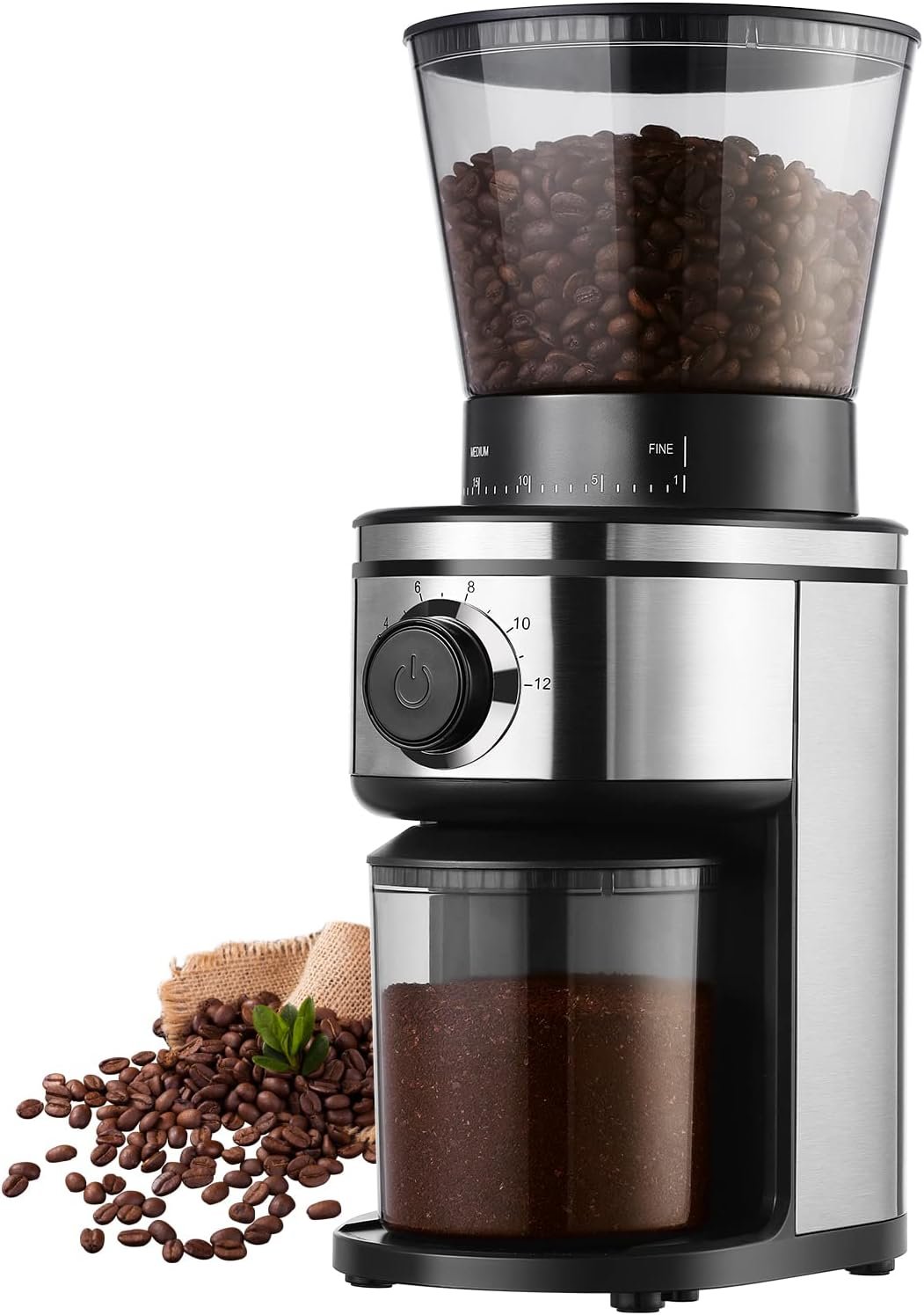
Among the three grinders supplied for this guide, the AMZCHEF 48-Setting Burr Coffee Grinder is our research-based starting pick for a first budget espresso setup. It combines a 40 mm stainless-steel conical burr, 48 stepped settings, timed dosing, anti-static design, and direct-to-portafilter support. Choose the Viesimple Gen 4 if you prefer a compact single-dose workflow and want to switch beans frequently. The Ollygrin is the simpler hopper-style alternative for buyers who also brew drip or French press and do not need the finest possible espresso adjustment.
Testing transparency: This is a research-based comparison of current product documentation, listing specifications, and design tradeoffs, not a hands-on laboratory test. Recommendations apply to these three supplied grinders rather than every budget grinder on the market. Prices are intentionally omitted because Amazon pricing and availability can change frequently.
How we evaluated
A budget grinder still needs real espresso control
Espresso reacts strongly to small changes in grind size, so the useful question is not simply “how many settings does it have?” We compared each grinder across the parts of ownership that change day-to-day results: adjustment resolution, burr and dosing workflow, retention and mess, and how much friction the grinder adds when you change beans or brew methods. Listed specifications describe manufacturer claims; they are not independently measured performance scores.
Dial-in controlAre there enough fine adjustments to react when a shot runs too fast or too slow?
Dosing workflowDoes it favor a bean hopper, timed dosing, direct portafilter grinding, or true single dosing?
Retention and messHow does the design deal with static, grounds left in the chute, and transfers between containers?
Ownership frictionConsider cleaning access, counter space, noise-focused design, and how easy it is to change beans.
Budget espresso grinders compared
Amazon links in this table are paid links. On a phone, swipe sideways to see every column. Prices and availability change frequently, so this comparison intentionally focuses on specifications and workflow rather than a fixed dollar amount.
Three budget-focused electric espresso grinders: burrs, adjustment, dosing style, and main tradeoff
Grinder
Best for
Burrs
Adjustment
Dosing style
Main tradeoff
Amazon paid links
AMZCHEF 48 Settings
First budget electric espresso grinder
40 mm stainless-steel conical
48 stepped settings
Hopper, timer, portafilter holder
Stepped adjustment is less granular than a true stepless espresso grinder
Espresso Mastered:The EspressoFinder.com Guide for Enthusiasts and Professionals
Choose smarter. Brew better from day one.
Grind-setting counts and burr-size claims can make every grinder look capable. This practical guide shows you what actually affects espresso dialing-in, workflow, and long-term value—before you spend your money.
Separate useful specifications from marketing noise
Match grinder adjustment, dosing style, and workflow to your routine
Spot hidden accessory, cleaning, and upgrade costs
Use a clear checklist to compare espresso grinders and machines
Free digital guide · Delivered by email · Privacy Policy
Our three picks, with the tradeoffs explained
A budget espresso grinder should make dialing in easier, not simply replace one source of inconsistency with another. The three choices below use different workflows, so the best pick depends on whether you keep beans in a hopper, weigh every dose, or switch between espresso and other brew methods.
Best overall budget workflow
1. AMZCHEF Burr Coffee Grinder, 48 Settings
The most balanced starting point here for someone who wants an electric hopper grinder with more adjustment steps, timed dosing, and a portafilter-friendly workflow.
Buy it ifYou want one affordable electric grinder for espresso plus other common brew methods, with direct portafilter support.
Skip it ifYou want a stepless adjustment collar or weigh and single-dose every shot with almost no beans stored in the grinder.
The AMZCHEF stands out on paper because its 48 stepped settings give you more adjustment positions than the 30-setting Ollygrin. The listed 40 mm stainless-steel conical burr covers espresso through coarser brewing, while the LED timer can be changed in half-second increments. For a beginner, that combination makes repeatability easier: once you find a workable grind setting, you can also keep the grind time consistent while you refine dose and yield.
Its portafilter holder is particularly useful for an espresso-first setup because it removes a transfer step. The current product description also emphasizes anti-static features, which matter more at espresso fineness because dry, finely ground coffee can cling to plastic and scatter around the counter. If your shots are still inconsistent after the grind is close, review your espresso tamping technique before assuming the grinder is the only problem.
Burrs40 mm stainless-steel conical
Adjustment48 stepped settings
DosingLED timer, 0.5-second increments listed
What we like
More grind positions than the other hopper grinder in this comparison
Direct-to-portafilter option reduces transfers
Anti-static design targets a common fine-grind mess problem
What to consider
Still a stepped grinder rather than stepless
Hopper storage is less convenient for frequent bean switching
Touch controls add more interface than a simple push-button grinder
Specification sources reviewed: current AMZCHEF product listing details and model documentation available for the 48-setting grinder.
2. Viesimple Gen 4 Single Dose Burr Coffee Grinder
A compact alternative for home baristas who weigh beans before every shot, switch coffees often, and prefer a dosing cup over a large hopper.
Buy it ifYou want a single-dose workflow, a 48 mm conical burr, and a compact aluminum-bodied grinder.
Skip it ifYou want to fill a hopper once and grind several household doses without weighing beans first.
The Gen 4 takes a different approach from the two hopper grinders. Its manual describes a 48 mm five-blade conical burr, an aluminum body, a magnetic dosing cup, and a blow-out funnel intended to reduce retained coffee. That makes the workflow easy to understand: weigh the beans you need, grind them, clear the chute, and transfer the dose to the portafilter.
This style is attractive if you alternate between regular and decaf or change roast levels often because you are not storing a large quantity of beans above the burrs. It also pairs naturally with the workflow described in our single-dose coffee grinder guide. The tradeoff is convenience: if several people make drinks in a row, repeated weighing and dosing can feel slower than keeping one coffee ready in a hopper.
Burrs48 mm five-blade conical listed
WorkflowSingle dose with magnetic cup
BodyAluminum construction listed
What we like
Single dosing makes bean changes straightforward
Magnetic dosing cup keeps the workflow compact
Blow-out funnel is designed to reduce retained grounds
What to consider
Less convenient for batch-style household use
External power adapter adds another item on the counter
Single-dose workflow works best when you already use a scale
Specification source reviewed: Viesimple Gen 4 instruction documentation for the VS-ECG 01B / current Gen 4 configuration.
A straightforward hopper grinder for buyers who want one appliance to cover espresso and coarser brewing without adopting a single-dose routine.
Buy it ifYou value simple controls, a 10-ounce hopper, and a broad fine-to-coarse grind range.
Skip it ifYou use a demanding non-pressurized espresso basket and regularly need tiny grind changes between neighboring settings.
Ollygrin lists 40 mm stainless-steel conical burrs and 30 grind settings from fine espresso through French press. The hopper holds about 10 ounces of beans, and an auto-lock mechanism is designed to reduce spills if you remove the hopper. Quantity is selected in a 2–12 cup range rather than by weight, which keeps operation simple but does not replace a scale when you are trying to repeat an espresso recipe precisely.
The main espresso compromise is adjustment resolution. Thirty positions can be enough to get close, especially with a more forgiving pressurized basket, but a non-pressurized basket may land between two useful steps as beans age. If you are new to puck preparation, our guides to the espresso portafilter and how to use an espresso machine explain the other variables that affect flow before you chase the grinder setting alone.
Burrs40 mm stainless-steel conical
Adjustment30 stepped settings
Hopper10 oz capacity listed
What we like
Simple hopper workflow for repeat daily use
Fine-to-coarse range supports multiple brew methods
Removable upper burr simplifies routine cleaning
What to consider
Fewer grind steps than the AMZCHEF
Cup-based quantity control is not dose-by-weight
Hopper workflow is less convenient for frequent bean changes
Specification source reviewed: Ollygrin BG702S-PG documentation and current product information for the 30-setting conical burr grinder.
Four decisions that matter more than the lowest price
How fine is the adjustment?
Espresso needs small corrections. A large total grind range is useful, but what matters most is how closely spaced the fine settings are around your working espresso range.
Hopper or single dose?
A hopper is faster when you use one coffee every day. Single dosing is better when you weigh each shot, switch beans often, or want to minimize old coffee sitting above the burrs.
Pressurized or non-pressurized basket?
Pressurized baskets tolerate a wider grind window. A traditional non-pressurized basket demands more precise dialing-in, making adjustment resolution much more important.
Are you measuring dose and yield?
Even a capable grinder cannot make espresso repeatable if dose and liquid yield change every shot. Use a scale, keep your tamp consistent, and adjust one variable at a time.
Quick answers
Common questions about budget espresso grinders
Can a cheap burr grinder make real espresso?
It can if the grinder reaches espresso fineness and provides small enough adjustment steps for your basket. Pressurized baskets are more forgiving; non-pressurized baskets expose coarse adjustment gaps much faster.
Is 48 grind settings automatically better than 30?
No. Setting count alone does not tell you the size of each step or how much of the adjustment range is dedicated to espresso. In this comparison, 48 positions provide more theoretical adjustment opportunities than 30, but burr alignment, calibration, and the spacing of the fine settings still matter.
Is a single-dose grinder better for espresso?
Not automatically. Single dosing is excellent for weighing each shot, switching beans, and reducing coffee left in a hopper. A hopper grinder is faster and simpler if your household uses the same beans every day. See our single-dose grinder guide for the workflow differences.
Do I need to grind directly into the portafilter?
No. Grinding into a dosing cup can be just as practical. Direct-to-portafilter grinding removes a transfer step, while a dosing cup can make distribution and switching between different portafilter sizes easier.
Should I spend more on the grinder or the espresso machine?
If your current grinder cannot make repeatable espresso-fine adjustments, improving the grinder can change shot consistency more than adding features to the machine. The better balance depends on your basket, beans, and how much manual dialing-in you want to do.
Recommended next
Continue your research
These published Espresso Finder guides cover the workflow around grinding, dosing, puck preparation, and choosing the rest of your home espresso setup.